Disposition Effect
Quick Definition
The disposition effect is the predictable habit of selling winning investments too soon and holding losing investments too long. It is one of the most consistently documented mistakes in retail investing, and it costs real money through lower returns, higher taxes, and lopsided portfolios.
What It Means
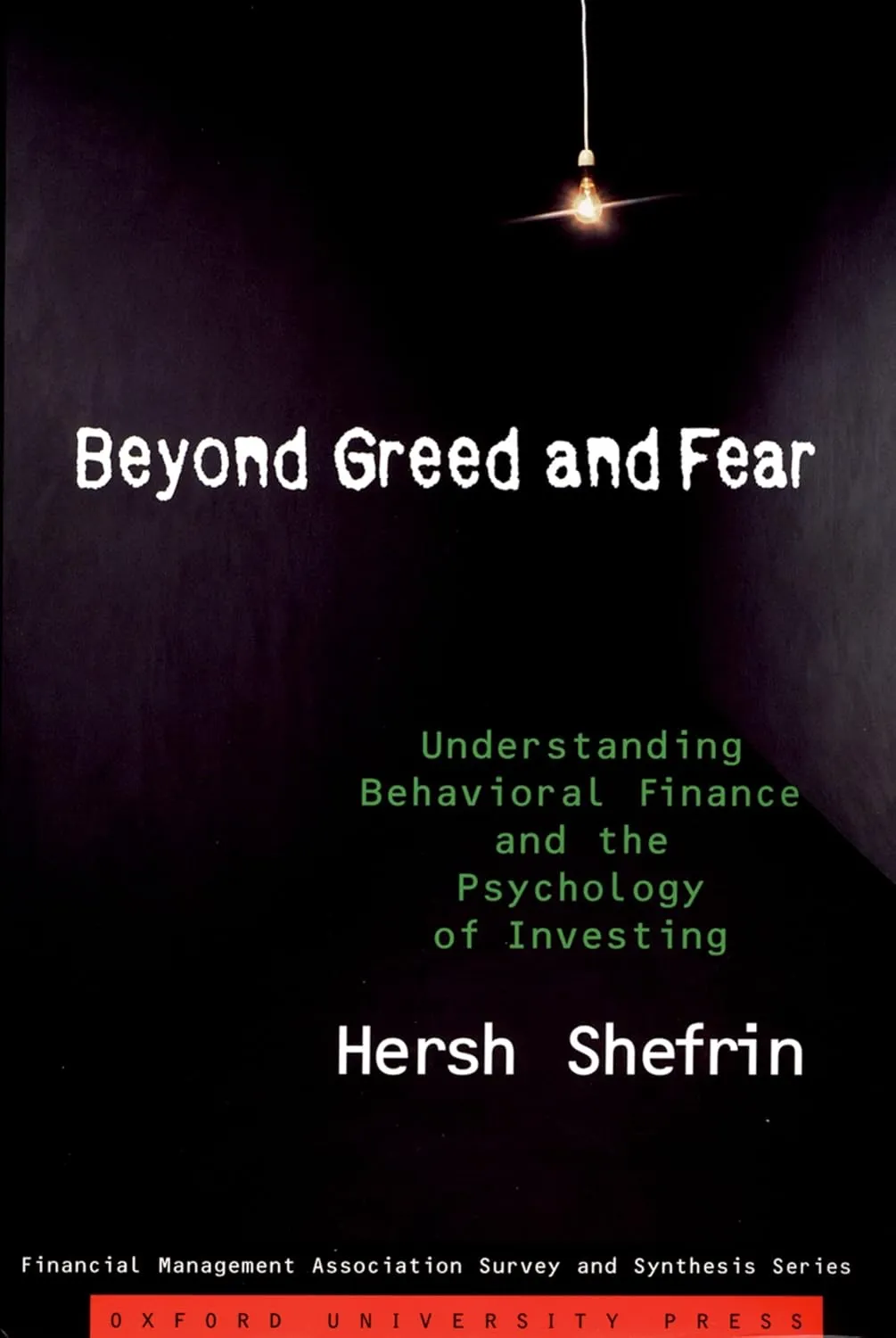
Coined by finance researchers Hersh Shefrin and Meir Statman in 1985, the disposition effect describes a pattern that shows up in brokerage data across countries, decades, and asset classes. When a stock is up, investors rush to sell and "bank the profit." When a stock is down, they refuse to sell because realizing the loss makes the mistake official. The name comes from the phrase "disposition to sell winners too early and ride losers too long."
The root cause is loss aversion. Selling a winner produces a positive emotion (a gain realized), while selling a loser produces a negative one (a loss realized). Holding the loser keeps the loss "on paper" and preserves the hope that it will bounce back. The brain treats an unrealized loss as less painful than a realized one, even though the economic impact is identical the moment you decide to sell.
This matters because it inverts good investing logic. A winning stock is often winning because the business is performing well, so cutting it early removes your best compounding engine. A losing stock is often losing because something is wrong with the business, so holding it keeps capital trapped in a deteriorating asset. The disposition effect systematically sells your best holdings and keeps your worst ones.
Research using individual brokerage account data (the landmark Terrance Odean studies from the late 1990s, and many follow-ups) found that the stocks investors sold went on to outperform the stocks they kept, by an average of several percentage points over the following year. The effect is not subtle. It is also stubborn: even professional traders show a milder version of it.
How It Works
The mechanics trace back to prospect theory and the value function, which is steeper for losses than for gains.
When a position is up:
- The investor bought at $50. The stock is now $80.
- Selling locks in a $30 gain, which feels good.
- The brain weights this realized gain heavily, so the investor sells.
- The stock keeps climbing because the business is growing. The investor misses the remaining upside.
When a position is down:
- The investor bought at $50. The stock is now $30.
- Selling locks in a $20 loss, which feels roughly twice as painful as the $30 gain felt good.
- The investor holds to avoid realizing the loss, telling themselves "it will come back."
- The business keeps deteriorating. The capital stays trapped, and the opportunity cost grows.
The asymmetry comes from the kink in the value function at the reference point (usually the purchase price). Below the reference point, the curve is convex, which encourages risk-seeking behavior (holding the loser, hoping it recovers). Above the reference point, the curve is concave, which encourages risk-averse behavior (selling the winner to secure the gain).
A second amplifier is mental accounting. Investors treat each position as its own mental account with its own purchase price, rather than evaluating the whole portfolio. This makes the purchase price feel like a special number it really is not. The market does not know or care what you paid.
Real-World Examples
The Odean brokerage study. Terrance Odean analyzed trading records from a large discount brokerage and found that individual investors realized their gains about 50% more often than their losses, even though the losers they kept underperformed the winners they sold. The round-trip cost of this behavior, after trading fees and the missed upside, was significant.
Tax season distortion. The disposition effect creates a predictable tax problem. Selling winners generates short-term and long-term capital gains that you owe tax on now. Holding losers defers the loss you could use to offset gains. The result is a higher tax bill than necessary. The fix is systematic tax-loss harvesting, which deliberately realizes losses to offset gains. Our post on tax-loss harvesting walks through the mechanics.
A worked example. Suppose you hold two stocks bought at $100 each. Stock A is now $150. Stock B is now $60.
| Scenario | What most investors do | What the data says happens next | Better approach |
|---|---|---|---|
| Stock A (up 50%) | Sell to lock in the gain | Winners often keep winning if the business is sound | Reevaluate on fundamentals, not your purchase price |
| Stock B (down 40%) | Hold, hoping it recovers | Losers often keep losing if the business is broken | Cut if the thesis is broken, harvest the tax loss |
If you sell A and hold B, you pay tax on A's $50 gain, and B may fall further to $40. If instead you held A (now worth $150 and possibly higher) and sold B to harvest a $40 loss, you would offset other gains and keep capital in the stronger business.
Wash sale trap. If you sell a loser to harvest the loss and buy it back within 30 days, the IRS disallows the loss under the wash sale rule. Many investors trip over this when they try to fix the disposition effect at year end. Plan sales more than 30 days apart from repurchases, or swap into a similar but not "substantially identical" fund.
Key Points to Remember
- The disposition effect sells your best stocks and keeps your worst ones, the opposite of what you want.
- It is driven by loss aversion: realizing a loss feels about twice as bad as realizing an equal gain feels good.
- The purchase price is a mental anchor, not a market reality. The market does not care what you paid.
- Selling winners early generates unnecessary taxes; holding losers defers useful tax losses.
- The fix is to judge each holding on its forward prospects, not on whether you are up or down.
Common Mistakes to Avoid
Using the purchase price as the decision rule. "I'll sell when it gets back to what I paid" is the classic disposition-effect line. It ties your decision to an irrelevant number. The right question is whether the business is worth holding at today's price for the next several years.
Letting one winner become too large. Refusing to sell winners at all can leave you overconcentrated in a single stock. The solution is rules-based rebalancing: trim positions that grow beyond a set percentage of the portfolio, regardless of whether they are up or down. See rebalancing.
Harvesting losses only in December. Waiting until year end to sell losers means you miss months of potential tax benefit and often rush into wash sale mistakes. Loss harvesting works all year.
Confusing "hold" with "conviction." Holding a loser because you believe in the company is fine if the thesis is intact. Holding a loser because selling would hurt is the disposition effect. Be honest about which one is driving you.
Ignoring the opportunity cost. Capital tied up in a declining stock is capital not working somewhere better. Even if the loser eventually recovers, the years spent waiting cost you compounding in a stronger asset.
Related Concepts
The disposition effect sits inside behavioral finance and is powered directly by loss aversion, the same force that makes losses feel twice as bad as gains. The broader science behind it is behavioral economics. The tendency to keep money in mental buckets tied to purchase prices is mental accounting, and the refusal to walk away from a bad position because of past spending connects to the sunk cost fallacy. On the practical side, the antidotes are tax-loss harvesting, understanding capital gains tax, and systematic rebalancing. Our posts on when you should sell a stock or fund and common investing mistakes give actionable rules. The original academic source is Shefrin and Statman's paper, available via the Journal of Finance archive on JSTOR.
Frequently Asked Questions
Q: Is the disposition effect the same as loss aversion? A: Not exactly. Loss aversion is the underlying psychological force (losses hurt more than gains feel good). The disposition effect is the specific investing behavior that results from it: selling winners early and holding losers long.
Q: Do professional investors fall for it too? A: Yes, though usually to a smaller degree. Studies of mutual fund managers and even proprietary traders find milder versions of the effect. Discipline and rules reduce it but do not eliminate it entirely.
Q: Should I never sell a winner? A: No. Selling a winner is fine when the position has grown too large for your risk tolerance or the valuation no longer makes sense. The error is selling purely because it feels good to lock in a gain, without regard to the forward outlook.
Q: How do I stop doing this? A: Build rules in advance. Rebalance on a set schedule, harvest losses systematically throughout the year, and evaluate each holding against its current price and business prospects, never against your purchase price. A written investment policy statement helps enforce this when emotions run high.
Q: Does tax-loss harvesting fix the disposition effect? A: It addresses the tax side by making loss realization intentional rather than avoided. But you still need a forward-looking reason for every sell decision. Harvesting a loss in a broken business is good; harvesting a loss in a sound business you want to own, without managing the wash sale rule, can backfire.