
The Financial Checklist for the First Year of Retirement
Your first year of retirement sets the pattern for the next 30. A 2025 EBRI study found 40% of retirees withdraw more than the recommended 4% in year 1, and 56% have no written withdrawal strategy. This checklist covers the 6 moves every new retiree must make.

The first year of retirement is when most retirement plans fail. Not because the math was wrong, but because the execution was. A 2025 study by the Employee Benefit Research Institute found that 40% of retirees withdraw more than the recommended 4% in their first year, and 56% do not have a written withdrawal strategy. They improvise. They take what they need, skip the tax planning, and discover the consequences 5 years later when the portfolio is lower than expected and the tax bill is higher than planned.
The first year is the transition. You go from a paycheck every two weeks to managing your own income stream. For 30 years, money arrived automatically. Now you have to create the pipeline. This is liberating and terrifying in equal measure. The mechanics are not complicated, but they are precise, and several decisions made in year 1 are expensive to reverse.
This post covers the 6 financial moves to make in your first year of retirement: execute your withdrawal strategy, take your first RMD or decide to delay, do a tax projection, review Medicare during Open Enrollment, rebalance your portfolio, and establish a sustainable spending rhythm.
Move 1: Execute Your Withdrawal Strategy
The first withdrawal
If you built a 12-month cash buffer before retirement, your first year of income is already sitting in cash. You do not need to sell anything. If you did not build a cash buffer, your first task is to set up systematic withdrawals from your portfolio.
Transfer 3 to 6 months of expenses at a time from investments to your checking account. Use the tax-efficient withdrawal order: taxable brokerage first, then tax-deferred (traditional 401(k) or IRA), then tax-free (Roth IRA).
Fidelity's Required Minimum Distributions guide covers RMD rules, withdrawal options, and life expectancy tables in detail.
The 4% rule in practice
In year 1, withdraw 4% of your starting portfolio balance. In year 2 and beyond, adjust the dollar amount for inflation, not for market performance. For example, with a $1 million portfolio, your year 1 withdrawal is $40,000. If inflation is 3%, your year 2 withdrawal is $41,200, regardless of whether the portfolio went up or down.
For the full 4% rule analysis, read our guide on the safe withdrawal rate.
The variable withdrawal alternative
Instead of a fixed dollar amount, you can withdraw a fixed percentage of the portfolio each year. If the portfolio drops, your income drops. If it rises, your income rises. This prevents portfolio depletion but creates income volatility.
A hybrid approach works well for many retirees: set a floor (the minimum income you need) and a ceiling (the maximum you will withdraw in good years). This gives you stability for essential expenses and flexibility for discretionary spending.
Move 2: Take Your First RMD or Decide to Delay
Who needs to take an RMD
The RMD age is 73 if you were born between 1951 and 1959. The RMD age is 75 if you were born in 1960 or later, under SECURE Act 2.0. RMDs apply to traditional 401(k), traditional IRA, SEP IRA, and SIMPLE IRA accounts. RMDs do not apply to Roth IRAs during the original owner's lifetime.
The IRS Retirement Topics page on Required Minimum Distributions covers RMD age, the first RMD deadline of April 1 of the following year, and the 25% penalty for missed RMDs.
The first RMD deadline
Your first RMD is due by April 1 of the year after you reach RMD age. If you turn 73 in 2026, your first RMD is due by April 1, 2027.
Warning: if you delay your first RMD to April 1, you must take your second RMD by December 31 of the same year. That means two taxable distributions in one calendar year, which can push you into a higher tax bracket and increase your IRMAA surcharges. Most advisors recommend taking the first RMD in the year you turn 73, not delaying to April 1.
For RMD rules and calculation, read our guide on required minimum distributions explained.
The still-working exception
If you are still employed at age 73 or older and participate in your employer's 401(k), you can delay RMDs from that 401(k) until you retire. This exception does not apply to IRAs or to 401(k)s from former employers. If you have an old 401(k) from a previous employer, roll it into your current employer's plan or an IRA before RMD age.
Schwab's 2026 RMD Reference Guide covers the RMD age 73/75 split, the still-working exception, the first RMD deadline, and the penalty reduction to 10% if corrected within 2 years.
The penalty for missing an RMD
The penalty is 25% of the amount you failed to withdraw. It is reduced to 10% if you correct the shortfall within 2 years. File Form 5329 to report and correct the missed RMD.
Move 3: Do a Tax Projection
Why year 1 taxes are different
Your income just dropped. But your tax bracket may not drop as much as you expect, because RMDs and traditional account withdrawals are taxed as ordinary income. If you collected a final paycheck, severance, or vacation payout, your year 1 income may be higher than your retirement income will be.
This creates a planning opportunity. If your income is low in year 1 (before RMDs begin), it may be the perfect time for a Roth conversion. Convert traditional IRA funds to Roth at a low tax rate. The converted amount is taxed now, but future growth and withdrawals are tax-free.
For the Roth conversion strategy, read our guide on Roth conversion before retirement.
The tax-efficient withdrawal order
The order matters. First, sell taxable investments, which are taxed at long-term capital gains rates of 0%, 15%, or 20% depending on your income. Second, take traditional 401(k) or IRA withdrawals, which are taxed as ordinary income and satisfy your RMD. Third, take Roth IRA withdrawals, which are tax-free and have no RMD.
The goal is to fill up the lower tax brackets with traditional account withdrawals, then use Roth for additional needs to avoid pushing into higher brackets.
Ameriprise's Tax Strategies to Consider Early in Retirement covers Roth conversions in low-income years, the tax-efficient withdrawal order, and Qualified Charitable Distributions.
Qualified Charitable Distributions
If you are 70 and a half or older, you can direct up to $111,000 per year (the 2026 limit) from your IRA directly to a qualified charity. The QCD counts toward your RMD and is excluded from your taxable income. This is more tax-efficient than taking the RMD and then donating, because the QCD keeps your adjusted gross income lower, which helps with IRMAA, Social Security taxation, and other income-based thresholds.
Move 4: Review Medicare During Open Enrollment
Open Enrollment Period (October 15 to December 7)
Your first Open Enrollment is your chance to switch plans if your initial choice does not fit your needs. Review your Part D (prescription drug) plan annually. Formularies change. A plan that covered your medications in January may not cover them in 2027.
If you enrolled in Medicare Advantage for the first time, you have a 12-month Medicare Advantage Open Enrollment Period (January 1 to March 31) to switch back to Original Medicare.
For Medicare coverage details, read our guide on what Medicare actually covers.
IRMAA awareness
Your 2026 IRMAA is based on your 2024 tax return, using a 2-year look-back. If your income was high in 2024 but dropped at retirement, file Form SSA-44 to request an immediate reduction.
The 2026 Part B standard premium is $202.90 per month. IRMAA surcharges start at $81.20 per month on top of the standard premium for singles with MAGI above $109,000, bringing the total to $284.10 per month. The surcharges climb through five brackets, reaching $487.00 per month for singles with MAGI of $500,000 or more.
Moves 5 and 6: Rebalance and Establish a Spending Rhythm
5. Rebalance your portfolio
After your first year of withdrawals, your asset allocation has shifted. If stocks had a strong year, your portfolio may be 70/30 instead of the 60/40 you planned.
Rebalance by selling assets that are overweight and using the proceeds for your next withdrawal. This forces you to sell high and buy low without thinking about it. If stocks rose and bonds fell, sell stocks for income and let the allocation drift back toward your target.
For the rebalancing strategy, read our guide on how to rebalance your portfolio.
6. Establish a sustainable spending rhythm
The psychological shift from saving to spending takes 6 to 12 months. Many new retirees underspend out of fear. They spent 30 years building the habit of saving and cannot bring themselves to spend. Others overspend in the first year: travel, home renovations, gifts for grandchildren. The retirement honeymoon can drain 2 to 3 years of withdrawals in 12 months.
Set a monthly spending limit based on your withdrawal plan. Track it. Adjust quarterly. Give yourself a guilt-free discretionary budget. You saved for decades. Spending some of it is the point.
For why spending discipline matters in early retirement, read our guide on sequence of returns risk.
First Year of Retirement: 6 Moves and Their Timing
| Move | When in Year 1 | Why It Matters | Key Risk If Skipped |
|---|---|---|---|
| Execute withdrawal strategy | Month 1 | Creates your income pipeline | Improvising withdrawals, overspending |
| Take first RMD or decide to delay | By Dec 31 of year you turn 73 | Satisfies IRS requirement | 25% penalty, doubled RMDs next year |
| Tax projection | January to February, before filing | Identifies Roth conversion window | Missing the lowest-income year for conversions |
| Medicare Open Enrollment review | Oct 15 to Dec 7 | Catches formulary and plan changes | Paying more for drugs or wrong coverage |
| Rebalance portfolio | Annually, after year-end | Restores target allocation | Drifting to higher risk than intended |
| Establish spending rhythm | Ongoing, first 6 to 12 months | Prevents honeymoon overspending | Depleting years of withdrawals in 12 months |
Real-World Examples
Example 1: The 67-year-old who found a Roth conversion window
A 67-year-old retires in January 2026 with $900,000 in a traditional IRA and $150,000 in a Roth IRA. His Social Security is $2,400 per month, or $28,800 per year. His expenses are $48,000 per year. His gap is $19,200 per year.
He takes $19,200 from his traditional IRA. His taxable income is $19,200 (IRA withdrawal) plus $24,480 (85% of Social Security is taxable at his income level), totaling $43,680. After the 2026 standard deduction of $16,100 for single filers, his taxable income is $27,580, placing him in the 12% bracket.
He realizes he has room in the 12% bracket and converts $20,000 from traditional to Roth IRA, paying $2,400 in taxes. This $20,000 will grow tax-free for the rest of his life and will not be subject to RMDs. Year 1 tax planning created a Roth conversion opportunity that saves taxes for decades.
Example 2: The 73-year-old who took her RMD early and used a QCD
A 73-year-old turns 73 in June 2026. She has $650,000 in a traditional IRA. Her first RMD is due by April 1, 2027. She calculates her RMD using the IRS Uniform Lifetime Table: $650,000 divided by 26.5 (the life expectancy factor for a 73-year-old) equals $24,528.
She takes the RMD in December 2026 instead of delaying to April 2027. By taking it in 2026, she avoids having two taxable distributions in 2027. She also directs $10,000 of the RMD as a Qualified Charitable Distribution to her church, reducing her taxable income by $10,000 while satisfying part of her RMD obligation. Taking the first RMD in the year you turn 73 and using QCDs reduces the tax burden.
Example 3: The 65-year-old who rebalanced while withdrawing
A 65-year-old retires in March 2026. She has a 60/40 portfolio: $600,000 in stocks and $400,000 in bonds. By December 2026, stocks have risen 14% and bonds have returned 3%. Her portfolio is now $684,000 in stocks and $412,000 in bonds, a 62/38 allocation.
She needs $20,000 for her first quarter 2027 expenses. Instead of selling bonds, she sells $20,000 from her stock holdings, bringing her stock allocation back toward 60%. She simultaneously directs $20,000 of bond interest into her cash buffer. The rebalancing and withdrawal happen in one move. Withdrawals and rebalancing are connected. Selling the overweight asset for income solves two problems at once.
Common Mistakes
- Taking too much in year 1. The retirement honeymoon effect: new retirees travel, renovate, and spend 20 to 30% more than planned. Track spending monthly and course-correct by month 6.
- Skipping the tax projection. Without a tax projection, you cannot identify Roth conversion opportunities or avoid IRMAA surcharges. Year 1 is often the lowest-income year of retirement, making it the best time for conversions.
- Delaying the first RMD to April 1. This creates two RMDs in one calendar year, potentially pushing you into a higher tax bracket and increasing IRMAA surcharges.
- Not reviewing Medicare Part D. Formularies change annually. A plan that cost $30 per month with your medications may jump to $80 per month or drop coverage for a specific drug. Review during Open Enrollment every October.
- Ignoring rebalancing. After a strong stock market year, your 60/40 portfolio can drift to 70/30. This increases risk at exactly the time when you need stability.
- Underspending out of fear. Some retirees live on less than they need because they are afraid of running out. If your withdrawal rate is under 3.5% and your portfolio is growing, you can spend more. Run the numbers annually.
Conclusion
The first year of retirement is about execution. You calculated the plan in the year before. Now you implement it. Execute your withdrawal strategy using the tax-efficient order: taxable, then tax-deferred, then Roth. Take your first RMD by December 31 of the year you turn 73 to avoid doubling up the next year. Do a tax projection in January or February to identify Roth conversion opportunities. Review your Medicare Part D plan during Open Enrollment, October 15 to December 7. Rebalance your portfolio annually. Establish a sustainable spending rhythm that gives you a guilt-free discretionary budget while protecting your essential expenses.
Retirement is not the end of financial planning. It is the beginning of a different kind of financial planning. The accumulation phase was about saving and investing. The distribution phase is about withdrawing, tax-optimizing, and sustaining. The mechanics are different, but the discipline is the same: calculate, plan, execute, review annually.
If you are in your first year of retirement, do a tax projection this month. Calculate your taxable income including Social Security, RMDs, and portfolio withdrawals. If you are in the 12% bracket or lower, talk to a fee-only advisor about a Roth conversion. Then read our guide on required minimum distributions to make sure you do not miss a deadline.
This post is for informational purposes only and does not constitute financial advice. Consult a qualified financial advisor or tax professional before making retirement decisions.
Tags
Savvy Nickel Team
Financial education expert dedicated to making complex money topics simple and accessible for everyone.
Recommended Articles

Money After 65: What Changes and What You Need to Reassess
After 65, your financial life shifts: Medicare replaces employer insurance, Social Security COLAs adjust your income, RMDs begin at 73, and estate planning becomes urgent. A 2025 Vanguard study found retirees who reassess annually spend 23% more sustainably. Here is what to reassess and when.

What to Do With Your Finances the Year Before You Retire
The average American retires at 62, but only 48% of pre-retirees have calculated how much income they will need. This pre-retirement checklist covers Social Security claiming, Medicare enrollment, portfolio shifts, debt payoff, and the 8 financial moves you must make before your last paycheck.

Sequence of Returns Risk: The Retirement Danger Nobody Warns You About
Two retirees with the same average return can end up with vastly different outcomes depending on when market losses hit. Here is what sequence of returns risk is, why it matters, and what actually protects against it.
Run the Numbers
Free calculators related to this article.
401(k) Calculator
Project your 401(k) balance at retirement based on your salary, contribution rate, employer match, and expected returns. See how tax-deferred growth and free employer money add up over decades.
Open calculator →Retirement Number Calculator
Your retirement number is the amount you need invested to stop working and live on your terms. Calculate your target based on your spending, not a generic multiple of your salary.
Open calculator →FIRE Calculator
Calculate your Financial Independence number and find out how many years until you can retire early. Enter your income, expenses, savings, and expected returns to see your personalized FIRE timeline with Lean, Regular, and Fat FIRE targets.
Open calculator →Recommended Books
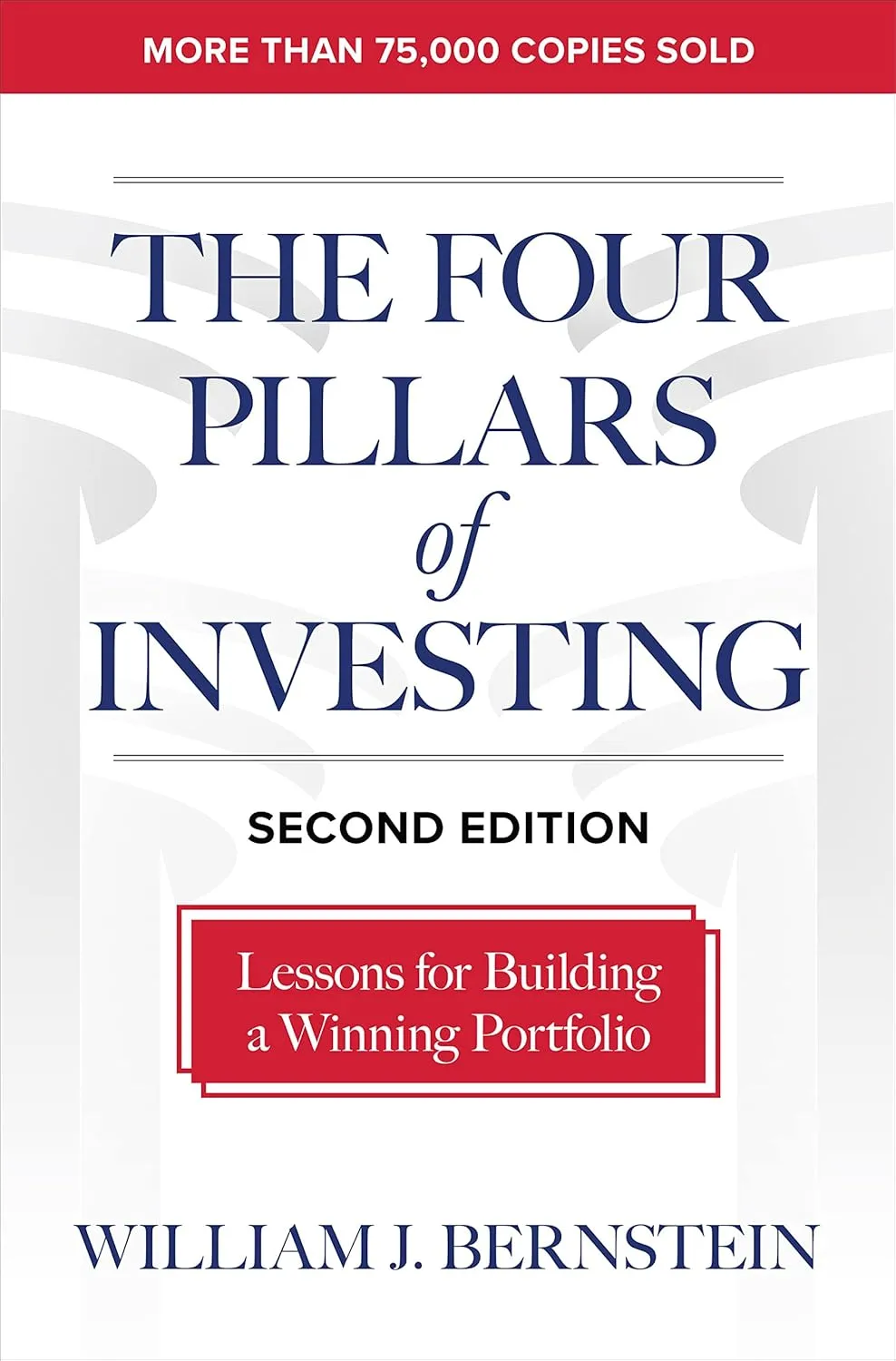
The Four Pillars of Investing: Lessons for Building a Winning Portfolio
by William J. Bernstein

Against the Gods: The Remarkable Story of Risk
by Peter L. Bernstein
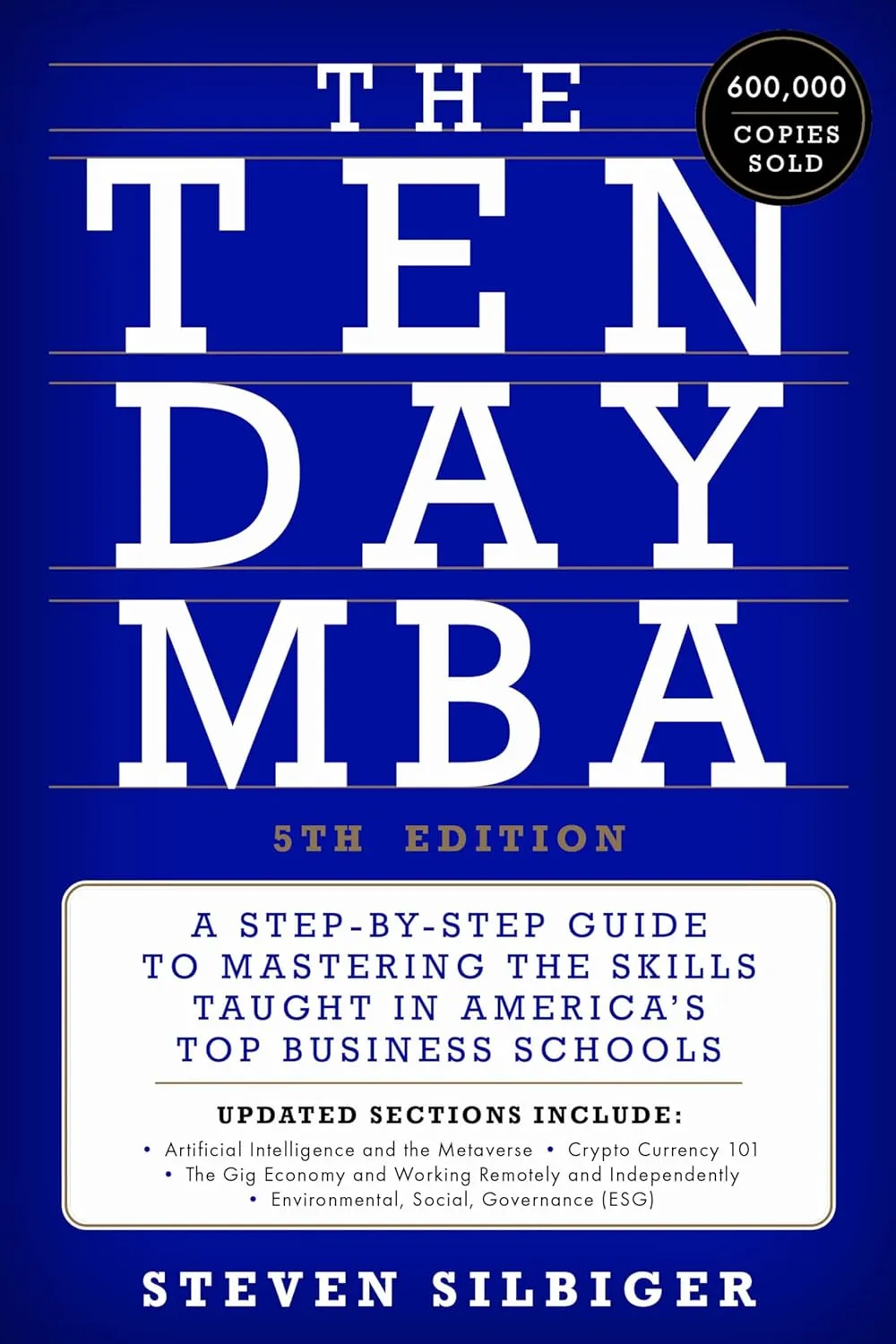
The Ten-Day MBA: A Step-by-Step Guide to Mastering the Skills Taught in America's Top Business Schools
by Steven Silbiger
Related Glossary Terms
Retirement
Retirement is the phase of life when you stop working for income and live off savings, pensions, and Social Security. Most Americans retire around age 62, but planning should start decades earlier.
Sequence of Returns Risk
Sequence of returns risk is the danger that poor investment returns early in retirement permanently damage a portfolio, even if average returns over the full period are strong. The order of returns matters, not just the average.
RMD
An RMD (Required Minimum Distribution) is the mandatory annual withdrawal the IRS requires from tax-deferred retirement accounts starting at age 73, with a 25% penalty for missed withdrawals.
Required Minimum Distribution
A Required Minimum Distribution (RMD) is the minimum amount you must withdraw from tax-deferred retirement accounts each year starting at age 73, as mandated by the IRS under SECURE 2.0 Act rules.
Deferred Compensation
Deferred compensation is a portion of an employee's earnings that is withheld and paid out at a later date, typically used by highly compensated executives to defer taxes and supplement retirement income beyond standard 401(k) limits.
FIRE
FIRE is a movement built on saving and investing 50 to 70 percent of your income so you can reach financial independence decades before the traditional retirement age of 65. The math relies on the 25x rule and a 4 percent safe withdrawal rate.
Recommended Podcasts

The Money Guy Show
by Brian Preston, CPA/CFP & Bo Hanson, CFA/CFP
Two fee-only financial advisors break down the Financial Order of Operations, a 9-step wealth-building framework. 617K YouTube followers and a 4.8 Apple rating.
The Long View
by Christine Benz, Amy Arnott & Ben Johnson
Morningstar's weekly deep-dive interview show on retirement, portfolio strategy, and fund analysis. 387 episodes, hosted by Christine Benz and the Morningstar research team.

Stacking Benjamins
by Joe Saul-Sehy & Josh 'OG' Bannerman, CFP
A former financial advisor and a CFP host a lighthearted show from Joe's mom's basement. Three episodes a week on investing, retirement, and behavioral finance.