*Disclosure: This article contains affiliate links. If you purchase through these links, we may earn a commission at no additional cost to you. We only recommend books we have personally read and genuinely believe in.
Quick Overview
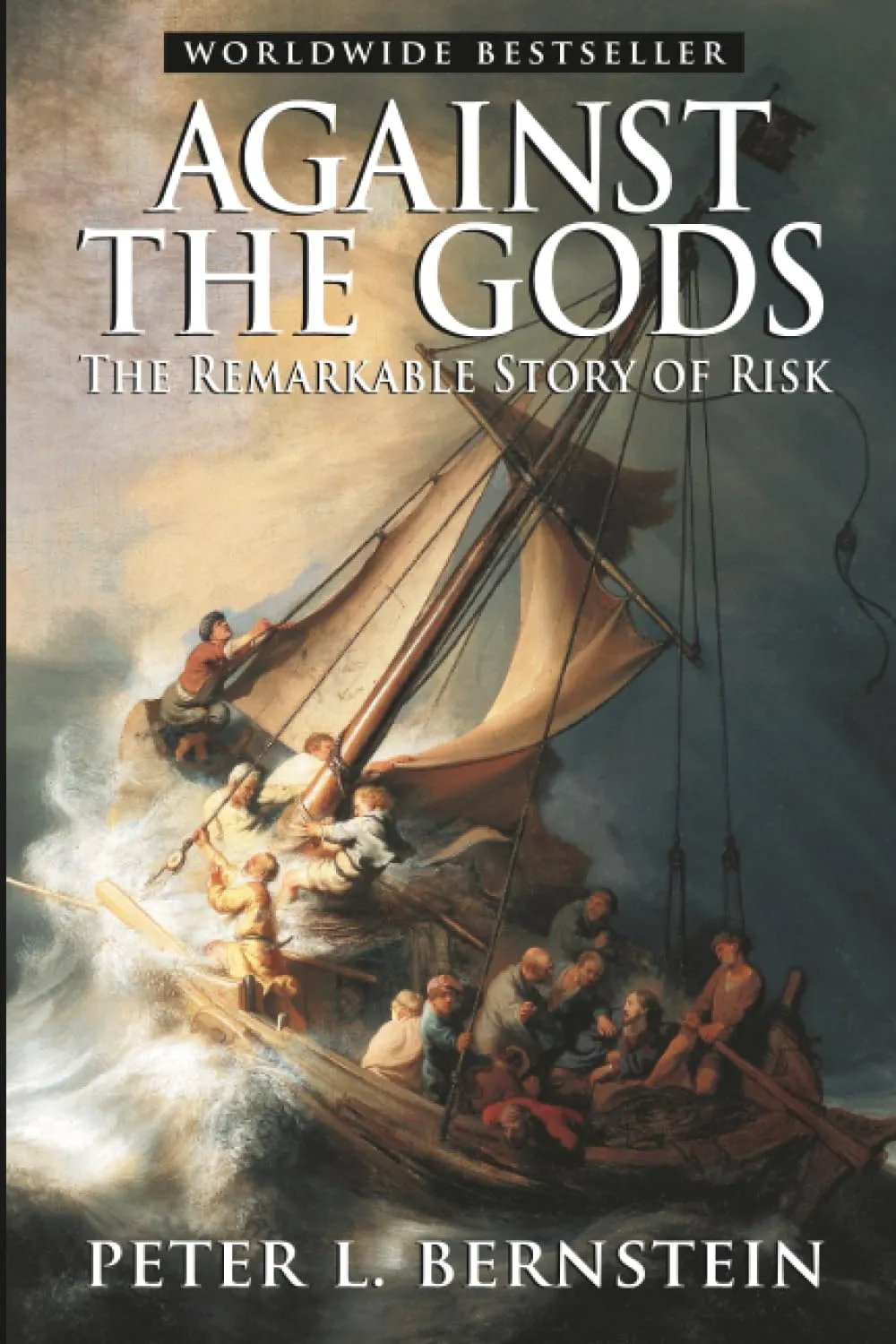
Most people think of risk as something to avoid. Peter Bernstein argues the opposite: the ability to measure and manage risk is the single greatest achievement of modern civilization. Without probability theory, there would be no insurance, no diversification, no options pricing, no retirement planning. Against the Gods traces this intellectual history from Greek dice games through Pascal and Fermat's correspondence in 1654 to the Black-Scholes formula in 1973. Published in 1996, it remains the only book that tells this story for a general audience.
Book Details
| Attribute | Details |
|---|---|
| Title | Against the Gods: The Remarkable Story of Risk |
| Author | Peter L. Bernstein |
| Publisher | Wiley |
| Published | 1996 |
| Pages | 384 |
| Reading Level | Intermediate |
| Amazon Rating | 4.5/5 stars |
Get Your Copy
Paperback: Buy on Amazon
Kindle: Buy on Amazon
About the Author
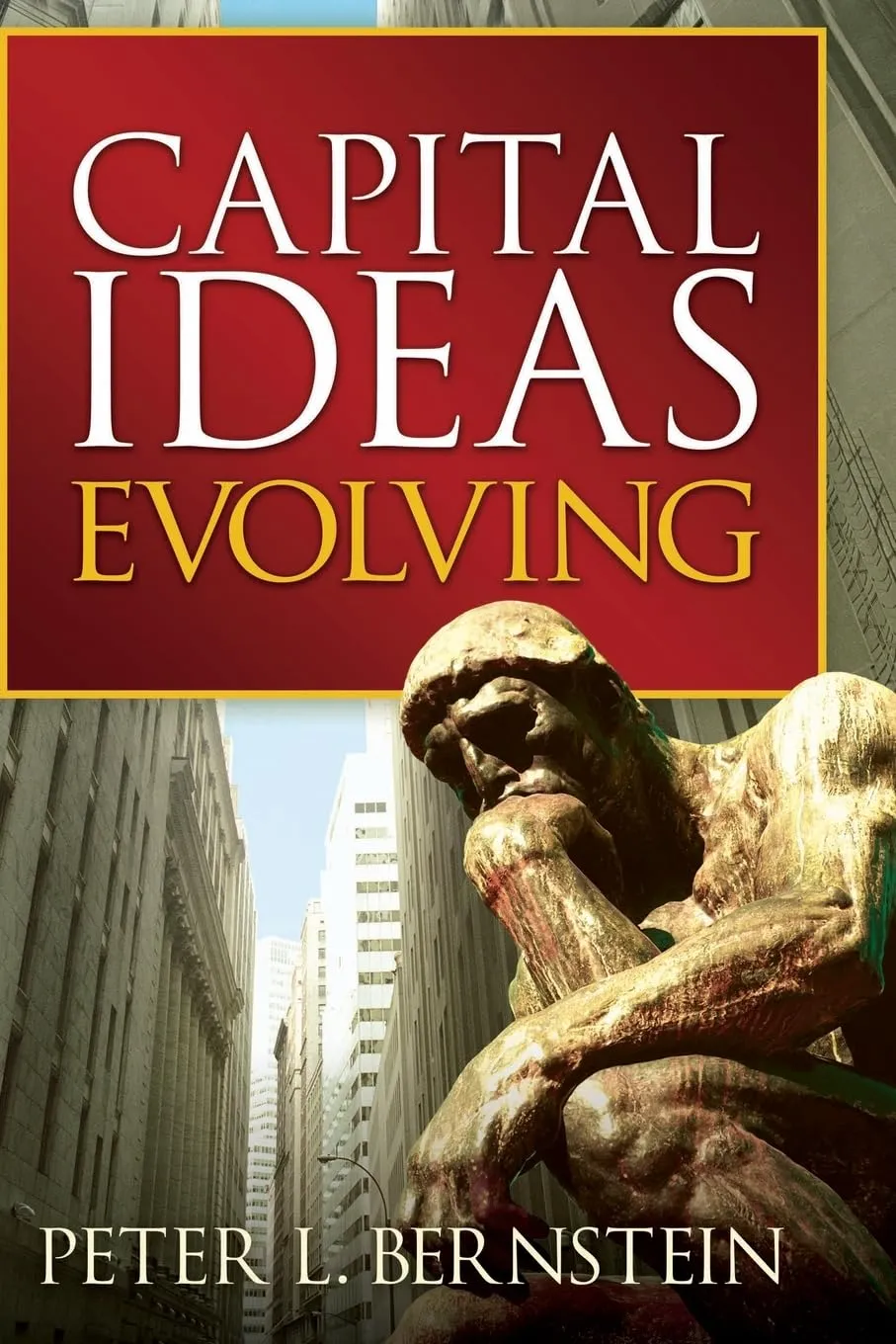
Peter Bernstein (1919-2009) founded Bernstein-Macaulay, an investment counseling firm, and later founded the economics consulting firm Peter L. Bernstein Inc. He edited the Journal of Portfolio Management for decades and wrote several books including Capital Ideas (the history of modern portfolio theory) and The Power of Gold. He was among the most widely respected figures in investment management for five decades.
What sets Bernstein apart from other financial historians is that he was a practitioner first. He managed real money, advised real clients, and understood the difference between theory and application. That practical grounding shows on every page.
The Central Argument
Bernstein's thesis: the ability to measure and manage risk separates modern civilization from the ancient world. The Greeks could not consistently predict outcomes because they had no systematic framework for probability. They attributed uncertain outcomes to the gods. The Renaissance mathematicians who invented probability theory gave humanity the tools to challenge the gods, to transform uncertainty into calculable risk.
The distinction that matters for investors:
| Concept | Definition | Example |
|---|---|---|
| Risk | Uncertainty that can be quantified with probabilities | A coin flip: 50% heads |
| Uncertainty | Unknown outcomes that cannot be assigned probabilities | What will oil prices be in 10 years? |
| True ignorance | We do not even know what we do not know | Unknown unknowns |
Most financial models deal with risk (quantifiable probability distributions). Most real investment decisions involve uncertainty (unquantifiable outcomes). Confusing the two, treating uncertain outcomes as if they were quantifiable, is a major source of financial model failure. A 2025 paper published in the Federal Reserve's finance and economics discussion series (Black Swans and Financial Stability) formalizes this distinction further, arguing that true black swans are fundamentally unknowable events that require resilience-based policy rather than better prediction tools.
The History of Probability: From Dice to Derivatives
The Ancient World: Randomness as Divine Will
Ancient cultures attributed uncertain outcomes to divine will. This was not mere superstition. Without a framework for probability, there was no alternative. The outcome of a battle, a harvest, or a voyage depended on factors too complex to systematically analyze.
Without probability theory, there could be no insurance (how do you price a policy without actuarial tables?), no options pricing (how do you value the right to buy something without expected value calculations?), and no modern portfolio theory (how do you diversify efficiently without correlation statistics?). All modern financial tools rest on probability foundations that did not exist before the Renaissance.
Luca Pacioli and the Problem of Points (1494)
Pacioli posed the first recorded probability problem in Summa de Arithmetica (1494): if a game of chance is interrupted before completion, how should the pot be divided between the two players?
This seems simple but is not. The correct answer requires calculating the probability each player would have won if the game had continued. Pacioli could not solve it correctly. It took another 160 years for Pascal and Fermat to provide the solution.
Pascal and Fermat: Probability Is Born (1654)
Blaise Pascal and Pierre de Fermat exchanged a series of letters in 1654 solving the problem of points. Their correspondence established the mathematical foundation of probability theory.
Pascal extended probability theory to the question of religious belief: even if the probability that God exists is small, the infinite payoff (eternal life) multiplied by any positive probability exceeds any finite cost of piety. This was one of the first formal expected value calculations applied to a real decision.
Expected Value = Sum of (Probability of outcome x Value of outcome)This formula underlies every investment decision. The expected return of a portfolio is the probability-weighted sum of all possible returns.
Daniel Bernoulli and Utility Theory (1738)
Bernoulli identified a puzzle: why would a rational gambler ever decline a fair bet? He realized that a dollar gained is worth less to a wealthy person than a dollar lost. The marginal utility of wealth diminishes.
The St. Petersburg Paradox illustrates this. A game: flip a fair coin. If heads on the first flip, win $2. If heads on the second flip, win $4. Continue until tails: win $2 to the power of n. The expected value is infinite. Yet no rational person would pay a large amount to play this game.
Bernoulli's resolution: the utility of wealth increases with wealth at a decreasing rate. The 10,000th dollar is worth less to you than the first. This is why loss aversion is rational for most investors. Losing $100,000 causes more utility loss than gaining $100,000 causes utility gain. This justifies maintaining diversification even when a concentrated bet has higher expected value.
Gauss and the Normal Distribution (1809)
Carl Friedrich Gauss formalized the bell curve (normal distribution), the foundation of most statistical analysis in finance.
If annual stock returns follow a normal distribution with mean 10% and standard deviation 20%:
| Return Range | Probability |
|---|---|
| Between -10% and +30% | 68% (within 1 standard deviation) |
| Between -30% and +50% | 95% (within 2 standard deviations) |
| Below -30% or above +50% | 5% |
| Below -50% (beyond 2 SD) | ~2.5% |
Here is where Bernstein's book intersects with one of the most active areas of financial research today. Real investment returns have fat tails: extreme events happen far more frequently than the normal distribution predicts. The 1987 crash was a 22-sigma event under normal distribution assumptions. Statistically impossible, yet it happened. LTCM's models used normal distributions and massively underestimated tail risks.
Nassim Taleb's critique, addressed in Fooled by Randomness and The Black Swan, extends this point: financial returns follow power-law distributions with far fatter tails than the normal distribution. Recent research has only strengthened this case. A 2025 study published in Risks journal (The Regress of Uncertainty and the Forecasting Paradox) proves mathematically that layered uncertainty about our own ignorance inevitably thickens statistical tails, even in perceived thin-tailed environments. The authors call this the Forecasting Paradox: the future is structurally more extreme than the past. This means Bernstein's warning about normal distribution assumptions is not just historically interesting. It is a live research frontier.
A 2025 paper from Graham Capital (Tail Risk as a Structural Feature of Modern Markets) argues that tail risk is no longer episodic but embedded in market structure, driven by the return of positive stock-bond correlation and rising volatility persistence. Standard tools like covariance and VIX provide descriptive insight but lack predictive power in fat-tailed environments.
Francis Galton and Regression to the Mean (1886)
Francis Galton discovered that children of unusually tall fathers tend to be shorter than their fathers, but taller than average. He called this regression to the mean: the tendency of extreme values to be followed by less extreme values.
| Domain | The Mean-Reversion Pattern |
|---|---|
| Corporate earnings | Unusually high margins attract competition; margins revert toward industry average |
| Investment returns | Top-performing funds in one period rarely remain top-performing |
| P/E ratios | Market P/E above 25x historically reverts toward long-run average of ~15x |
| Country economic growth | Periods of exceptional growth attract capital; growth moderates |
| Interest rates | Extreme rate levels attract policy response |
This is one of the most important and most often ignored principles in investing. The investment that has gone up the most recently is not the one most likely to continue outperforming. It may be the most likely to underperform as it regresses to the mean. For a practical application, see our guide on how often you should check your investment portfolio.
Modern Portfolio Theory
Harry Markowitz and Diversification (1952)
Harry Markowitz's 1952 paper Portfolio Selection introduced mean-variance optimization, the mathematical framework for constructing efficient portfolios.
The key insight: combining assets with imperfect correlation reduces portfolio volatility without proportionally reducing expected return. This is the only free lunch in finance.
| Asset Correlation | Diversification Benefit |
|---|---|
| +1.0 (perfect positive) | None: assets move identically |
| +0.5 (moderate positive) | Moderate: some reduction in volatility |
| 0 (uncorrelated) | Good: significant volatility reduction |
| -0.5 (moderate negative) | Excellent: substantial volatility reduction |
| -1.0 (perfect negative) | Maximum: variance can be eliminated |
A portfolio of 30 stocks drawn from different industries and geographies will have dramatically lower volatility than any individual stock, even if the individual stocks are themselves volatile. The volatility reduction is free in the sense that it does not require reducing expected returns.
William Sharpe and the Capital Asset Pricing Model (1964)
Sharpe extended Markowitz's work to determine what expected return should be required for any given level of systematic risk.
Expected Return = Risk-Free Rate + Beta x (Market Return - Risk-Free Rate)Beta measures how much a stock moves with the market. A beta of 1.5 means the stock moves 1.5% for every 1% market move.
The practical limitation: CAPM assumes markets are efficient, that all investors have the same information and expectations, and that beta fully captures risk. All three assumptions are approximately wrong. Beta is a useful risk measure but not a complete one.
Fischer Black, Myron Scholes, and Options Pricing (1973)
Black-Scholes solved the problem of how to price an option: the right but not the obligation to buy or sell an asset at a specific price.
The breakthrough insight: a perfectly hedged portfolio of stock and options has no risk. A riskless portfolio should earn the risk-free rate. This allows pricing the option without knowing the expected return of the stock. You only need the volatility of the stock's price.
| Input | Increase means Call Price |
|---|---|
| Stock price (S) | Increases |
| Strike price (K) | Decreases |
| Time to expiration (T) | Increases |
| Volatility | Increases significantly |
| Risk-free rate | Increases slightly |
The model assumes constant volatility and log-normally distributed returns. In reality, volatility is not constant (it spikes during crises) and returns have fat tails. The volatility smile (implied volatility is higher for out-of-the-money options than at-the-money) is evidence that market participants adjust for these limitations.
The Fundamental Investment Lessons
Lesson 1: Risk Cannot Be Eliminated, Only Transformed
Every financial innovation in history, from insurance to diversification, transforms risk rather than eliminating it. Insurance shifts risk from individuals to pools. Futures shift price risk from producers to speculators. Diversification converts company-specific risk into market risk.
Understanding what risk has been transformed to, and who is bearing it, is essential for any investor. When you buy a bond, you have transformed equity risk into credit risk and interest rate risk. When you buy a derivative, you have transformed price risk into counterparty risk. The risk does not disappear. It moves.
Lesson 2: Probability Theory Enables Decision-Making Under Uncertainty
Before probability theory, extreme uncertainty made rational financial planning nearly impossible. Now we can calculate expected values, confidence intervals, and scenario probabilities. This allows systematic comparison of alternatives under uncertainty, the foundation of every investment decision.
Lesson 3: Normal Distribution Assumptions Underestimate Tail Risk
The greatest failures of financial models (LTCM, 2008 crisis CDO models, bank VaR models) were caused by underestimating the probability of extreme events. Fat tails are a fundamental property of financial markets. The 2025 Forecasting Paradox research shows this is not just an empirical observation but a mathematical inevitability: layered uncertainty about our own models thickens tails structurally. Maintain cushions against scenarios your models say are nearly impossible.
Lesson 4: Regression to the Mean Is Persistent and Exploitable
In the long run, extreme performance in any domain tends to revert toward average. Overpaying for recent winners is systematically expensive. Undervalued laggards tend to recover over time. Margins that are unusually high tend to attract competition. This principle is the basis for rebalancing your portfolio: selling recent winners and buying recent losers is not a moral judgment, it is a mechanical application of regression to the mean.
Strengths & Weaknesses
What We Loved
Areas for Improvement
Who Should Read This Book
Highly Recommended For
Probably Not For
Comparison to Similar Books
| Book | Focus | Depth | Readability |
|---|---|---|---|
| Against the Gods | History of probability and risk | High | Medium |
| Fooled by Randomness (Taleb) | Fat tails and cognitive biases | Medium | High |
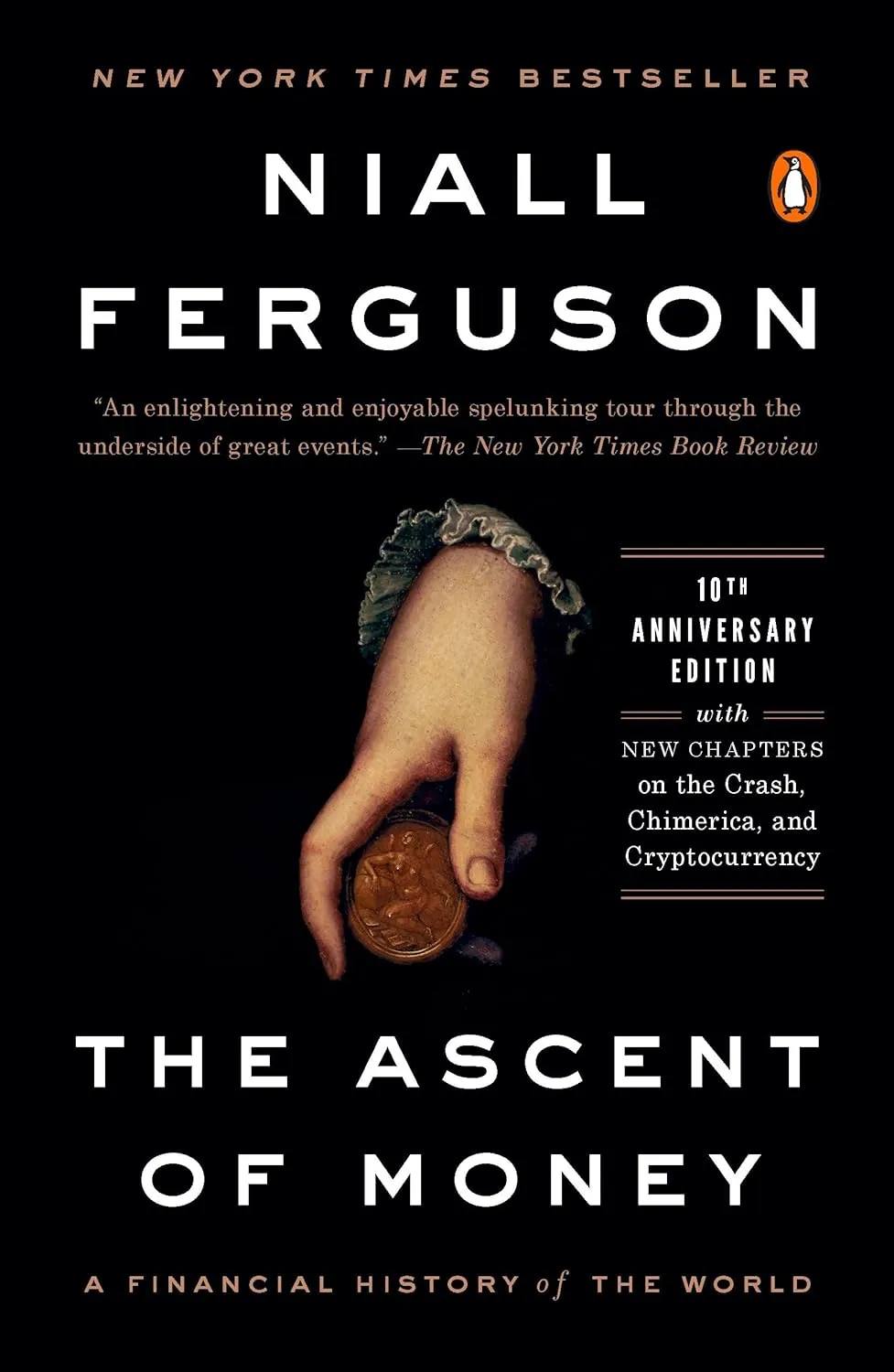
| The Ascent of Money (Ferguson) | Broader financial history | High | High |
| Manias, Panics, and Crashes (Kindleberger) | History of financial crises | High | Medium |
Read Against the Gods for the intellectual foundations. Read Taleb for the critique of those foundations. Read Kindleberger for the pattern of crises that result when the foundations crack.
Implementation Guide
How to Apply Bernstein's Lessons
Step 1: Understand your risk budget
Step 2: Stress-test for fat tails
Step 3: Apply regression to the mean
Step 4: Respect the difference between risk and uncertainty
Frequently Asked Questions
Q: Is this book still relevant given that it was published in 1996?
A: Very much so. The intellectual history has not changed. What has changed is that the 2008 crisis and recent fat-tail research (including the 2025 Forecasting Paradox paper) have made Bernstein's warnings about normal distribution assumptions even more urgent. The book's gaps are in what came after 1996, not in its account of what came before.
Q: Do I need a math background to understand this?
A: No. Bernstein explains every concept in plain language. The Pascal and Fermat correspondence, Bernoulli's utility theory, and Black-Scholes are all presented without requiring you to do the math. You need to follow the logic, not solve the equations.
Q: Should I read this before or after Taleb's Fooled by Randomness?
A: Read Bernstein first. He gives you the foundations. Then read Taleb, who argues that those foundations are more fragile than Bernstein suggests. The two books together give you a complete picture.
Final Verdict
Rating: 4.6/5
Against the Gods is the intellectual history of modern finance. Its account of probability theory's development, Markowitz's diversification insight, and the limits of normal distribution assumptions provides context that no other book offers. The 2025 research on the Forecasting Paradox and structural tail risk has made Bernstein's core warning more relevant, not less. Every serious investor benefits from understanding where their tools came from and where those tools break down.
Read it for the history. Then read Taleb for what the history got wrong. Then keep a bigger cash cushion than your spreadsheet says you need.
Get Your Copy
Paperback: Buy on Amazon
Kindle: Buy on Amazon
Prices current as of publication date. Free shipping available with Prime.