*Disclosure: This article contains affiliate links. If you purchase through these links, we may earn a commission at no additional cost to you. We only recommend books we genuinely believe in.
Quick Overview
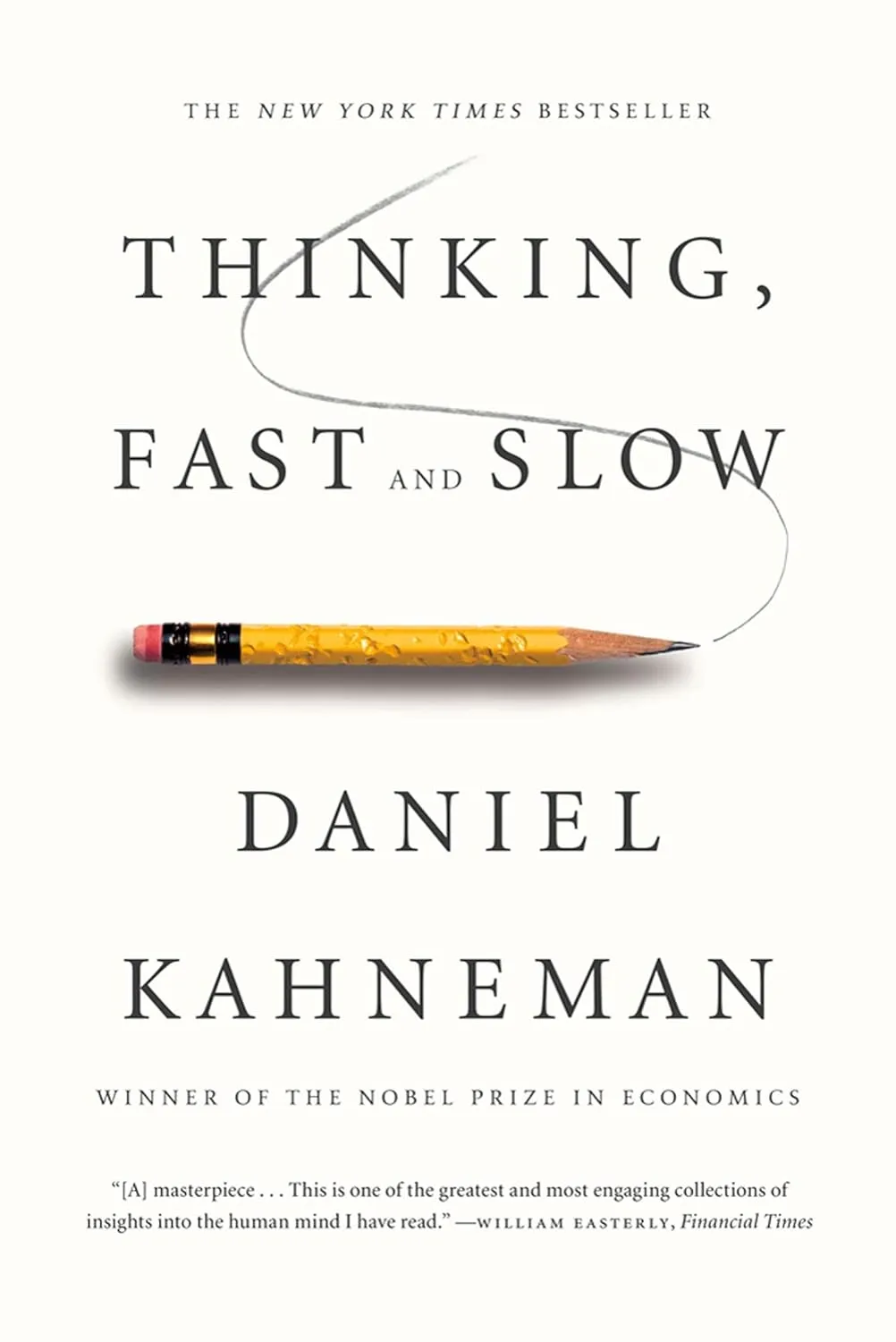
Daniel Kahneman spent 40 years studying how humans make decisions and won the 2002 Nobel Prize in Economics for that work. He died on March 27, 2024, at age 90, leaving behind a body of research that fundamentally reshaped economics, finance, psychology, and medicine. Thinking, Fast and Slow is his summary of a lifetime of research into the two cognitive systems that govern human judgment. For investors, it is the scientific foundation beneath every behavioral finance observation: here is the mechanism that causes panic selling, overconfidence, loss aversion, and the dozens of other cognitive errors that destroy returns.
Book Details
| Attribute | Details |
|---|---|
| Title | Thinking, Fast and Slow |
| Author | Daniel Kahneman |
| Publisher | Farrar, Straus and Giroux |
| Published | 2011 |
| Pages | 499 |
| ISBN-13 | 978-0374533557 |
| Reading Level | Intermediate |
| Amazon Rating | 4.6/5 stars |
Get Your Copy
Paperback: Buy on Amazon
Kindle: Buy on Amazon
Audiobook: Buy on Amazon
About the Author
Daniel Kahneman (1934-2024) was the Eugene Higgins Professor of Psychology Emeritus at Princeton University. He spent most of his career working alongside Amos Tversky, with whom he developed Prospect Theory, the most influential behavioral economics framework ever created. Their collaboration produced a Nobel Prize in Economics in 2002. Tversky died in 1996 and could not share the prize, but Kahneman consistently credited him as an equal contributor.
Princeton's obituary described him as "a giant in the field" whose work influenced disciplines ranging from finance to public health. The AP's obituary noted that his research "upended economics by demonstrating the extent to which people abandon logic and leap to conclusions."
In 2021, Kahneman co-authored Noise: A Flaw in Human Judgment with Olivier Sibony and Cass Sunstein, extending his research into the variability of professional judgments. He remained intellectually active until his death, engaging publicly with the replication crisis that challenged some of the studies cited in Thinking, Fast and Slow.
The Two Systems
The book's organizing framework is the distinction between two modes of thinking:
| Feature | System 1 | System 2 |
|---|---|---|
| Speed | Fast | Slow |
| Effort | Effortless | Effortful |
| Conscious? | No | Yes |
| Reliable? | Often wrong | Usually right (when engaged) |
| Examples | Recognizing a face; reading emotion; driving on a familiar road | Completing a tax form; comparing insurance policies; calculating 47 x 83 |
System 1 is always running. It generates intuitions, impressions, and judgments automatically and constantly. System 2 is lazy by design: it requires energy and is easily fatigued. The critical problem is that System 2 often rubber-stamps System 1's conclusions without scrutinizing them.
The investment implication: Almost every financial mistake comes from allowing System 1 to make decisions that require System 2. Panic selling during a bear market is pure System 1. The correct behavior (doing nothing or buying more) requires overriding System 1 with deliberate System 2 reasoning.
Part I: Two Systems
Cognitive Ease
When information is easy to process, System 1 assigns it a positive feeling. This has dangerous implications:
Kahneman's experiment: groups shown the same investment volatility data in different formats (table vs. narrative) made systematically different choices based solely on presentation, not content.
Anchoring
One of the most reliably reproduced cognitive biases in economics. When people make numerical estimates, they anchor on the first number they encounter, even when it is clearly irrelevant.
Classic experiment:
Group A's average estimate: 86 million. Group B's average estimate: 45 million. The random anchor contaminated both estimates dramatically.
Investment anchoring:
Availability Heuristic
People judge the probability of events by how easily examples come to mind. Events that are vivid, recent, or emotionally powerful are overweighted.
For investors: The availability heuristic causes investors to sell stocks after crashes (recent losses are vivid) and buy after runs (recent gains are vivid). This is precisely backwards.
Part II: Heuristics and Biases
Representativeness
People judge probability by how much something resembles a prototype rather than base rate statistics.
The Linda Problem (the most famous experiment in behavioral economics):
Linda is 31, single, outspoken, and very bright. As a student she was deeply concerned with discrimination and social justice.
Which is more probable?
Most people choose B. This is logically impossible: a conjunction of two events cannot be more probable than either event alone. But B feels more representative of Linda's description, so System 1 prefers it.
Investment application: When an investment narrative is compelling (good story, relatable founder, exciting technology), investors assign it higher probability of success than the base rate of similar businesses warrants. The story overrides the statistics.
Regression to the Mean
Exceptional performance is usually followed by more ordinary performance. This is a mathematical necessity when outcomes contain any random component. Yet humans consistently attribute regression to the mean to specific causes.
Investment application:
The base rate is your best predictor. Dramatic recent performance is your worst.
Part III: Overconfidence
The Planning Fallacy
People systematically underestimate the time, cost, and risk of future plans while overestimating the benefits.
| Project Type | Average Overrun vs. Estimate |
|---|---|
| Software projects | 189% over budget |
| Large construction projects | 45% over budget |
| Personal financial goals | Achieved 30-40% of the time on original timeline |
| New business survival (5 years) | ~50% vs. entrepreneur belief of ~90% |
The Illusion of Understanding and Narrative Fallacy
Humans construct coherent stories from random events. After the fact, every market correction seems inevitable and clearly predictable. Before the fact, almost no one predicted it.
The hindsight bias: In 2006, almost no mainstream economist predicted the 2008 financial crisis. After 2008, commentators wrote confidently about how obvious the warning signs were. The certainty of hindsight creates an illusion of predictability that does not exist in real time.
2025 Research: Overconfidence in the AI Era
A 2025 study published in the Journal of Strategic and Operations Management investigated investor overconfidence in the age of AI. The findings are directly relevant to Kahneman's framework:
A separate 2025 NBER paper found that large language models exhibit systematic behavioral biases in economic decisions. In preference-based tasks, AI responses become more human-like as models become more advanced. The biases Kahneman documented in humans are now appearing in the AI tools investors use to make decisions.
A 2025 study on meme stock valuation using panel data from 28 meme stocks (2019-2024) confirmed that overconfidence, measured by trading volume changes, has a significant positive relationship with firm valuation. Investors who overestimate their predictive ability drive pricing distortions in speculative assets.
Part IV: Choices - Prospect Theory
This is the section that won Kahneman the Nobel Prize. He and Tversky showed that people do not evaluate outcomes in terms of final wealth (as classical economics assumes) but in terms of gains and losses relative to a reference point.
The Value Function
Key properties:
Investment consequence:
| Behavior | Driven By | Result |
|---|---|---|
| Selling winners too early | Wanting to lock in a gain before it disappears | Misses continued appreciation |
| Holding losers too long | Refusing to realize a loss | Compounds losses |
| Selling during crashes | Losses feel unbearable | Locks in losses, misses recovery |
| Avoiding equities entirely | Loss aversion greater than rational risk tolerance | Insufficient long-term returns |
The Fourfold Pattern
| Probability | Type of Outcome | Behavior | Example |
|---|---|---|---|
| High | Gain | Risk averse (take the sure thing) | Sell a winning stock early |
| Low | Gain | Risk seeking (buy the lottery) | Buy long-shot penny stocks |
| High | Loss | Risk seeking (avoid locking in loss) | Hold a losing stock too long |
| Low | Loss | Risk averse (buy insurance) | Overpay for financial protection |
This pattern explains why investors simultaneously hold losing stocks too long (high probability loss, risk seeking) while selling winners too early (high probability gain, risk averse). The optimal behavior in both cases is reversed.
Part V: The Two Selves
Experiencing Self vs. Remembering Self
Kahneman distinguishes between:
We make decisions based on what the remembering self will think, not what the experiencing self actually feels. The remembering self uses shortcuts: the peak intensity of an experience and its final moments (the "peak-end rule") matter far more than duration.
Investment application:
The Replication Crisis: What Survives
Kahneman himself acknowledged the replication crisis openly. In 2012, he wrote an open letter to priming researchers warning of a "train wreck looming" after several flagship priming studies failed replication. This intellectual honesty is itself a model for how scientists should respond to challenges to their work.
What has survived replication:
| Finding | Status | Evidence |
|---|---|---|
| Loss aversion | Robust | Consistently replicated across cultures and contexts |
| Anchoring | Robust | One of the most reliably reproduced effects in psychology |
| Availability heuristic | Robust | Confirmed in multiple large-scale replications |
| Framing effects | Robust | 2025 replication with 1,697 participants confirmed framing effects persist even with matched descriptions |
| Prospect Theory | Robust | Core framework remains intact |
| Behavioral priming | Partially failed | Some effects exist at smaller magnitudes; many original studies did not replicate |
| Ego depletion | Mixed | 2025 multi-lab study with 2,078 participants found effects (d=0.31-0.35) using more intensive manipulation |
A 2025 Nature study that had independent reanalysts reanalyze 100 published studies found that 74% of reanalyses reached the same conclusion as the original, though only 34% produced the same result within a tight tolerance. This suggests that while specific effect sizes may be less precise than originally reported, the directional findings of behavioral research remain largely valid.
The bottom line for investors: The core findings that matter for investment decisions (loss aversion, anchoring, overconfidence, availability bias) are on solid empirical ground. The specific priming studies in early chapters of the book should be read with caution, but the investment implications drawn from the robust findings are sound.
Practical Investment Checklist Derived from the Book
Before Making Any Investment Decision
| Check | Question |
|---|---|
| Anchoring | Am I anchored to my purchase price, a recent price, or an analyst's target? |
| Availability | Is my assessment influenced by recent vivid events (crash, bull market, news)? |
| Representativeness | Am I ignoring the base rate in favor of a compelling story? |
| Overconfidence | What is my actual track record on similar decisions? |
| Loss aversion | Would I make the same decision if starting from zero today? |
| Planning fallacy | Have I stress-tested my assumptions against base rates? |
Strengths & Weaknesses
What We Loved
Areas for Improvement
Who Should Read This Book
Highly Recommended For
Probably Not For
Comparison to Similar Books
| Book | Focus | Depth | Readability |
|---|---|---|---|
| Thinking, Fast and Slow | Complete cognitive bias framework | Very High | Medium |
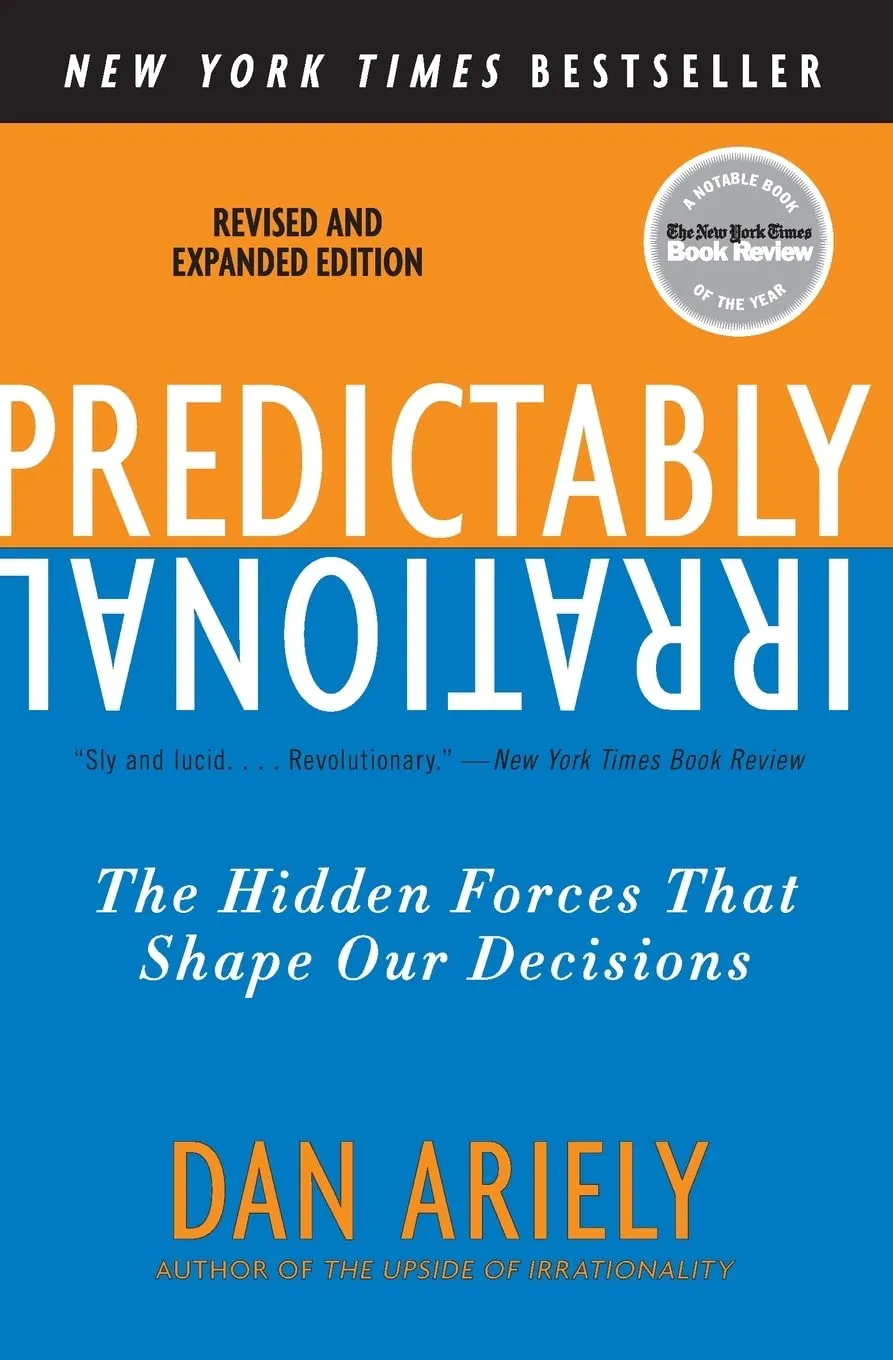
| Predictably Irrational | Consumer behavior biases | Medium | High |
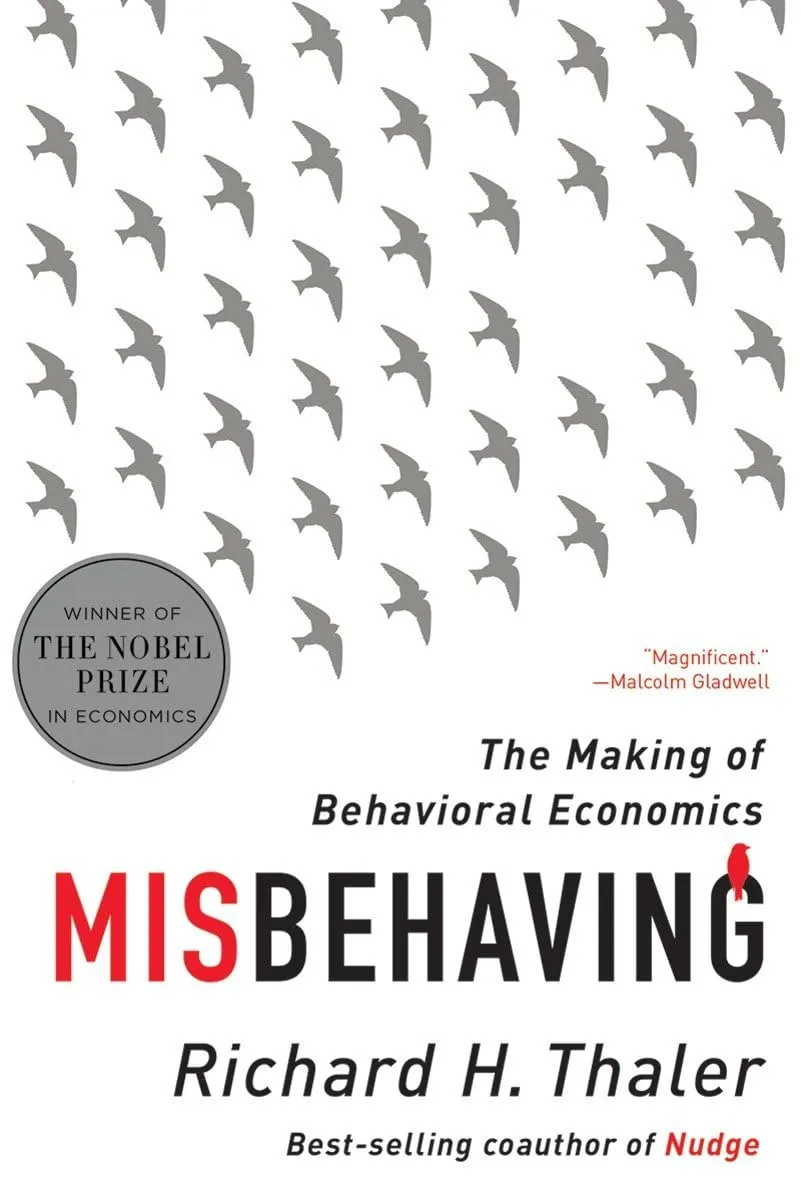
| Misbehaving | Economic irrationality narrative | Medium | High |
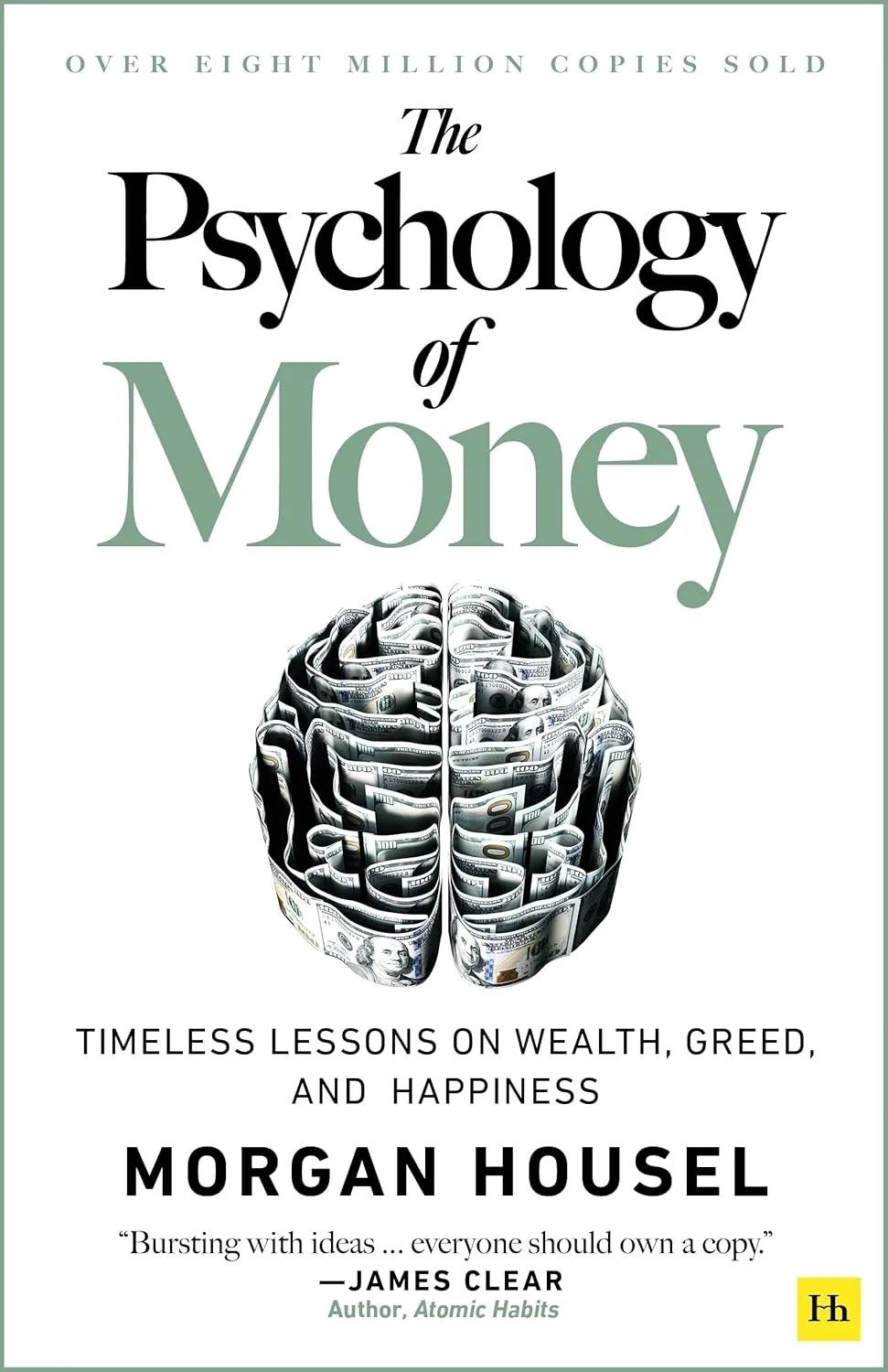
| The Psychology of Money | Financial psychology mindset | Medium | Very High |
| Your Money and Your Brain | Investor-specific biases | Medium | High |
Implementation Guide
30-Day Reading and Application Plan
Week 1: Read Parts I and II (Two Systems, Heuristics and Biases)
Week 2: Read Parts III and IV (Overconfidence, Prospect Theory)
Week 3: Read Part V and the appendices
Week 4: Build your decision checklist
Frequently Asked Questions
Q: Do I need a psychology background to read this?
A: No. Kahneman explains each concept from first principles and consistently uses intuitive experiments to illustrate them. No prior background is required.
Q: Which chapters are most important for investors?
A: Part II (Heuristics and Biases, especially anchoring and availability), Part III (Overconfidence), and Part IV (Prospect Theory) are most directly applicable to investing. These cover roughly pages 100-340.
Q: Has Kahneman's research held up in the replication crisis?
A: Core findings like loss aversion, anchoring, and availability are robustly replicated. Some specific experiments (particularly the "priming" studies in earlier chapters) have had replication problems. A 2025 framing effects replication with 1,697 participants confirmed that framing effects persist even when option descriptions are matched and complete. The major behavioral finance applications are on solid ground.
Q: What should I read alongside this book?
A: The Psychology of Money by Housel for accessible application to personal finance. Misbehaving by Richard Thaler for the story of how behavioral economics changed policymaking. Kahneman's Noise (2021) for the extension of his research into professional judgment variability.
Q: How does Kahneman's work apply to AI-assisted investing?
A: A 2025 NBER study found that large language models exhibit the same behavioral biases as humans in preference-based tasks. As more investors use AI tools for investment decisions, understanding these biases becomes more important, not less. The AI does not eliminate Kahneman's biases. It inherits them.
Final Verdict
Rating: 4.7/5
Thinking, Fast and Slow is one of the most important books written in the last 50 years for anyone making decisions under uncertainty, which is every investor. Its insights into loss aversion, anchoring, overconfidence, and the narrative fallacy explain more about why investment returns disappoint than any market analysis. Kahneman's death in 2024 cemented his legacy, but the research he left behind continues to shape how we understand financial decision-making.
The replication crisis challenged some specific studies but validated the core findings that matter for investors. Read it once for the concepts and return to it regularly as a checklist.
Get Your Copy
Paperback: Buy on Amazon
Kindle: Buy on Amazon
Audiobook: Buy on Amazon
Prices current as of publication date. Free shipping available with Prime.