*Disclosure: This article contains affiliate links. If you purchase through these links, we may earn a commission at no additional cost to you. We only recommend books we genuinely believe in.
Quick Overview
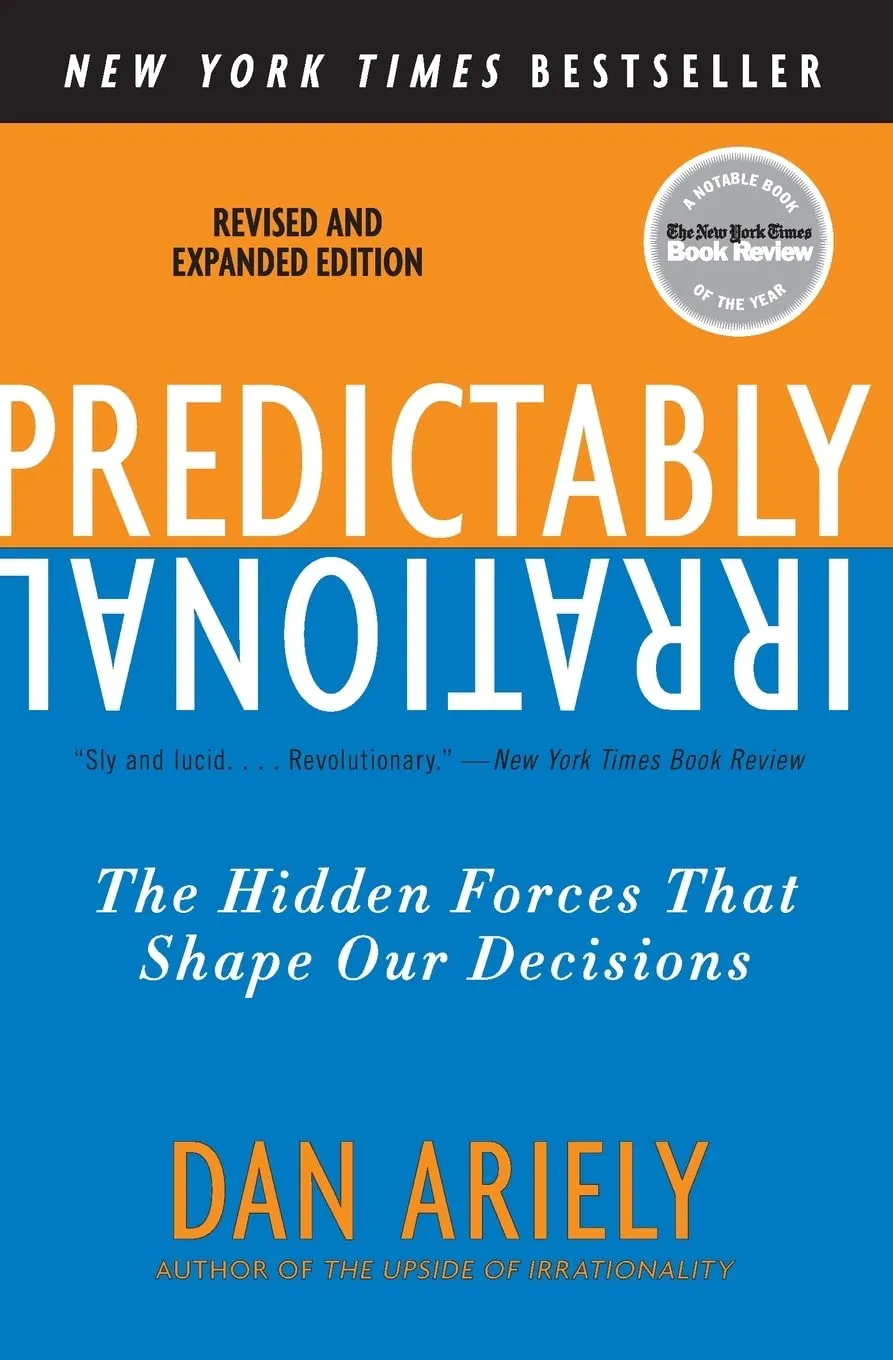
You walk into a store and see a "buy two, get one free" sign. You came in for one item. You leave with three. Why? Dan Ariely spent years designing experiments to answer exactly this kind of question. Predictably Irrational collects his most striking findings: we are not randomly irrational (which would be manageable) but systematically irrational in ways that are consistent, predictable, and exploitable by marketers, by financial institutions, and by ourselves once we understand the mechanisms. For anyone managing money, the book is a map of the psychological terrain you navigate every time you make a financial decision. The replication crisis has challenged some of the specific effect sizes Ariely reported, but the core patterns he describes have held up remarkably well.
Book Details
| Attribute | Details |
|---|---|
| Title | Predictably Irrational |
| Author | Dan Ariely |
| Publisher | HarperCollins |
| Published | 2008 (Revised and Expanded 2009) |
| Pages | 368 |
| Reading Level | Beginner to Intermediate |
| Amazon Rating | 4.5/5 stars |
Get Your Copy
Paperback: Buy on Amazon
Kindle: Buy on Amazon
Audiobook: Buy on Amazon
About the Author
Dan Ariely was severely burned in an accident at age 18 and spent three years recovering in a hospital. During that time, he became fascinated by the irrational aspects of medical care: why nurses administered painful treatments quickly (which was more painful overall) rather than slowly (which was less painful) purely for efficiency. That observation launched a career studying the gap between how we think we make decisions and how we actually make them.
He is the James B. Duke Professor of Psychology and Behavioral Economics at Duke University and a founding member of the Center for Advanced Hindsight. His research has been published in top academic journals including the Quarterly Journal of Economics, the Journal of Behavioral Decision Making, and Management Science.
The Central Thesis
Classical economics assumes humans are rational agents who maximize utility. Ariely's research demonstrates that we are systematically irrational in specific, predictable ways. The good news: because the irrationality is predictable, it can be anticipated, understood, and partially corrected.
The financial stakes of predictable irrationality:
| Irrational Behavior | Typical Annual Cost |
|---|---|
| Paying credit card minimums | $500-$2,000 |
| Anchoring to arbitrary retail prices | $300-$1,000 |
| "FREE" trapping (buying things to get free shipping) | $200-$500 |
| Keeping subscription services out of loss aversion | $200-$600 |
| Overvaluing owned possessions (endowment effect) | Opportunity cost |
| Poor retirement contribution due to default inaction | $50,000+ over career |
Key Chapters and Their Financial Applications
Chapter 1: The Truth About Relativity
The Experiment: Ariely offered subjects three subscription options for The Economist:
Nobody chose print only ($125 when web+print was the same price). But its presence made web+print seem like a bargain. Remove the print-only option and web subscriptions jumped dramatically.
The financial trap: anchoring and decoy pricing
You do not evaluate value in absolute terms. You evaluate it relative to nearby alternatives. Retailers exploit this through:
| Technique | Example | How It Works |
|---|---|---|
| Decoy pricing | Small/Medium/Large coffees at $2/$2.75/$3 | Medium exists to make Large look like value |
| Price anchoring | "Was $299, Now $149" | The $299 anchor makes $149 feel cheap |
| Bundle anchoring | "3 for $10" vs. "$3.50 each" | Creates pressure to buy more than needed |
| Reference pricing | Showing MSRP vs. sale price | MSRP is arbitrary but powerfully anchors perception |
Investment application: Investors anchor to a stock's 52-week high or their purchase price. These numbers are irrelevant to intrinsic value. The market does not care what you paid. Value the business; ignore your cost basis.
Chapter 2: The Fallacy of Supply and Demand
The Experiment: Subjects were asked whether they would pay their Social Security number (as a dollar amount) for various goods, then bid on the same goods in an auction. People with higher Social Security numbers consistently bid more.
A random 9-digit number became an anchor for their willingness to pay.
Implications:
The first price you encounter for any financial product becomes a reference point that shapes all subsequent evaluations. This means:
Counter-strategy: Deliberately research objective benchmarks before any significant financial negotiation. What is the actual going rate? What do comparable investments cost? Start from data, not from the first number presented.
Chapter 3: The Cost of Zero Cost
The Experiment: Subjects were offered a choice:
Most chose the Lindt truffle (rational, better value). Then the prices were dropped by 1 cent:
Suddenly most chose the free Hershey's Kiss, even though the relative value of the Lindt truffle had not changed.
FREE is not a discount. It is a different emotional category.
Financial traps involving FREE:
| Trap | How It Works | Real Cost |
|---|---|---|
| Free shipping threshold | Buy $30 more to avoid $5 shipping | You spend $25 net to save $5 |
| Free gift with purchase | Buy $100 product to get $20 gift | Often overpriced product anyway |
| Free trial subscriptions | Hard to cancel, continue at full price | Average consumer forgets 40% of trials |
| "No interest for 12 months" | FREE financing triggers overbuying | Balloon payment or rate trap at 12 months |
| Free advice from commission-based advisor | Appears free | Paid through product sales |
The most dangerous financial product in American households is the "FREE checking account" with a debit card attached, which generates $35 overdraft fees and stealth charges that cost billions annually. Use our credit card interest calculator to see how much these "free" banking products actually cost you.
Chapter 4: The Cost of Social Norms
The Experiment: Ariely found that adding a small payment to something people do for social reasons (helping a neighbor move, volunteering) can actually reduce the behavior. Social norms (help your neighbor) and market norms (pay $10/hour to help) operate in different psychological systems.
Financial applications:
This explains several important phenomena:
Why financial advice from family fails: When family members give financial advice for "free," it is evaluated in a social norms context (do they know what they're talking about? do they have my best interests?). Paid professional advice is evaluated in a market context (am I getting value for money?). Neither is inherently better, but mixing them causes confusion.
Why people are terrible at valuing their own time: If your lawyer charges $500/hour to review a contract and you are a teacher earning $40/hour, you should hire the lawyer for one hour rather than spend 10 hours yourself. But "doing it myself" feels free. Social norm thinking prevents the economically rational calculation. Use our true hourly wage calculator to understand what your time is actually worth.
Why employer equity compensation is psychologically powerful: When a company gives employees stock options, they are shifting the employee from market norms (I get paid to work) to social norms (I am a partial owner building something together). This increases dedication far beyond what the dollar value of the options would justify through pure market logic.
Chapter 5: The Power of a Free Cookie (Procrastination and Self-Control)
The Experiment: Students in one group had to set their own deadlines for three papers, distributed throughout the semester. Another group had all three papers due at the end. A third group had the professor set evenly spaced deadlines.
When given freedom to choose, students chose suboptimally due to procrastination and overconfidence about future self-discipline.
Financial applications:
| Without Commitment Device | With Commitment Device |
|---|---|
| "I'll start saving next month" | Automatic paycheck deduction |
| "I'll rebalance when I get around to it" | Annual calendar reminder |
| "I'll pay extra on debt when I have extra" | Automatic extra principal payment |
| "I'll max my IRA before tax day" | Monthly automatic IRA contribution |
The research consistently shows that commitment devices (removing the future choice by setting it up automatically today) dramatically improve financial outcomes. Automating savings is the single highest-leverage action in personal finance. Read our guide to dollar-cost averaging for a practical implementation.
The Save More Tomorrow (SMarT) program:
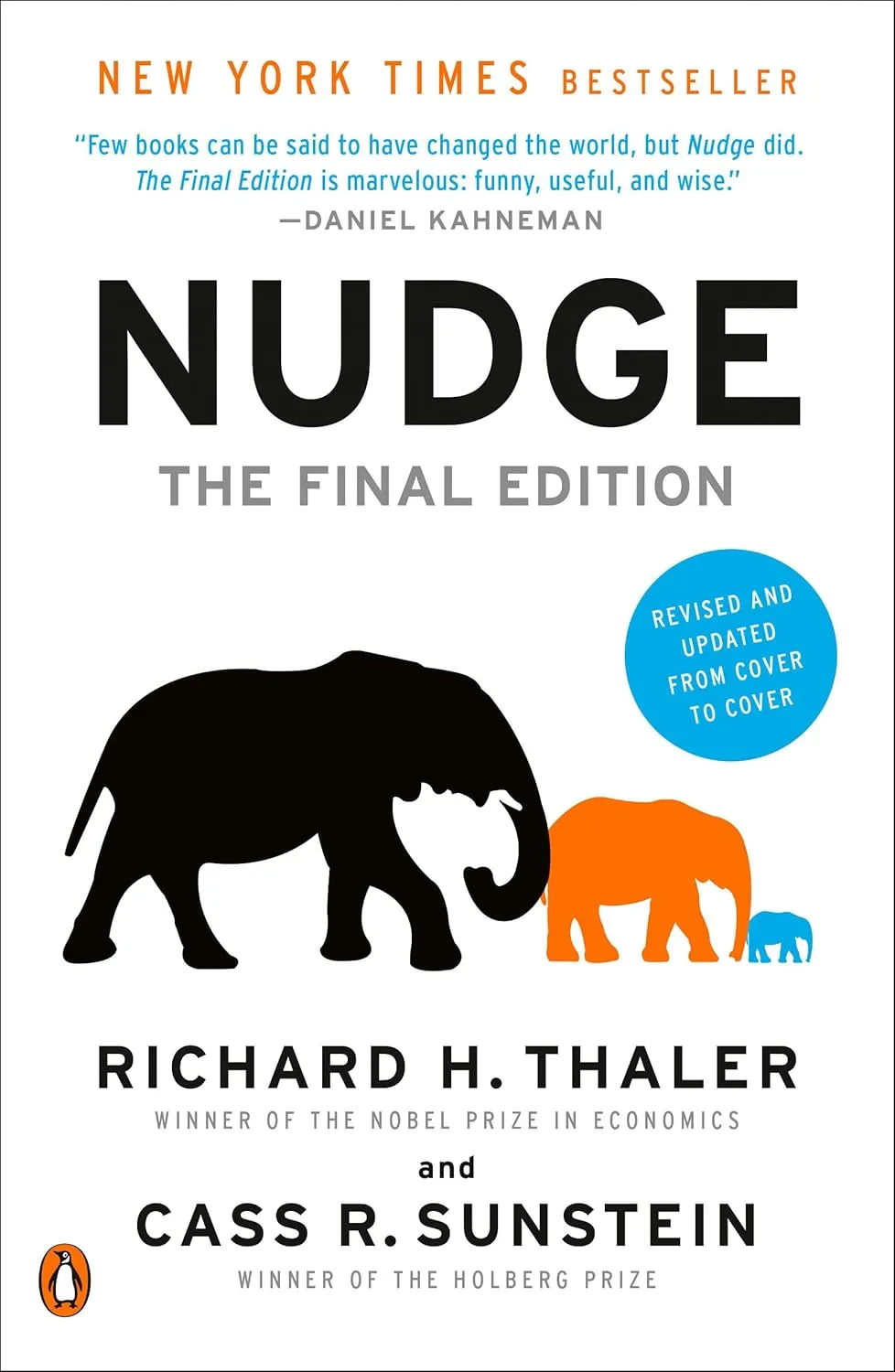
Behavioral economists Thaler and Benartzi designed a program where employees committed to directing future salary increases to retirement savings. They did not have to reduce current income, only commit future raises. Participation rates jumped from 3.5% to 13.6% in one year, and savings rates tripled. Read more about this in our review of Nudge.
Chapter 6: The Problem of Procrastination and Self-Control
Ownership and the Endowment Effect:
Once you own something, you value it more than the market does. This creates a systematic pricing error:
| Situation | Irrational Behavior |
|---|---|
| Selling inherited stocks | Hold too long because they feel "special" |
| Pricing your own home | Overestimate value by 10-15% vs. market |
| Holding losing investments | Refuse to sell because acknowledging loss feels like failure |
| Keeping subscriptions | Do not cancel because cancellation feels like a loss |
The investment implication: When deciding whether to hold or sell any position, ask: "If I did not own this, would I buy it today at the current price?" If the honest answer is no, you are being held by the endowment effect, not investment logic.
Chapter 7: Keeping Doors Open (The High Cost of Options)
Ariely demonstrates through experiments that humans irrationally pay to keep options open, even when keeping the option costs more than the option is worth.
The financial manifestation:
Counter-strategy: Regularly evaluate which open options you are maintaining at a cost. Closing options is psychologically painful but often financially correct. Read our guide on asset allocation for a framework on simplifying your investment approach.
The Replication Crisis: What Holds Up and What Does Not
Ariely's work has been at the center of the behavioral science replication crisis, and any honest review needs to address this directly.
Anchoring Effects
A 2024 Management Science meta-analysis by Furnham, Boo, and McClelland analyzed 2,601 effect sizes across the anchoring literature and found a large overall effect (Hedges' g = 0.82) that remained large even after accounting for publication bias. The core anchoring phenomenon is robust.
However, a 2025 replication study published in Economic Inquiry told a more cautionary story. The researchers replicated an anchoring study that had originally reported a 31% increase in participants' bids. By increasing statistical power from 46% to 96%, they reduced the average exaggeration of the statistically significant result by a factor of seven. Their replication found an estimated effect of just 3.4%, with a 95% confidence interval that included zero. The original effect size was overstated by a factor of nine.
The takeaway: anchoring is real, but specific effect sizes from individual studies should be treated as illustrative rather than precise. The direction of the effect is reliable; the magnitude is often smaller than initially reported.
The Endowment Effect
The endowment effect has been one of the most robustly demonstrated and most aggressively contested phenomena in behavioral economics. A 2025 paper in the Journal of Risk and Uncertainty by Jones reviewed a 20-year arc of research testing whether the endowment effect is an evolved psychological adaptation. The evolutionary salience of an item predicted 52% of the variance in endowment effect magnitudes across a large set of novel items, suggesting the effect has deep biological roots.
However, the effect is more conditional than popular treatments suggest. List's marketplace studies showed that experienced traders exhibit essentially no endowment effect, while inexperienced traders show the standard pattern. The effect shrinks dramatically under specific procedural controls and largely disappears for market participants trading commodities they are familiar with.
The honest summary: the endowment effect is real, but it is more conditional than pricing playbooks imply. It depends on the type of good, the subject's experience, and the elicitation procedure.
Broader Replication Concerns
A 2025 Nature study reanalyzed 100 studies published between 2009 and 2018 in the social and behavioral sciences. Of the independent reanalyses, 34% yielded the same result as the original report (within a tolerance of plus or minus 0.05 Cohen's d). With a four times broader tolerance, this increased to 57%. Of the reanalyses conducted, 74% reached the same conclusion as the original investigation, 24% yielded no effects or inconclusive results, and 2% reported the opposite effect.
This means roughly one in four behavioral science findings may not be robust to alternative analytical approaches. Ariely's specific experiments should be read with this context in mind. The patterns he describes are consistent with independent research by Kahneman, Thaler, and others, but the precise numbers from individual studies should be treated as suggestive rather than definitive.
The Most Important Behavioral Finance Lesson
Ariely's unifying insight: the rational agent model of economics describes how we wish people behaved, not how they actually do. This has profound implications:
For investors:
The highest-leverage financial applications of Ariely's research:
| Bias | Exploit Against You | Protect Yourself |
|---|---|---|
| Anchoring | Retail prices, "was/now" | Research objective benchmarks |
| FREE trap | Free shipping, free trials | Calculate actual cost of every "free" offer |
| Procrastination | "I'll save more later" | Automate everything today |
| Endowment effect | Overvalue owned assets | "Would I buy this today?" test |
| Social norm confusion | Free "advice" with hidden commissions | Pay for fiduciary advice |
| Option preservation | Keep too many strategies open | Commit to one approach |
Strengths & Weaknesses
What We Loved
Areas for Improvement
Who Should Read This Book
Highly Recommended For
Probably Not For
Comparison to Similar Books
| Book | Style | Investing Focus | Accessibility |
|---|---|---|---|
| Predictably Irrational | Experiment-driven narrative | Medium | Very High |
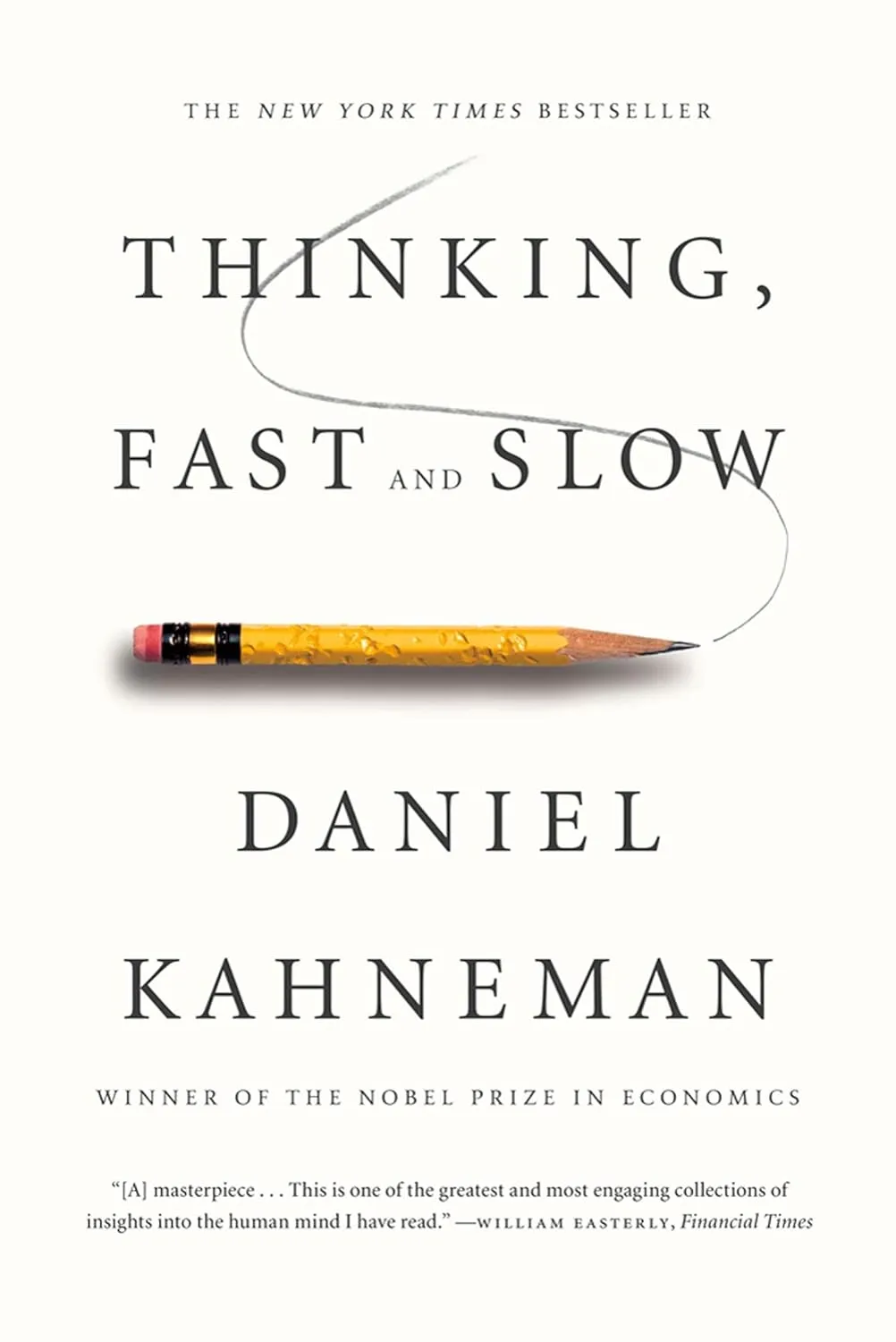
| Thinking, Fast and Slow | Academic synthesis | High | Medium |
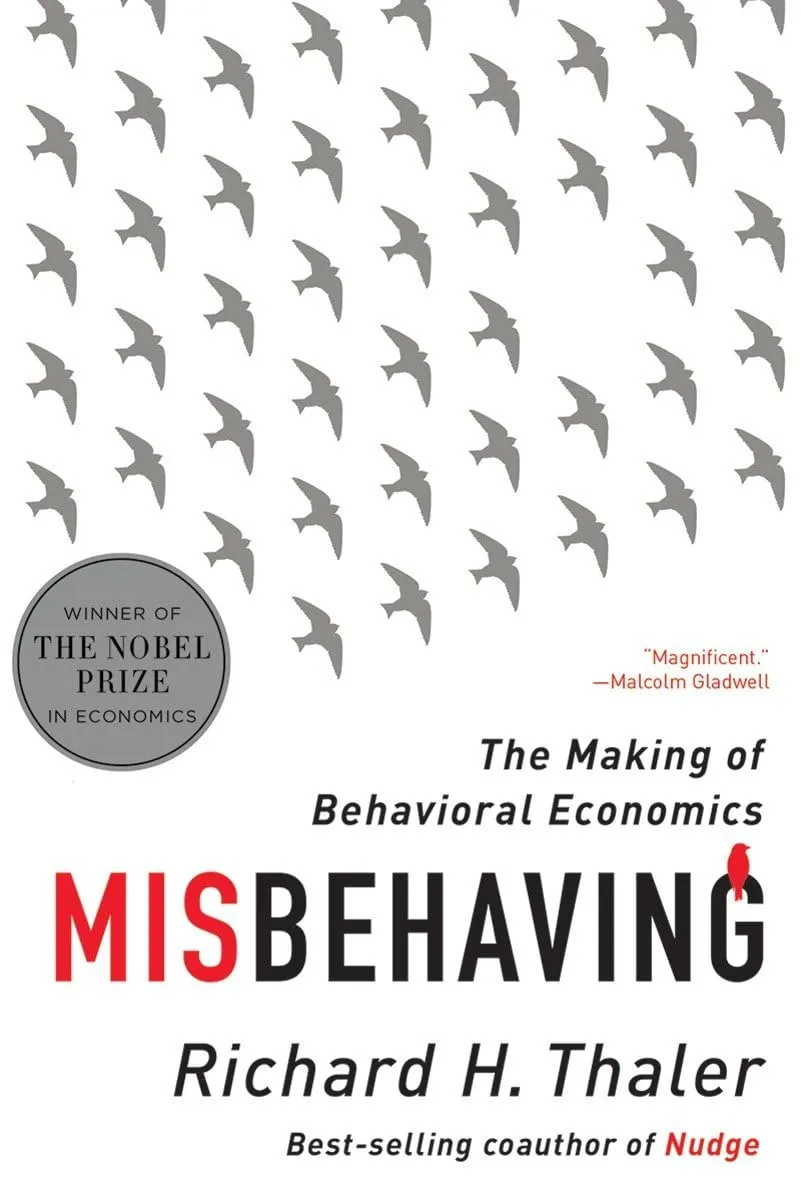
| Misbehaving | Professional memoir + research | Medium | High |
| The Psychology of Money | Essay collection | Very High | Very High |
Frequently Asked Questions
Q: Has Ariely's research held up in the replication crisis?
A: The core behavioral patterns (anchoring, FREE effect, procrastination, endowment effect) are robust and consistent with Kahneman's independent research. A 2024 meta-analysis of 2,601 anchoring effect sizes confirmed a large overall effect. However, a 2025 high-powered replication found that specific effect sizes from individual studies can be overstated by a factor of seven or more. The direction of the effects is reliable; the precise magnitudes should be treated as illustrative.
Q: What is the single most important takeaway for personal finance?
A: Automate everything. Your future self will procrastinate, rationalize, and fail to follow through on financial intentions. Automation removes the reliance on future willpower. Set up automatic 401(k) contributions, automatic IRA transfers, automatic extra debt payments, and automatic investment rebalancing. Use our debt payoff calculator to plan your automated debt elimination strategy.
Q: Is the endowment effect real?
A: Yes, but it is more conditional than originally reported. A 2025 Journal of Risk and Uncertainty paper showed that evolutionary salience predicts 52% of the variance in endowment effect magnitudes. The effect is strongest for inexperienced traders and for items with high evolutionary significance. Experienced market participants show little to no endowment effect. The effect is real, but it is not a universal multiplier you can apply to any pricing situation.
Final Verdict
Rating: 4.6/5
Predictably Irrational is one of the most readable behavioral economics books ever written. Its experiments are elegant, its prose is clear, and its applications to financial decision-making are direct and actionable. The replication crisis has tempered some of the specific claims: a 2025 high-powered replication found anchoring effects nine times smaller than the original study, and the endowment effect is more conditional than early research suggested. But the core patterns Ariely describes are consistent with independent research by Kahneman, Thaler, and others, and the practical advice (automate your finances, research objective benchmarks, calculate the real cost of "free") remains sound. Read it alongside Kahneman's Thinking, Fast and Slow for the complete behavioral finance education.
Ready to put these insights into practice? Start by automating your savings with our savings goal calculator, then read our guide to building good financial habits to understand the psychology behind why automation works.
Get Your Copy
Paperback: Buy on Amazon
Kindle: Buy on Amazon
Audiobook: Buy on Amazon
Prices current as of publication date. Free shipping available with Prime.