
Fractional Shares Explained: How to Invest in Amazon With $10
Fractional shares let you buy a slice of any stock or ETF regardless of its price. Here is how they work, which brokerages offer them, and when they actually matter for your portfolio.

Amazon stock trades at roughly $200 per share. Berkshire Hathaway Class A shares trade at over $700,000 per share. For decades, investors without enough cash to buy a full share of expensive stocks were simply locked out.
Fractional shares changed that. Today, you can buy $10 worth of Amazon, $5 of Apple, or $1 of any S&P 500 company through most major brokerages. The mechanics are simple, the access is real, and the implications for small investors are significant.
In 2026, Charles Schwab expanded its fractional share program from S&P 500 stocks only to most U.S. listed stocks and ETFs, with a new $1 minimum, according to Schwab's press release. This brought Schwab in line with Fidelity and Robinhood, which already offered broad fractional share coverage. The last meaningful barrier to small-amount investing is effectively gone.
What a Fractional Share Is
A fractional share is a partial ownership stake in a stock or ETF, less than one full share. If Apple stock trades at $220 and you invest $50, you own 50 divided by 220, or 0.227 shares of Apple.
You receive the same proportional economic benefits as a full shareholder:
- Price appreciation (or depreciation) on your position
- Dividends proportional to your ownership fraction
- The ability to sell your position at any time
What you typically do not receive with fractional shares:
- Voting rights (most brokerages do not pass through votes on fractional positions)
- The ability to transfer fractional shares to a different brokerage (most must be sold first)
For the overwhelming majority of individual investors, the absence of voting rights is irrelevant. Fractional shares provide full economic exposure at any investment amount. For a deeper explanation of how ETFs work, see What Is an ETF and How Does It Work?.
Which Brokerages Offer Fractional Shares in 2026
| Brokerage | Fractional Shares | Minimum Investment | Coverage |
|---|---|---|---|
| Fidelity | Yes (Stocks by the Slice) | $1 | 7,000+ U.S. stocks and ETFs |
| Charles Schwab | Yes (expanded 2026) | $1 | Most U.S. stocks and ETFs |
| Robinhood | Yes | $1 | Most U.S. stocks and ETFs |
| SoFi Invest | Yes | $5 | Most U.S. stocks and ETFs |
| Interactive Brokers | Yes | $1 | Most U.S. and international stocks |
| Vanguard | No | 1 full share | Not available for most accounts |
Fidelity and Robinhood have the broadest fractional share programs, covering most U.S. listed stocks and many ETFs down to $1. Fidelity's program covers over 7,000 securities, the widest selection among major brokers, according to Fidelity's fractional shares page.
Schwab's 2026 expansion was significant. Previously, Schwab's "Slices" program was limited to S&P 500 component stocks at a $5 minimum. Now, clients can trade fractional shares of most U.S. stocks and ETFs directly from the standard trade ticket with a $1 minimum, matching Fidelity and Robinhood.
Important: Vanguard still does not offer fractional shares for most accounts. This is a meaningful practical difference for investors starting with small amounts who want to hold Vanguard ETFs like VOO or VTI. For small investors, Fidelity's platform is generally more accessible due to fractional ETF support, $0 minimums, and zero-expense-ratio index funds (FZROX, FZILX). For a full brokerage comparison, see How to Choose the Best Brokerage for Your First Investment Account.
When Fractional Shares Actually Matter
For investors starting with small amounts
The most direct use case: you have $25 to $100 to invest per month and want to hold specific funds or stocks that trade above $100 per share.
Without fractional shares, a $200 investment in a month when VOO (Vanguard S&P 500 ETF, approximately $530 per share) is your target means you either wait and accumulate $530 before investing, or you buy a different cheaper fund. Both are suboptimal.
With fractional shares at Fidelity, $200 buys 0.377 shares of VOO. Your money is invested immediately, not sitting in cash waiting to accumulate enough for a full share.
For precise allocation management
If you are building a specific portfolio allocation, say 70% VTI, 20% VXUS, 10% BND, fractional shares let you hit your exact targets regardless of current share prices.
Example: $500 to invest in a 70/20/10 three-fund portfolio (March 2026 prices)
| Fund | Price | Target Amount | Shares Purchased |
|---|---|---|---|
| VTI (~$331/share) | $331 | $350 (70%) | 1.057 shares |
| VXUS (~$68/share) | $68 | $100 (20%) | 1.471 shares |
| BND (~$76/share) | $76 | $50 (10%) | 0.658 shares |
Without fractional shares, you cannot allocate $350 to VTI. You buy 1 share ($331) and have $19 left that does not fit the allocation cleanly. With fractional shares, you hit the target precisely.
For dollar-cost averaging on a fixed schedule
Automated monthly investments of a fixed dollar amount are only possible with fractional shares if the target fund's share price exceeds your monthly contribution.
If you automate $150 per month to VOO at $530 per share, you need fractional shares to execute that trade. Fidelity supports this natively through its automatic investment feature. Schwab's 2026 update also brought this capability to its platform, allowing dollar-based recurring investments directly from the trade ticket.
When Fractional Shares Matter Less
For investors already holding full shares
If you have accumulated enough to buy full shares of your target funds, fractional shares provide minimal additional benefit. The pricing and execution of fractional share trades is nearly identical to full share trades for major liquid securities.
For ETF investors at Vanguard
Vanguard's brokerage does not offer fractional shares, but this is largely compensated by the availability of Vanguard mutual fund equivalents (VTSAX, VTIAX, VBTLX) which accept any dollar amount with no share price constraint. For investors who prefer Vanguard's platform, using the equivalent mutual funds rather than ETFs sidesteps the fractional share limitation entirely.
The Fractional Share Mechanics: What Actually Happens
When you buy a fractional share, the brokerage handles the logistics in one of two ways:
Direct fractional ownership. The brokerage purchases the fractional position in a pooled account and credits your account with the exact fractional stake. Fidelity operates this way for most securities.
Synthetic exposure. The brokerage maintains a full share and sells you a contract representing economic exposure to the fractional portion. You have economic rights but technically hold a brokerage-specific instrument rather than direct stock ownership.
For practical purposes the difference is minor. Your account shows the position, you receive dividends, and you can sell at any time. The distinction matters primarily if you want to transfer shares out to a different brokerage. Fractional positions almost always must be sold rather than transferred in kind.
Fractional Shares vs. Mutual Funds: The Comparison
Before fractional shares existed, the traditional solution to "I only have $50 to invest" was a no-minimum mutual fund. Mutual funds have always accepted any dollar amount because they pool investor capital and issue units rather than whole shares.
| Feature | Fractional ETF | Mutual Fund |
|---|---|---|
| Minimum investment | $1 to $5 | Usually $0 (Fidelity, Schwab) |
| Intraday trading | Yes | No (end-of-day pricing only) |
| Expense ratio | 0.03 to 0.10% for major index ETFs | Similar for index mutual funds |
| Transferability | Sell fractional, transfer proceeds | Transfer directly between brokerages |
| Tax efficiency | Slightly higher (ETF structure) | Slightly lower (capital gain distributions) |
| Simplicity | Simple | Equally simple |
For long-term investors, the practical difference between a fractional ETF purchase and an equivalent mutual fund purchase is negligible. Both accomplish the same goal: immediate investment of any dollar amount in a diversified fund at low cost.
The fractional share innovation primarily benefits investors who prefer the ETF structure (intraday trading, slightly better tax efficiency) but previously needed larger amounts to use it. Fidelity's zero-expense-ratio mutual funds (FZROX at 0.00%, FZILX at 0.00%) actually make the mutual fund route cheaper than fractional ETFs at Fidelity, since even the lowest-cost ETFs charge 0.03%.
Practical Setup: Buying Fractional Shares at Fidelity
- Open a Fidelity account (brokerage, Roth IRA, or other account type)
- Search for the stock or ETF you want (e.g., "FXAIX" or "VOO")
- Click "Buy"
- In the order type, select "Dollars" rather than "Shares"
- Enter your dollar amount (e.g., $75)
- Review and confirm the order
The fractional share purchase executes during market hours at or near the current market price. Your account shows the fractional position including the exact number of shares (e.g., 0.414 shares of VOO).
Setting up automatic investments in fractional amounts: Navigate to "Accounts and Trade" then "Automatic Investments" and schedule recurring dollar-amount purchases on your preferred frequency.
Real-World Examples
Example: Kezia, 20, invests $30 per month
Situation: Kezia earns $1,100 per month at a part-time job and can invest $30 per month. She wanted to invest in VOO but a single share costs approximately $530.
What she did: Opened a Roth IRA at Fidelity and set up a $30 per month automatic investment in VOO through fractional shares. Each month she buys approximately 0.057 shares.
After 12 months: She owns 0.68 shares of VOO, worth approximately $360 at current prices. The same $360 in a money market account would have earned roughly $16 in interest. Her investment participates fully in S&P 500 returns without needing $530 to start.
Example: Marcus, building a precise three-fund portfolio
Situation: Marcus had $800 per month to invest and wanted to maintain exactly 65% VTI, 25% VXUS, 10% BND. Without fractional shares, the indivisible share prices made hitting these targets impossible month to month.
What he did: Set up three separate automatic investments at Fidelity: $520 per month to VTI, $200 per month to VXUS, $80 per month to BND. Fractional share support means every dollar is invested in the correct fund each month.
Result: His actual allocation stays within 1 to 2% of his target without manual intervention. The portfolio manages itself precisely.
Example: Sofia, asked whether to buy Amazon or an index fund
Situation: Sofia had $100 to invest. A friend suggested buying Amazon stock ($200 per share). Fractional shares made this possible. She could buy 0.5 shares. But she was unsure whether that made sense.
The guidance: For $100, the better choice is a fractional share of a total market index fund rather than a fractional share of a single company. Owning 0.5 shares of Amazon means 100% concentration in one company. $100 in FSKAX (Fidelity's total market fund) gives proportional exposure to 3,500-plus companies, including Amazon as one of them.
The lesson: Fractional shares make individual stocks accessible, but accessibility does not make concentration in individual stocks the right strategy for most investors.
Fractional shares removed one of the last barriers to getting started with investing. There is no longer a meaningful minimum to begin. $10, $25, $50 all work. The remaining barriers are behavioral and structural: building the habit, choosing the right account type, and staying invested through volatility. Those are not solved by fractional shares, but the entry point to start addressing them has never been lower.
For where fractional shares fit in a complete beginner strategy, see How to Invest $500, $1,000, $5,000 and $10,000 Differently and Your First Investment Portfolio in Your 20s.
This post is for informational purposes only and does not constitute financial advice. Fractional share availability, minimums, and mechanics vary by brokerage and are subject to change. All investment carries risk, including possible loss of principal.
Tags
Savvy Nickel Team
Financial education expert dedicated to making complex money topics simple and accessible for everyone.
Recommended Articles

How to Choose the Best Brokerage Account in 2026
Fidelity, Vanguard, and Schwab all offer $0 commissions and low-cost index funds. But they differ on fractional shares, fund minimums, app quality, and customer service. Here is the full comparison.

How to Invest $500, $1,000, $5,000 and $10,000 Differently
The right investment strategy depends heavily on how much you have to start with. Here is exactly what to do at each amount, with updated 2026 contribution limits and current I Bond rates.

What Is a Safe Withdrawal Rate? The 4% Rule Explained
The 4% rule is the most widely cited retirement guideline, but most people don't know where it came from or when it breaks down. Here's the honest explanation with 2026 research.
Run the Numbers
Free calculators related to this article.
Dividend Calculator
Project your dividend income year by year, track your yield on cost, and see how reinvesting dividends accelerates portfolio growth. Includes tax adjustments and dividend growth.
Open calculator →Investment Calculator
Project how your starting amount and monthly contributions grow over time. See both nominal and inflation-adjusted results so you know what your money will actually be worth.
Open calculator →Portfolio Allocation Calculator
Find the right mix of stocks, bonds, and cash for your age and risk tolerance, with dollar amounts and a glide path projection toward retirement.
Open calculator →Recommended Books
Related Glossary Terms
Stock
A stock is a share of ownership in a company, entitling holders to a proportional claim on assets, earnings, and voting rights. Stocks are the primary engine of long-term wealth creation.
Broker
A broker is a licensed intermediary who executes buy and sell orders for securities, real estate, or other assets on behalf of clients, earning a commission or fee for the service.
Investment
An investment is an asset you buy with the expectation that it will generate income or appreciate in value over time. In 2026, with the S&P 500 CAPE ratio near 42, choosing the right investments and understanding the risk-return tradeoff matters more than ever.
Restricted Stock
Restricted stock units (RSUs) are company shares granted to employees that vest over time. Warrants give holders the right to buy shares at a fixed price before expiration. In 2026, 57% of companies are changing their equity plans and RSU grants have compressed 15-20% from 2021 peaks.
Vesting
Vesting is the process by which you earn full ownership of employer-provided assets over time. It applies to 401(k) employer matches, stock options, RSUs, and pension benefits, with schedules that can be immediate, cliff, or graded.
Common Stock
Common stock represents ownership shares in a company that give investors voting rights and a claim on profits through dividends and price appreciation, the most widely held type of investment security in the world.
Recommended Podcasts
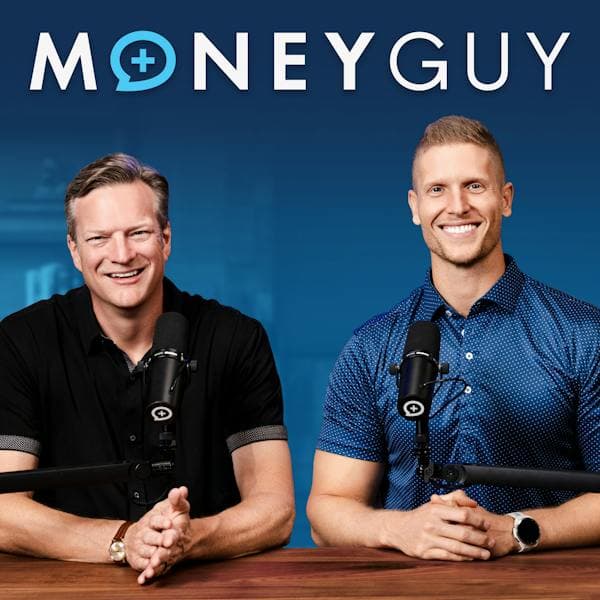
The Money Guy Show
by Brian Preston, CPA/CFP & Bo Hanson, CFA/CFP
Two fee-only financial advisors break down the Financial Order of Operations, a 9-step wealth-building framework. 617K YouTube followers and a 4.8 Apple rating.
Financial Feminist
by Tori Dunlap
Tori Dunlap hosts the number one money podcast for women, covering debt payoff, investing, and salary negotiation. New episodes every Tuesday from Her First 100K.

The Personal Finance Podcast
by Andrew Giancola
Andrew Giancola's Master Money show covers budgeting, investing, and side income with a systems-first approach. 350K monthly downloads and a 4.7 Apple rating.