
How to Invest $500, $1,000, $5,000 and $10,000 Differently
The right investment strategy depends heavily on how much you have to start with. Here is exactly what to do at each amount, with updated 2026 contribution limits and current I Bond rates.

The most common reason people delay investing is the belief that they do not have enough to start. That belief is wrong. But the amount you have does genuinely change what the smartest first move looks like.
This post walks through exactly what to do at four common starting amounts: $500, $1,000, $5,000, and $10,000. The strategy shifts at each level, not dramatically, but in ways that matter.
Before Any Amount: The Account Decision
Before deciding what to invest in, decide where to invest. The account type affects your taxes for decades and should come first.
The priority order:
- 401(k) up to employer match: If your employer matches contributions, this is a guaranteed immediate return. Always capture the full match before investing anywhere else. The 2026 401(k) employee contribution limit is $24,500.
- Roth IRA: Tax-free growth and withdrawals. Best for most people under the income limit. For 2026, the full contribution phase-out starts at $153,000 for single filers and $242,000 for married filing jointly.
- Traditional IRA: Pre-tax contributions. Better if you expect lower income in retirement than now.
- Taxable brokerage: No contribution limits, no special tax treatment. Use after maxing tax-advantaged accounts.
For every amount below, assume you are investing in a Roth IRA at Fidelity or Schwab unless you have already maxed it for the year. The 2026 Roth IRA contribution limit is $7,500, or $8,600 if you are 50 or older.
Investing $500
The constraint: $500 is enough to start, but not enough to build a complex portfolio. The right move is simple and immediate.
What to do:
Open a Roth IRA at Fidelity (no minimum, fractional shares) and invest the full $500 in a single broad index fund:
- FZROX (Fidelity Zero Total Market, 0% expense ratio) or
- FXAIX (Fidelity 500 Index, 0.015% expense ratio)
That is it. One fund. Do not split $500 across multiple funds. The diversification benefit is negligible at this amount and adds unnecessary complexity.
The more important action at $500: Set up a recurring automatic investment of $25 to $50 per month. The $500 lump sum is less important than the habit of consistent monthly additions.
What $500 grows to at 8% average annual return:
| Years | Value (no additional contributions) | Value ($50/month added) |
|---|---|---|
| 10 | $1,079 | $9,886 |
| 20 | $2,330 | $30,786 |
| 30 | $5,031 | $76,143 |
The $50 per month habit generates 15x more wealth over 30 years than the lump sum alone. The behavior matters more than the starting amount.
What NOT to do with $500:
- Do not invest in individual stocks. A single bad pick can wipe out a meaningful percentage of your portfolio.
- Do not buy crypto as your first investment. The volatility is disproportionate to the size of the position.
- Do not wait to "learn more" before starting. The cost of delay compounds against you. See What Is an S&P 500 Index Fund and Should You Just Put Everything In It? for why index funds are the recommended starting point.
Investing $1,000
The constraint: Still relatively small. Keep it simple, but you now have room to think about your first intentional allocation.
What to do:
Same account priority as above. With $1,000, a two-fund approach is reasonable if you want international exposure alongside U.S. stocks:
| Fund | Allocation | Amount |
|---|---|---|
| Total U.S. market index (FSKAX / VTI) | 80% | $800 |
| International index (FZILX / VXUS) | 20% | $200 |
Alternatively, a single target-date fund (e.g., Fidelity Freedom Index 2055) handles this allocation automatically and requires zero ongoing decisions.
The emergency fund check: Before investing $1,000, confirm you have at least $500 to $1,000 in a separate high-yield savings account as an emergency fund. Investing money you might need in the next 12 months is a mistake. Market drops can leave you selling at a loss right when you need cash. See Best High-Yield Savings Accounts for Teens in 2026 for where to park your cash buffer.
What $1,000 grows to:
| Years | At 8% annual return | At 10% annual return |
|---|---|---|
| 10 | $2,159 | $2,594 |
| 20 | $4,661 | $6,727 |
| 30 | $10,063 | $17,449 |
| 40 | $21,725 | $45,259 |
Investing $5,000
The constraint: $5,000 is a meaningful amount. At this level, asset allocation starts to matter more, and you have room to be intentional about structure.
What to do:
First, check which accounts have capacity:
- Have you maxed your Roth IRA this year? ($7,500 limit in 2026, $5,000 fits within it)
- Do you have any high-interest debt above 8% APR? Pay that first. The guaranteed return of eliminating 20% APR debt beats any expected investment return.
Assuming the Roth IRA has capacity and you are debt-free (or carrying only low-rate debt):
Portfolio for $5,000:
| Fund | Allocation | Amount | Purpose |
|---|---|---|---|
| Total U.S. market (FSKAX / VTI) | 70% | $3,500 | Core U.S. equity exposure |
| International index (FZILX / VXUS) | 20% | $1,000 | Global diversification |
| Bond index (FXNAX / BND) | 10% | $500 | Volatility reduction |
This is the classic three-fund portfolio in compact form. If you are under 35 and the money is for retirement, you could reasonably drop the bonds entirely (replace with 80/20 stocks) and add them back as you age. For more on bond allocation by age, see Bonds Explained: Do You Need Them?.
If $5,000 is in addition to already-maxed tax-advantaged accounts: Open a taxable brokerage account at the same broker and invest in ETFs (VOO, VTI, VXUS) rather than mutual funds. ETFs are more tax-efficient in taxable accounts due to lower capital gains distributions.
Lump sum vs. dollar cost averaging at $5,000:
Research consistently shows that investing a lump sum immediately outperforms spreading it out over time in roughly two-thirds of historical market environments, because markets tend to rise over time. However, if the idea of investing $5,000 and watching it drop 15% in month one would cause you to panic-sell, spread the investment over 4 to 6 months. A slightly lower expected return is worth the behavioral insurance.
Investing $10,000
The constraint: At $10,000, you have real decision-making to do. The right allocation depends on your specific situation.
Step 1: The debt and emergency fund audit
| Item | Amount | Action |
|---|---|---|
| Emergency fund (target: 3 months expenses) | How much do you have? | Fund this first if under target |
| Credit card debt | APR typically 20-24% | Pay off completely before investing |
| Car loan | APR typically 5-8% | Optional accelerated payoff |
| Student loans (federal) | APR typically 5-7% | Investing likely beats payoff at these rates |
| Mortgage | APR typically 6-7% | Investing likely comparable; depends on psychology |
High-interest debt elimination is the highest guaranteed return available. There is no investment that reliably returns 22% (the average credit card APR). Eliminate all high-interest debt before investing the remainder.
Step 2: Max tax-advantaged accounts first
With $10,000:
- Roth IRA: $7,500 max (2026)
- Remainder ($2,500): taxable brokerage or next year's IRA
Step 3: Portfolio allocation at $10,000
For a long-horizon investor (10+ years):
| Fund | Allocation | Amount |
|---|---|---|
| Total U.S. market (VTI / FSKAX) | 60% | $6,000 |
| International index (VXUS / FZILX) | 30% | $3,000 |
| Bond index (BND / FXNAX) | 10% | $1,000 |
For an investor within 5 to 10 years of needing the money (house down payment, major expense):
| Fund | Allocation | Amount |
|---|---|---|
| Total U.S. market | 50% | $5,000 |
| International index | 20% | $2,000 |
| Bond index | 30% | $3,000 |
Increase the bond allocation the shorter your time horizon. Bonds lose less in market downturns, protecting money you will need relatively soon.
At $10,000, also consider:
- I Bonds: U.S. Treasury inflation-protected savings bonds currently yielding 4.26% (composite rate for bonds issued May through October 2026, combining a 0.90% fixed rate with the semiannual inflation rate). The annual purchase limit is $10,000 per person through TreasuryDirect.gov. Zero default risk, inflation-adjusted returns. Not liquid for 12 months. Good for 5 to 10% of a conservative portfolio.
- HSA investing: If you have a qualifying high-deductible health plan, an HSA can be invested. The 2026 HSA contribution limit is $4,300 for individual coverage or $8,550 for family coverage. Triple tax-advantaged: pre-tax contributions, tax-free growth, tax-free withdrawals for medical expenses.
Side-by-Side Summary
| Starting Amount | Account Priority | Recommended Funds | Key Decision |
|---|---|---|---|
| $500 | Roth IRA | One total market fund | Set up monthly auto-invest |
| $1,000 | Roth IRA | 80% U.S. / 20% international | Verify emergency fund exists first |
| $5,000 | Roth IRA, then taxable | Three-fund portfolio | Lump sum vs. DCA based on risk tolerance |
| $10,000 | Pay high-rate debt first, max Roth IRA, taxable brokerage | Three-fund, adjusted for time horizon | Emergency fund, debt audit, account type split, I Bonds |
The One Constant at Every Amount
Every amount benefits from the same underlying behavior: investing consistently, not touching the money, and not changing strategy based on short-term market moves.
The investor who puts $500 in one fund and adds $50 per month for 30 years without ever selling beats the investor who puts in $10,000, panics during a correction, sells at a loss, and waits on the sidelines. Strategy matters far less than behavior.
For details on the specific funds mentioned here, see What Is an S&P 500 Index Fund and Should You Just Put Everything In It? and What Is Expense Ratio and Why Does 1% Matter So Much?. If you are trying to figure out how much to invest each month, the budget calculator can help you find the surplus in your monthly cash flow.
This post is for informational purposes only and does not constitute financial advice. All investment carries risk, including possible loss of principal. Consult a licensed financial advisor for guidance specific to your situation.
Tags
Savvy Nickel Team
Financial education expert dedicated to making complex money topics simple and accessible for everyone.
Recommended Articles

Fractional Shares Explained: How to Invest in Amazon With $10
Fractional shares let you buy a slice of any stock or ETF regardless of its price. Here is how they work, which brokerages offer them, and when they actually matter for your portfolio.

What Is a Safe Withdrawal Rate? The 4% Rule Explained
The 4% rule is the most widely cited retirement guideline, but most people don't know where it came from or when it breaks down. Here's the honest explanation with 2026 research.

How Real Estate Fits Into a Diversified Investment Portfolio
Real estate reduces portfolio volatility and provides income stocks and bonds cannot. With REITs returning 14.9% through mid-2026 and low correlation to the Magnificent 7, here is how to size your allocation and which vehicles to use.
Run the Numbers
Free calculators related to this article.
Dividend Calculator
Project your dividend income year by year, track your yield on cost, and see how reinvesting dividends accelerates portfolio growth. Includes tax adjustments and dividend growth.
Open calculator →Investment Calculator
Project how your starting amount and monthly contributions grow over time. See both nominal and inflation-adjusted results so you know what your money will actually be worth.
Open calculator →Portfolio Allocation Calculator
Find the right mix of stocks, bonds, and cash for your age and risk tolerance, with dollar amounts and a glide path projection toward retirement.
Open calculator →Recommended Books
Related Glossary Terms
Investment
An investment is an asset you buy with the expectation that it will generate income or appreciate in value over time. In 2026, with the S&P 500 CAPE ratio near 42, choosing the right investments and understanding the risk-return tradeoff matters more than ever.
Broker
A broker is a licensed intermediary who executes buy and sell orders for securities, real estate, or other assets on behalf of clients, earning a commission or fee for the service.
Restricted Stock
Restricted stock units (RSUs) are company shares granted to employees that vest over time. Warrants give holders the right to buy shares at a fixed price before expiration. In 2026, 57% of companies are changing their equity plans and RSU grants have compressed 15-20% from 2021 peaks.
Vesting
Vesting is the process by which you earn full ownership of employer-provided assets over time. It applies to 401(k) employer matches, stock options, RSUs, and pension benefits, with schedules that can be immediate, cliff, or graded.
Capital Gains Tax
Capital gains tax is the tax owed on profits from selling assets like stocks, bonds, or real estate — with rates depending on how long you held the asset and your income level, ranging from 0% to 37%.
10-K
A 10-K is the annual report publicly traded companies must file with the SEC, containing audited financials, risk factors, and management's full analysis of business performance over the fiscal year.
Recommended Podcasts
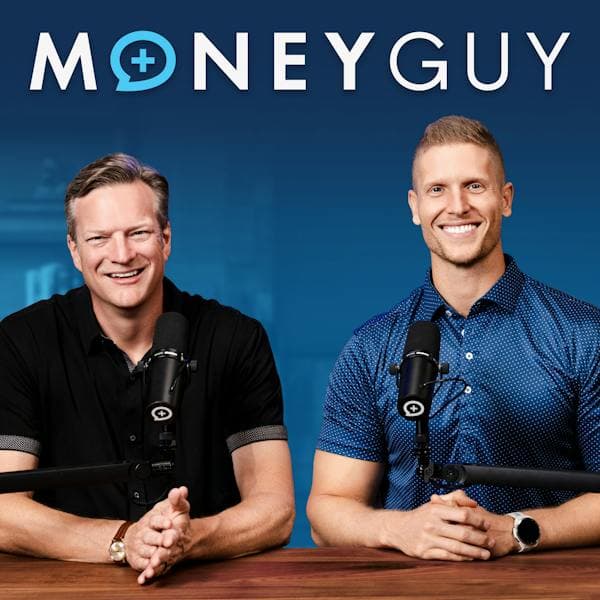
The Money Guy Show
by Brian Preston, CPA/CFP & Bo Hanson, CFA/CFP
Two fee-only financial advisors break down the Financial Order of Operations, a 9-step wealth-building framework. 617K YouTube followers and a 4.8 Apple rating.
Financial Feminist
by Tori Dunlap
Tori Dunlap hosts the number one money podcast for women, covering debt payoff, investing, and salary negotiation. New episodes every Tuesday from Her First 100K.
The Personal Finance Podcast
by Andrew Giancola
Andrew Giancola's Master Money show covers budgeting, investing, and side income with a systems-first approach. 350K monthly downloads and a 4.7 Apple rating.