
The Sunk Cost Fallacy: How It's Destroying Your Finances
Throwing good money after bad is more common than you think. Here's what the sunk cost fallacy is, why your brain falls for it, and how to spot it in your own financial decisions.

You have been paying for a gym membership for eight months. You have gone twice. You keep paying because you "already spent so much on it" and quitting feels like admitting failure.
Or you bought a stock at $40. It is now at $18. You will not sell because selling would "lock in the loss," even though the money is already gone.
Or you stayed in a bad apartment lease for an extra year because you had already signed and put down a deposit.
Every one of these decisions has the same flaw at its core: you are letting money you have already spent control money you have not spent yet. That is the sunk cost fallacy, and it is one of the most reliably expensive thinking errors in personal finance.
What Is a Sunk Cost?
A sunk cost is any cost that has already been paid and cannot be recovered. It is gone. Past tense. The money spent on the gym membership, the down payment on a car you regret buying, the subscription you forgot to cancel for six months: all sunk costs.
In rational decision-making, sunk costs should have zero influence on future decisions. What matters is only what lies ahead: the future costs, the future benefits, and the future opportunity cost of your options.
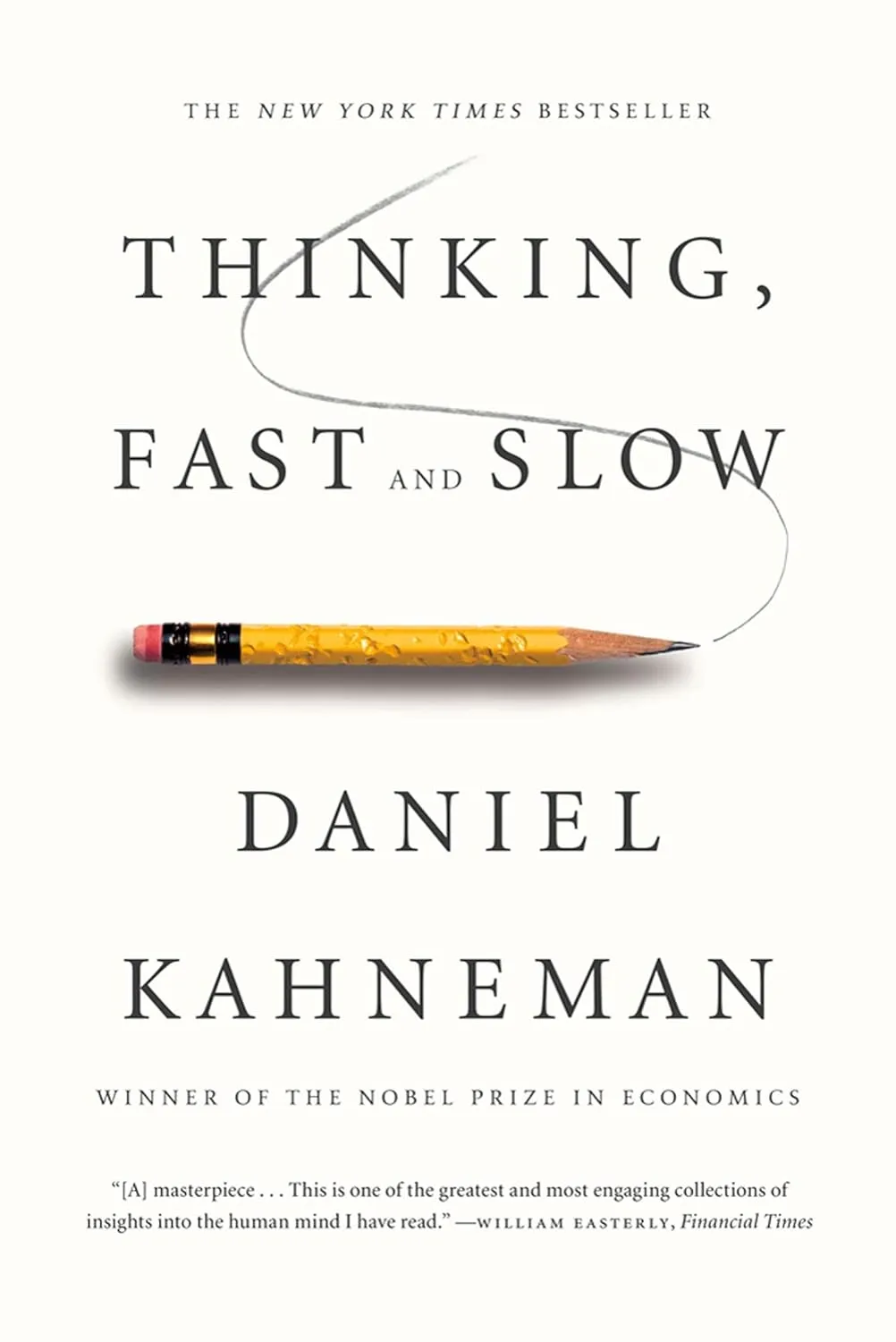
But human brains do not work that way. We are wired to feel losses more acutely than equivalent gains, a phenomenon psychologists Daniel Kahneman and Amos Tversky documented in their landmark Prospect Theory research. A 2024 meta-analysis by Brown, Imai, Vieider, and Camerer in the Journal of Economic Literature synthesized 607 empirical estimates of loss aversion across decades of research and confirmed that the effect is robust across stake sizes and contexts. Cutting a loss feels like a second loss: the pain of the original loss plus the pain of officially confirming it. So we avoid the second pain by keeping the bad situation alive.
This is the trap. And it is not just a personal quirk. A 2025 study published in the Journal of Finance by Marius Guenzel found that corporations systematically fall for the same bias. In stock merger deals, quasi-random cost shocks after a binding agreement strongly predicted firms' commitment to the acquired business. An interquartile cost increase reduced subsequent divestiture rates by 8% to 9%. The effect was concentrated in firms where the acquiring CEO was still in office, consistent with an intrapersonal sunk cost channel. If CEOs of major corporations cannot ignore sunk costs, it is no surprise that individual investors struggle with the same bias.
Where the Sunk Cost Fallacy Shows Up in Real Financial Life
Holding a Losing Investment Too Long
This is one of the most studied versions of the fallacy in finance. When an investment drops significantly, many investors hold it instead of selling because:
- Selling "makes the loss real" even though the loss already happened
- They are waiting to "get back to even" before exiting
- They feel they owe the investment a chance to recover
The problem: the stock does not know what you paid for it. Its future performance is completely unrelated to your purchase price. The relevant question is never "how much have I lost?" but "is this the best place for this money going forward?"
If the answer is no, the rational move is to sell and redeploy the capital somewhere better. Clinging to the position because of what you paid is letting a past number dictate a future decision.
| What you paid | Current value | The sunk cost question | The right question |
|---|---|---|---|
| $5,000 | $2,800 | "How do I get back to $5,000?" | "Is this the best use of $2,800 today?" |
| $200/mo membership | $0 in use | "I have paid 8 months already" | "Is paying month 9 worth it going forward?" |
| $18,000 car | Worth $9,000 | "I owe more than it is worth" | "What is the cheapest path forward from here?" |
Staying in a Financial Arrangement That No Longer Makes Sense
Leases, subscriptions, contracts, business partnerships, side projects: all are common sunk cost traps. The reasoning follows the same pattern:
"I have already invested so much time and money in this, I cannot walk away now."
But "cannot walk away now" is usually a feeling, not a financial reality. The question to ask: if you were starting from zero today, would you enter this arrangement? If the honest answer is no, the sunk costs already paid are not a reason to stay. They are done. What you are actually deciding is whether to pay the future costs.
The "Might As Well" Spending Trap
This is a subtler version. You already bought a ticket to an event. The event turns out to be something you do not want to attend that day. But you go anyway because you "paid for it."
You have already paid for it. Whether you go or stay home, that money is gone. The only question is whether going is worth your time and energy on that specific day. Sometimes it is. Sometimes it is not. The ticket price is not part of the current decision.
A 2025 experiment published in the Journal of Economic Behavior & Organization with 1,806 participants tested exactly this scenario. Researchers randomized the price of a ticket to enter a real-effort task and observed its effect on play time. Their intervention, which varied the sunk cost by $2 for a 14-minute task, resulted in a moderate sunk cost effect of about 1.3 minutes. The effect is real but modest, which suggests that while the bias is genuine, it can be overcome with conscious effort.
This same logic applies to all-inclusive vacations, bulk food purchases, prepaid services, and anything where you feel compelled to "use it because you paid for it" even when using it creates no real benefit.
The Opportunity Cost Problem
The sunk cost fallacy does not just waste money on bad situations. It steals money from better ones.
Every dollar sitting in a losing investment is a dollar not in a better investment. Every month you pay for a service you do not use is a month that $15 or $50 or $200 is not being saved, invested, or applied to debt.
The opportunity cost, the value of the next-best alternative you gave up, is the real financial damage. And unlike the sunk cost, which is fixed, the opportunity cost keeps accumulating as long as you make the irrational choice.
Simple example: You bought a stock at $10,000. It is now worth $6,000. You hold for 2 more years waiting to break even while the stock does nothing. Meanwhile, a broad index fund would have returned approximately 16% (8%/year). At the end of year 2, your stock is still at $6,000. The index fund position would have been worth $6,971. Your opportunity cost for the two years of "waiting to break even" was $971 on top of the original loss.
Multiply this reasoning across multiple bad financial decisions you are holding onto, and the total drag on your finances becomes substantial.
How to Catch Yourself Falling for It
The sunk cost fallacy is hard to spot in real time because it is disguised as commitment, loyalty, or perseverance. Here are the phrases that should stop you:
- "I have already put so much into this..."
- "I cannot quit now after everything I have invested..."
- "I need to at least get my money's worth before..."
- "Once I break even, then I will..."
- "I have been paying for it, I might as well use it..."
When you catch yourself using any of these as justification for a financial decision, that is your cue to reframe the question.
The reframe: Strip away everything that happened before today and ask only: "Starting from right now, with the money and resources I currently have, does this make sense going forward?"
If the honest answer is no, you have identified a sunk cost trap.
Real-World Examples
Example: James, 34, software developer
Situation: James had $8,000 in a single stock that had dropped 60% from his purchase price. He refused to sell because he would "lose too much," and instead watched it fall further over 18 months.
What he did: A friend pointed out that the $3,200 remaining was not "$8,000 at a loss." It was $3,200 that could be deployed anywhere. He sold, moved the money into a total market index fund, and stopped tracking the original stock.
Result: The index fund returned approximately 22% over the next two years. The original stock is now worth $900. The $3,200 is now worth $3,904. He is still down from his original purchase, but the sunk cost trap is broken.
Example: Rachel, 29, nurse
Situation: Rachel had been paying $85/month for a fitness app subscription she never opened, a $45/month streaming bundle, and a $120/year software license she "might need someday." She kept all three because she had "already started" them.
What she did: She audited every recurring charge and asked a single question: "If I were not already subscribed, would I sign up for this today?" For all three, the answer was no. She canceled.
Result: $130/month freed up. Over a year, that is $1,560, which she redirected to her Roth IRA. The sunk costs on all three subscriptions were a few hundred dollars combined. The forward cost she avoided was $1,560+ per year.
Example: David, 52, contractor
Situation: David had been running a side business for three years that was consistently losing about $4,000/year after expenses. He kept going because he had invested $22,000 in equipment and setup costs.
What he did: He separated the $22,000 (gone, sunk) from the forward question: "Is it worth continuing to run something that loses $4,000 per year?" The answer was no. He wound it down, sold the equipment for $9,000, and invested the proceeds.
Result: Over the following three years, he kept $12,000 he would have lost ($4k/year x 3), plus the $9,000 from equipment. The $22,000 sunk cost was painful to accept, but it was already spent regardless of what he decided.
The Mental Shift That Changes Everything
Accepting a sunk cost requires acknowledging a loss. That hurts. The brain resists it precisely because it hurts.
A 2026 study published in Cognition found that the sunk cost effect extends beyond money into cognitive effort. Participants who had already invested mental effort into a task were substantially more willing to invest additional effort to continue, even when it made no rational sense. The bias is not just about money. It is about how our brains process the relationship between past investment and current choices.
But here is the reframe that makes it easier: you are not accepting a new loss when you walk away from a bad financial situation. The loss already happened. What you are actually doing is preventing further losses and freeing up resources to build something better.
Every financial decision is only about what happens from this moment forward. The past has no vote.
If you want to understand more about how emotions drive financial decisions, including why bad spending patterns are so hard to break, read Why You Keep Spending Money You Do Not Have. For a deeper look at how behavioral biases affect investment decisions, see Common Investing Mistakes Beginners Make.
This post is for informational purposes only and does not constitute financial or investment advice. Past investment performance does not guarantee future results. Consult a licensed financial advisor before making investment decisions.
Tags
Savvy Nickel Team
Financial education expert dedicated to making complex money topics simple and accessible for everyone.
Recommended Articles

How Fear of Investing Keeps People Poor (And How to Overcome It)
Avoiding the stock market because it feels risky actually guarantees a worse financial outcome. Here's what the fear is really about, what the data says, and how to start investing when it terrifies you.

Why Budgets Fail and What Actually Works Instead
Most budget systems collapse within weeks because they're built on willpower, not behavior design. Here is what the 2026 research says actually works, and why it's simpler than a spreadsheet.

The Psychology Behind Impulse Buying and How to Beat It
Impulse purchases do not happen randomly. Your brain is following a predictable script every time. Here is what that script looks like and how to rewrite it, with 2026 consumer research data.
Run the Numbers
Free calculators related to this article.
Dividend Calculator
Project your dividend income year by year, track your yield on cost, and see how reinvesting dividends accelerates portfolio growth. Includes tax adjustments and dividend growth.
Open calculator →Investment Calculator
Project how your starting amount and monthly contributions grow over time. See both nominal and inflation-adjusted results so you know what your money will actually be worth.
Open calculator →Portfolio Allocation Calculator
Find the right mix of stocks, bonds, and cash for your age and risk tolerance, with dollar amounts and a glide path projection toward retirement.
Open calculator →Recommended Books
Related Glossary Terms
Sunk Cost
A sunk cost is money already spent that cannot be recovered, and it should have no bearing on future decisions. The sunk cost fallacy is the tendency to keep pouring resources into a losing choice because of past spending, trapping capital in bad investments and unused commitments.
Behavioral Finance
Behavioral finance applies psychology to investing and markets, explaining why investors overtrade, chase performance, and panic sell. It challenges the idea that markets always price assets rationally and gives individuals tools to recognize their own decision errors.
Behavioral Economics
Behavioral economics studies how real people make financial decisions, blending psychology with economics to explain why we systematically deviate from pure rationality. It reshapes how governments, employers, and individuals design choices around saving, spending, and investing.
Finance
Finance is the system of allocating money across time and risk. It encompasses borrowing, lending, investing, budgeting, and the institutions that make all of those activities possible.
Opportunity Cost
Opportunity cost is the value of the next best alternative you give up when making a choice. Every financial decision carries a hidden cost beyond the sticker price, and ignoring it can cost you hundreds of thousands over a lifetime.
Budget
A budget is a plan for how to spend and save your income. It assigns every dollar a purpose before the month begins, turning vague financial intentions into specific, trackable decisions.
Recommended Podcasts

The Personal Finance Podcast
by Andrew Giancola
Andrew Giancola's Master Money show covers budgeting, investing, and side income with a systems-first approach. 350K monthly downloads and a 4.7 Apple rating.

The Money Guy Show
by Brian Preston, CPA/CFP & Bo Hanson, CFA/CFP
Two fee-only financial advisors break down the Financial Order of Operations, a 9-step wealth-building framework. 617K YouTube followers and a 4.8 Apple rating.

So Money
by Farnoosh Torabi
Farnoosh Torabi's award-winning interview show features money conversations with business leaders, authors, and entrepreneurs. 40 million downloads and 2,000-plus episodes.