
How Fear of Investing Keeps People Poor (And How to Overcome It)
Avoiding the stock market because it feels risky actually guarantees a worse financial outcome. Here's what the fear is really about, what the data says, and how to start investing when it terrifies you.

As of April 2026, only 58% of U.S. adults own any stock at all, according to Gallup's annual Economy and Personal Finance survey. That is down from 62% in 2025 and marks the first decline in stock ownership since 2016. Roughly 156 million Americans hold equity, but most do so only through a workplace retirement plan. Just 37% hold investments outside a retirement account, per the Federal Reserve's 2025 Survey of Household Economics and Decisionmaking.
The problem is that not investing is not a neutral decision. It is an active choice to fall behind. Inflation erodes cash savings at roughly 3.5% per year based on the latest Bureau of Labor Statistics CPI data (June 2026). The S&P 500 has returned approximately 10.2% annually on average over the past century with dividends reinvested, according to NYU Stern's historical returns dataset. Staying out of the market does not protect your money. It guarantees it loses purchasing power over time.
Fear of investing keeps people poor. Not dramatically, in a single event, but slowly, across decades, through what they did not build.
What Investment Fear Actually Looks Like
Fear of investing is not a single emotion. It shows up in several distinct forms, and identifying which one you have determines which solution applies.
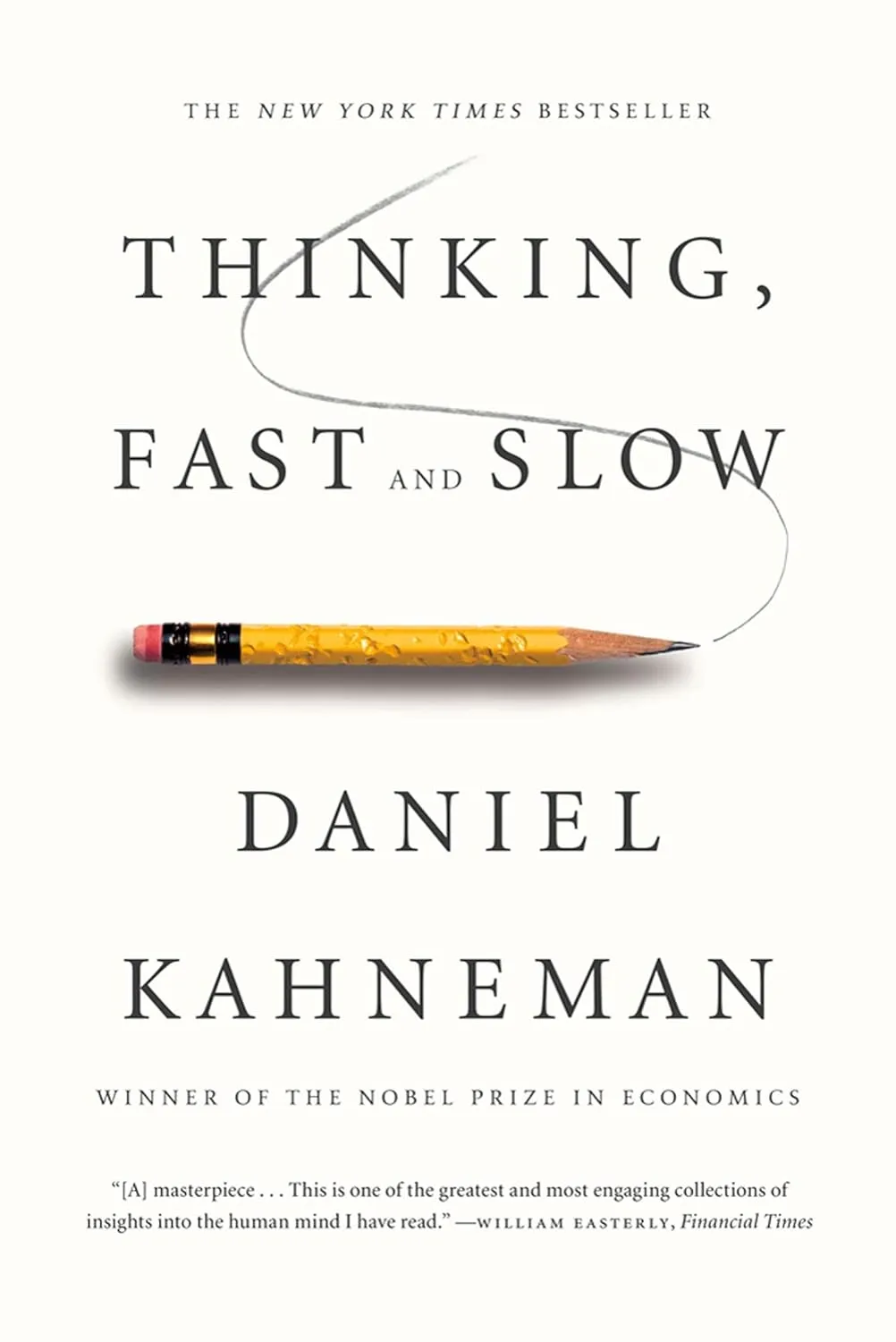
Loss aversion is the most fundamental. Research by Kahneman and Tversky established that people feel the pain of a financial loss roughly twice as intensely as they feel the pleasure of an equivalent gain. Losing $1,000 hurts about as much as gaining $2,000 feels good. This asymmetry makes the possibility of market declines feel much more threatening than the certainty of slow savings erosion.
Complexity overwhelm is another form. The investment world is full of jargon, options, and conflicting advice. Brokerages, asset classes, expense ratios, rebalancing, tax treatment, index funds versus active funds, international allocation, dividend investing, sector ETFs. Many people freeze not because they are afraid of risk specifically but because the entry cost of understanding what to do feels prohibitive. When something feels too complicated to get right, the default choice is to do nothing.
Fear of making the wrong move is related but distinct. This is the fear of buying at the wrong time, in the wrong fund, at the wrong allocation. It often surfaces as endless research without action. "I'm still learning before I invest" becomes a phrase that stretches from months into years.
Distrust of the system affects many people, especially those who grew up in households that experienced poverty, financial hardship, or predatory financial products. The financial system does not feel like a place where ordinary people benefit. This distrust is not irrational given historical context, but it leads to keeping money in cash under mattresses, in checking accounts, or in low-yield savings instead of wealth-building vehicles.
Market event trauma is real. People who were old enough to have money in the market during 2008 or early 2020 sometimes carry a visceral memory of seeing account balances crater. That emotional memory overrides the intellectual knowledge that markets recovered. The gut wins over the head when real money is involved.
What Staying Out of the Market Actually Costs
Fear of investing is most often framed as avoiding risk. But there is no risk-free option. Only different kinds of risk with different timelines.
The cost of inflation on idle cash: if you keep $20,000 in a regular savings account earning 0.5% for 10 years, you end up with roughly $21,000. Sounds acceptable until you account for inflation at 3.5% per year. Your $21,000 in year 10 buys what $14,900 bought in year 0. You saved your way to a $5,100 reduction in real purchasing power.
The cost of missing market growth:
| Starting amount | Annual return | 10 years | 20 years | 30 years |
|---|---|---|---|---|
| $20,000 | 0.5% (savings) | $21,023 | $22,104 | $23,242 |
| $20,000 | 4.0% (HYSA) | $29,604 | $43,822 | $64,868 |
| $20,000 | 7.0% (conservative equity mix) | $39,343 | $77,394 | $152,245 |
| $20,000 | 10.2% (historical S&P 500 avg) | $52,838 | $139,876 | $370,560 |
The difference between a savings account and a broad market index fund over 30 years on a single $20,000 deposit is approximately $347,000 in wealth. That is the cost of fear.
No individual outcome is guaranteed. But the probability distribution strongly favors market investment over long time horizons. Across every rolling 20-year period from 1928 to 2024, the S&P 500 produced a positive annualized return. The worst 20-year window returned 3.0% annually. The best returned 17.8%. Zero 20-year periods have produced a loss. (NYU Stern / Damodaran historical dataset)
The Misunderstanding at the Heart of Investment Fear
Most people who fear investing are afraid of the wrong thing. They are afraid of volatility, the short-term fluctuations in value that cause account balances to drop 20%, 30%, or 40% in a bad year.
Volatility is real and can be emotionally brutal. But for a long-term investor with a time horizon of 10 or more years, volatility is noise, not risk. The relevant risk is permanent loss of capital, the possibility that an investment goes to zero and never recovers.
Diversified, broad-market index funds have essentially zero probability of permanent total loss. A single stock can go to zero. An index fund holding 500 or 3,500 companies cannot go to zero unless every major company in the American economy simultaneously collapses and never recovers, at which point every other financial instrument, including savings accounts, would be worthless too.
The practical implication: if you invest in a broad index fund and hold it for 15 to 30 years, the fluctuations along the way are irrelevant to your final outcome. The only scenario where volatility becomes actual risk is if you need the money during a downturn, which is why emergency funds and not investing money you will need within 5 years are important principles.
How to Start Investing When It Terrifies You
Start Smaller Than You Think You Should
The most common mistake fearful first-time investors make is waiting until they have "enough" to start meaningfully, while that threshold keeps moving. "Once I have $1,000." Then "once I have $5,000." Then "once things calm down in the market."
Fidelity, Charles Schwab, and Vanguard all allow you to open a brokerage account or Roth IRA with $0 and invest in index funds with fractional shares starting at $1. There is no minimum.
The purpose of starting small is not to get rich fast. It is to acclimate your nervous system to the experience of having money in the market. Watching a $200 investment fluctuate between $190 and $220 teaches your brain that volatility is tolerable in a way that no amount of reading about it can.
Choose One Thing and Stop Researching
Complexity overwhelm is solved by radical simplification. You do not need the optimal portfolio. You need a good enough portfolio that you actually start.
One fund is enough to begin:
| Fund | Type | What It Holds | Expense Ratio |
|---|---|---|---|
| FXAIX | Mutual fund | S&P 500 (500 largest US companies) | 0.015% |
| VTI | ETF | Total U.S. stock market (~3,500 companies) | 0.03% |
| FSKAX | Mutual fund | Total U.S. market | 0.015% |
| VTSAX | Mutual fund | Total U.S. market | 0.04% |
Any one of these, held consistently, will produce long-term results that outperform the vast majority of actively managed funds, including those run by professional investors. The research on this is overwhelming and consistent across decades of data. Over a 20-year period, approximately 93% of large-cap actively managed funds underperformed the S&P 500, according to S&P Dow Jones Indices' SPIVA report.
You can add complexity later. Start with one fund.
Automate So You Do Not Have to Feel It
Manual investing requires you to make a deliberate choice regularly to send money toward something that feels scary. Automated investing requires you to make one decision once and then let it happen.
Set up automatic monthly contributions to your investment account. Even $50 per month. The automation removes the ongoing emotional hurdle because you never have to re-decide.
When the market drops and your balance falls, resist the urge to check it frequently or stop contributions. Market drops are when you are buying at lower prices. Temporary discomfort, long-term benefit.
Use a Tax-Advantaged Account First
If you have a 401(k) through an employer, the tax benefit itself is a first-day return on your investment. In 2026, you can contribute up to $24,500 pre-tax, reducing your taxable income immediately. If your employer offers a match, you get an immediate guaranteed return equal to the match percentage before markets even open.
If you do not have a 401(k), open a Roth IRA at Fidelity or Schwab. The tax-free growth over decades is a powerful compounding advantage, and the account is in your own name regardless of employer changes. The 2026 contribution limit is $7,500, or $8,600 if you are 50 or older.
Starting in a tax-advantaged account is also psychologically easier because the money feels more locked away, which reduces the temptation to sell during volatile periods.
Real-World Examples
Example: Tanya, 38, administrative assistant
Situation: Tanya had $14,000 in a savings account earning 0.4%. She had never invested because "the stock market is gambling," a belief formed during 2008 when she watched her parents lose money and struggle.
What she did: She started by opening a Roth IRA at Fidelity and moving $500 into FXAIX, a small enough amount that losing it all (essentially impossible in an S&P 500 fund) would not be catastrophic. She left it alone for six months.
Result: After six months, the $500 had grown to $548. Nothing dramatic. But the experience of watching it go up and down without disaster broke the mental block. She moved $8,000 more over the next year, kept $6,000 in savings as her emergency fund, and has not touched the invested amount.
Example: Omar, 22, recent graduate
Situation: Omar had researched investing for 18 months and still had not bought anything. He had accumulated a long list of questions, concerns, and things to figure out first. His savings sat in a checking account earning nothing.
What he did: He gave himself a deadline: invest $300 in VTI by the end of the week or forfeit his ability to delay further. He did it in 20 minutes. The decision fatigue dissolved once the first purchase was made.
Result: The research addiction broke. Within three months he had $2,400 invested. He later described the 18 months of research as "procrastination with extra steps."
Example: Denise, 51, recently divorced
Situation: After her divorce, Denise had $45,000 in cash from the settlement. She was afraid to invest it because she was afraid of making a mistake at her age and not having time to recover.
What she did: Rather than putting it all in at once (which felt terrifying), she invested $5,000 per month over 9 months, a technique called dollar cost averaging that spreads purchases across time and reduces the psychological weight of timing the market.
Result: Over the nine months, the market had some volatile stretches. Because she was buying throughout, some purchases were at lower prices and some higher, averaging out her entry point. The gradual process made the fear manageable. Her $45,000 is now invested in a three-fund portfolio, and she has 14 years before she plans to retire.
Common Mistakes
Waiting for the "right time." There is no right time. Market timing consistently underperforms time in the market. The best time to start was years ago. The second best time is now, with whatever amount you can afford.
Checking your portfolio daily. Monitoring investments constantly amplifies the emotional impact of normal volatility. Check monthly or quarterly. Daily checking leads to emotional decisions, and emotional decisions are almost always the wrong ones.
Selling when the market drops. The investors who earned the full 20-year S&P 500 return are, by definition, the ones who did not sell in the spring of 2009. Selling during a downturn locks in temporary losses as permanent ones.
The Fear Is Normal. Acting Anyway Is the Job.
Almost nobody feels completely comfortable starting to invest. The people who built wealth through market investing did not do so because they were fearless. They did it because they understood that the alternative, waiting, holding cash, staying out, carried its own very real cost.
The goal is not to eliminate the fear. It is to take action despite the fear, start small enough that the stakes feel manageable, and let the experience of having money in the market teach you what reading about it never can.
The biggest financial mistake you can make is not investing at the wrong time. It is not investing at all.
For a practical starting point, see What Is an Index Fund? The Plain-English Guide and How to Open a Brokerage Account Step by Step. If you are deciding between account types, our 401(k) vs. Roth IRA comparison breaks down which one makes sense for your situation.
This post is for informational purposes only and does not constitute investment or financial advice. Past market returns do not guarantee future performance. Consult a registered financial advisor before making investment decisions. Historical S&P 500 data referenced from NYU Stern (Damodaran) and the Bureau of Labor Statistics.
Tags
Savvy Nickel Team
Financial education expert dedicated to making complex money topics simple and accessible for everyone.
Recommended Articles

Delayed Gratification: The One Skill That Predicts Financial Success
The ability to wait, to choose a larger reward later over a smaller one now, is the single most consistent predictor of financial outcomes. Here is the updated science and how to actually build this skill.

The Psychology Behind Impulse Buying and How to Beat It
Impulse purchases do not happen randomly. Your brain is following a predictable script every time. Here is what that script looks like and how to rewrite it, with 2026 consumer research data.

Why Lifestyle Inflation Is the Silent Killer of Wealth
Every raise you have ever gotten should have accelerated your savings. For most people, it did not. Lifestyle inflation is why, and it is more insidious than you think.
Run the Numbers
Free calculators related to this article.
Compound Interest Calculator
See exactly how your money grows over time with compound interest. Enter your starting amount, monthly contributions, interest rate, and time horizon to watch your wealth build.
Open calculator →Investment Return Calculator
See how a lump sum or regular contributions grow over time at any return rate. Compare nominal returns against inflation-adjusted results to get an honest picture of your real gains.
Open calculator →Millionaire Calculator
Find out when you will reach your first million (or any wealth target) based on your current savings, monthly contributions, and expected investment returns. See how different contribution levels change your timeline.
Open calculator →Recommended Books
Related Glossary Terms
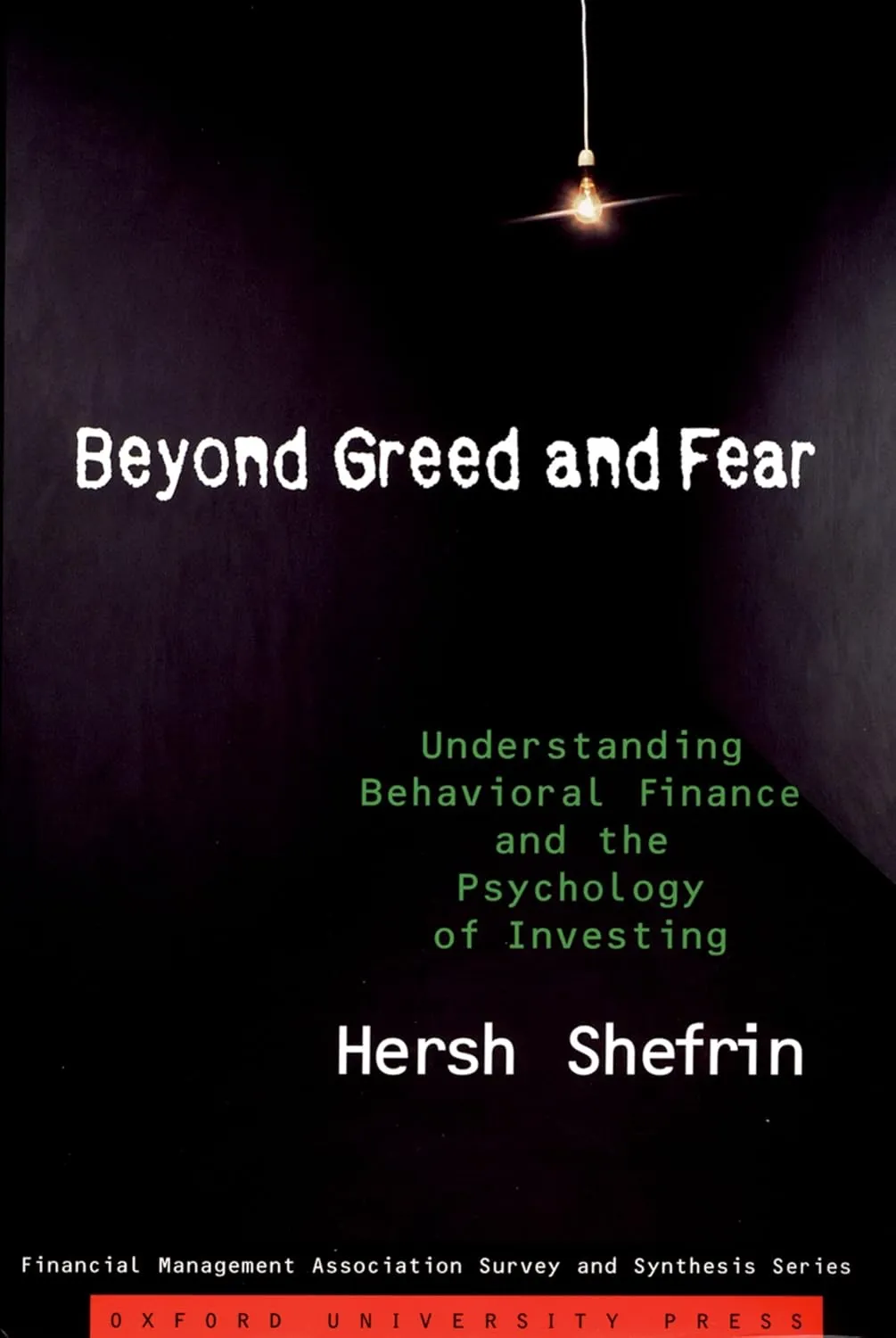
Behavioral Finance
Behavioral finance applies psychology to investing and markets, explaining why investors overtrade, chase performance, and panic sell. It challenges the idea that markets always price assets rationally and gives individuals tools to recognize their own decision errors.
Loss Aversion
Loss aversion is the psychological principle that losses feel roughly twice as painful as equivalent gains feel good. It drives investors to hold losers, sell winners early, and avoid sensible risks, and it shapes everything from insurance pricing to retirement plan design.
Sunk Cost
A sunk cost is money already spent that cannot be recovered, and it should have no bearing on future decisions. The sunk cost fallacy is the tendency to keep pouring resources into a losing choice because of past spending, trapping capital in bad investments and unused commitments.
Behavioral Economics
Behavioral economics studies how real people make financial decisions, blending psychology with economics to explain why we systematically deviate from pure rationality. It reshapes how governments, employers, and individuals design choices around saving, spending, and investing.
Compound Interest
Compound interest is the process of earning interest on both your original principal and previously accumulated interest, creating exponential growth that makes it the most powerful force in personal finance.
Disposition Effect
The disposition effect is the tendency to sell investments that have gained value too early while holding onto losers too long. Driven by loss aversion, it quietly drags down returns and inflates tax bills for millions of investors.
Recommended Podcasts
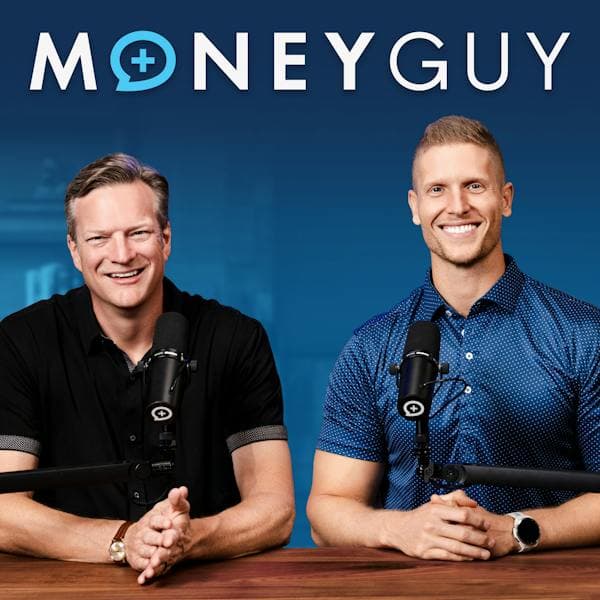
The Money Guy Show
by Brian Preston, CPA/CFP & Bo Hanson, CFA/CFP
Two fee-only financial advisors break down the Financial Order of Operations, a 9-step wealth-building framework. 617K YouTube followers and a 4.8 Apple rating.
Financial Feminist
by Tori Dunlap
Tori Dunlap hosts the number one money podcast for women, covering debt payoff, investing, and salary negotiation. New episodes every Tuesday from Her First 100K.
The Personal Finance Podcast
by Andrew Giancola
Andrew Giancola's Master Money show covers budgeting, investing, and side income with a systems-first approach. 350K monthly downloads and a 4.7 Apple rating.