
Why Lifestyle Inflation Is the Silent Killer of Wealth
Every raise you have ever gotten should have accelerated your savings. For most people, it did not. Lifestyle inflation is why, and it is more insidious than you think.

You got a raise three years ago. Then another one. Maybe you changed jobs and jumped your income by 20%. On paper, you are earning significantly more than you were five years ago.
So why does the end of the month still feel the same? Why is your savings rate roughly where it was before?
The answer, almost always, is lifestyle inflation: the automatic, gradual expansion of your spending to match your income. It does not announce itself. It shows up quietly as a nicer apartment, a car with a higher payment, meals out that cost a little more, subscriptions that pile up, and a general baseline shift in what feels "normal" to spend.
Lifestyle inflation is the single most common reason that higher earners do not build proportionally more wealth than lower earners. The Northwestern Mutual 2026 Planning and Progress Study found that Americans now believe they need $1.46 million to retire comfortably, up $200,000 from 2025. Yet 48% believe they will outlive their savings. Income is rising. Wealth is not keeping pace. (Read the Northwestern Mutual study.)
How Lifestyle Inflation Actually Works
Lifestyle inflation is not recklessness. It is not bad decisions made carelessly. It is the predictable result of two deeply human tendencies: hedonic adaptation and social anchoring.
Hedonic adaptation is your brain's ability to normalize almost any new level of comfort or pleasure. The new car that felt thrilling in month one is just your car by month six. The upgraded apartment that felt luxurious when you moved in feels ordinary by year two. Your brain resets its baseline to whatever the current experience is, so you need a constant upward ratchet of new spending to maintain the same level of satisfaction.
This is not a character flaw. It is neuroscience. But it has a direct cost: the things you spend more on stop delivering proportionally more happiness fairly quickly, while the financial drag of the higher expense continues indefinitely.
Social anchoring compounds the effect. As your income rises, your peer group often shifts. Your colleagues, neighborhood, and social circle gradually move upmarket with you. The reference point for what is a "normal" apartment, car, vacation, or restaurant becomes more expensive. Spending that would have felt extravagant three years ago feels like the baseline for your current context.
Neither of these processes requires any conscious choice. They happen automatically unless you actively intervene.
The Math That Shows Why This Matters So Much
Consider two people, both 28, both starting with a $60,000 salary.
Person A gets a raise to $75,000 at age 30 and raises their lifestyle spending proportionally. They save 10% of income throughout, so savings go from $6,000/year to $7,500/year, a $1,500 annual increase.
Person B gets the same raise but keeps living expenses at their previous level for two years before allowing any lifestyle adjustment. They redirect the extra $15,000 in year one and $15,000 in year two entirely to investments.
| Person A | Person B | |
|---|---|---|
| Income at 30 | $75,000 | $75,000 |
| Annual savings (year 1 post-raise) | $7,500 | $22,500 |
| Extra invested vs. baseline (2 years) | $0 | $30,000 |
| Value of that $30,000 at age 65 (8% return) | -- | ~$367,000 |
Person B gave up two years of lifestyle upgrades and gained approximately $367,000 in retirement wealth. Same income. Same salary trajectory. Wildly different outcomes from one behavioral adjustment.
Now scale that across every raise, every job change, every income increase over a 35-year career, and the difference between someone who automatically inflates lifestyle versus someone who captures even half of each income increase becomes the difference between retiring comfortably and not retiring at all.
The Lifestyle Categories That Grow the Fastest
Not all lifestyle inflation is equal. Some categories expand gradually; others jump in large, hard-to-reverse steps.
Housing is the most dangerous because it is a fixed monthly commitment that can be difficult to undo. Every time income rises, the "affordable" range on Zillow shifts upward. A person who earns $50,000 rents a $900/month apartment. At $80,000, they upgrade to $1,400. At $110,000, they are at $2,000. Each move feels justified by the income, but housing costs rarely come back down once they go up.
Cars follow the same pattern. Payments that were manageable at one income become a psychological floor. Once you have driven a $600/month car, a $350/month car feels like a downgrade even if it is financially much healthier.
Subscriptions and services are the sneaky category. Each one is small enough to feel negligible: a streaming service here, a meal kit there, a premium account on a platform you use occasionally. But the category expands continuously with income because each individual item clears the "I can afford this" mental threshold. Individually invisible. Collectively significant.
Dining and experiences are discretionary but highly social, which makes them harder to pull back on than pure solo consumption.
Practical Ways to Break the Cycle
Pay Yourself the Raise First
The most effective countermeasure to lifestyle inflation is to automate the capture of income increases before they become available to spend.
When you get a raise, increase your 401(k) contribution the same week, before you have adapted your spending to the new take-home amount. You will genuinely not feel the difference because you never experienced the higher take-home. Economists call this "pre-commitment," and it consistently outperforms willpower-based approaches. In 2026, the 401(k) contribution limit is $24,500, with $8,000 in catch-up contributions for those 50 and older.
A practical target: capture at least 50% of every net raise as savings or investments. The other 50% can go to lifestyle improvements. This is a sustainable approach that allows real quality-of-life improvements while still building wealth at an accelerating rate.
Define Your "Enough" Baseline
One of the most powerful financial exercises you can do is explicitly define what "enough" looks like for your major expense categories. Not a budget. A written statement of what the right level is for you at your current life stage.
"Enough apartment is X square feet in X neighborhood at around $X/month."
"Enough car is reliable, less than 5 years old, and under $X/month."
"Enough dining out is 2 to 3 times per week at an average of $X per meal."
Having explicit baselines makes it much easier to notice and resist when spending pressure is pushing you above them for no real quality-of-life gain.
The Annual Savings Rate Check
Once a year, when you file taxes is a natural time, calculate your actual savings rate: total money saved and invested divided by gross income.
If your savings rate is flat or declining despite income growth, you have confirmed lifestyle inflation is happening. That number should rise over time as income rises. If it does not, the raises are being consumed invisibly.
For reference, here is what different savings rates produce over a 30-year career at various income levels:
| Annual Income | Savings Rate | Annual Savings | Portfolio at 65 (8% return, 30 yrs) |
|---|---|---|---|
| $70,000 | 10% | $7,000 | ~$794,000 |
| $70,000 | 20% | $14,000 | ~$1,587,000 |
| $100,000 | 10% | $10,000 | ~$1,132,000 |
| $100,000 | 25% | $25,000 | ~$2,830,000 |
The income number matters. The savings rate matters more. Use the budget calculator to check where your money is actually going.
Real-World Examples
Example: Andre, 33, software engineer
Situation: Andre's income had grown from $68,000 to $115,000 over six years through raises and one job change. His net worth was $42,000, less than one year of his current income. He could not figure out where the money had gone.
What he did: He added up his monthly committed expenses: a $2,400 apartment (up from $1,100), a $580 car payment (up from $0, had previously owned a paid-off car), $240 in subscriptions, and substantially higher dining and social spending. His lifestyle had grown by roughly $3,000/month since his first job. He renegotiated his car situation (bought out his lease and drove it another three years) and moved to a slightly less expensive apartment at lease renewal.
Result: He recovered $1,400/month in monthly cash flow, redirected it entirely to retirement accounts and a taxable brokerage, and rebuilt his savings rate from about 7% to 22% over 18 months.
Example: Simone, 26, physician's assistant
Situation: Starting her first real job at $87,000 after years of student income, Simone wanted to enjoy her earnings but had heard about lifestyle inflation and decided to act preemptively.
What she did: Before her first paycheck arrived, she automated $1,200/month to a Roth IRA and a taxable brokerage. She set her apartment and car budgets based on what she had been comfortable spending as a student, then allowed herself $200/month "quality of life" upgrade spending.
Result: She never experienced the full $87,000 income, so she never adapted to it. By year two, she was saving $16,000+ per year while genuinely feeling comfortable, because her baseline had been set before inflation could occur.
The Version That Is Not a Problem
Not all lifestyle improvement is lifestyle inflation in the harmful sense. Spending more on things that genuinely improve your quality of life, support your health, strengthen relationships, or align with your stated values is not the enemy.
The problem is automatic lifestyle creep: spending that rises with income out of habit, social pressure, or hedonic adaptation rather than conscious choice.
The question to ask is not "can I afford this?" but "is this where I want more of my life's money to go?" Those are different questions. The first is about capacity. The second is about intention.
Spending more intentionally is how you can have meaningful lifestyle improvements and build wealth simultaneously, by being deliberate about which category gets the benefit of every income increase.
For more on how earning more can actually hurt your wealth-building if not managed carefully, see The 5 Money Moves to Make Before You Turn 25. Share this with someone who just got a raise and is already browsing apartment listings.
This post is for informational purposes only and does not constitute financial advice. Investment projections shown are illustrative and based on assumed 8% annual returns. Actual returns vary and are not guaranteed. Retirement confidence data sourced from Northwestern Mutual 2026 Planning and Progress Study.
Tags
Savvy Nickel Team
Financial education expert dedicated to making complex money topics simple and accessible for everyone.
Recommended Articles

Delayed Gratification: The One Skill That Predicts Financial Success
The ability to wait, to choose a larger reward later over a smaller one now, is the single most consistent predictor of financial outcomes. Here is the updated science and how to actually build this skill.

How Fear of Investing Keeps People Poor (And How to Overcome It)
Avoiding the stock market because it feels risky actually guarantees a worse financial outcome. Here's what the fear is really about, what the data says, and how to start investing when it terrifies you.

The Psychology Behind Impulse Buying and How to Beat It
Impulse purchases do not happen randomly. Your brain is following a predictable script every time. Here is what that script looks like and how to rewrite it, with 2026 consumer research data.
Run the Numbers
Free calculators related to this article.
Budget Calculator / 50-30-20 Analyzer
Enter your take-home pay and instantly see how to split it across needs, wants, and savings using the 50-30-20 rule. Adjust the percentages to fit your situation and see exactly how much goes where.
Open calculator →Latte Factor / Small Expense Calculator
How much is your daily coffee, streaming subscription, or lunch habit actually costing you over 10, 20, or 30 years if that money were invested instead? The compound math on small habits is more surprising than most people expect.
Open calculator →Millionaire Calculator
Find out when you will reach your first million (or any wealth target) based on your current savings, monthly contributions, and expected investment returns. See how different contribution levels change your timeline.
Open calculator →Recommended Books
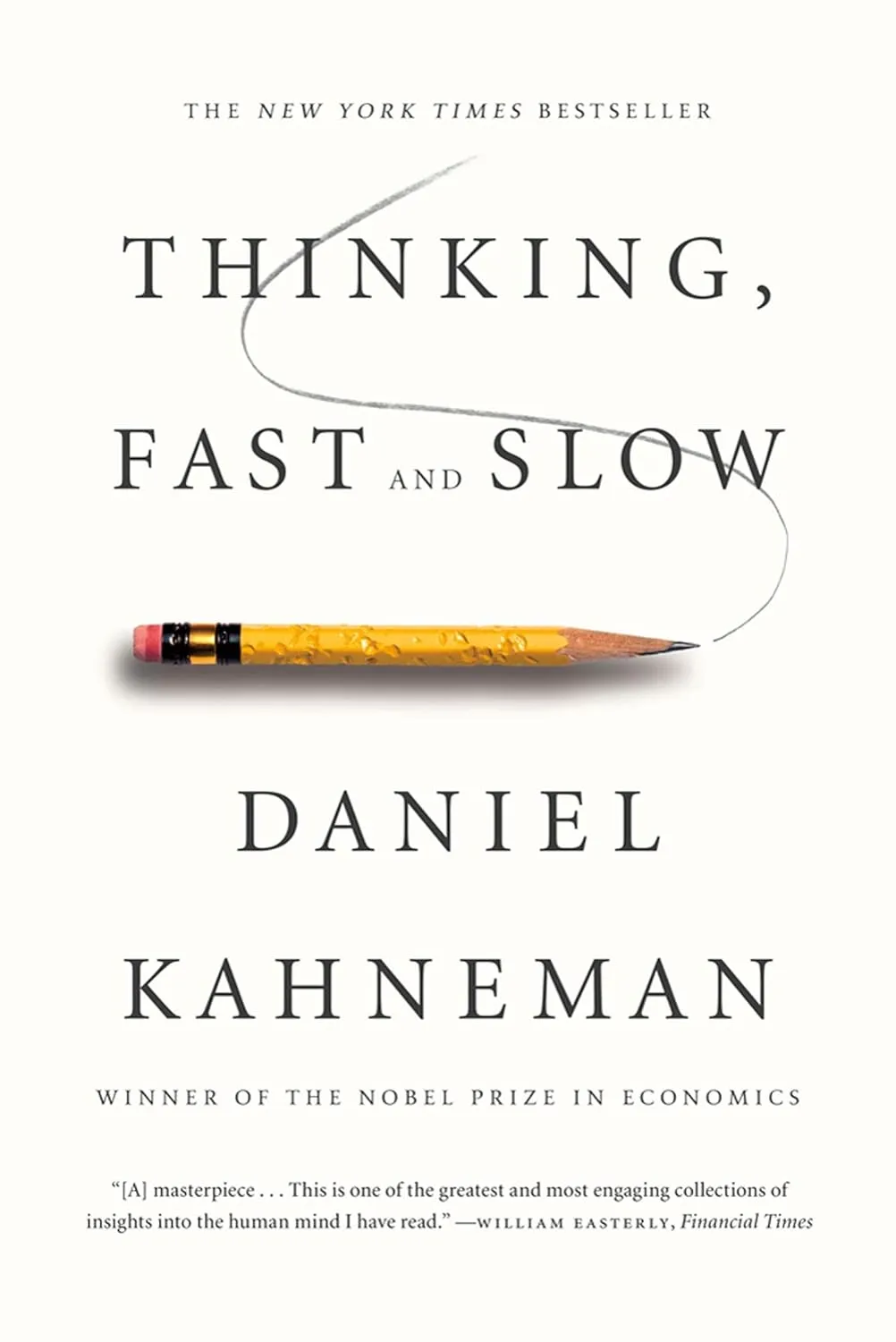
Related Glossary Terms
Savings
Savings is money set aside for future use rather than spent immediately. The US personal saving rate was 2.7% in June 2026, near historic lows, while top high-yield savings accounts pay up to 4.50% APY.
Inflation
Inflation is the rate at which the general price level of goods and services rises over time, reducing the purchasing power of money and making financial planning essential for preserving real wealth.
Cash Flow
Cash flow measures whether money accumulates or drains away in your financial life. It is the difference between income and expenses over a period of time, and it determines financial resilience more than income or net worth.
Compound Interest
Compound interest is the process of earning interest on both your original principal and previously accumulated interest, creating exponential growth that makes it the most powerful force in personal finance.
Financial Independence
Financial independence means having enough invested assets to cover living expenses without needing employment income. The standard target is 25x annual expenses, based on the 4% withdrawal rule.
FIRE
FIRE is a movement built on saving and investing 50 to 70 percent of your income so you can reach financial independence decades before the traditional retirement age of 65. The math relies on the 25x rule and a 4 percent safe withdrawal rate.
Recommended Podcasts

Million Bazillion
by Ryan Perez & Bridget Bodnar
A Marketplace podcast that makes money make sense for kids and families. Covers inflation, cryptocurrency, savings, and how the economy works. 2.6K Apple ratings, 4.6 average. New season September 2026.

Planet Money
by NPR team (Amanda Aronczyk, Mary Childs, Karen Duffin, Robert Smith, and others)
NPR's flagship economics podcast ties any topic back to the economy in 25-minute episodes. 30K Apple ratings, daily episodes, and a free Summer School series.
In My Finance Era
by Vanguard team
Vanguard's personal finance podcast for early-career investors. Short episodes on saving, investing, debt, and HSAs. Backed by Vanguard's February 2026 research on young adult money attitudes.