
How to Open a Brokerage Account Step by Step
Opening a brokerage account is easier than most people expect. Here is a complete walkthrough, what to choose, what you will need, and exactly what to do once it is open.

Opening a brokerage account is the gateway to investing, and most people delay it far longer than necessary because the process sounds more intimidating than it is. In reality, opening an account takes 10 to 15 minutes, requires no minimum deposit at most brokerages, and involves nothing more complex than filling out a standard online form.
This guide walks through every step: choosing the right account type, picking a brokerage, completing the application, and making your first investment. For 2026, the IRS has increased contribution limits across retirement accounts, giving you more room to save. The IRS announced that 401(k) limits rose to $24,500 and IRA limits to $7,500, up from $23,500 and $7,000 respectively in 2025.
Step 1: Decide What Type of Account You Need
Not all brokerage accounts are the same. The most important distinction is whether the account has tax advantages.
Tax-Advantaged Retirement Accounts
These accounts offer either a tax deduction now or tax-free growth in exchange for some restrictions on when you can withdraw money.
| Account | Who Can Open It | Tax Benefit | 2026 Contribution Limit | Early Withdrawal |
|---|---|---|---|---|
| Roth IRA | Anyone with earned income under $153,000 (single) | Tax-free growth and withdrawals | $7,500 ($8,600 if 50+) | Contributions anytime; earnings after 59.5 |
| Traditional IRA | Anyone with earned income | Tax deduction now, pay taxes on withdrawal | $7,500 ($8,600 if 50+) | Penalty before 59.5 |
| 401(k) | Through your employer only | Pre-tax contributions | $24,500 ($32,500 if 50+) | Penalty before 59.5 |
| Custodial Roth IRA | Parent opens for minor with earned income | Tax-free growth | Lesser of earned income or $7,500 | Same as Roth IRA |
For most people starting out: Open a Roth IRA first if you have earned income. The tax-free compounding over decades is one of the best deals in personal finance. For 2026, single filers with modified adjusted gross income below $153,000 can contribute the full $7,500. The phase-out range extends to $168,000. For married couples filing jointly, the range is $242,000 to $252,000, according to Fidelity's 2026 contribution guide.
Taxable Brokerage Account
A regular investment account with no special tax treatment. You can invest any amount with no contribution limits, and you can withdraw money at any time. Gains are subject to capital gains tax when you sell, but the flexibility is complete.
Open a taxable account when:
- You have maxed your Roth IRA and 401(k)
- You are saving for a goal less than 10 years away
- You want flexibility to access funds before retirement age
UGMA/UTMA Custodial Account
For investing on behalf of a minor who does not have earned income. A parent opens it, the money belongs to the child, and control transfers at the age of majority (18 or 21 depending on state).
Step 2: Choose a Brokerage
For most individual investors, three brokerages stand clearly above the rest for low-cost index fund investing:
| Brokerage | Best For | Minimums | Standout Feature |
|---|---|---|---|
| Fidelity | All-around best for beginners | $0 | 0.00% expense ratio funds (FZROX, FZILX), fractional shares on 7,000+ stocks and ETFs at $1 minimum, no fees |
| Charles Schwab | Excellent all-around, great research tools | $0 | Stock Slices: buy up to 30 S&P 500 stocks in one order at $5 minimum per slice, strong education tools |
| Vanguard | Index fund purists, long-term investors | $0 (ETFs), $3,000 (some mutual funds) | Lowest-cost mutual funds, investor-owned structure, no fractional shares |
| M1 Finance | Automated investing, "pie" portfolio approach | $100 | Auto-rebalancing, good for hands-off investors |
Recommendation for most beginners: Fidelity. Zero-fee funds, no minimums anywhere, excellent app and website, and fractional shares mean you can invest any dollar amount in any fund. Their Youth Account is also the best teen investing option. Schwab is a strong alternative if you want to buy fractional shares of S&P 500 stocks in bulk (up to 30 in a single order via Stock Slices at $5 each).
Avoid brokerages that charge per-trade commissions, have high fund expense ratios in their own products, or push you toward their proprietary actively managed funds. For a deeper comparison of fractional share offerings, see Fractional Shares Explained.
Step 3: Gather What You Need
Before you start the application, have these ready:
- Social Security Number (SSN): required for all brokerage accounts
- Government-issued photo ID: driver's license or passport (some brokerages ask for a photo upload)
- Bank account information: routing number and account number for linking your bank to fund the account
- Employment information: employer name, occupation (for regulatory purposes)
- Basic personal details: address, date of birth, phone number, email
If opening a joint account or custodial account, you will also need the co-owner's or minor's Social Security Number.
Step 4: Complete the Application
Go to your chosen brokerage's website and click "Open an Account." The process is fully online and typically takes 10 to 15 minutes.
What you will be asked:
Account type selection. Choose Roth IRA, Traditional IRA, Individual Taxable, or Custodial. If you are unsure, choose Roth IRA if you have earned income below the limit, Individual Taxable if not.
Personal information. Name, address, date of birth, Social Security Number, phone, email.
Employment and financial information. Your employer, occupation, annual income range, net worth range, and investment objective (growth, income, preservation). Answer these accurately. They are used to comply with financial regulations, not to qualify or disqualify you.
Investment experience. Most forms ask your experience level (none, limited, good, extensive). Answering honestly does not restrict your account. It is for regulatory suitability records.
Beneficiary designation. For retirement accounts (Roth IRA, Traditional IRA), always name a beneficiary. This ensures the account passes directly to that person outside of probate if you die. Do not skip this step.
Identity verification. The brokerage will verify your identity using your SSN and sometimes a soft credit check (does not affect your credit score). Occasionally they will ask for a photo ID upload.
Step 5: Link Your Bank and Fund the Account
After the application is approved (usually instantly or within 1 to 2 business days), you will link your bank account:
- Enter your bank's routing number and account number (found on a check or your bank's website)
- The brokerage may make two small test deposits (under $1) in your bank account to verify ownership. Confirm those amounts in the brokerage portal.
- Once verified, initiate a transfer from your bank to the brokerage account
Transfer timing: ACH transfers typically take 2 to 5 business days to fully settle. Some brokerages (Fidelity, Schwab) provide immediate trading access to a portion of your transfer before it fully clears.
How much to start with: There is no minimum at Fidelity, Schwab, or most modern brokerages. You can fund with $25, $100, $1,000, whatever you have. The account is open regardless.
Step 6: Make Your First Investment
Once your funds are available, you are ready to buy. Here is the process for buying a mutual fund or ETF:
Buying a Mutual Fund (e.g., FXAIX at Fidelity)
- Click "Trade" or "Buy/Sell"
- Search the fund ticker (e.g., FXAIX)
- Choose your account
- Select "Buy"
- Enter a dollar amount (e.g., $500). Mutual funds trade in dollar amounts, not share counts.
- Select "Market" order type (executes at next day's closing price for mutual funds)
- Review and confirm
Buying an ETF (e.g., VTI at any brokerage)
- Click "Trade"
- Search the ETF ticker (e.g., VTI)
- Choose your account
- Select "Buy"
- Enter either a number of shares or a dollar amount (fractional shares available at Fidelity and Schwab)
- Select "Market" order for immediate execution at current price
- Review and confirm
For your first investment, keep it simple: one broad index fund covering the total U.S. market or S&P 500. You can diversify later once the habit is established. For a full portfolio framework, see Your First Investment Portfolio in Your 20s.
Step 7: Set Up Automatic Contributions
The most powerful investing habit is automating contributions so they happen without any ongoing decision-making.
At Fidelity: Go to "Accounts," select your account, find "Automatic Investments," and set up a recurring purchase on a schedule (weekly, biweekly, monthly) of any dollar amount into your chosen fund.
At Schwab: "Automatic Investment Plan" under account services.
At Vanguard: "Automatic Investment" in the account management section.
Set the amount to what you can consistently afford, even $50 per month is a meaningful starting point. The consistency matters far more than the amount.
Common Mistakes When Opening an Account
Leaving the account unfunded. Opening the account and not transferring money is extremely common. The account does nothing until you invest. Set a calendar reminder to fund it the same week you open it.
Not naming a beneficiary on retirement accounts. Without a named beneficiary, a Roth or Traditional IRA goes through probate on your death, a slow, expensive legal process. Takes 30 seconds to add a beneficiary. Do it during setup.
Choosing an account type without understanding the rules. Putting money in a Roth IRA that you will need in two years creates problems. Earnings withdrawn before 59.5 face a 10% penalty. Use a taxable brokerage for money you might need soon.
Buying without a plan. Funding an account and then not knowing what to buy leads to either paralysis (money sits in a money market account earning low interest) or impulse buying (trending stocks, sector ETFs). Have your target fund in mind before you fund the account.
Forgetting about the account. Set an annual calendar event to review your portfolio once per year. Nothing more complex than that. Just make sure contributions are running and allocation is still appropriate.
Real-World Examples
Example: Nia, 23, first professional job, $46,000 salary
Situation: Nia had never invested and was intimidated by the process. She had $800 saved and wanted to start.
What she did: She opened a Roth IRA at Fidelity in 15 minutes. She linked her bank account, transferred $800, and bought $800 of FZROX (Fidelity Zero Total Market, 0.00% expense ratio). She set up a $150 per month automatic investment.
Result: Nia was fully invested within one week of deciding to start. The process she had delayed for two years took 15 minutes. Her $800 is now growing tax-free alongside automatic monthly additions.
Example: Derek, 38, self-employed consultant, no employer 401(k)
Situation: Without an employer plan, Derek needed to open his own retirement accounts. He had $12,000 he wanted to invest.
What he did: He opened a Roth IRA at Schwab ($7,500 contribution for 2026 limit), then opened a taxable brokerage at Schwab for the remaining $4,500. He bought SWTSX (Schwab Total Stock Market Index) in both accounts.
Result: Derek maxed his Roth IRA for the year, invested the remainder in a taxable account, and has a simple two-account structure that he funds every January.
After You've Opened the Account
Once the account is open and funded, the main things to do are:
- Invest the money (do not let it sit as cash earning low money market rates)
- Set up automatic monthly contributions
- Name a beneficiary on retirement accounts
- Set a calendar reminder for an annual review
- Do not check it daily (checking too frequently increases the temptation to react to short-term market movements)
The hardest part of opening a brokerage account is usually starting. Everything after that is straightforward. If you already have an account and want to optimize your portfolio, see Your First Investment Portfolio in Your 20s.
This post is for informational purposes only and does not constitute financial advice. Contribution limits and account rules change annually. Verify current figures at [IRS.gov](https://www.irs.gov).
Tags
Savvy Nickel Team
Financial education expert dedicated to making complex money topics simple and accessible for everyone.
Recommended Articles

How to Rebalance Your Portfolio (And When to Bother)
Rebalancing keeps your portfolio aligned with your target allocation, but doing it wrong or too often costs you money. Here is the right approach, how often to do it, and the tax-smart way to execute it.

ETF vs Mutual Fund: What's the Difference?
ETFs and mutual funds both let you own hundreds of stocks at once, but they differ in ways that matter for taxes, costs, and how you invest. Here is the clear breakdown.

What Is an Index Fund and Why Does Everyone Recommend Them?
Index funds are the most widely recommended investment for beginners and experts alike. Here's exactly what they are, how they work, and why the evidence behind them is so compelling.
Run the Numbers
Free calculators related to this article.
Investment Return Calculator
See how a lump sum or regular contributions grow over time at any return rate. Compare nominal returns against inflation-adjusted results to get an honest picture of your real gains.
Open calculator →Compound Interest Calculator
See exactly how your money grows over time with compound interest. Enter your starting amount, monthly contributions, interest rate, and time horizon to watch your wealth build.
Open calculator →Dividend Calculator
Project your dividend income year by year, track your yield on cost, and see how reinvesting dividends accelerates portfolio growth. Includes tax adjustments and dividend growth.
Open calculator →Recommended Books
Related Glossary Terms
Broker
A broker is a licensed intermediary who executes buy and sell orders for securities, real estate, or other assets on behalf of clients, earning a commission or fee for the service.
Roth IRA
A Roth IRA is a tax-advantaged retirement account where contributions are made with after-tax dollars, allowing all future growth and qualified withdrawals to be completely tax-free.
IRA
An IRA is a personal tax-advantaged retirement savings account that lets individuals invest independently of their employer, with traditional IRAs offering tax-deferred growth and Roth IRAs offering tax-free growth.
Investment
An investment is an asset you buy with the expectation that it will generate income or appreciate in value over time. In 2026, with the S&P 500 CAPE ratio near 42, choosing the right investments and understanding the risk-return tradeoff matters more than ever.
ETF
An ETF is a basket of securities that trades on an exchange like a single stock. The global ETF market hit $23 trillion in 2026. Learn how ETFs work.
Index Fund
An index fund is a passively managed investment fund that tracks a market index like the S&P 500, offering broad diversification at minimal cost by holding the same securities in the same proportions as the index.
Recommended Podcasts
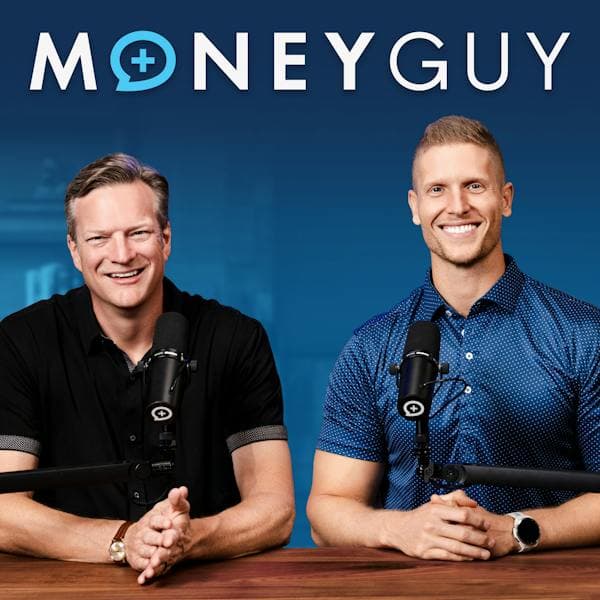
The Money Guy Show
by Brian Preston, CPA/CFP & Bo Hanson, CFA/CFP
Two fee-only financial advisors break down the Financial Order of Operations, a 9-step wealth-building framework. 617K YouTube followers and a 4.8 Apple rating.
The Investing for Beginners Podcast
by Andrew Sather & Stephen Morris (with Evan Raidt)
A value investing show for beginners that explains stock analysis in plain English. Running since 2017 with a focus on fundamentals, financial statements, and avoiding common mistakes.

The Long View
by Christine Benz, Amy Arnott & Ben Johnson
Morningstar's weekly deep-dive interview show on retirement, portfolio strategy, and fund analysis. 387 episodes, hosted by Christine Benz and the Morningstar research team.