*Disclosure: This article contains affiliate links. If you purchase through these links, we may earn a commission at no additional cost to you. We only recommend books we genuinely believe in.
Quick Overview
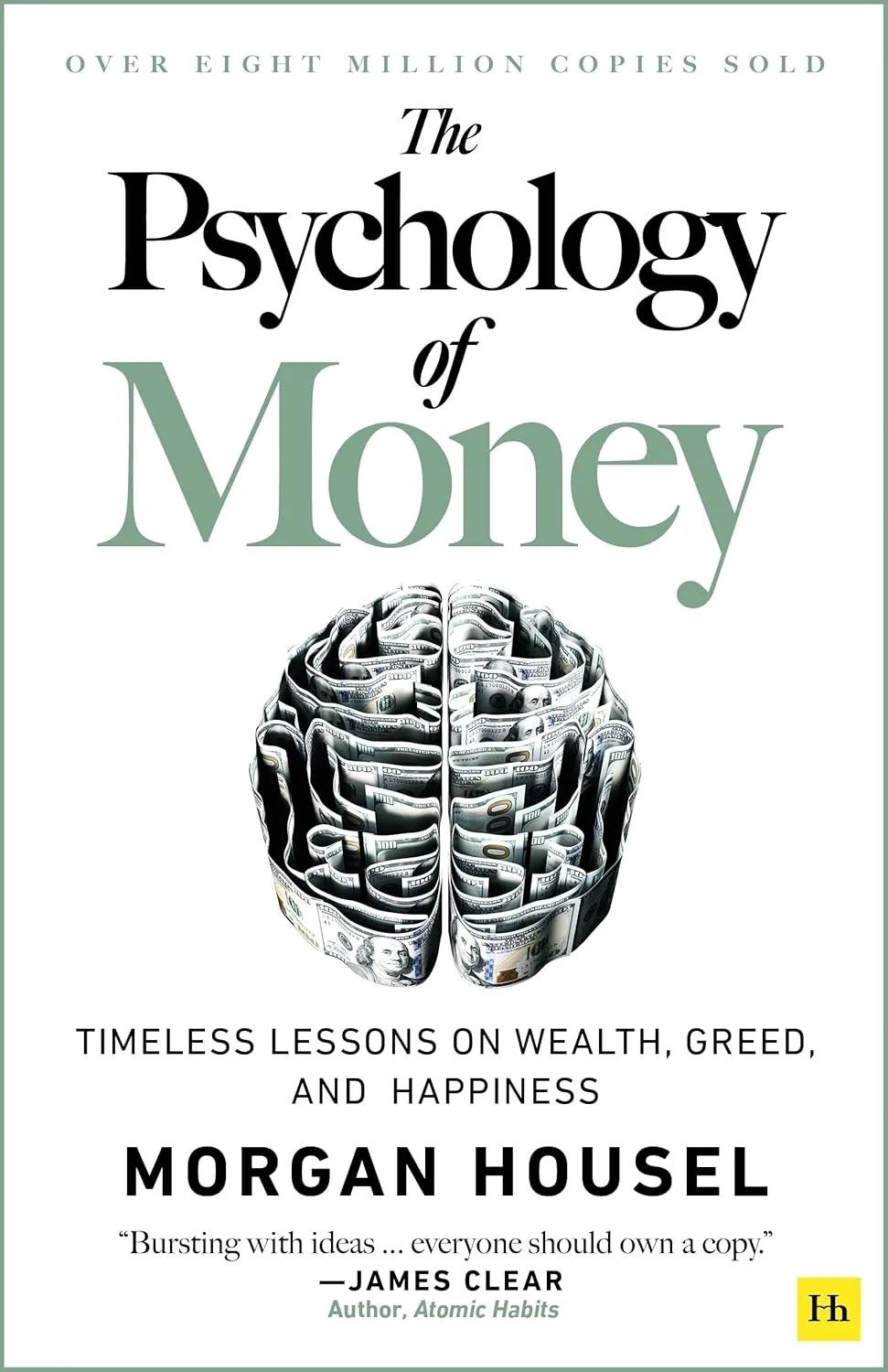
Morgan Housel spent years as a financial columnist for The Motley Fool and The Wall Street Journal watching smart people make terrible financial decisions. His conclusion: financial success has less to do with knowledge and more to do with behavior. A 2025 study by the Financial Industry Regulatory Authority (FINRA) found that 63% of American adults cannot pass a basic financial literacy test, yet the highest-wealth households in the study were not those with the most financial knowledge but those with the strongest behavioral habits: consistent saving, avoidance of high-interest debt, and long-term thinking. The Psychology of Money presents 19 short essays arguing that how you think and feel about money matters more than any spreadsheet or strategy. It has sold over 4 million copies and is now one of the best-selling personal finance books of all time.
Book Details
| Attribute | Details |
|---|---|
| Title | The Psychology of Money |
| Author | Morgan Housel |
| Publisher | Harriman House |
| Published | September 2020 |
| Pages | 256 |
| Reading Level | Beginner |
| Amazon Rating | 4.7/5 stars |
Get Your Copy
Hardcover: Buy on Amazon
Kindle: Buy on Amazon
Audiobook: Buy on Amazon
About the Author
Morgan Housel is a partner at The Collaborative Fund and former columnist at The Motley Fool and The Wall Street Journal. He has won two Best in Business awards from the Society of American Business Editors and Writers. He lives in Seattle with his wife and children.
Housel's writing style is unusually good for finance. He combines historical anecdotes, psychology research, and clear logic without ever becoming dry or technical. His central gift is finding the specific story that makes an abstract principle unforgettable.
The Book's Structure
Rather than a traditional narrative, The Psychology of Money consists of 19 standalone essays, each building on a single idea. This makes it ideal for rereading specific chapters when relevant life situations arise. The best chapters:
The Most Important Ideas
1. No One's Crazy
Every financial decision you make makes sense given the unique experiences that formed your beliefs about money. Someone who grew up during the Great Depression views cash differently than someone who grew up during the 1990s bull market. Neither is wrong. They are products of their history. This connects to what behavioral economists call loss aversion, the tendency to feel losses roughly twice as intensely as equivalent gains.
Implication: Before judging someone else's financial choices, consider the experiences that shaped their worldview. Before changing your own behavior, examine what experiences formed it.
2. The Luck and Risk Paradox
Bill Gates attended one of the only high schools in the world that had a computer in 1968. His friend and classmate Kent Evans, equally talented, died in a mountaineering accident before college. One succeeded enormously. One died young. Both outcomes were largely outside their control.
Housel's point: we attribute too much success to skill and too much failure to bad decisions. Survivorship bias ensures we mostly see the successful people and study their habits, while the equally skilled people who had worse luck are invisible.
For investors: A five-year winning streak may reflect skill, luck, or both. The honest response to success is acknowledging both, not just claiming the skill. For more on how cognitive biases affect investment decisions, read our guide on behavioral finance basics.
3. Never Enough: The Goalpost That Keeps Moving
Housel opens this chapter with the story of Rajat Gupta, a Goldman Sachs director who had reached the pinnacle of legitimate financial success, with $100 million in personal net worth, yet risked everything through insider trading for a chance at more.
The psychology of never enough:
| Net Worth | Typical Response |
|---|---|
| $0 | "If I had $100,000 I'd be set" |
| $100,000 | "If I had $500,000 I'd be comfortable" |
| $500,000 | "If I had $1 million I'd be fine" |
| $1 million | "If I had $5 million I'd be truly free" |
| $5 million | "I need more to maintain this lifestyle" |
The goalpost moves with wealth. This is not pathological, it is almost universal. The defense is to define "enough" explicitly, in advance, and refuse to let it drift.
4. Compounding: The 8th Wonder of the World
This chapter uses Warren Buffett as the most dramatic illustration of compounding in history.
Warren Buffett's wealth timeline:
| Age | Net Worth | % of Final Wealth |
|---|---|---|
| 10 | $9,000 | 0.0001% |
| 30 | $1 million | 0.0011% |
| 44 | $1 billion | 0.11% |
| 52 | $3.8 billion | 0.42% |
| 65 | $19 billion | 2.1% |
| 92 | ~$90 billion | 100% |
The key insight: 96% of Buffett's net worth was accumulated after his 65th birthday. His skill was investing brilliance. His secret weapon was time. He started at age 10 and never stopped. You can model the power of compounding yourself with our compound interest calculator.
The math of compound growth:
$10,000 invested at 10% annually:
Year 10:  $25,937
Year 20:  $67,275
Year 30: $174,494
Year 40: $452,593
The last 10 years from Year 30 to Year 40 produce more wealth ($278,099) than the first 30 years combined ($174,494). Compounding is counterintuitive because the largest gains always come at the end.
5. Getting Wealthy vs. Staying Wealthy
These require opposite skills:
| Getting Wealthy | Staying Wealthy |
|---|---|
| Optimism | Pessimism about future risks |
| Concentration | Diversification |
| Risk-taking | Risk avoidance |
| Bold decisions | Caution |
| Speed | Patience |
Many people who build wealth through concentrated bets and entrepreneurial risk eventually lose it because they cannot shift mental models. The investor who made a fortune taking big swings keeps taking big swings even after they have achieved financial independence. Preservation requires a different temperament than accumulation.
6. Tails, You Win
In a broad stock portfolio, the vast majority of individual stocks are mediocre or losing investments. The portfolio's returns are driven by a tiny number of spectacular winners.
Amazon's return to shareholders, 1997-2023:
The stock fell more than 10% on 51 different days over that period. It fell more than 30% on three separate occasions. It fell 94% in the dot-com bust. Yet someone who held from the IPO through 2023 was up roughly 200,000%.
For diversified investors: You do not need to identify the tail events in advance. You need to own the whole basket and not sell when individual positions fall. The index fund investor automatically owns every tail event in the market.
7. Freedom: The Highest Dividend Money Pays
Housel argues that the primary value of money is not what it can buy but what it enables: control over your time.
"The highest form of wealth is the ability to wake up every morning and say: I can do whatever I want today."
Research on happiness and money:
A 2010 Princeton study found that emotional wellbeing increased with income up to approximately $75,000 per year (in 2010 dollars), with diminishing returns above that. A 2021 Matthew Killingsworth study using real-time wellbeing data found that wellbeing continued to increase with income beyond $75,000 but at a decreasing rate. A 2024 update by Kahneman and Killingsworth reconciled their findings: happiness plateaus for the least happy 15% of people around $100,000, while the happiest 30% continue seeing benefits well beyond $500,000.
The practical implication: Optimizing for income above your baseline wellbeing level often trades the thing money can buy (time control) for more money. There are diminishing returns on additional income and increasing returns on additional time control.
8. Wealth Is What You Don't See
When you see someone driving a Ferrari, you think about how rich they must be. What you cannot see: whether they own it or leased it, how much debt they carry, whether their net worth is positive, whether they sleep well at night.
Housel's observation:
Spending money to signal wealth to others produces the paradox that the best-looking wealthy people often have the least actual wealth. The genuinely wealthy person you never notice is the one who drives a ten-year-old car and maxes out their retirement accounts.
The wealth-income distinction:
| Concept | Visible? | What It Measures |
|---|---|---|
| Income | Partially | Money flowing in |
| Spending | Very visible | Money flowing out |
| Wealth | Invisible | Money kept |
Wealth is the gap between income and spending, accumulated over time. It is almost entirely invisible from external observation.
9. Save Money
Housel's practical prescription is deliberately simple: savings rate matters more than investment returns for most people. For a practical tool to track your savings, see our budget calculator.
Impact of savings rate vs. investment return on 30-year wealth accumulation ($60,000 income):
| Savings Rate | 6% Return | 8% Return | 10% Return |
|---|---|---|---|
| 5% | $142,000 | $183,000 | $237,000 |
| 10% | $284,000 | $366,000 | $474,000 |
| 20% | $567,000 | $731,000 | $949,000 |
| 30% | $851,000 | $1,097,000 | $1,423,000 |
| 50% | $1,418,000 | $1,828,000 | $2,371,000 |
Going from a 6% to 10% return (very hard to achieve) is less impactful than going from a 10% to 30% savings rate (hard but entirely within your control).
You save by wanting less. The most powerful way to increase your savings rate is reducing your lifestyle expectations, not finding better investments.
10. Room for Error: The Margin of Safety in Personal Finance
Housel translates Graham's margin of safety concept into personal finance. The future is uncertain. Plans will not unfold as expected. The intelligent response is building buffers:
| Buffer | Purpose |
|---|---|
| 6-12 month emergency fund | Job loss, medical crisis |
| Lower spending than income | Savings in good times |
| Investment portfolio in broad index | Diversification protects against individual failure |
| No leverage on long-term investments | Cannot be forced to sell at the worst time |
| Skills in multiple areas | Career resilience |
The goal of room for error is not to plan for a specific bad scenario. It is to be resilient to the wide range of bad scenarios you cannot predict.
Housel's Personal Investment Approach
In the final chapter, Housel shares his own financial setup with unusual transparency:
His point is not that his approach is optimal for everyone. It is that financial decisions must account for the emotional and psychological dimension, not just the mathematical one. A "suboptimal" portfolio that you can hold through a crash beats an "optimal" portfolio that you abandon during panic.
Strengths & Weaknesses
What We Loved
Areas for Improvement
Who Should Read This Book
Highly Recommended For
Probably Not For
Comparison to Similar Books
| Book | Approach | Readability | Practical Depth |
|---|---|---|---|
| The Psychology of Money | Behavioral mindset | Very High | Medium |
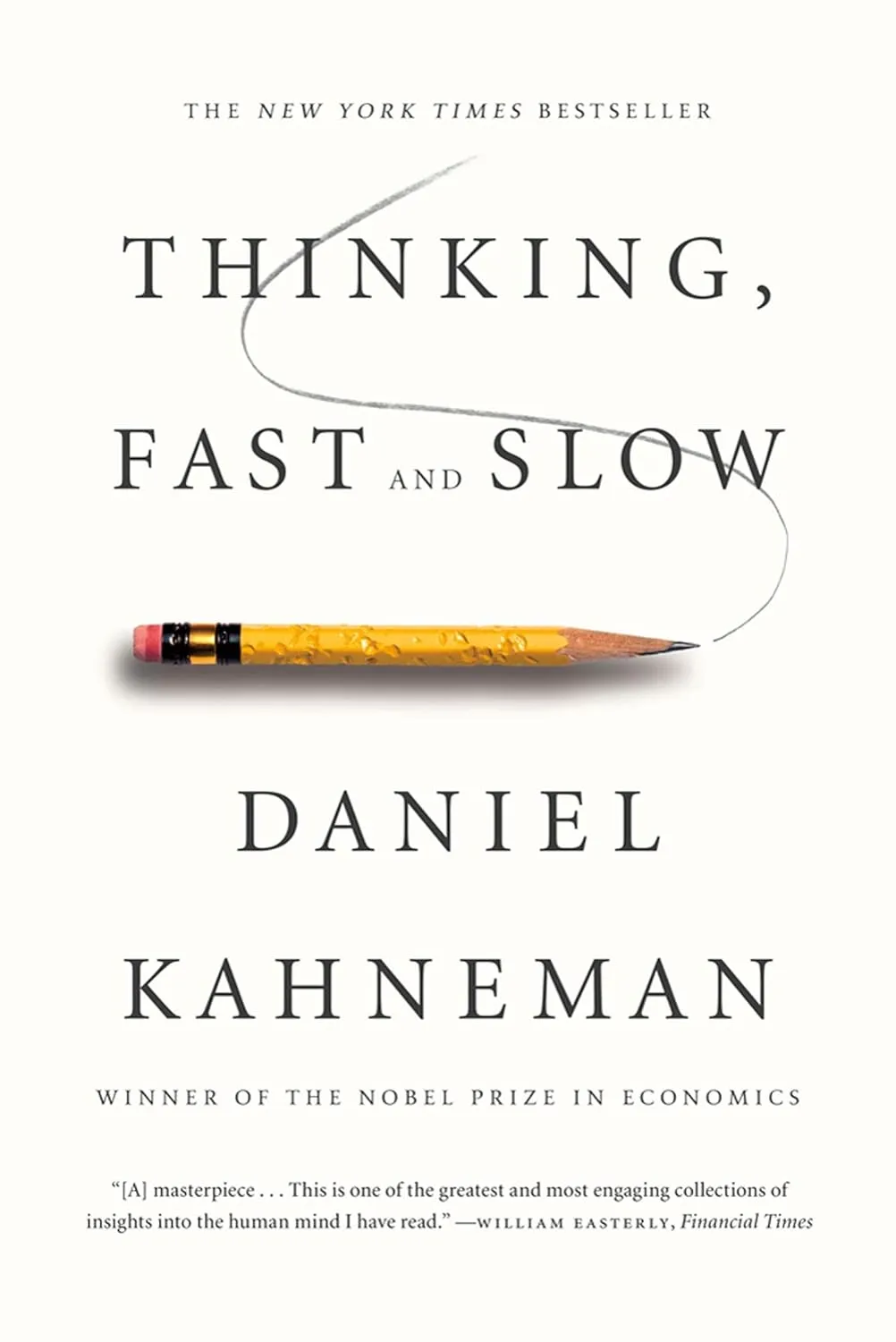
| Thinking, Fast and Slow | Cognitive bias research | Medium | High |
| Your Money and Your Brain | Investing psychology | Medium | High |
| Predictably Irrational | Consumer behavior | High | Medium |
Frequently Asked Questions
Q: Is this a beginner book or an advanced one?
A: Neither and both. Beginners will absorb the behavioral lessons that will shape their financial habits for decades. Advanced investors will find important reminders about the limits of pure optimization.
Q: Does Housel recommend specific investments?
A: He mentions index funds approvingly and shares his own approach (index funds plus a large cash buffer) in the last chapter. He deliberately avoids prescriptive investment advice, focusing instead on the psychological framework.
Q: What is the single most important lesson?
A: "The ability to do what you want, when you want, for as long as you want, is priceless. It is the highest dividend money pays." Build your financial life around purchasing time freedom, not material goods.
Final Verdict
Rating: 4.9/5
The Psychology of Money is the best personal finance book published in the last decade and probably one of the five best ever written. It will not give you a specific portfolio to copy. It will give you a framework for thinking about money that improves every financial decision you make for the rest of your life.
If you have ever made an emotional financial decision and wondered why, this book will give you the framework to understand it. The behavioral lessons Housel teaches are more durable than any specific investment strategy because human psychology does not change. For readers who want a specific investment strategy to pair with these behavioral insights, our guide on index fund investing covers the practical side.
Get Your Copy
Hardcover: Buy on Amazon
Kindle: Buy on Amazon
Audiobook: Buy on Amazon
Prices current as of publication date. Free shipping available with Prime.