*Disclosure: This article contains affiliate links. If you purchase through these links, we may earn a commission at no additional cost to you. We only recommend books we genuinely believe in.
Quick Overview
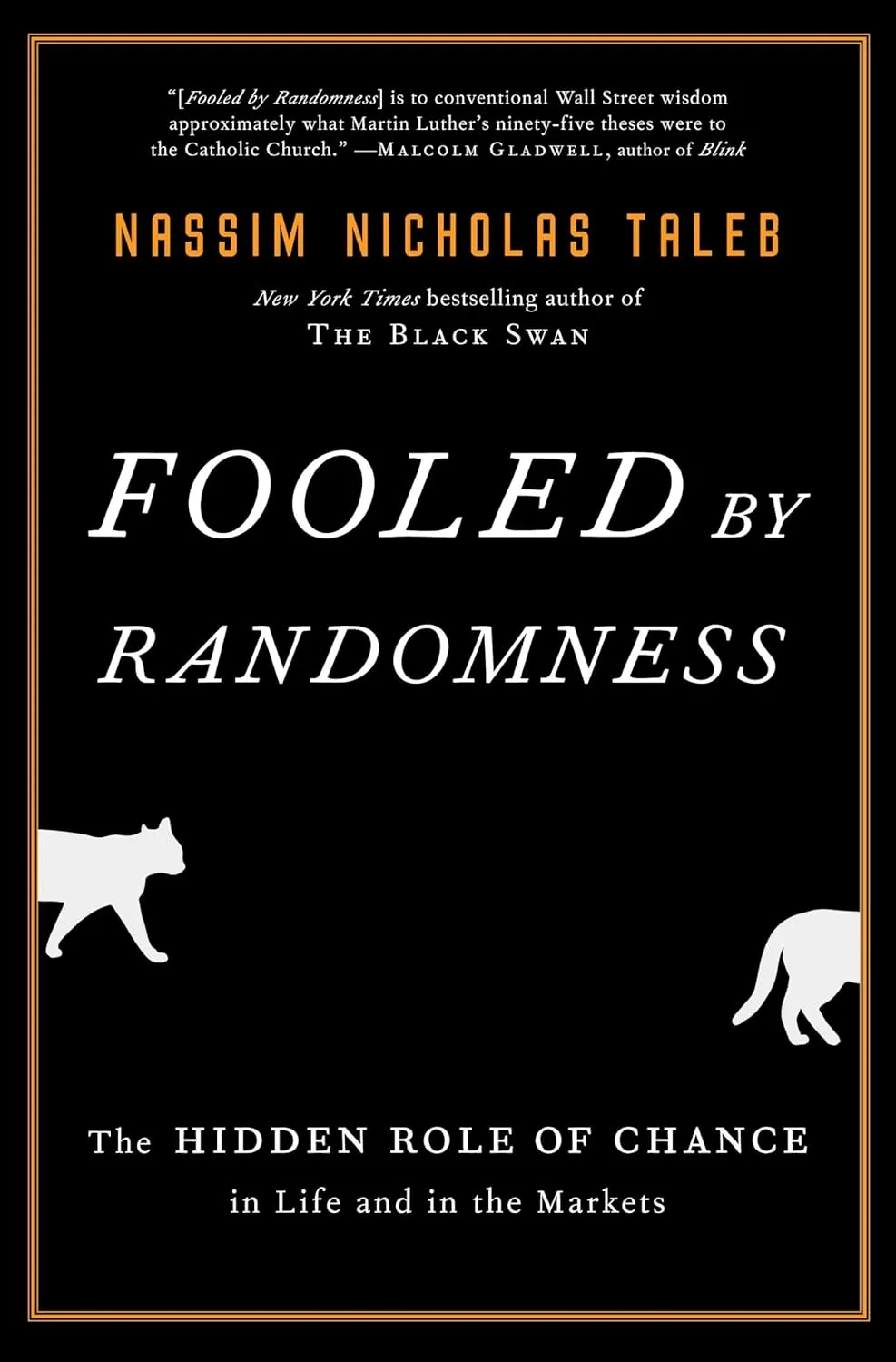
Most successful traders are not skilled. They are lucky. That is the uncomfortable thesis of Nassim Taleb's first book, and he spends 368 pages making the case with brutal clarity. Fooled by Randomness argues that humans are wired to see patterns where none exist, to attribute success to skill and failure to bad luck, and to systematically underestimate the role of chance in financial markets and life. If you have ever looked at a fund manager's 5-year track record and thought "this person is talented," this book will make you think again.
Book Details
| Attribute | Details |
|---|---|
| Title | Fooled by Randomness |
| Author | Nassim Nicholas Taleb |
| Publisher | Random House Trade Paperbacks |
| Latest Edition | 2005 (Revised) |
| Pages | 368 |
| ISBN-13 | 978-0812975115 |
| Reading Level | Intermediate |
| Amazon Rating | 4.5/5 stars |
Get Your Copy
Paperback: Buy on Amazon
Kindle: Buy on Amazon
Audiobook: Buy on Amazon
About the Author
Nassim Nicholas Taleb is a former options trader, risk analyst, and Distinguished Professor of Risk Engineering at NYU's Tandon School of Engineering. He traded derivatives for 21 years before becoming a full-time author and researcher. His trading career spanned firms like Credit Suisse First Boston, Bankers Trust, and BNP Paribas, where he specialized in options and exotic derivatives.
Taleb holds an MBA from Wharton and a PhD from the University of Paris. He is best known for his multi-volume work Incerto, which includes Fooled by Randomness, The Black Swan, The Bed of Procrustes, Antifragile, and Skin in the Game. His writing style is intentionally combative. He mocks economists, ridicules Wall Street analysts, and names specific people he considers frauds. This makes the book entertaining but also polarizing.
Key Concepts
1. Survivorship Bias
The most important concept in the book. Survivorship bias is the logical error of focusing on people or things that survived a process while ignoring those that failed, typically because the failures are invisible.
Taleb's trader example:
Imagine 10,000 traders start their careers. Each year, half lose money and leave the industry. After 5 years, approximately 312 traders remain. After 10 years, about 10 remain.
If you look at those 10 surviving traders, you will see an extraordinary group. Every one of them has beaten the market for a decade. Books will be written about their strategies. They will appear on CNBC. Investors will give them billions to manage.
But the math says this outcome is expected by pure chance. If each trader has a 50% chance of beating the market each year, then out of 10,000 starting traders, about 10 will have 10 consecutive winning years. Their success tells you nothing about their skill. It is a statistical inevitability.
Where survivorship bias appears in investing:
| Context | What You See | What You Miss |
|---|---|---|
| Mutual fund performance | Funds that survived 10+ years | Hundreds of funds that merged or liquidated |
| Hedge fund indexes | Top performers still reporting | Funds that stopped reporting after poor performance |
| Entrepreneur success stories | Founders who became billionaires | Thousands who went bankrupt |
| Stock market returns | Companies still listed | Companies that went bankrupt or were delisted |
| Real estate investing | Investors who made fortunes | Those who overleveraged and lost everything |
A 2019 study by S&P Dow Jones Indices found that over a 15-year period, 89.79% of large-cap fund managers underperformed the S&P 500. The funds you see advertised are the survivors. The failures have been quietly removed from the database.
2. Alternative Histories
Taleb introduces the concept of "alternative histories" to explain why evaluating decisions by outcomes alone is dangerous. A decision is good or bad based on the process that produced it, not the outcome.
The dentist example:
A conservative dentist invests in bonds and earns a steady 4% per year. His neighbor invests in a single tech stock and earns 500% in one year. By outcome, the neighbor looks brilliant. But Taleb asks: what if the neighbor's strategy had a 90% chance of losing everything and a 10% chance of a 500% return? The dentist's strategy had a 99% chance of earning 4% and a 1% chance of a small loss.
The neighbor won, but his decision was still reckless. The dentist lost, but his decision was still sound. Evaluating decisions by outcomes rather than by the quality of the process is the fundamental error Taleb sees everywhere in finance.
The implication for investors:
When you read about a fund manager who returned 40% last year, you are seeing one outcome from a distribution of possible outcomes. You do not know whether their strategy had a 60% chance of returning 40% and a 40% chance of losing 50%, or a 95% chance of returning 12% and a 5% chance of returning 40%. The outcome alone cannot tell you.
3. Asymmetric Payoffs
Taleb is obsessed with asymmetric payoffs: situations where the upside and downside are dramatically different in magnitude.
The turkey fallacy:
A turkey is fed every day for 1,000 days. Each day, the turkey's confidence grows that the farmer loves turkeys. On day 1,001, the turkey is slaughtered. The turkey's model of the world was based on 1,000 days of confirming evidence, and it was completely wrong.
This is the problem with strategies that collect small gains consistently but expose themselves to rare catastrophic losses. Selling out-of-the-money options is the classic example. You collect premium income month after month, building confidence in the strategy. Then a black swan event occurs, and the loss wipes out years of gains.
Asymmetric payoff scenarios:
| Strategy | Frequency of Gains | Magnitude of Gains | Frequency of Losses | Magnitude of Losses |
|---|---|---|---|---|
| Sell OTM puts | 90% of months | Small premium | 10% of months | Can be catastrophic |
| Buy OTM puts | 90% of months | Small loss (premium) | 10% of months | Can be very large |
| Index fund buy-and-hold | Most years | Market average | Some years | Market drawdown |
| Concentrated stock bet | Variable | Can be huge | Variable | Can be total loss |
Taleb's preference is for strategies with limited downside and unlimited upside, even if they lose money most of the time. He would rather lose small amounts consistently and make enormous gains occasionally than make small gains consistently and face ruin occasionally.
4. The Problem with [Volatility](/glossary/volatility) as Risk
Modern finance equates volatility with risk. The Sharpe ratio measures return per unit of volatility. Portfolio optimization minimizes volatility for a given expected return.
Taleb thinks this is wrong. Volatility measures the frequency and magnitude of price swings. It does not measure the risk of permanent capital loss. A strategy that loses 1% every month has low volatility but will eventually lose everything. A strategy that gains 20% most years but loses 40% occasionally has high volatility but may be safer over the long run.
Taleb's risk framework:
| Standard Finance View | Taleb's View |
|---|---|
| Risk = volatility | Risk = probability of permanent loss |
| Normal distribution models price movements | Fat tails dominate; extreme events are more common than models predict |
| Past data predicts future risk | Past data may not capture unseen risks |
| Diversification reduces risk | Diversification helps but cannot eliminate tail risk |
| Sharpe ratio measures risk-adjusted returns | Sharpe ratio penalizes strategies with rare large gains |
5. The Narrative Fallacy
Humans are wired to construct stories that explain events after they happen. Taleb calls this the "narrative fallacy." We cannot tolerate randomness, so we invent causes.
Examples in financial media:
| Event | Media Explanation | Reality |
|---|---|---|
| Stock drops 3% | "Investors concerned about inflation data" | Random noise; no single cause |
| Market rallies 2% | "Optimism about Fed policy" | Multiple factors; causation is unclear |
| Company misses earnings | "CEO execution problems" | Random variation; one quarter is not a trend |
| Fund manager outperforms | "Superior stock selection" | Could be luck; need many years to distinguish skill from chance |
I caught myself doing this after the 2020 COVID crash. I read dozens of articles explaining why the market crashed when it did, and each one sounded convincing. But none of them predicted the crash in advance. The explanations were all post-hoc narratives imposed on random events. Taleb's book made me much more skeptical of financial media explanations.
Practical Applications
How to Evaluate Fund Managers
After reading this book, I changed how I evaluate investment managers. Instead of looking at returns, I look at process:
| Question to Ask | What a Good Answer Looks Like |
|---|---|
| What is your investment process? | Clear, repeatable methodology |
| How do you manage risk? | Explicit risk limits; downside protection |
| What is your edge? | Specific, testable, not "we are smarter" |
| How long is your track record? | 20+ years (shorter tracks cannot distinguish skill from luck) |
| What was your worst drawdown? | Honest answer with explanation |
| Do you invest your own money? | Yes; skin in the game matters |
Protecting Against Tail Risk
Taleb's core practical advice is to protect against catastrophic outcomes while accepting that you cannot predict them:
Use our investment return calculator to model how different tail risk scenarios would affect your portfolio.
Recognizing Your Own Bias
The most uncomfortable part of reading Fooled by Randomness is realizing that you are not exempt from these biases. Taleb is not writing about other people. He is writing about you.
Self-assessment questions:
If you answered yes to any of these, you are fooled by randomness. The first step is awareness.
Strengths & Weaknesses
What We Loved
Areas for Improvement
Who Should Read This Book
Highly Recommended For
Probably Not For
Comparison to Similar Books
| Book | Focus | Difficulty | Key Insight |
|---|---|---|---|
| Fooled by Randomness (Taleb) | Luck vs. skill in markets | Intermediate | Survivorship bias; alternative histories |
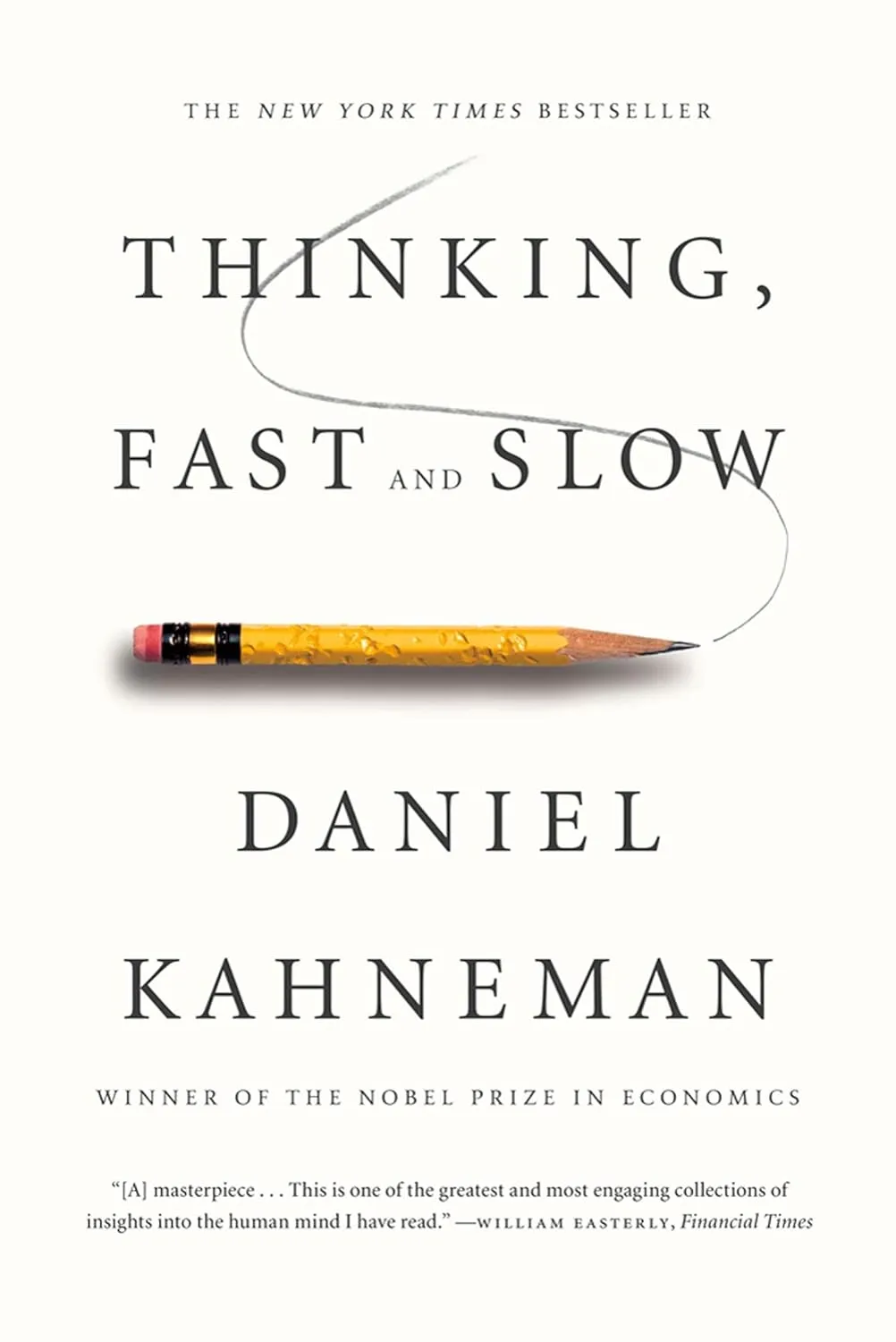
| Thinking, Fast and Slow (Kahneman) | Cognitive biases broadly | Intermediate | System 1 vs. System 2 thinking |
| The Black Swan (Taleb) | Extreme events | Advanced | Fat tails; unpredictability of rare events |
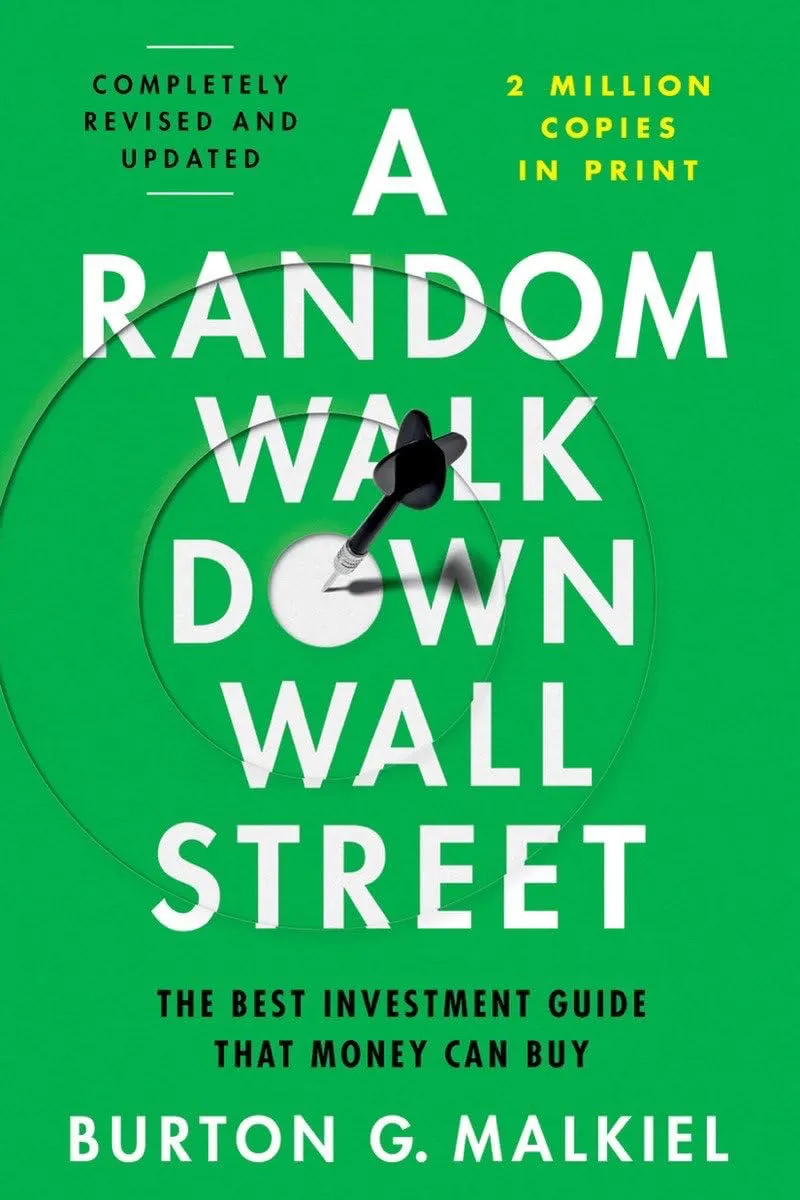
| A Random Walk Down Wall Street (Malkiel) | Market efficiency | Beginner | Markets are unpredictable; index funds win |
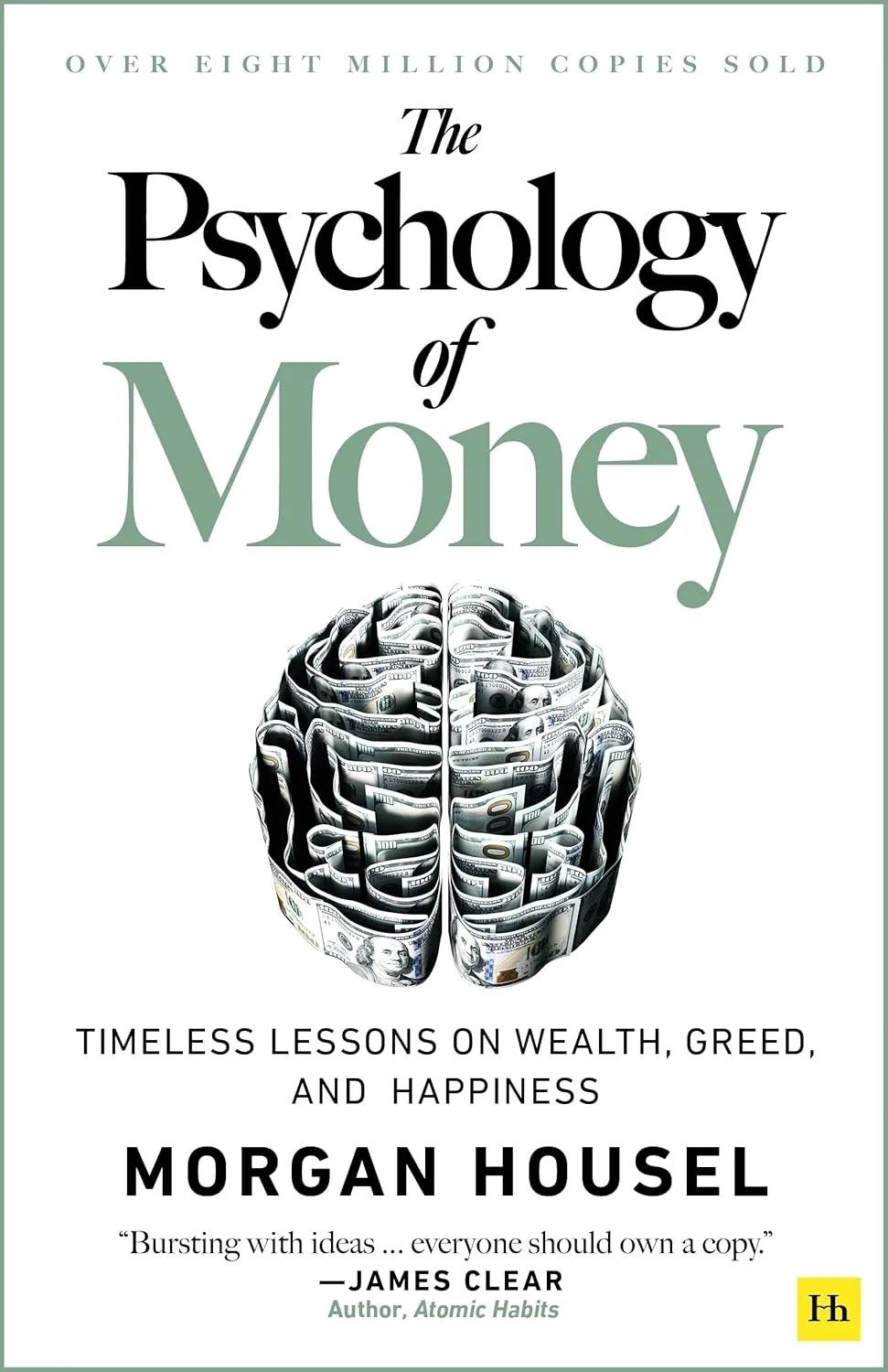
| The Psychology of Money (Housel) | Behavioral finance | Beginner | Behavior matters more than intelligence |
Read Fooled by Randomness first for the randomness framework, then Thinking, Fast and Slow for the broader cognitive bias research, then The Black Swan for the deeper dive into extreme events.
Implementation Guide
30-Day Reading and Application Plan
Week 1: Read and absorb
Week 2: Audit your portfolio
Week 3: Change your process
Week 4: Build tail risk protection
Frequently Asked Questions
Q: Is this book too academic for a regular investor?
A: No. Taleb uses stories and examples more than math. The concepts are accessible if you are willing to think probabilistically. The fictional interludes between chapters are actually the most accessible parts.
Q: Should I read this before or after The Black Swan?
A: Read Fooled by Randomness first. It sets up the framework. The Black Swan goes deeper into extreme events and fat tails, which builds on the foundation established here.
Q: Does Taleb recommend index funds?
A: Not explicitly, but his arguments lead naturally to passive investing. If you cannot distinguish skill from luck in active managers, and if survivorship bias means most surviving managers are just lucky, then index funds become the rational default.
Q: Has the book been validated by subsequent events?
A: The 2008 financial crisis, the 2020 COVID crash, and the 2023 banking crisis (Silicon Valley Bank) all validated Taleb's thesis about fat tails and the inadequacy of risk models based on normal distributions. Models that assumed housing prices could not fall nationally failed catastrophically in 2008. SVB's risk models did not account for a rapid rise in interest rates.
Q: What does Taleb think about crypto?
A: Taleb has been publicly critical of Bitcoin, arguing it fails as a currency, store of value, and inflation hedge. His critique is consistent with the book's framework: crypto enthusiasts exhibit many of the biases Taleb describes, particularly survivorship bias (focusing on early Bitcoin investors who became wealthy while ignoring those who lost everything in failed exchanges).
Final Verdict
Rating: 4.5/5
Fooled by Randomness is not a pleasant read. It attacks your confidence in your own judgment. It makes you question whether your investment success is real or manufactured by luck. It forces you to confront the possibility that you know less than you think.
That is exactly why it is essential reading. The investors who survive long-term are not the ones with the best track records. They are the ones who understand how much of performance is random and who build portfolios that can survive the unpredictable.
Read it once to be disturbed. Read it twice to internalize the lessons. Then keep it on your shelf and re-read the survivorship bias chapter whenever you are tempted to chase a hot fund manager.
Get Your Copy
Paperback: Buy on Amazon
Kindle: Buy on Amazon
Audiobook: Buy on Amazon
Prices current as of publication date. Free shipping available with Prime.