
How Often Should You Check Your Investment Portfolio?
Checking your portfolio too often is one of the most reliable ways to reduce your returns. Here is what the research says about optimal check frequency and why less attention usually means more money.

Most investors check their portfolios far too often. Not because checking is inherently dangerous, but because the act of checking creates opportunities to react, and most reactions to short-term portfolio movements destroy long-term returns.
The research on this is consistent enough to be called a finding rather than an opinion: investors who look at their portfolios less frequently tend to make fewer trades, react less to volatility, and end up with more money.
What Happens When You Check Too Often
The problem is not the information itself. The problem is what your brain does with it.
Loss aversion amplified by frequency. Nobel Prize-winning behavioral economist Richard Thaler studied how often investors check their portfolios and the decisions that follow. His key finding: investors who checked frequently experienced the same number of portfolio gains and losses as those who checked rarely, but they felt the losses much more acutely each time they logged in. Loss aversion (the psychological pain of a loss being roughly twice as strong as the pleasure of an equivalent gain) fires every time you see a negative number.
A monthly checker experiences loss aversion roughly 4 to 5 times per year (since markets are negative in about 40% of months). A daily checker experiences it 100+ times per year. The emotional weight accumulates and eventually produces action.
More data, more decisions, worse outcomes. An investor who checks daily has roughly 250 data points per year about their portfolio value. Each data point creates a potential decision point: should I sell? Should I buy more? Should I change my allocation? More decision points mean more opportunities for behavioral mistakes. Index fund investors who never change their allocation consistently outperform those who actively manage their holdings, and the primary driver is fewer mistakes, not better stock selection.
The Fidelity study (often cited, context important): Fidelity reportedly found that their best-performing accounts belonged to customers who were either deceased or had forgotten they had an account. While the exact study details are debated, the directional finding has been replicated in academic research: investor inertia, specifically not reacting to market movements, is one of the strongest predictors of above-average returns.
How Often the Research Suggests Checking
For long-term retirement accounts (30+ year horizon):
| Frequency | What You Should Do | What Happens in Practice |
|---|---|---|
| Daily | Nothing (probably) | Anxiety, reactive trades, performance drag |
| Weekly | Nothing (probably) | Still too frequent for useful signals |
| Monthly | Nothing (probably) | Marginally useful for confirming automation is working |
| Quarterly | Contribution check, mental log | Reasonable for most investors |
| Annually | Rebalance if needed, contribution increase, beneficiary check | Sufficient for most long-term investors |
The annual review is the right cadence for most investors with a long time horizon and an automated contribution strategy. The quarterly check is reasonable if you want more visibility without the noise of daily fluctuations.
For investors near or in retirement (5 years from or actively withdrawing):
Quarterly monitoring becomes more meaningful because:
- Sequence-of-returns risk is real. You may need to adjust withdrawal rates based on portfolio performance
- Rebalancing matters more as the portfolio allocation directly affects near-term withdrawals
- Tax-loss harvesting opportunities in a taxable account are worth capturing
Even at this stage, monthly is the outer bound of useful check frequency for most people. Daily checking near retirement produces the same behavioral risks as during accumulation, with the added danger that a panicked sale during a downturn can permanently impair retirement income.
What to Actually Do When You Check
The reason to check your portfolio is to take a specific action, not to obtain emotional feedback about recent market movements.
Useful actions during a portfolio check:
| Action | Frequency | Trigger |
|---|---|---|
| Verify automatic contributions are processing | Quarterly | Confirm the automation is working |
| Check if any contribution increases are warranted | Annually (Jan) | Salary increase, life change |
| Rebalance if allocation has drifted 5%+ from target | Annually or when triggered | Portfolio review |
| Update beneficiary designations | Annually or after life events | Life change (marriage, divorce, children) |
| Increase contribution percentage | Annually | Raise, bonus, debt payoff |
| Review investment options in 401(k) for cost changes | Annually | Plan year change |
| Tax-loss harvest opportunities | Opportunistically in taxable account | Significant unrealized losses |
Notice what is not on this list: reacting to recent performance, switching funds based on year-to-date returns, moving to cash because of economic news, or increasing stock allocation because the market has been rising.
The wrong reasons to check:
- Market news triggered anxiety
- A friend mentioned their portfolio is up
- You read a headline about a crash
- You want to feel good about gains
- You want to assess whether to sell
None of these check-triggers produce useful actions. They produce noise that competes with your long-term investment plan.
The Specific Costs of Over-Checking
The performance penalty of reactive trading. DALBAR's annual Quantitative Analysis of Investor Behavior has measured the gap between market returns and actual investor returns for over 30 years. The 2026 QAIB report, released in April 2026, revealed something unusual: in 2025, the gap between the S&P 500 and the average equity fund investor narrowed to just 0.72 percentage points (72 basis points), the third smallest gap since 1985. The S&P 500 returned 17.88% in 2025, while the average equity investor earned 17.16%. (Read the DALBAR press release.)
However, 2024 saw the second largest performance gap of the past decade, at 848 basis points. The long-term picture remains clear: over 20-year horizons, the average equity fund investor consistently earns less than the index they invest in because they buy after prices rise and sell after prices fall.
The 20-year average gap (through 2025):
- S&P 500 annualized return: approximately 10%
- Average equity fund investor annualized return: approximately 7 to 8%
- Annual gap: approximately 2 to 3 percentage points
On $100,000 over 20 years:
- Staying invested at 10%: approximately $673,000
- Average investor behavior at 7.5%: approximately $424,000
- Behavioral penalty: approximately $249,000
The cost of reacting to portfolio fluctuations, of checking frequently and making decisions based on what you see, can amount to hundreds of thousands of dollars over 20 years. That is an extraordinary price for real-time information you did not need.
Building Better Portfolio Habits
Set a review calendar and stick to it. Choose two or four dates per year to review your portfolio. Put them on your calendar now. Outside of those dates, close the app. This turns portfolio management from a reactive behavior into a scheduled one.
Remove the app from your home screen. Out of sight significantly reduces compulsive checking. If you have to navigate to the brokerage app, you are less likely to check from habit than from intention.
Stop watching financial news during market volatility. Financial media's job is to make you feel like you need to act. "Markets plunge" is a headline that drives clicks. The correct response to most market plunges is nothing, but financial media cannot monetize "nothing." Recognize the incentive misalignment and limit exposure during turbulent periods.
Write an investment policy statement. A one-paragraph description of your investment plan, including asset allocation, contribution strategy, rebalancing triggers, and the conditions under which you would change anything, serves as a contract with your future self. When you feel the urge to make a reactive change, reading the statement often dissolves it. The urge is based on current fear. The statement is based on deliberate reasoning made when markets were calm.
Sample investment policy statement for a 30-year-old:
"My portfolio is allocated 80% global equities (split 65% U.S. / 35% international) and 20% bonds. I contribute $600/month automatically on the 5th of each month. I rebalance once per year in January if any allocation has drifted more than 5% from target. I will not change my fund selection or allocation based on market performance, economic news, or calendar year returns. The only conditions under which I will make a significant change are: approaching within 10 years of retirement (shift bonds to 30%), or a major life change requiring a fundamental reassessment."
Having this written means the decision is already made. When markets fall 20% and the urge to do something arises, the policy statement answers the question: you already decided. Nothing.
Real-World Examples
Example: Zoe, checked daily, learned the cost
Situation: Zoe started investing at 25 and checked her Roth IRA every morning with coffee. During a 12% market correction in her second year, she watched her $18,000 balance drop to $15,840 over six weeks. In week 7, she moved everything to a money market fund "until things stabilized."
What happened: The market recovered 8% over the following six weeks. She missed it. When she reinvested, she was buying back at approximately the same prices she sold at, plus a 6-week gap of flat money market returns.
What she changed: She deleted the brokerage app from her phone and committed to quarterly checks only. Her portfolio performance improved not because the market changed, but because she stopped interfering.
Example: Marcus, annual reviewer
Situation: Marcus set a single annual review date (first Sunday of January) for his 401(k) and Roth IRA. He checked his balances once, confirmed his automated contributions were processing, increased his 401(k) contribution by 1%, and closed the apps.
Through multiple downturns: In years when the market fell significantly, Marcus's annual review showed a lower balance than the prior year. He confirmed his allocation had not drifted too far from target (it usually had not), made no changes, and moved on.
His 15-year result: A portfolio that tracked closely to the S&P 500's actual return because he never made a reactive trade. His behavior, not his investment selection, was his primary advantage.
The portfolio check frequency that produces the best long-term outcomes is the one that gives you enough visibility to execute your plan without providing enough data to react to noise. For most investors, that is quarterly at most, and annually is sufficient.
For how this principle applies during actual market crashes, see What Happens to Your Investments If the Stock Market Crashes Tomorrow? and How to Invest During a Recession Without Panicking. Share this with someone who checks their portfolio daily.
This post is for informational purposes only and does not constitute financial advice. DALBAR research referenced is from the 2026 QAIB Report, released April 2026. Individual investor outcomes vary based on specific circumstances and decisions.
Tags
Savvy Nickel Team
Financial education expert dedicated to making complex money topics simple and accessible for everyone.
Recommended Articles

What Is an S&P 500 Index Fund and Should You Just Put Everything In It?
The S&P 500 is the benchmark most investors measure themselves against, and rarely beat. Here is what it actually is, how index funds track it, and whether a single fund is really enough.

What Is an Index Fund and Why Does Everyone Recommend Them?
Index funds are the most widely recommended investment for beginners and experts alike. Here's exactly what they are, how they work, and why the evidence behind them is so compelling.

What Is a Safe Withdrawal Rate? The 4% Rule Explained
The 4% rule is the most widely cited retirement guideline, but most people don't know where it came from or when it breaks down. Here's the honest explanation with 2026 research.
Run the Numbers
Free calculators related to this article.
Dividend Calculator
Project your dividend income year by year, track your yield on cost, and see how reinvesting dividends accelerates portfolio growth. Includes tax adjustments and dividend growth.
Open calculator →Investment Calculator
Project how your starting amount and monthly contributions grow over time. See both nominal and inflation-adjusted results so you know what your money will actually be worth.
Open calculator →Portfolio Allocation Calculator
Find the right mix of stocks, bonds, and cash for your age and risk tolerance, with dollar amounts and a glide path projection toward retirement.
Open calculator →Recommended Books
Related Glossary Terms
Investment
An investment is an asset you buy with the expectation that it will generate income or appreciate in value over time. In 2026, with the S&P 500 CAPE ratio near 42, choosing the right investments and understanding the risk-return tradeoff matters more than ever.
Portfolio
A portfolio is the complete collection of financial investments held by an individual or institution, including stocks, bonds, cash, real estate, and other assets, managed together to achieve specific financial goals within an acceptable risk level.
Mutual Fund
A mutual fund pools money from many investors to buy a diversified portfolio of stocks, bonds, or other securities, managed by professional portfolio managers.
Asset Allocation
Asset allocation is the strategy of dividing a portfolio among different asset classes like stocks, bonds, and cash based on your goals, time horizon, and risk tolerance to optimize the risk-return trade-off.
Asset Class
An asset class is a group of investments that share similar characteristics, behave similarly in the marketplace, and are subject to the same laws and regulations, with the major classes being equities, fixed income, cash, real estate, and commodities.
Diversification
Diversification is the practice of spreading investments across different assets, sectors, and geographies to reduce risk, based on the principle that not all investments will decline at the same time.
Recommended Podcasts
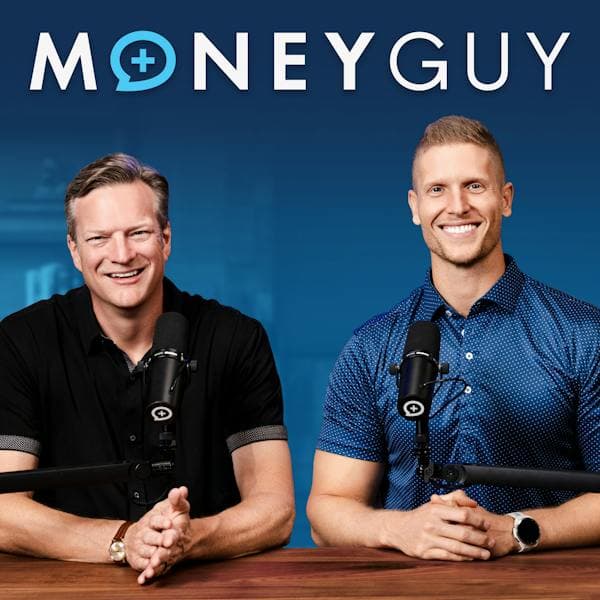
The Money Guy Show
by Brian Preston, CPA/CFP & Bo Hanson, CFA/CFP
Two fee-only financial advisors break down the Financial Order of Operations, a 9-step wealth-building framework. 617K YouTube followers and a 4.8 Apple rating.
Financial Feminist
by Tori Dunlap
Tori Dunlap hosts the number one money podcast for women, covering debt payoff, investing, and salary negotiation. New episodes every Tuesday from Her First 100K.
The Personal Finance Podcast
by Andrew Giancola
Andrew Giancola's Master Money show covers budgeting, investing, and side income with a systems-first approach. 350K monthly downloads and a 4.7 Apple rating.