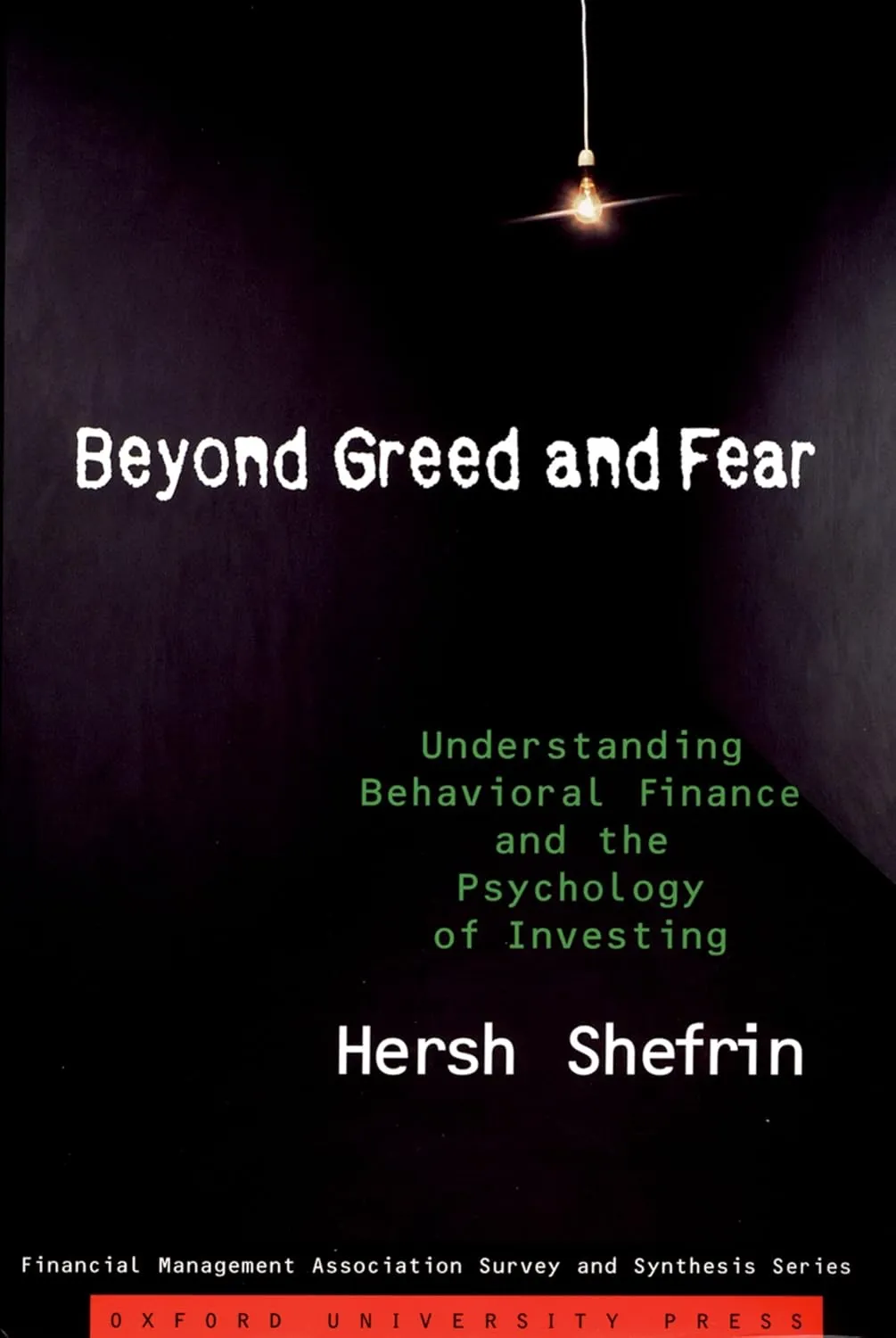
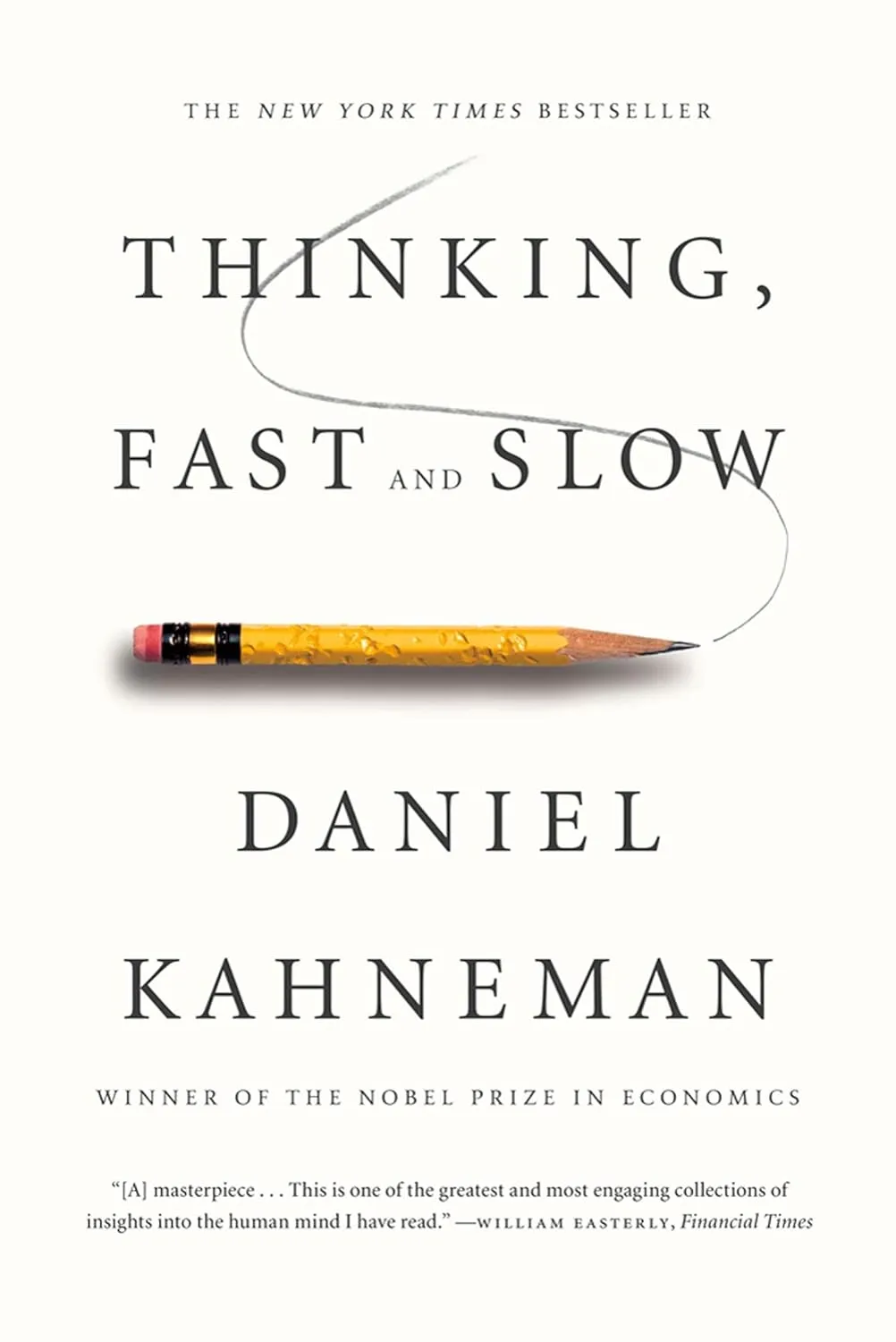
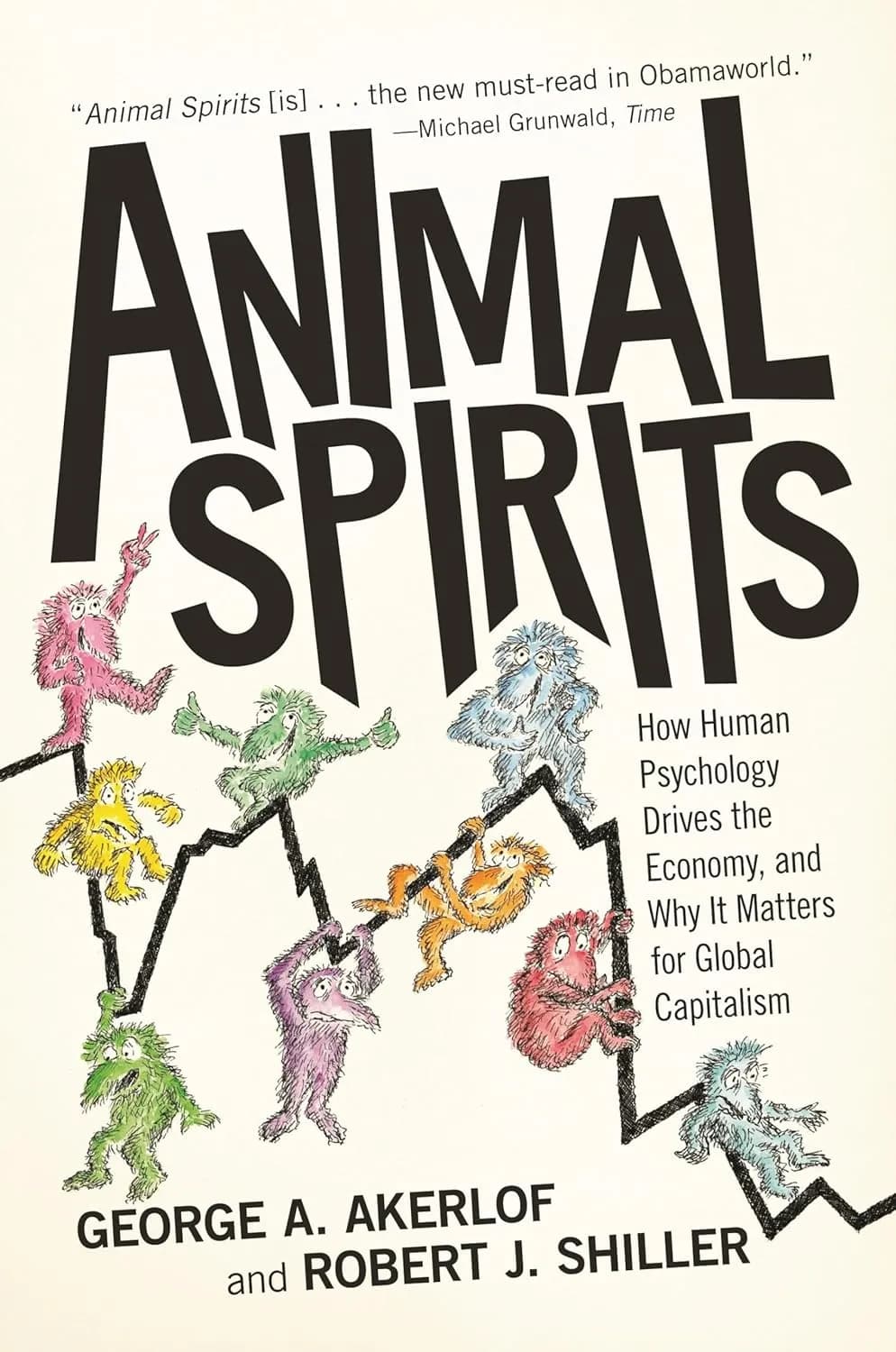
Behavioral Finance
Quick Definition
Behavioral finance studies how real investors and markets actually behave, rather than how textbook theory says they should. It documents the repeatable mental errors that cause people to buy high, sell low, trade too often, and trust the crowd at the worst possible moment.
What It Means
Standard finance theory, including the efficient market hypothesis, assumes investors are rational, markets instantly digest new information, and prices reflect all available data. Behavioral finance starts from a different place: investors are human, humans use shortcuts, and those shortcuts create patterns that show up in prices, trading volume, and returns.
The field grew out of the work of Daniel Kahneman, Amos Tversky, and Richard Thaler, then was adapted to markets by researchers like Robert Shiller, who won the Nobel Prize in Economics in 2013 partly for showing that asset prices can be driven by psychology and fads rather than fundamentals alone. Shiller's work on excess volatility, published well before the 2000 dot-com crash and the 2008 housing crisis, argued that prices swing more than changes in fundamentals can explain. Behavioral finance provided the "why": investors extrapolate recent returns, anchor on round numbers, and copy each other.
By 2026, the practical evidence for behavioral finance is everywhere in retail investing data. Brokerage platforms report that individual investors trade more after market runs, chase funds with the best trailing one-year returns, and panic sell during drawdowns only to miss the rebound. Studies of trading app behavior consistently show that notification-driven interfaces increase trading frequency and reduce returns. The rise of zero-commission trading in 2019 and the meme-stock episodes of 2021 put behavioral finance front and center, because removing the per-trade fee removed a natural brake on overtrading.
The field also matters for portfolio construction. If you know that loss aversion will tempt you to sell during a correction, you can pre-commit to a strategy that makes selling harder, like a written investment policy statement or automatic rebalancing. If you know that recency bias makes recent returns feel permanent, you can lean on dollar-cost averaging and a target-date glide path instead of timing the market.
How It Works
Behavioral finance organizes investor errors into two buckets: cognitive errors (faulty reasoning) and emotional biases (feelings that override reasoning). Most people suffer from a mix of both.
Cognitive errors
- Overconfidence. Investors consistently overestimate their ability to pick winners and time the market. Studies of retail brokerage accounts show that the most active traders earn the lowest returns, because trading costs, taxes, and bad timing eat the edge they think they have.
- Confirmation bias. People seek out information that supports their existing view and ignore evidence against it. An investor bullish on a stock reads the bullish analyst notes and skips the bearish ones.
- Representativeness. The brain judges probability by how similar something looks to a stereotype. A company with a hot product gets labeled "the next Amazon" even though the base rate of companies becoming Amazon is vanishingly small.
- Anchoring. People latch onto an initial number, like a stock's 52-week high, and judge current prices against it. A stock down 40% from its peak feels "cheap" even if the business is now worth half what it was.
Emotional biases
- Loss aversion. The pain of losing is roughly twice the pleasure of gaining the same amount, which drives the disposition effect: selling winners too early to lock in the good feeling, and holding losers to avoid realizing the bad one.
- Herding. People feel safer doing what the crowd does. In markets, herding inflates bubbles and deepens crashes, because everyone buys at the top and sells at the bottom together.
- Regret aversion. Investors avoid decisions that could produce regret, which leads to inertia. Some never start investing at all because starting feels riskier than doing nothing, even though doing nothing guarantees they miss long-term compounding.
- Mental accounting. Money gets sorted into mental buckets that change how it is spent or invested. See our mental accounting entry for the full mechanism.
Real-World Examples
Chasing past performance. Mutual fund inflows consistently track the prior year's best-performing funds, even though the data shows that past performance is a weak predictor of future returns. Investors buy the top of the leader board and bail when the fund reverts to the mean. This is why fund companies advertise one-year returns so heavily: they know recency bias sells.
Panic selling in corrections. During the March 2020 COVID crash, retail investors who sold near the bottom locked in losses and then faced the difficult decision of when to get back in. Many waited until the market had already recovered most of its losses, buying back in at higher prices than they sold. Research from Dalbar and similar studies has for years shown that the average equity fund investor earns less than the funds they hold, because their timing decisions drag down returns.
The disposition effect in action. Imagine you bought 100 shares of a stock at $50. It rises to $80, and you sell to "lock in the gain." Another stock you bought at $50 falls to $30, and you hold because "it will come back." The result: you pay taxes on the winner, let the loser keep declining, and end up with a portfolio tilted toward your worst picks. This pattern is documented in brokerage data going back decades.
Meme stock herding. The 2021 meme-stock surge showed herding and overconfidence in real time. Retail investors piled into heavily shorted names because the crowd was doing it and the recent returns looked spectacular. Many who bought after the initial spike lost large percentages when the momentum reversed. The episode is a textbook case of representativeness (assuming the pattern would continue) and herding.
| Bias | What it looks like | Cost to the investor |
|---|---|---|
| Overconfidence | Trading several times a week | Lower net returns after costs and taxes |
| Recency bias | Buying last year's top fund | Buying high, selling low on rotation |
| Loss aversion | Holding losers, selling winners | Tax inefficiency, worse portfolio quality |
| Herding | Buying what everyone is talking about | Entry near the top of a bubble |
| Anchoring | "It was $200, so $120 is cheap" | Buying a deteriorating business at a "discount" |
Key Points to Remember
- The average investor underperforms the investments they own, because their buy and sell timing is worse than buy-and-hold.
- Most biases are not character flaws. They are efficient mental shortcuts that misfire in modern markets designed to exploit them.
- Awareness alone is not enough. You need systems (automation, written rules, default allocations) that remove in-the-moment decisions.
- Behavioral finance does not prove markets are irrational everywhere. It shows that specific, predictable errors occur often enough to matter for your returns.
- The cheapest fix is usually doing less: trade less, check less, react less.
Common Mistakes to Avoid
Believing you are the exception. Overconfidence tells every investor they will beat the average. The data says most will not. Acting as if you are average, and building a low-cost diversified portfolio, is the higher-probability path. Our post on common investing mistakes beginners make covers this in depth.
Checking your portfolio too often. Frequent checking amplifies loss aversion because you see every daily dip. Investors who check monthly instead of daily report less stress and are less likely to trade impulsively. Read our guide on how often to check your investment portfolio.
Confusing a good outcome with a good decision. A lucky bet that paid off does not validate a flawed process. Over time, process drives results, not single outcomes. This is why professional investors focus on decision quality rather than scoreboard watching.
Letting taxes and emotions override rebalancing. Rebalancing forces you to sell what has done well and buy what has lagged, which feels wrong but is mechanically sound. Skipping it leaves your risk exposure drifting. See our guide on how to rebalance your portfolio.
Ignoring survivorship bias in fund data. The funds you see advertised are the ones that survived. The ones that closed are gone from the averages, making past returns look better than the experience of a typical investor. Our survivorship bias entry explains the math.
Related Concepts
Behavioral finance is the applied investing branch of behavioral economics, which covers the broader psychology of decision making. The single most studied investing bias is loss aversion, and its signature market manifestation is the disposition effect. Time-inconsistent preferences show up as hyperbolic discounting, and the refusal to walk away from bad positions traces to the sunk cost fallacy. The tension between behavioral finance and classical theory is captured in the debate over the efficient market hypothesis, and the data distortions that flatter active managers are explained by survivorship bias. For practical habits, our posts on the fear of investing that keeps people poor and what happens when the market crashes translate the theory into action. A primary academic source is the CFA Institute's research collection on behavioral finance and market efficiency.
Frequently Asked Questions
Q: Does behavioral finance mean markets are irrational and I should not invest? A: No. It means individual investors make predictable errors, and those errors can create opportunities or risks. The best response is usually a disciplined, low-cost, diversified strategy that minimizes the chance for bias to creep in, not avoiding markets entirely.
Q: Can I beat the market by exploiting other people's biases? A: Some professional strategies try, but it is hard, crowded, and expensive. For most individuals, the bigger win comes from avoiding your own biases rather than trying to profit from everyone else's.
Q: Why do I keep selling my winners and holding my losers? A: That is the disposition effect, driven by loss aversion. The fix is to set rules in advance: rebalance on a schedule, use tax-loss harvesting systematically, and judge each holding on its forward prospects, not your purchase price.
Q: Are robo-advisors a behavioral finance solution? A: Partly. They automate diversification and rebalancing, which removes some behavioral errors. But they cannot stop you from logging in and selling during a panic. The behavioral benefit depends on whether you let the automation do its job. Compare options in our guide on robo-advisors vs self-directed investing.
Q: How is behavioral finance different from behavioral economics? A: Behavioral economics is the broader science of human decision making. Behavioral finance is the subset applied to investing, markets, and portfolio decisions. The two share the same psychological foundations.