
Robo Advisors vs Self-Directed Investing: An Honest Comparison
Robo advisors charge 0.25% to manage your money. Self-directed investing is free. Is the convenience worth the fee? Here is an honest comparison with real numbers.

A 0.25% annual fee sounds trivial. Over 30 years on a $500,000 portfolio, it costs $37,500. Over a lifetime of investing, that "tiny" fee can exceed $100,000. Is the convenience worth it?
The choice between a robo advisor and self-directed investing is not just about fees. It is about how much time you want to spend managing your portfolio, how confident you are in your decisions, and how likely you are to panic-sell without guardrails.
Here is what robo advisors actually do, what self-directed investing requires, and a side-by-side comparison to help you choose.
What Robo Advisors Actually Do
Robo advisors build and manage a diversified portfolio for you based on your risk tolerance and goals. They handle three things that most investors would otherwise do manually (or skip entirely):
Automated portfolio construction. You answer a questionnaire about your age, income, goals, and risk tolerance. The robo advisor assigns you a portfolio of ETFs aligned with an appropriate asset allocation. No research required on your end.
Automatic rebalancing. When your allocation drifts (stocks outperform bonds, so your 80/20 portfolio becomes 85/15), the robo advisor sells the overweighted assets and buys the underweighted ones to restore your target. This happens automatically, typically on a daily or weekly monitoring cycle. For why this matters, read our guide on rebalancing your portfolio.
Tax-loss harvesting. In taxable accounts, the robo advisor sells losing positions to realize capital losses that offset your gains, reducing your tax bill. Betterment estimates this adds about 0.77% in annual after-tax returns. Wealthfront goes further with Direct Indexing at $100,000+, holding individual stocks instead of an S&P 500 ETF to harvest losses at the stock level. This can add 1.5 to 2% in annual after-tax returns for investors in high tax brackets.
The major robo advisors in 2026:
- Betterment: 0.25% Digital plan ($0 minimum, or $5/month if your balance is under $24,000 without $200/month recurring deposits). Premium at 0.65% ($100,000 minimum) includes unlimited access to CFP professionals.
- Wealthfront: 0.25% flat fee, $500 minimum. Direct Indexing at $100,000+. No human advisor option at any price. Includes the Path financial planning tool.
- Schwab Intelligent Portfolios: $0 advisory fee, but the platform holds approximately 6 to 10% of your portfolio in cash, which is not invested. This "cash drag" is how Schwab gets paid. The opportunity cost of holding 8% in cash instead of stocks can exceed what a 0.25% fee would cost.
- Fidelity Go: Free management on balances under $25,000. 0.35% on balances above $25,000.
What Self-Directed Investing Requires
Self-directed investing means you choose your own investments, rebalance yourself, and manage your own behavior during market downturns. The cost is $0 in advisory fees at any major brokerage (Fidelity, Schwab, and Vanguard all offer commission-free ETF and index fund trading).
The most common self-directed approach is a three-fund portfolio: a US total market index fund, an international index fund, and a bond fund. You pick your allocation (say, 80% stocks and 20% bonds), buy the funds, and check back once or twice a year.
What you are responsible for:
- Choosing your investments (30 minutes of research upfront)
- Rebalancing 1 to 2 times per year (about 30 minutes each time)
- Handling tax-loss harvesting yourself (or skipping it if you only use tax-advantaged accounts like an IRA or 401(k), where it provides no benefit)
- Managing your own behavior during market downturns (this is the hardest part)
The SEC's investor.gov provides free educational resources for self-directed investors, including guidance on choosing investments and understanding fees.
The Real Cost Comparison
The math seems straightforward: 0.25% versus 0.00%. But the real question is whether you will behave rationally for 30 years without guardrails.
On a $100,000 portfolio earning 7% average annual return over 30 years:
- Robo advisor at 0.25%: approximately $744,000 final balance (fees consumed roughly $37,500 over 30 years)
- Self-directed at 0.00%: approximately $761,000 final balance
The raw math favors self-directed by about $17,000 over 30 years on a $100,000 portfolio. But this calculation assumes you never panic sell, never chase hot funds, and never abandon your plan during a downturn. Those are big assumptions.
Vanguard's Advisor's Alpha research found that behavioral coaching alone can add up to 150 basis points (1.5%) in net returns per year by preventing panic selling and market timing. The full Advisor's Alpha framework, which includes asset allocation, rebalancing, tax-efficient strategies, and behavioral coaching, can add up to 3% in net returns over time.
A robo advisor provides a structural version of this coaching. It rebalances automatically when markets drop (buying low) and prevents you from selling during a correction because there is no "sell" button you are tempted to press. The behavioral guardrail has real, quantifiable value.
If a self-directed investor underperforms by even 0.5% per year due to behavioral mistakes (panic selling once, market timing, chasing a hot sector), the robo advisor wins on net. One panic sale during a 20% market correction can wipe out decades of fee savings.
For more on the behavioral side of investing, read our post on how the fear of investing keeps people poor.
When Each Option Makes Sense
Choose a robo advisor if:
- You want to invest and not think about it
- You have panicked or sold during a market downturn before
- You want tax-loss harvesting in a taxable account without doing it yourself
- You are starting with a small balance and want automatic allocation
Choose self-directed investing if:
- You are willing to learn the basics of a three-fund portfolio
- You can commit to checking your portfolio 2 to 4 times per year, not daily
- You want to minimize fees over a long time horizon
- You use tax-advantaged accounts (IRA, 401(k)) where tax-loss harvesting is irrelevant
The hybrid option:
Use a robo advisor for your taxable brokerage account (where tax-loss harvesting provides real value) and self-directed investing for your IRA and 401(k) (where tax-loss harvesting provides no benefit since there are no taxable gains). This captures the tax efficiency of the robo advisor where it matters and avoids the fee where it does not.
If you want a "set it and forget it" option that is even simpler than a robo advisor, a target-date fund handles allocation and rebalancing automatically within a single fund, often at a lower cost than a robo advisor.
Robo Advisor vs Self-Directed Investing
| Feature | Robo Advisor | Self-Directed |
|---|---|---|
| Annual fee | 0.25% (Betterment, Wealthfront) | $0 |
| Rebalancing | Automatic, continuous | Manual, 1-2x per year |
| Tax-loss harvesting | Automatic (taxable accounts) | Manual or skip |
| Investment choices | Selected for you | You choose (typically 3-fund portfolio) |
| Behavioral guardrails | Built in (no sell button temptation) | Self-imposed (requires discipline) |
| Setup time | 15 minutes | 30 minutes |
| Ongoing time | Near zero | 1-2 hours per year |
| Best for | Hands-off investors, panic-prone investors | Fee minimizers, disciplined investors |
Real-World Examples
Example: Alex, 26, using Betterment
Situation: Alex opened a Betterment account with $500/month automatic contributions. He had no interest in learning about asset allocation or rebalancing.
What he did: Set up recurring deposits and selected a moderate risk profile. Never logged in except to increase the contribution after a raise. During the 2025 market correction, the portfolio dropped about 15%. He felt the urge to check daily but had no mechanism to sell or change allocation easily, so he did nothing.
Result: After 3 years, balance reached approximately $19,800. The robo advisor rebalanced during the dip automatically, buying undervalued positions. Total fees paid over 3 years: about $99. Zero stress, zero decisions beyond the initial setup.
Example: Rachel, 31, self-directed at Fidelity
Situation: Rachel chose a three-fund portfolio at Fidelity: FZROX (US total market), FZILX (international), FXNAX (bonds). She pays $0 in advisory fees and $0 in fund expense ratios.
What she did: Set her allocation to 80/15/5 (stocks/international/bonds). Rebalances once per year in January. During the 2025 correction, her portfolio dropped 16%. She checked it daily for two weeks, felt nauseous, but did not sell. The behavioral test was real: she had to talk herself out of selling multiple times.
Result: Over 3 years, saved approximately $120 in fees compared to a robo advisor. The behavioral cost was significant: two weeks of anxiety and the temptation to abandon her plan. She passed the test, but acknowledges it was harder than expected. For investors who are not confident they can pass that test, a robo advisor's guardrails are worth the fee.
Common Mistakes
Choosing a robo advisor and then also trying to pick individual stocks. This defeats the purpose. If you are paying 0.25% for automated portfolio management, let it manage your portfolio. Picking stocks on the side reintroduces all the behavioral problems the robo advisor is supposed to prevent.
Choosing self-directed investing but checking the portfolio daily. Daily checking leads to emotional reactions. The whole point of self-directed investing is low-maintenance, long-term discipline. Check 2 to 4 times per year.
Ignoring the cash drag in Schwab Intelligent Portfolios. Schwab charges $0 advisory fee, but holds roughly 6 to 10% of your portfolio in uninvested cash. On a $100,000 portfolio over 30 years, holding 8% in cash instead of stocks can cost you more than $50,000 in foregone returns. The "free" robo advisor can be more expensive than the 0.25% alternatives.
Assuming tax-loss harvesting matters in an IRA or 401(k). It does not. Tax-advantaged accounts have no taxable gains, so harvesting losses provides zero benefit. If all your investments are in retirement accounts, the robo advisor's tax-loss harvesting feature is worthless to you.
The Bottom Line
The fee difference between a robo advisor and self-directed investing is small. The behavioral difference is large. Choose based on your temperament, not just the math.
Both paths are vastly better than not investing at all. The worst choice is paralysis: spending months researching whether to use a robo advisor while your money sits in a 0.01% checking account earning nothing.
If you want zero involvement, start with a robo advisor. If you want maximum control and are willing to learn, read our guide to the three-fund portfolio. Either way, the most important step is the first one.
This post is for informational purposes only and does not constitute financial advice. Robo advisor pricing and features are current as of July 2026 and may change. Past performance does not guarantee future results. Consult a financial professional for personalized advice.
Tags
Savvy Nickel Team
Financial education expert dedicated to making complex money topics simple and accessible for everyone.
Recommended Articles

What to Do If You Lose Everything Financially
Chapter 7 stays on your credit report 10 years, Chapter 13 for 7. But 99% of non-dismissed Chapter 7 cases discharge. Here is how to rebuild from zero.

How to Freeze Your Credit and Why It Is the Single Best Fraud Prevention Step
A credit freeze is free, takes 30 minutes, and prevents anyone from opening credit accounts in your name. It is the single best fraud prevention step you can take. Here is exactly how to freeze your credit at all three bureaus.

How the Roth IRA Saves You Money on Taxes Decades Later
The Roth IRA's tax advantage is invisible today but enormous over time. Here is exactly how it works, who it benefits most, and why starting early changes everything.
Run the Numbers
Free calculators related to this article.
Dividend Calculator
Project your dividend income year by year, track your yield on cost, and see how reinvesting dividends accelerates portfolio growth. Includes tax adjustments and dividend growth.
Open calculator →Investment Calculator
Project how your starting amount and monthly contributions grow over time. See both nominal and inflation-adjusted results so you know what your money will actually be worth.
Open calculator →Portfolio Allocation Calculator
Find the right mix of stocks, bonds, and cash for your age and risk tolerance, with dollar amounts and a glide path projection toward retirement.
Open calculator →Recommended Books
Related Glossary Terms
Vesting
Vesting is the process by which you earn full ownership of employer-provided assets over time. It applies to 401(k) employer matches, stock options, RSUs, and pension benefits, with schedules that can be immediate, cliff, or graded.
AMT
The Alternative Minimum Tax is a parallel tax system that ensures high-income earners pay a minimum level of tax by limiting certain deductions and preferences. You owe whichever is higher: regular tax or AMT.
Portfolio
A portfolio is the complete collection of financial investments held by an individual or institution, including stocks, bonds, cash, real estate, and other assets, managed together to achieve specific financial goals within an acceptable risk level.
83(b) Election
An 83(b) election lets recipients of restricted stock pay tax on the grant-date value instead of the vesting-date value, converting future appreciation into lower capital gains rates.
Asset Allocation
Asset allocation is the strategy of dividing a portfolio among different asset classes like stocks, bonds, and cash based on your goals, time horizon, and risk tolerance to optimize the risk-return trade-off.
Asset Class
An asset class is a group of investments that share similar characteristics, behave similarly in the marketplace, and are subject to the same laws and regulations, with the major classes being equities, fixed income, cash, real estate, and commodities.
Recommended Podcasts
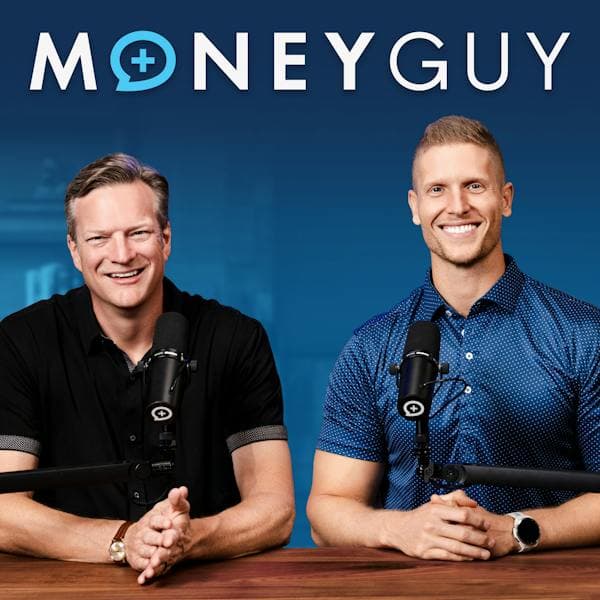
The Money Guy Show
by Brian Preston, CPA/CFP & Bo Hanson, CFA/CFP
Two fee-only financial advisors break down the Financial Order of Operations, a 9-step wealth-building framework. 617K YouTube followers and a 4.8 Apple rating.
Financial Feminist
by Tori Dunlap
Tori Dunlap hosts the number one money podcast for women, covering debt payoff, investing, and salary negotiation. New episodes every Tuesday from Her First 100K.
The Personal Finance Podcast
by Andrew Giancola
Andrew Giancola's Master Money show covers budgeting, investing, and side income with a systems-first approach. 350K monthly downloads and a 4.7 Apple rating.