*Disclosure: This article contains affiliate links. If you purchase through these links, we may earn a commission at no additional cost to you. We only recommend books we have personally read and genuinely believe in.
Quick Overview
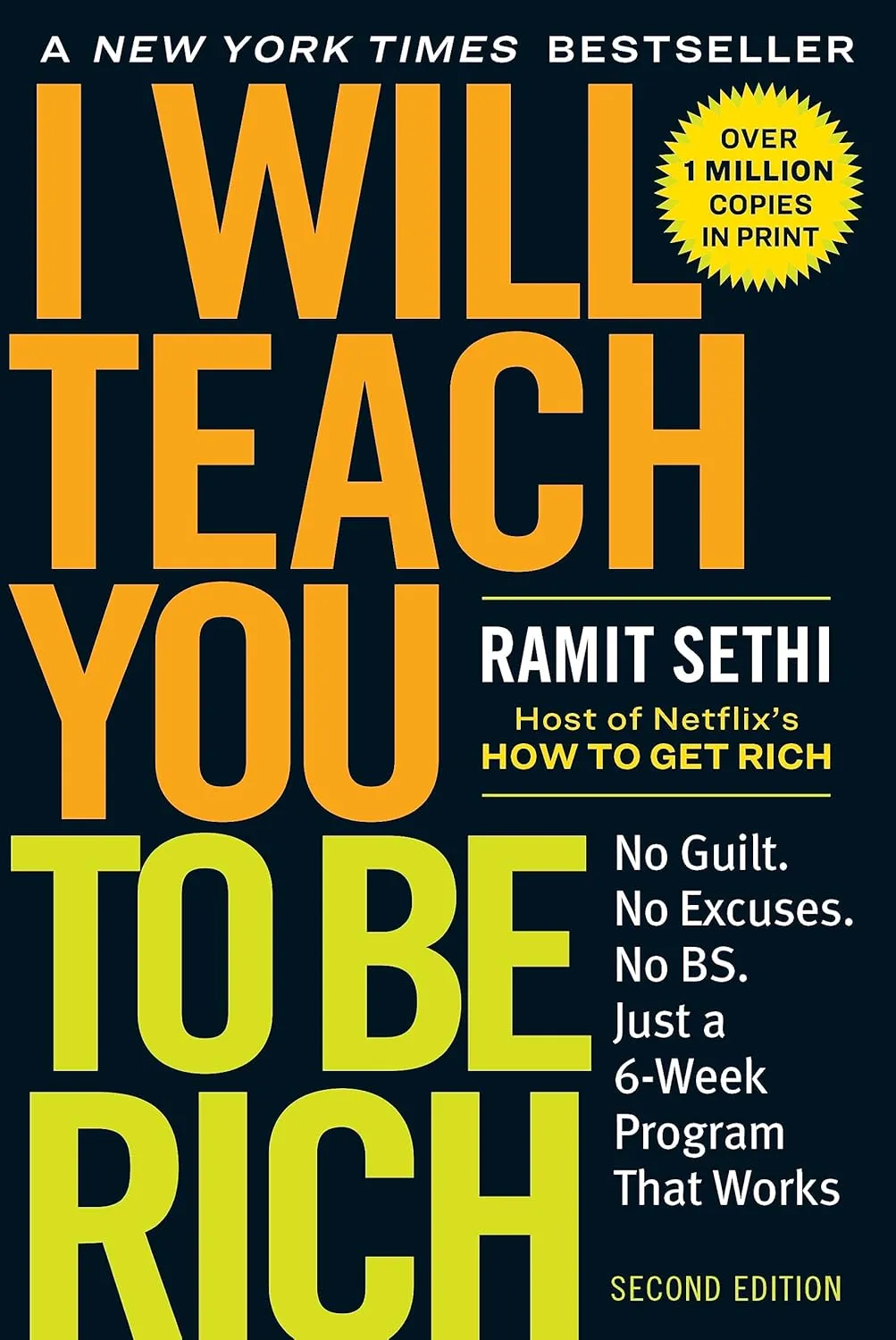
Ramit Sethi says you should spend up to 35% of your take-home pay on whatever you want, guilt-free. That is not the kind of advice most personal finance authors give. His argument is that traditional budgeting fails because it requires constant willpower, and humans are not built for permanent deprivation. Instead, automate your savings and investments, optimize your banking and credit card infrastructure, and then spend freely on what genuinely matters to you while cutting ruthlessly on everything else.
The second edition (2019) updates the content for modern financial tools, apps, and investment platforms. The book has sold over one million copies, and Sethi's Netflix show "How to Get Rich" (2023) brought his philosophy to an even wider audience. His Conscious Spending Plan remains one of the most practical money management frameworks available in 2026.
Book Details
| Attribute | Details |
|---|---|
| Title | I Will Teach You to Be Rich |
| Author | Ramit Sethi |
| Publisher | Workman Publishing |
| First Published | 2009 |
| Second Edition | 2019 |
| Pages | 352 |
| Reading Level | Beginner |
| Amazon Rating | 4.7/5 stars |
Get Your Copy
Paperback: Buy on Amazon
Kindle: Buy on Amazon
Audiobook: Buy on Amazon
About the Author
Ramit Sethi graduated from Stanford with a BS and MS in technology and human factors, and later earned an MBA from Stanford Graduate School of Business. He started his personal finance blog (iwillteachyoutoberich.com) as a college student and built it into a multi-million dollar business. Unlike most personal finance authors, he explicitly rejects the frugality-first approach, focusing instead on automating financial systems and spending freely on things that genuinely matter while cutting aggressively on things that do not. His podcast and Netflix show have made him one of the most recognized voices in personal finance for millennials and Gen Z.
The Core Philosophy: Conscious Spending
Sethi's fundamental insight: most personal finance advice focuses on restricting spending, which requires constant willpower and eventually fails. His approach focuses on automating savings and investments so they happen without decision or willpower, optimizing the infrastructure (bank accounts, credit cards) to maximize returns with zero effort, and conscious spending. That means spending freely on what you genuinely love and cutting ruthlessly on what you do not.
The Conscious Spending Plan:
| Category | Suggested % of Take-Home Pay |
|---|---|
| Fixed costs (rent, utilities, debt payments) | 50-60% |
| Investments | 10% |
| Savings goals (vacation, emergency fund, car) | 5-10% |
| Guilt-free spending | 20-35% |
The guilt-free spending category is deliberate. Sethi argues that budgeting systems that allocate nothing for pleasure fail because humans are not built for permanent deprivation. Design a system that allows guilt-free spending on your genuine priorities. For a different approach to budgeting, see why budgets fail and what actually works.
Week 1: Optimize Your Credit Cards
Sethi opens with credit cards because most young adults have them but manage them poorly.
The Credit Card Optimization Framework
Step 1: Never carry a balance. Every financial calculation in Sethi's system assumes you pay your full balance monthly. Credit card debt at 22-29% APR is wealth destruction. Nothing else matters until this is fixed. If you are carrying balances, use our credit card interest calculator to see exactly how much it is costing you.
Step 2: Get the right cards.
| Spending Pattern | Best Card Type |
|---|---|
| High travel spending | Travel rewards card (Chase Sapphire, Amex Gold) |
| Everyday spending | 2% cash back card (Citi Double Cash, Fidelity Visa) |
| Amazon/Whole Foods heavy | Amazon Prime Rewards Visa |
| Gas and groceries heavy | Blue Cash Preferred Amex |
Sethi calculates that an optimized credit card setup vs. a default card earns approximately $500-$1,500 per year in additional rewards on typical middle-class spending.
Step 3: Call to negotiate. Sethi provides specific negotiation scripts that still work in 2026. I used his annual fee waiver script on a Chase Sapphire card I had for three years, and the representative waived the $95 fee in under two minutes. The key is to be polite, mention your history as a customer, and ask directly. These calls succeed approximately 80% of the time for customers with good payment history.
Here are the scripts:
To waive annual fees: "Hi, I've been a customer for [X] years and I'd like to have my annual fee waived."
To lower interest rates: "I've received several competing offers and I'd like my rate lowered to [X]%. Can you match that?"
To remove late fees: "I've been a reliable customer and I made one late payment. I'd like that fee waived."
Five minutes on the phone can save hundreds of dollars.
Building Credit
For people starting without credit history:
| Step | Action | Timeline |
|---|---|---|
| 1 | Secured credit card with $500 deposit | Month 1 |
| 2 | Use card for small purchases monthly | Ongoing |
| 3 | Pay in full every month | Ongoing |
| 4 | After 6-12 months, apply for standard card | Month 6-12 |
| 5 | Keep old accounts open | Ongoing |
Understanding your credit score matters because it affects everything from mortgage rates to insurance premiums. Here are the components:
| Factor | Weight | Key Action |
|---|---|---|
| Payment history | 35% | Never miss a payment |
| Credit utilization | 30% | Keep below 30% of limit |
| Length of history | 15% | Keep old accounts open |
| New credit | 10% | Limit new applications |
| Credit mix | 10% | Have multiple account types |
Week 2: Beat the Banks
Most people earn near-zero on savings accounts and pay excessive fees. Sethi's optimization saves $200-$500/year with 2 hours of work.
The Optimal Banking Setup
High-yield savings account (separate from checking):
No-fee checking account:
What to avoid:
The annual cost of not optimizing your banking:
| Situation | Annual Cost |
|---|---|
| Savings account at 0.01% vs. 4.15% on $10,000 | $414 lost |
| Monthly maintenance fee $15/month | $180 |
| 4 ATM fees $3 each per month | $144 |
| Total suboptimal banking cost | ~$738/year |
Week 3: Get Ready to Invest
Sethi provides the most direct, non-overwhelming explanation of why to invest available in any mainstream book:
The math of starting early:
| Start Age | Monthly Investment | Monthly Investment | At 65 (8% return) |
|---|---|---|---|
| 22 | $200/month | 43 years | $702,000 |
| 32 | $200/month | 33 years | $326,000 |
| 42 | $200/month | 23 years | $144,000 |
| 52 | $200/month | 13 years | $57,000 |
Starting at 22 versus 32 with the same $200/month produces $376,000 more, from exactly 10 extra years of compounding. The message: start immediately, even imperfectly. For a deeper look at this effect, read how compound interest works for teens.
The Investment Account Hierarchy
Sethi's account priority order (same as Bogleheads, but explained for beginners):
| Priority | Account | Why |
|---|---|---|
| 1 | 401(k) up to full employer match | Free money — always take it |
| 2 | Pay off high-interest debt (>8%) | Guaranteed high return |
| 3 | Roth IRA (max out if eligible) | Tax-free growth forever |
| 4 | 401(k) above match | Tax-deferred growth |
| 5 | Taxable brokerage | No limits, no restrictions |
2026 contribution limits (updated from the IRS Notice 2025-67, announced November 2025):
| Account | Annual Limit | Catch-up (50+) |
|---|---|---|
| 401(k) | $24,500 | +$8,000 |
| IRA (Roth or Traditional) | $7,500 | +$1,100 |
| HSA (individual) | $4,400 | +$1,000 |
| HSA (family) | $8,750 | +$1,000 |
Note: Workers aged 60-63 get a "super catch-up" of $11,250 on 401(k) plans in 2026, for a total of $35,750. The Roth IRA income phase-out for 2026 runs from $153,000 to $168,000 for singles and $242,000 to $252,000 for married couples filing jointly. Use our 401k calculator and Roth vs Traditional IRA calculator to plan your contributions.
Week 4: Conscious Spending
The most distinctive part of Sethi's system. Rather than budgeting every category, he identifies the four major areas of spending and lets you design your own priorities. I tried this approach after years of failing with traditional budgets. The shift was simple but powerful: I cut my streaming subscriptions, stopped buying clothes I did not need, and redirected that money to a travel fund. For the first time, I stuck with a spending plan for more than three months because it did not feel like punishment.
The four major spending areas:
| Category | Average % of Spending |
|---|---|
| Housing | 30-35% |
| Food | 10-15% |
| Transportation | 15-20% |
| Entertainment/discretionary | 15-25% |
Sethi's advice: pick the 1-2 categories that genuinely bring you joy and spend there without guilt. Cut ruthlessly on the others.
Example applications:
Person who loves travel:
Person who loves food:
The principle: optimize your financial system to fund the experiences that genuinely matter, not the ones that feel like they should matter. If you want to see how small daily savings add up, try our latte factor calculator.
Week 5: Save While Sleeping. Automating Your Finances.
This is the most practically valuable chapter in the book. I set up Sethi's automation system in about 90 minutes on a Saturday morning, and it has run without intervention for over two years. Every payday, money flows automatically into my savings, Roth IRA, and investment accounts. I never have to think about whether I am saving enough, because the system does it for me.
The Automatic Money Flow
Sethi maps out the complete automated system:
Paycheck → Checking Account
    ↓ (automatic transfer, day of paycheck)
→ Emergency Fund (high-yield savings)
→ Roth IRA contribution
→ 401(k) already deducted from paycheck

    ↓ (automatic bill pay)
→ Rent/mortgage
→ Utilities
→ Insurance
→ Debt minimum payments

    ↓ (what remains)
→ Guilt-free spending account
→ Conscious spending categories
How to set it up (step-by-step):
| Step | Action | Time Required |
|---|---|---|
| 1 | Open high-yield savings account | 15 minutes |
| 2 | Set up automatic transfer on payday | 5 minutes |
| 3 | Link 401(k) automatic contribution | Already done via HR |
| 4 | Open Roth IRA at Fidelity/Vanguard | 30 minutes |
| 5 | Set up monthly IRA auto-contribution | 5 minutes |
| 6 | Set up auto-pay for all fixed bills | 30 minutes |
| Total setup time | ~90 minutes |
After 90 minutes of setup, the financial system runs without willpower, attention, or decision-making for the rest of your life. Sethi updated his automation recommendations on his podcast in 2025, noting that apps like Monarch Money and Copilot can now auto-categorize spending across all four buckets, making it even easier to track whether you are hitting your target percentages.
Week 6: The Myth of Financial Expertise. Investing Simply.
Sethi demolishes the idea that investing requires expertise or active management. His recommendation remains the same in 2025 and 2026: low-cost index funds or target-date funds.
Target Date Retirement Funds:
For investors who want the simplest possible implementation, target date funds provide everything:
| Fund | Holds | Automatically Adjusts |
|---|---|---|
| Vanguard Target 2055 (VFFVX) | VTI + VXUS + BND | Yes, more conservative as 2055 approaches |
| Fidelity Freedom Index 2055 (FDEWX) | FSKAX + FTIHX + FXNAX | Yes |
| Schwab Target 2055 (SWYJX) | SCHB + SCHF + SCHZ | Yes |
One fund, total diversification, automatic rebalancing, globally diversified. Expense ratios 0.10-0.15%.
Three-fund portfolio (for slightly more control):
| Fund | What It Holds | Expense Ratio |
|---|---|---|
| Vanguard Total Stock Market (VTSAX/VTI) | All U.S. stocks | 0.03-0.04% |
| Vanguard Total International (VTIAX/VXUS) | All international stocks | 0.07-0.08% |
| Vanguard Total Bond Market (VBTLX/BND) | All U.S. bonds | 0.03-0.04% |
For a deeper dive into this approach, see our guide to the three-fund portfolio.
Sethi vs. Ramsey vs. Bogle
Each of these major personal finance voices has a distinct focus:
| Author | Primary Audience | Main Focus | Investment Approach |
|---|---|---|---|
| Ramit Sethi | 20-35 year olds | Systems + psychology | Index funds (explicit) |
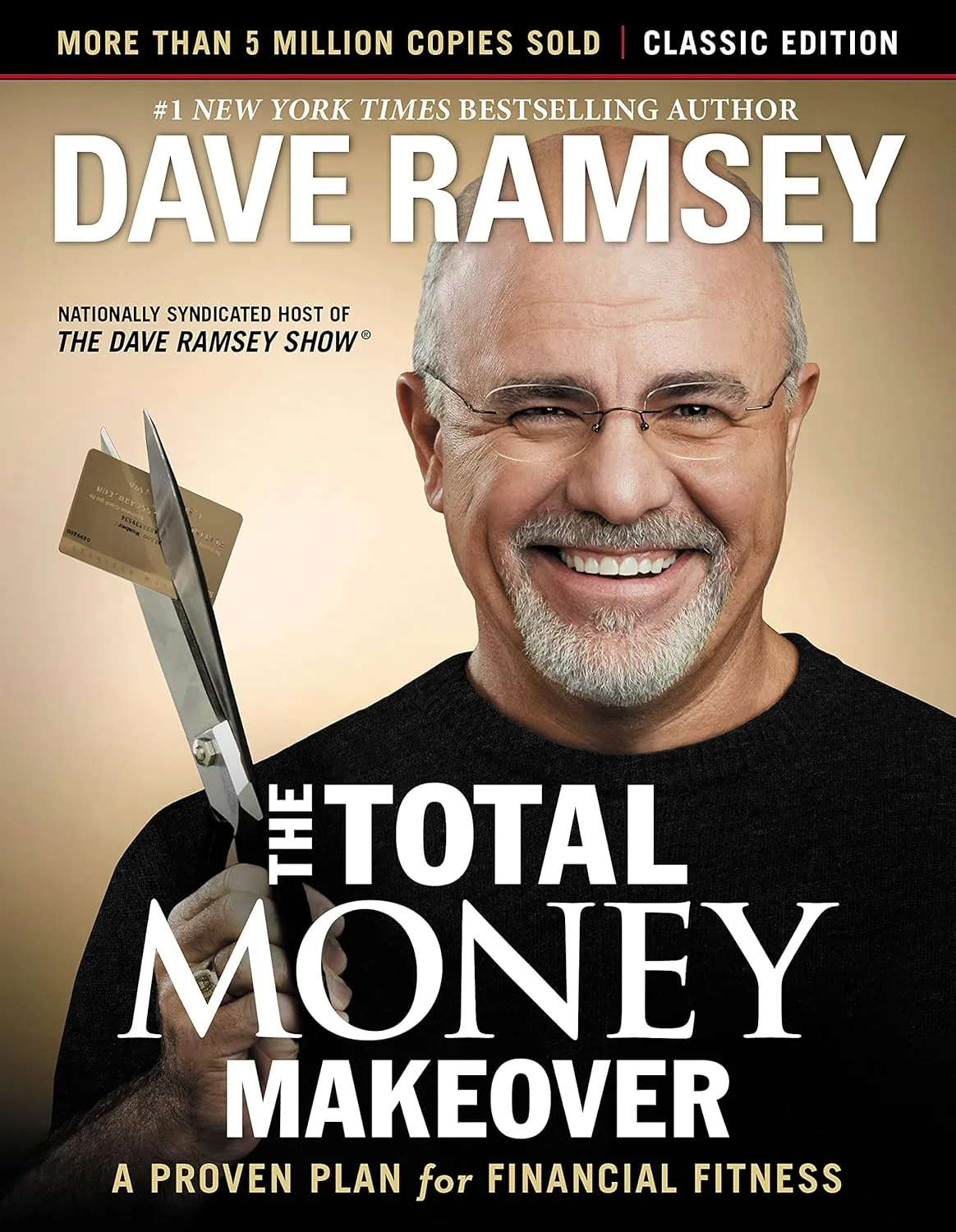
| Dave Ramsey | Debt-troubled households | Debt elimination | Active funds (flawed) |
| John Bogle | All investors | Evidence-based passive | Index funds (architect) |
| JL Collins | FIRE aspirants | Simple wealth building | Single index fund |
Sethi is unique in explicitly endorsing index funds from the first edition, integrating credit card optimization, and maintaining a non-judgmental tone about spending. For a comparison of index fund options, see what is an index fund and ETF vs mutual fund.
Strengths and Weaknesses
What We Loved
Areas for Improvement
Who Should Read This Book
Highly Recommended For
Probably Not For
Frequently Asked Questions
Q: Is the second edition significantly different from the first?
A: Yes. The 2019 second edition updates banking recommendations (online high-yield accounts are now mainstream), updates investment guidance with specific tickers, adds the conscious spending framework, and removes outdated advice. Get the second edition. Sethi has also noted on his podcast that a third edition is not imminent as of 2025, but he continues to update recommendations through his newsletter and show.
Q: What is the single most important thing to implement from this book?
A: The automated money flow. Set up the automatic transfers so savings and investing happen on payday without thought. This single action, implemented in 90 minutes, will produce more wealth over a lifetime than any investment strategy you spend years agonizing over. Use our savings rate calculator to see how different rates affect your timeline.
Q: Does Sethi recommend active investing or index funds?
A: Index funds explicitly. He recommends target date funds for those wanting maximum simplicity and a three-fund portfolio for those wanting slightly more control. He does not recommend stock picking or active management.
Final Verdict
Rating: 4.7/5
I Will Teach You to Be Rich is the best personal finance book written specifically for young adults. Its automation framework, credit card optimization, and banking setup guidance produce immediate, measurable results. The conscious spending philosophy is both psychologically healthy and financially sound. The 2026 contribution limits ($24,500 for 401(k), $7,500 for IRA) make the automation system even more powerful than when the book was written. Required reading for anyone in their 20s or 30s who has not yet set up a complete personal finance system.
Get Your Copy
Paperback: Buy on Amazon
Kindle: Buy on Amazon
Audiobook: Buy on Amazon
Prices current as of publication date. Free shipping available with Prime.
For more personal finance reading, check out our guide to teaching yourself about money.