*Disclosure: This article contains affiliate links. If you purchase through these links, we may earn a commission at no additional cost to you. We only recommend books we genuinely believe in.
Quick Overview
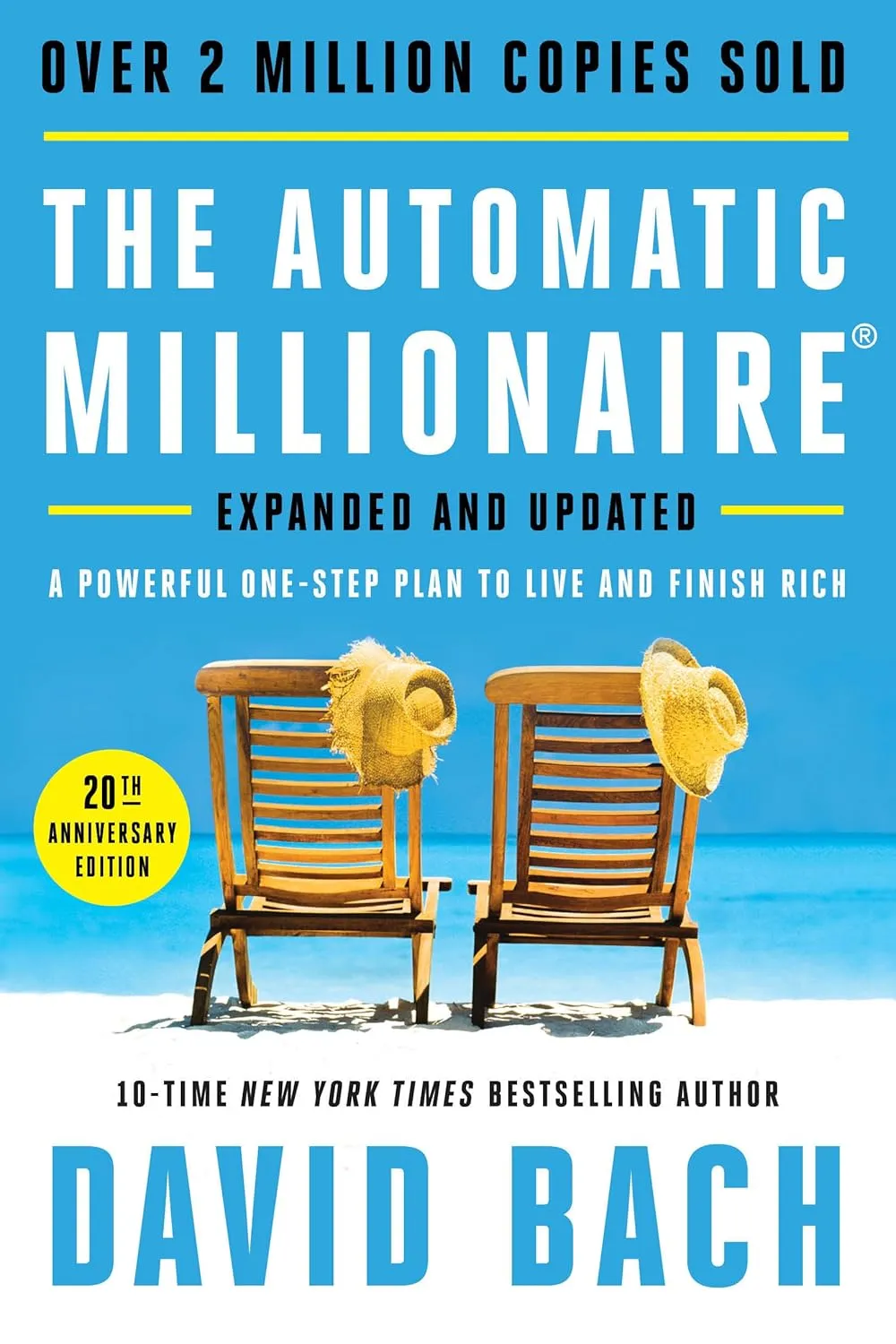
A 2024 Vanguard study found that investors who use automatic contribution plans are 86% more likely to stick with their investment strategy during market downturns than those who invest manually. The behavioral research is unambiguous: automation is the single most effective tool for building wealth, and it works precisely because it removes the need for willpower. David Bach distills personal finance to this essential insight in The Automatic Millionaire. The reason most people fail to build wealth is not that they lack income, knowledge, or willpower. It is that they rely on those things when they should be relying on automation. Bach teaches one central lesson: automate your savings and investments so that wealth building happens without requiring any ongoing decision or discipline. Every other personal finance lesson is secondary to this.
Book Details
| Attribute | Details |
|---|---|
| Title | The Automatic Millionaire |
| Author | David Bach |
| Publisher | Crown Business |
| First Published | 2003 (Updated edition 2016) |
| Pages | 240 |
| Reading Level | Beginner |
| Amazon Rating | 4.6/5 stars |
Get Your Copy
Paperback: Buy on Amazon
Kindle: Buy on Amazon
Audiobook: Buy on Amazon
About the Author
David Bach is a financial advisor and New York Times bestselling author who has written nine financial books, including Smart Women Finish Rich and Smart Couples Finish Rich. He has appeared frequently on Today, CNN, and other media. His FinishRich.com platform has reached millions of readers. He is not an academic economist but a practitioner who has helped thousands of clients implement simple, automated financial plans.
The Origin Story: The McIntyres
Bach opens with a couple who attended one of his financial seminars, Jim and Sue McIntyre. He expected them to be high earners who had invested wisely. Instead:
At retirement, they had a paid-off home, two income properties, and over $1 million in retirement accounts. On a combined income of $56,000, never more than $40,000 from a single earner.
Their secret:
They automated everything. Every paycheck, a fixed percentage went to retirement accounts before they ever saw it. Every year, that percentage increased by 1%. For 35 years, they never had to decide whether to save: the system did it for them.
The Latte Factor
Bach's most famous (and most criticized) concept:
The calculation:
| Daily habit | Daily cost | Annual cost | 30-year value at 10% |
|---|---|---|---|
| Daily latte | $5.00 | $1,825 | $328,000 |
| Daily latte + snack | $10.00 | $3,650 | $655,000 |
| Daily lunch out | $15.00 | $5,475 | $983,000 |
| Cigarettes | $10.00 | $3,650 | $655,000 |
The controversy:
Critics argue the latte factor oversimplifies: cutting lattes will not make you rich if housing, healthcare, and childcare are consuming your income. They are partially right. The latte factor is not meant as a complete wealth-building strategy. Its value is as a lens: it makes you aware of unconscious, habitual spending that provides less satisfaction than you assume.
The real point:
The latte itself does not matter. The mental exercise, what small regular spending could I redirect, builds the consciousness about money that identifies real opportunities. For some people it is lattes. For others it is restaurant lunches. For others it is unused subscriptions. The specific item is less important than the habit of examination. For a deeper look at cutting unnecessary spending, read our guide on budgeting basics.
Finding your latte factor:
| Category | Monthly Spending | Actual Value? |
|---|---|---|
| Streaming subscriptions | $85 | Review each one |
| Daily convenience purchases | $150 | Habitual, not chosen |
| Food delivery fees | $60 | Convenience premium |
| Gym membership (unused) | $50 | Zero value |
| Total potential monthly redirect | $345 | $414,000 over 30 years at 10% |
Pay Yourself First: The Foundation
Bach's central mechanism is the pay yourself first principle: automatic savings before any other spending occurs. This is the same principle we cover in our guide on how to start investing.
The standard approach (why it fails):
Earn money → Pay bills → Buy things → Save whatever's leftResult: there is rarely anything left. Lifestyle expands to consume income. Savings are always deferred.
The automatic millionaire approach:
Earn money → Automatically save X% → Spend whatever's leftResult: savings happen before spending decisions. Lifestyle adjusts to the net. Wealth builds automatically.
Implementation: The One-Hour Financial Plan
Bach argues you can set up the complete automatic millionaire system in one hour:
Step 1: Maximize employer match (15 minutes)
Step 2: Open a Roth IRA (20 minutes)
Step 3: Set up automatic savings transfer (10 minutes)
Step 4: Set up automatic bill pay (15 minutes)
Total setup time: approximately 60 minutes. Total ongoing effort: essentially zero.
The Automatic Millionaire Plan
Bach's recommended automation targets:
Retirement Savings
Contribution targets:
| Age | Minimum | Good | Great |
|---|---|---|---|
| 20s | 6% | 10% | 15%+ |
| 30s | 8% | 12% | 15%+ |
| 40s | 10% | 15% | 20%+ |
| 50s | 15% | 20% | Max + catch-up |
Investment default recommendation:
Bach recommends target-date retirement funds as the default:
The automation compounding effect:
| Starting age | Monthly contribution | 8% return | At age 65 |
|---|---|---|---|
| 25 | $300 | 8% | $1,036,000 |
| 35 | $300 | 8% | $447,000 |
| 45 | $300 | 8% | $176,000 |
| 55 | $300 | 8% | $54,000 |
Starting at 25 rather than 35 with the same $300/month produces $589,000 more. The only difference is 10 years of automatic contributions that required no willpower whatsoever.
Emergency Fund
Bach's automatic emergency fund plan:
Emergency fund progress ($300/month):
| Month | Balance |
|---|---|
| 6 | $1,800 |
| 12 | $3,600 |
| 18 | $5,400 |
| 24 | $7,200 |
At $300/month, a 3-month emergency fund ($4,500 for a $1,500/month expense budget) is funded in 15 months. Fully automatic. Zero discipline required.
Homeownership: Pay the Mortgage Biweekly
Bach's most distinctive practical advice for homeowners: switch to biweekly mortgage payments.
How it works:
| Payment Schedule | Payments/Year | Extra Payments/Year | Savings on 30-year $300K Mortgage |
|---|---|---|---|
| Monthly | 12 | 0 | - |
| Biweekly | 26 (≈ 13 monthly payments) | 1 full extra payment | $42,000+ in interest, 6-7 years off mortgage |
Because you make 26 half-payments rather than 12 full payments, you make the equivalent of one extra payment per year. On a 30-year mortgage, this cuts the payoff time to approximately 22-24 years and saves tens of thousands in interest.
Implementation: Many lenders allow biweekly payment programs for free (some charge a small setup fee). Set it up once; never think about it again.
Bach's Account Structure
The recommended account setup:
| Account | Purpose | Automation |
|---|---|---|
| Checking (no fee, high yield) | Income receipt, bill pay | Auto-pay all bills |
| 401(k) / 403(b) | Tax-deferred retirement | Auto-deduct from paycheck |
| Roth IRA | Tax-free retirement | Monthly auto-contribution |
| High-yield savings | Emergency fund | Monthly auto-transfer |
| HSA (if eligible) | Medical expenses + retirement overflow | Paycheck deduction |
| Taxable brokerage | Post-retirement-max investing | Monthly auto-contribution |
All flows automated. Each account has a specific purpose. No decisions required after initial setup.
What Bach Gets Right
Automation is the most powerful personal finance tool available. Research consistently shows that automating savings dramatically outperforms intention-based saving. Ramit Sethi, Vicki Robin, and every major personal finance figure agrees on this one principle.
The simplicity of the 60-minute setup democratizes financial planning. Most Americans do not need a financial advisor; they need someone to tell them to set up an automatic 401(k) contribution and a Roth IRA. Bach does this clearly and directly.
Target-date fund recommendation is sound. For most non-expert investors, a single target-date fund covering stocks, bonds, and international exposure is superior to most actively managed portfolios.
Where Bach Falls Short
The latte factor oversimplification has been credibly criticized. Housing costs, healthcare, childcare, and student loan debt are the major financial challenges for most Americans, not daily coffee. While the consciousness-building exercise is valuable, framing wealth gaps as primarily a spending discipline problem can be misleading. A 2025 Federal Reserve Survey of Consumer Finances showed that the median homeowner's net worth is 80 times that of a renter, suggesting housing policy and asset ownership matter far more than daily spending habits.
Investment depth is limited. Bach recommends target-date funds and does not go deeper. For readers wanting to understand index fund investing, asset allocation, or tax optimization, additional books are needed.
The 10% return assumption is too optimistic. Bach frequently uses 10% nominal returns in his examples. The historical average is approximately 10% nominal, but after inflation and reasonable fees, 7% real is more appropriate for planning.
Strengths & Weaknesses
What We Loved
Areas for Improvement
Who Should Read This Book
Highly Recommended For
Probably Not For
Comparison to Similar Books
| Book | Automation Focus | Investment Depth | Debt Guidance |
|---|---|---|---|
| The Automatic Millionaire | Very High | Low | Minimal |
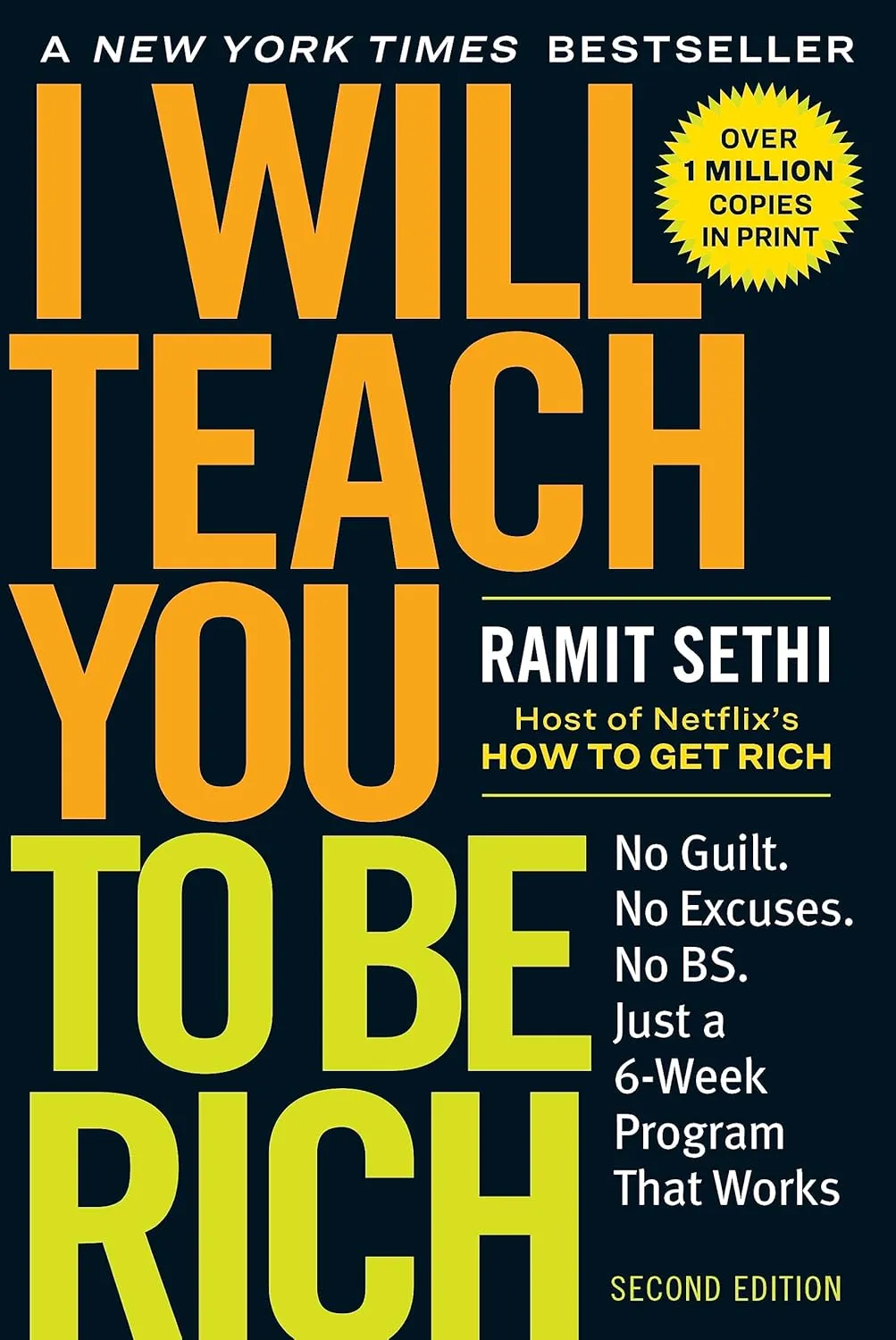
| I Will Teach You to Be Rich | Very High | Medium | Low |
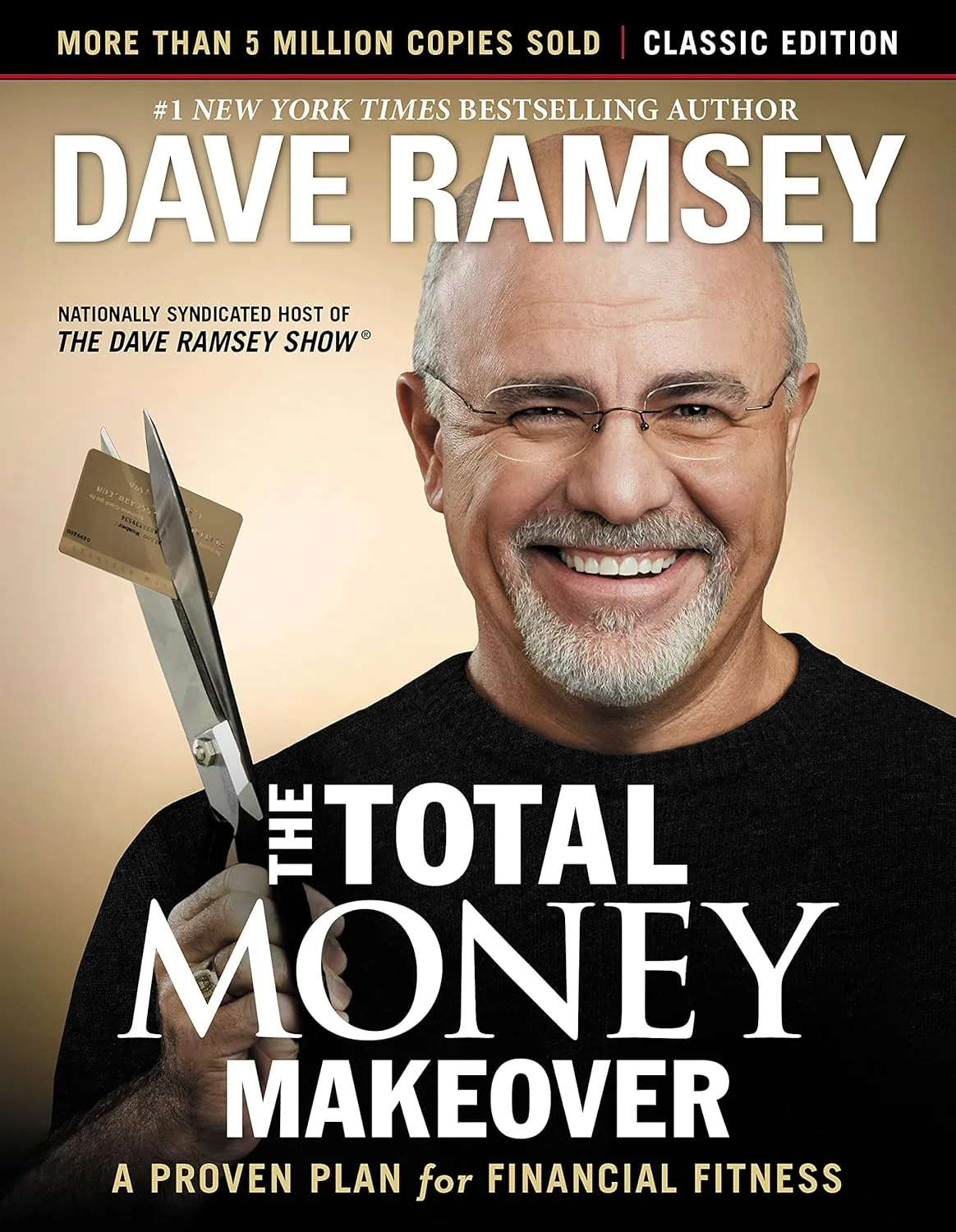
| The Total Money Makeover | Medium | Low | Very High |
| The Simple Path to Wealth | Medium | Very High | Low |
Frequently Asked Questions
Q: Is the latte factor a real path to wealth?
A: It depends entirely on your income and expenses. For households where the primary financial challenge is habitual small spending, it is. For households where housing costs 50%+ of income and childcare consumes another 20%, cutting lattes is insufficient. Use it as a consciousness-building tool, not as a complete wealth strategy.
Q: Are target-date funds really the best investment for most people?
A: For investors who will not engage with investment decisions, yes, a target-date fund from Vanguard or Fidelity is superior to most alternatives available in 401(k) plans. For investors willing to manage a three-fund portfolio, slightly lower expense ratios are available. See our guide on target-date funds for a detailed comparison.
Q: What about debt, does Bach address it?
A: Minimally. He addresses mortgage optimization (biweekly payments) and briefly mentions debt, but the book does not provide a debt elimination framework. Combine with Ramsey's Total Money Makeover if debt is a primary concern.
Final Verdict
Rating: 4.4/5
The Automatic Millionaire delivers its core message, automate everything, with unusual clarity and actionability. Its one-hour setup plan, biweekly mortgage tip, and target-date fund recommendation are all sound. The latte factor deserves more nuance than it receives, and the investment section needs supplementation. For a complete beginner who has never set up automated savings, this book can change the financial trajectory of their life in one afternoon.
If you have never set up automatic savings, this book is the fastest way to start. The one-hour plan works, and the math is on your side. For readers who already automate their savings and want to go deeper on investment strategy, our three-fund portfolio guide is the logical next step.
Get Your Copy
Paperback: Buy on Amazon
Kindle: Buy on Amazon
Audiobook: Buy on Amazon
Prices current as of publication date. Free shipping available with Prime.