
What I Wish I Knew About Money at 18
The financial lessons most people learn the hard way in their 20s and 30s. Here's the condensed version, so you can skip the expensive mistakes and get straight to what actually works.

Nobody teaches you money. Not really. School covers algebra and essay structure, but not how interest compounds against you on a credit card or how a Roth IRA works. You figure most of it out the hard way, through overdraft fees, a maxed-out card at 23, or watching a friend hit 35 and panic about having nothing saved.
The lessons below are the ones most adults wish they had at 18. Not abstract wisdom, but specific, actionable things that would have changed decisions.
1. The First Thing to Do With Every Paycheck Is Pay Your Future Self
Most 18-year-olds spend what they earn and save what is left. The problem: what is left is usually zero.
The fix is a simple structural change. The moment money hits your bank account, move a fixed amount, even $25, even $50, to a savings or investment account before you spend anything. Not after bills. Not after fun. First.
This is called "paying yourself first," and it is the single most effective savings habit in personal finance. When the transfer is automatic, you never make a decision about it, you never feel like you are depriving yourself, and you never spend it because it is not in your spending account.
Set up a $25-$50/month automatic transfer to a high-yield savings account (Ally, Marcus, or SoFi) or a Roth IRA (if you have earned income). Do it the day you start any job. The amount is almost secondary. The habit is the point. For a complete guide to opening a Roth IRA, see How to Start Investing at 16.
2. A Credit Card Is a Tool, Not Extra Money
The credit card is the first major financial test most 18-year-olds face. Many fail it, not because they are irresponsible, but because nobody explained the exact mechanism.
How credit card interest actually works:
You spend $800 on a credit card with a 24% APR. You make the minimum payment ($25). Next month, you owe $791 because interest accrued on the $800 balance at 2% per month ($16 in interest), and your $25 payment barely touched the principal.
Pay only minimums on $800 for two years and you'll pay approximately $370 in interest on top of the original $800. You paid $1,170 for whatever that $800 bought.
The one rule that prevents all of this: Pay the full statement balance by the due date, every month, without exception. If you cannot pay it in full, you cannot afford it. The card is not a loan. It is a payment method that happens to offer a 30-day float.
Used this way, a credit card builds your credit score, earns rewards, and costs you nothing. Used any other way, it is an extremely expensive form of debt.
3. Your Credit Score Is Built (or Destroyed) by Habits, Not Events
Credit scores seem mysterious. They are not. They are driven by a small set of behaviors that either consistently build or consistently damage your score.
The two factors that matter most (roughly 65% of your score):
Payment history (35%): Pay every bill on time, every month. One 30-day late payment can drop your score by 50-100 points. Set every recurring bill to autopay for the minimum amount. You can always pay more, but the autopay prevents a forgotten payment from destroying your history.
Credit utilization (30%): How much of your available credit you use. Keeping utilization below 10% is ideal; below 30% is acceptable. If you have a $1,000 credit limit, keep the balance below $100-$300 when your statement closes.
What to do at 18 to build credit:
- Open a secured credit card or a student credit card with a low limit
- Charge one or two small recurring items (streaming subscription, monthly bill) to it
- Set up autopay for the full statement balance
- Do nothing else. Just let the on-time payment history accumulate month after month
In 12-18 months, you will have a credit score above 700. In 3-4 years of this habit, 750+.
4. Inflation Eats Money Sitting Still
Keeping money in a checking account feels safe. Technically it is safe. The dollar amount does not decrease. But what that money can buy decreases every year.
Inflation in the U.S. averages roughly 2-3% per year historically. In recent years it has been higher. At 3% annual inflation, $1,000 today buys what $744 will buy in 10 years. Holding cash is a slow, guaranteed loss of purchasing power.
What to do:
- Money you need in the next 12 months: high-yield savings account (currently 4-5% APY, keeps pace with or beats inflation)
- Money you will not need for 5+ years: invested in a total market index fund inside a Roth IRA or taxable brokerage
Leaving long-term money in a checking account at 0.01% interest while inflation runs at 3% is the equivalent of losing 3% per year. It feels like doing nothing. It is actually losing ground.
5. Time Is Your Actual Advantage, and You Are Currently in It
This gets said often enough that it starts to sound like a cliche. But the numbers behind it are concrete and most 18-year-olds have never actually seen them laid out.
$100/month from age 18 to 65 in a Roth IRA earning 8% average return: $517,000, entirely tax-free. The 2026 Roth IRA contribution limit is $7,500 per year, so even maxing the account is only $625/month.
$100/month from age 28 to 65: $230,000.
$100/month from age 38 to 65: $93,000.
The same amount, the same monthly contribution, the same investment, but starting 10 years later produces less than half the result. Starting 20 years later produces less than a fifth.
You are currently in the most powerful investing window of your entire life. Every year you wait is not "neutral." It materially reduces the final outcome of every dollar you eventually do invest. For the full breakdown of how Roth IRAs save you money over decades, see How the Roth IRA Saves You Money on Taxes Decades Later.
6. The Real Cost of a Car Is Not the Sticker Price
Transportation is the second-largest expense for most young adults, and it is where the most avoidable financial damage happens.
A $20,000 car financed at 7% APR over 60 months costs $396/month. Over 5 years, you pay $23,760, which is $3,760 in interest on top of the price. Add insurance ($1,200-$2,400/year for a young driver), registration, maintenance, and gas, and the full cost of that $20,000 car over 5 years is often $35,000-$45,000.
What this means practically:
Buying a reliable used car for $8,000-$12,000 cash (or with a small, short-term loan) instead of financing a $25,000 new car frees $300-$500/month. That is $3,600-$6,000/year that could be invested. At 18, $400/month invested for 47 years at 8% becomes approximately $2 million.
The new car does not cost $20,000. It costs $2 million in foregone retirement wealth. That framing changes the decision.
7. Lifestyle Inflation Is the Silent Wealth Killer
Lifestyle inflation is what happens when every income increase is absorbed into a proportionally larger lifestyle: bigger apartment, nicer car, better restaurants. Income goes up; savings rate stays the same; wealth does not build.
The pattern starts early. First real paycheck goes entirely to spending. First raise gets absorbed into a new apartment. Bonus goes to a vacation. There is nothing wrong with enjoying money. The problem is when consumption reliably expands to fill every dollar of income growth.
The most effective long-term habit is directing a specific percentage of every raise or income increase to savings before lifestyle adjusts. If you get a $200/month raise, commit $100 of it to your investment accounts before your spending lifestyle has a chance to absorb it. Do this consistently for 20 years and your savings rate grows with your income without ever feeling like deprivation.
8. An Emergency Fund Is Not Optional
Life breaks things. Cars, medical situations, jobs, appliances. Without a cash buffer, every one of these events pushes you toward debt, and debt at 22% APR undoes years of careful saving in months. The average credit card APR in July 2026 is approximately 22% for new offers, according to WalletHub.
An emergency fund is not savings for a goal. It is insurance against the unpredictable cost of being alive.
Target: 3-6 months of essential expenses in a high-yield savings account, touched only for genuine emergencies.
At 18, your essential expenses are probably $800-$1,500/month. A 3-month emergency fund is $2,400-$4,500. Build this before you invest aggressively. Once it is built, leave it. Replenish it immediately if you use it.
This one buffer prevents more financial damage than almost any other single action.
9. Your Income Is the Engine. Protect and Grow It
Personal finance advice focuses heavily on spending less and investing more. Both matter. But at 18-25, your income is the most important lever you have, and it is the one you have the most direct control over.
What this means:
Invest in skills that increase your earning power. A course, a certification, reading in your field, practicing a craft. These have compounding returns that dwarf any investment. A $2,000 coding bootcamp that leads to a $20,000 salary increase pays a 1,000% return in the first year alone.
Show up consistently and excellently at work. The people who get raises and promotions are not always the smartest. They are reliably the most dependable. Reputation compounds.
Be strategic about your first few jobs. Entry-level years matter for trajectory. A $42,000 job that teaches you valuable skills and leads to a $70,000 job in 3 years is often better than a $50,000 job with no growth path.
10. Comparison Is the Most Expensive Financial Habit
Social comparison drives a staggering amount of spending. The friend who buys a new car. The Instagram photo of the vacation. The colleague with the nicer apartment. Trying to match, or keep up with, external signals of wealth is a reliable path to spending more than you have.
The counterintuitive truth: many people displaying wealth are borrowing it. Consumer debt in the U.S. totals trillions of dollars precisely because appearing prosperous and being prosperous are two very different things.
The people quietly building wealth are rarely the most visible spenders. They are the ones driving used cars, living below their means, and investing the gap, while their net worth grows invisibly for decades. For more on this dynamic, see How to Stop Comparing Your Money to Others.
Comparing your financial life to other people's consumption is comparing your reality to someone else's performance. It is one of the most expensive comparisons you can make.
The Short Version
| Lesson | The One Action |
|---|---|
| Pay yourself first | Automate a transfer to savings the day you get paid |
| Credit cards are tools | Pay the full balance every month, no exceptions |
| Build credit by habit | One card, autopay full balance, don't think about it |
| Inflation eats cash | Move long-term savings to a HYSA or index fund |
| Time is your advantage | Open a Roth IRA and start now |
| Cars are expensive | Buy reliable used; avoid long-term financing |
| Avoid lifestyle inflation | Direct half of every raise to investments first |
| Emergency fund is non-negotiable | 3 months of expenses in a HYSA, untouched |
| Income is the engine | Invest in skills; be dependable; grow your earning power |
| Stop comparing | Build quietly; ignore displays of consumption |
You will learn most of this eventually. The question is whether you learn it at 18 or at 35. The difference in outcome between those two timelines is hundreds of thousands of dollars. For a deeper dive into the investing lessons that matter most, see What I Wish I Knew About Money at 18 and How Compound Interest Works for Teens.
This post is for informational purposes only and does not constitute financial advice. Specific investment and account recommendations depend on individual circumstances.
Tags
Savvy Nickel Team
Financial education expert dedicated to making complex money topics simple and accessible for everyone.
Recommended Articles

Best Budgeting Apps Compared: Which One Actually Gets Used
Most people abandon budgeting apps within three weeks. We compared the top apps of 2026 by price, features, and which ones people actually still use six months later.

How to Pay Off $10,000 in Debt in 12 Months on a Normal Salary
Paying off $10,000 in a year sounds impossible until you see the actual math. Here is a realistic, step-by-step plan that works on a regular income without requiring extreme sacrifice.

The Real Cost of Waiting 5 Years to Start Investing
Waiting feels harmless. It is not. Here is exactly what five years of delay costs you in real dollars, and why the math is far more brutal than most people realize, with 2026 contribution limits.
Run the Numbers
Free calculators related to this article.
Budget Calculator / 50-30-20 Analyzer
Enter your take-home pay and instantly see how to split it across needs, wants, and savings using the 50-30-20 rule. Adjust the percentages to fit your situation and see exactly how much goes where.
Open calculator →Net Worth Calculator
Calculate your true financial picture by adding up everything you own and subtracting everything you owe. Track your progress month over month as your net worth grows.
Open calculator →Credit Card Interest Calculator
See exactly how much your credit card balance is costing you in interest and how long it will take to pay off. Find out how minimum payments trap you in debt for years, and what a fixed monthly payment does instead.
Open calculator →Recommended Books
Related Glossary Terms
Budget
A budget is a plan for how to spend and save your income. It assigns every dollar a purpose before the month begins, turning vague financial intentions into specific, trackable decisions.
Asset
An asset is anything of economic value owned by an individual or business that can generate future benefits, including cash, investments, property, and equipment, forming the left side of a balance sheet.
Cash Flow
Cash flow measures whether money accumulates or drains away in your financial life. It is the difference between income and expenses over a period of time, and it determines financial resilience more than income or net worth.
Financial Independence
Financial independence means having enough invested assets to cover living expenses without needing employment income. The standard target is 25x annual expenses, based on the 4% withdrawal rule.
Liquidity
Liquidity is how quickly an asset converts to cash without losing value. In July 2026, top HYSAs pay up to 4.50% APY while the average savings account earns just 0.38%, making liquidity cheaper than ever to maintain.
Opportunity Cost
Opportunity cost is the value of the next best alternative you give up when making a choice. Every financial decision carries a hidden cost beyond the sticker price, and ignoring it can cost you hundreds of thousands over a lifetime.
Recommended Podcasts

The Personal Finance Podcast
by Andrew Giancola
Andrew Giancola's Master Money show covers budgeting, investing, and side income with a systems-first approach. 350K monthly downloads and a 4.7 Apple rating.
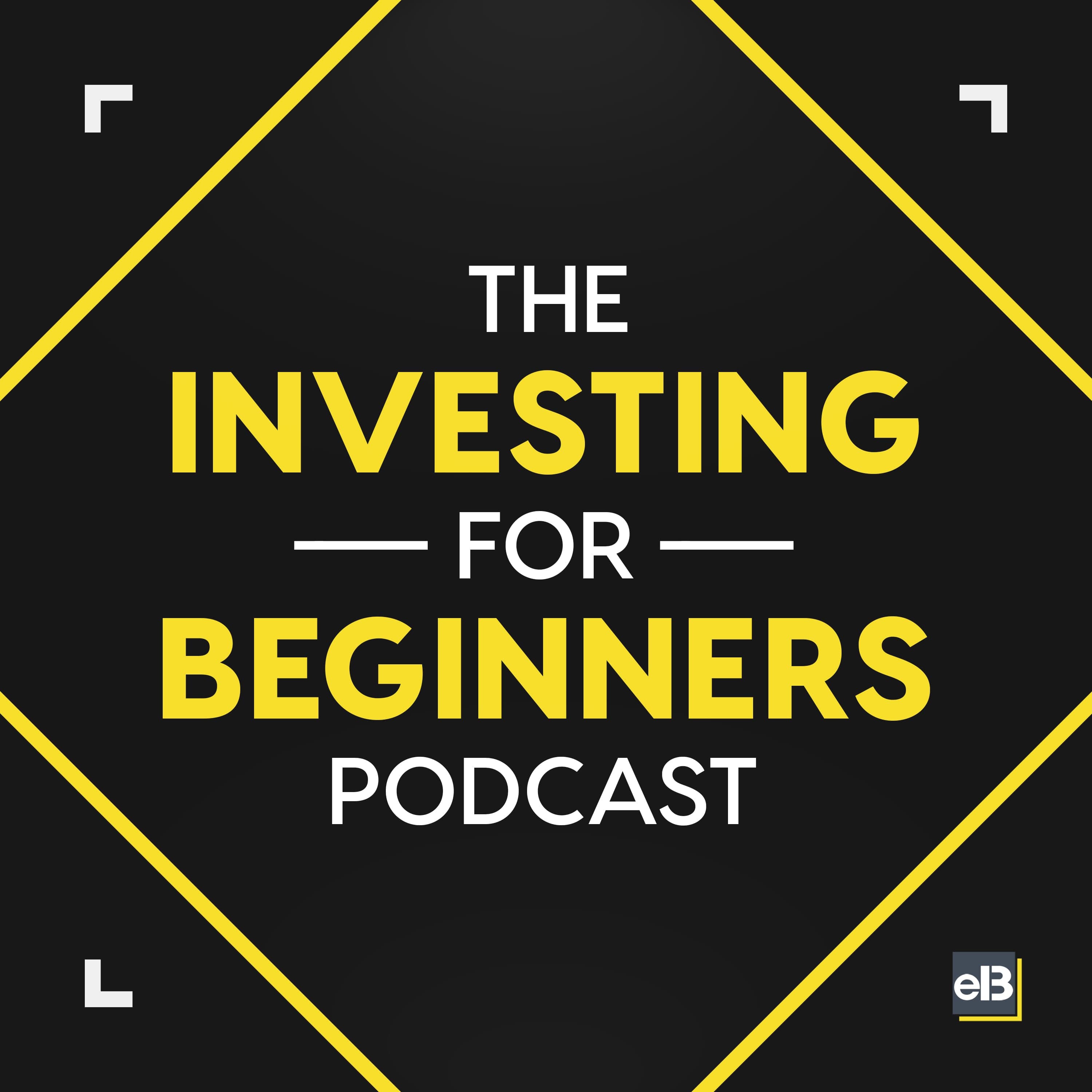
The Investing for Beginners Podcast
by Andrew Sather & Stephen Morris (with Evan Raidt)
A value investing show for beginners that explains stock analysis in plain English. Running since 2017 with a focus on fundamentals, financial statements, and avoiding common mistakes.

NerdWallet's Smart Money Podcast
by Sean Pyles, CFP & Elizabeth Ayoola
NerdWallet's finance journalists answer real listener money questions with research-backed answers. Weekly, 650+ episodes, and a 4.3 Apple rating.