*Disclosure: This article contains affiliate links. If you purchase through these links, we may earn a commission at no additional cost to you. We only recommend books we genuinely believe in.
Quick Overview
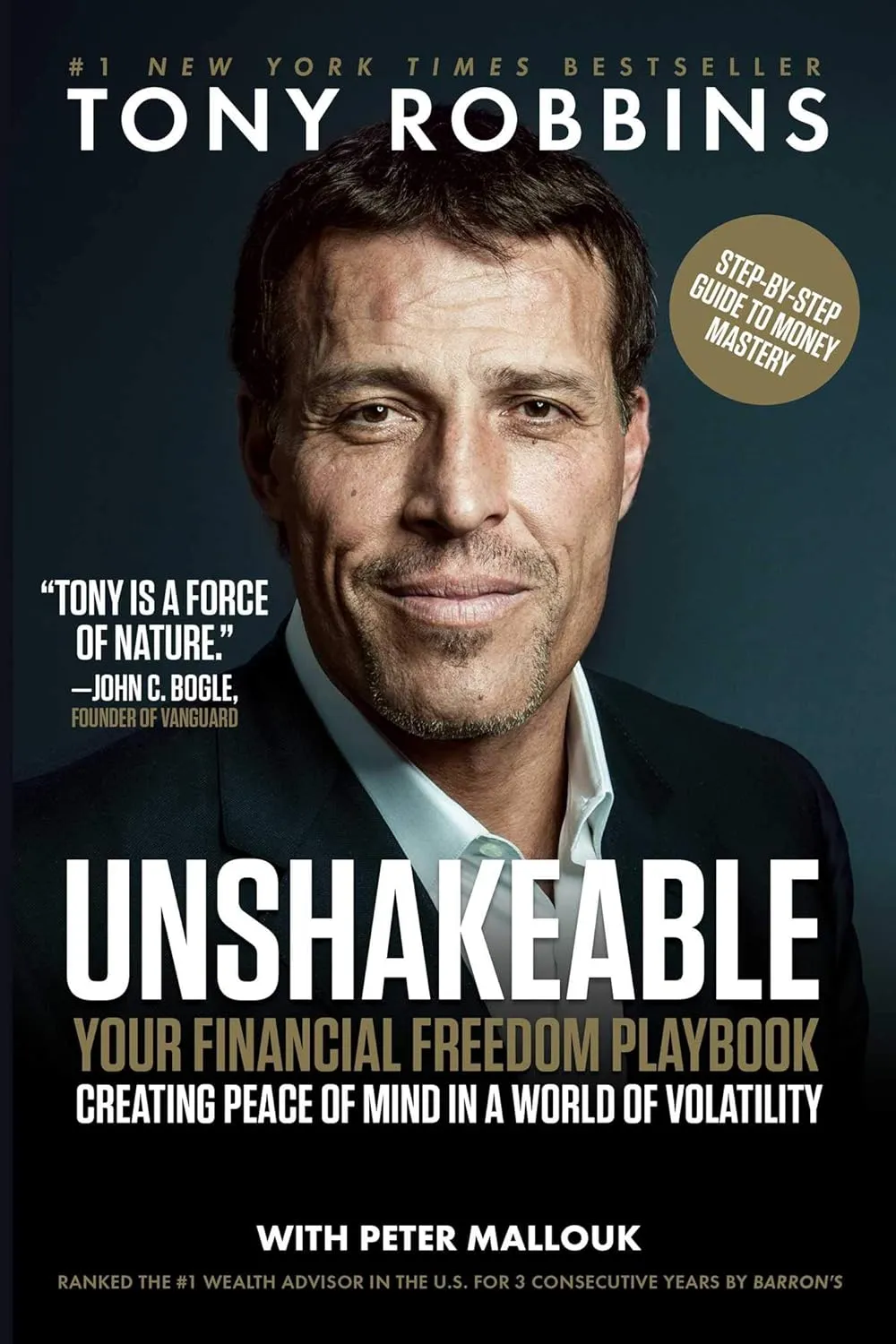
Tony Robbins wrote Money: Master the Game in 2014 as a 600-page exploration of financial freedom strategies. Unshakeable is the condensed, actionable version: 256 pages focused on what individual investors actually need to do. Co-authored with Peter Mallouk (then CEO of Creative Planning, one of the nation's largest independent RIAs), the book distills interviews with Warren Buffett, Ray Dalio, John Bogle, Carl Icahn, and others into a clear set of principles: use low-cost index funds, work with a fiduciary advisor, minimize fees and taxes, and cultivate the emotional discipline to stay invested through inevitable market corrections.
Book Details
| Attribute | Details |
|---|---|
| Title | Unshakeable: Your Financial Freedom Playbook |
| Author | Tony Robbins with Peter Mallouk |
| Publisher | Simon & Schuster |
| Published | 2017 |
| Pages | 256 |
| ISBN-13 | 978-1501162576 |
| Reading Level | Beginner |
| Amazon Rating | 4.7/5 stars |
Get Your Copy
Paperback: Buy on Amazon
Kindle: Buy on Amazon
Audiobook: Buy on Amazon
About the Authors
Tony Robbins is a life and business strategist who has coached more than 50 million people over four decades. His financial education work began with Money: Master the Game (2014), which featured interviews with 50 of the world's top financial minds. He served as Chief of Investor Psychology at Creative Planning from 2016 to 2019, when the firms parted ways amicably. According to RIABiz, the separation was driven by regulatory constraints and Mallouk's shift to an M&A growth strategy rather than individual referrals.
Peter Mallouk is the CEO and President of Creative Planning, one of the nation's largest independent RIAs. He has been ranked the #1 financial advisor in the US by Barron's multiple times. He co-authored Unshakeable with Robbins and remains a prominent voice in fiduciary wealth management.
Despite the 2019 split, Robbins continues to advocate for the principles in Unshakeable through his platform. As GOBankingRates noted in 2026, "His wisdom is so sage that it's applicable in 2026 and beyond, but only if those taking his advice apply consistency and follow-through in the process."
Core Principle 1: The Power of Compound Interest
Robbins opens with the mathematical foundation of wealth building: compound interest is the most powerful force in personal finance.
The illustration that drives the point home:
| Monthly Investment | Years Invested | Total Contributed | Value at 8% Return |
|---|---|---|---|
| $100 | 40 | $48,000 | $351,428 |
| $300 | 40 | $144,000 | $1,054,284 |
| $500 | 40 | $240,000 | $1,757,140 |
| $1,000 | 40 | $480,000 | $3,514,281 |
The gap between what you contribute and what you accumulate is entirely the product of compound growth. Starting earlier matters more than investing more.
The cost of waiting:
| Start Age | Monthly Investment | Value at Age 65 (8% return) |
|---|---|---|
| 25 | $300 | $1,398,000 |
| 35 | $300 | $589,000 |
| 45 | $300 | $227,000 |
| 55 | $300 | $66,000 |
A 25-year-old who invests $300/month ends up with nearly 2.4x the wealth of a 35-year-old investing the same amount. The 10-year head start produces $809,000 in additional wealth from the same total contributions.
Use the investment return calculator to model your own compound interest scenarios.
Core Principle 2: The Hidden Cost of Fees
Robbins's most important practical contribution is making readers feel the true cost of investment fees.
The Fee Impact Table
| Expense Ratio | $100K Invested for 30 Years at 8% | Lost to Fees |
|---|---|---|
| 0.15% (index fund) | $997,000 | $58,000 |
| 0.85% (typical active fund) | $763,000 | $292,000 |
| 1.50% (loaded fund + advisory) | $574,000 | $481,000 |
A 1.35% difference in expense ratio costs $423,000 over 30 years on a $100,000 investment. That is 42% of your total potential wealth.
The Four Types of Fees Robbins Exposes
| Fee Type | Typical Cost | Who Pays It |
|---|---|---|
| Expense ratio | 0.5-1.5% annually | All fund investors |
| Advisory fee | 1.0-2.0% annually | Advised clients |
| Transaction costs | $5-50 per trade | Active traders |
| Tax drag | 0.5-2.0% annually | Active strategies |
The critical insight: Fees are certain. Returns are not. A 1% fee is guaranteed to cost you 1% every year. The fund's outperformance is not guaranteed. Over decades, the certain cost of fees compounds against you while the uncertain benefit of active management may never materialize.
As the a2zleader summary noted: "Fees are certain, while performance is not. A portfolio can survive market volatility and still lose a large share of its future value to expense ratios, advisory charges, trading costs, and tax drag."
Core Principle 3: Market Corrections and Emotional Discipline
The Correction Data
Robbins presents historical data on market corrections to normalize them:
| Event Type | Average Frequency | Average Duration | Average Drawdown | Recovery Time |
|---|---|---|---|---|
| Correction (5-10%) | ~1 per year | ~2 months | -7% | 4 months |
| Correction (10-20%) | ~1 per 2 years | ~4 months | -13% | 8 months |
| Bear market (>20%) | ~1 per 4-5 years | ~10 months | -33% | 2-3 years |
| Crash (>40%) | Rare | 1-2 years | -50%+ | 5-10 years |
The behavioral insight: Most investors sell during corrections and buy during recoveries. This behavior gap costs individual investors 2-4% annually according to DALBAR studies, turning market returns of 8-10% into investor returns of 4-6%.
The Cost of Missing the Best Days
| Days Missed | S&P 500 Return (20 years) | Investor Return |
|---|---|---|
| 0 days | +547% | +547% |
| 10 best days | +332% | +332% |
| 20 best days | +201% | +201% |
| 30 best days | +104% | +104% |
| 40 best days | +35% | +35% |
Missing the 30 best days over 20 years cuts returns by 80%. Those best days overwhelmingly occur during market bottoms and recoveries, precisely when emotional investors are selling.
As GOBankingRates noted in 2026: "Most of the short-term volatility should usually be ignored. When the market corrects, Robbins advises to not pull out, but to simply ride the wave of ups and downs."
Core Principle 4: Asset Allocation and Diversification
Robbins advocates for broad diversification across asset classes rather than stock picking. The book presents several model portfolios from interviews with top investors.
The All-Weather Portfolio (Ray Dalio)
| Asset Class | Allocation |
|---|---|
| US Stocks | 30% |
| Long-term US Bonds | 40% |
| Intermediate US Bonds | 15% |
| Commodities | 7.5% |
| Gold | 7.5% |
This portfolio is designed to perform reasonably across economic environments: growth, inflation, deflation, and recession. It sacrifices upside during bull markets for stability during crises.
The Boglehead Three-Fund Portfolio
| Asset Class | Allocation |
|---|---|
| Total US Stock Market | 60% |
| Total International Stock Market | 20% |
| Total Bond Market | 20% |
Simpler, lower cost, and historically effective. The three-fund portfolio captures global equity returns and bond stability with minimal fees.
Robbins's recommendation: Choose a portfolio you can stick with through bear markets. The best portfolio is the one you will not abandon during a crash.
Core Principle 5: Work with a Fiduciary
Robbins makes a clear distinction between brokers and fiduciaries:
| Standard | Broker (Suitability) | Fiduciary |
|---|---|---|
| Legal obligation | "Suitable" investments | Your best interests |
| Compensation | Often commission-based | Fee-based or fee-only |
| Conflict of interest | May exist | Must be disclosed |
| Recommendation quality | May favor higher-commission products | Must be best available |
As Robbins's own website states: "Your broker is not your friend." The book argues that most financial advisors operate under the suitability standard, which allows them to recommend higher-commission products that may not be optimal for the client.
Important context: Robbins had a financial relationship with Creative Planning, receiving compensation for referrals. RIABiz reported that "Mr. Robbins receives compensation for serving in this capacity based on increased business derived by Creative Planning from his services. Accordingly, Mr. Robbins has a financial incentive to refer investors to Creative Planning." This conflict was disclosed in Creative Planning's SEC filings. The 2019 split ended this arrangement, but readers should be aware of the historical conflict when evaluating the book's fiduciary recommendations.
The Relevance of Unshakeable in 2026
What Still Holds
The core principles Robbins advocates are well-supported by decades of academic research and remain valid in 2026:
| Principle | 2026 Status | Evidence |
|---|---|---|
| Low-cost index funds outperform active management | Confirmed | SPIVA scorecards consistently show 85-90% of active funds underperform over 10+ years |
| Fees compound against returns | Confirmed | Mathematical certainty |
| Most investors underperform due to behavior | Confirmed | DALBAR studies continue to show 2-4% behavior gap |
| Asset allocation drives most returns | Confirmed | Academic studies consistently show 90%+ of return variation comes from allocation, not selection |
| Fiduciary standard protects investors | Confirmed | SEC Regulation Best Interest (2020) raised standards but gaps remain |
What Has Changed Since 2017
| Factor | 2017 (Publication) | 2026 | Impact |
|---|---|---|---|
| Zero-commission trading | Just beginning | Universal | Fee reduction accelerated; trading cost no longer a barrier |
| Robo-advisors | Emerging | Mainstream | Low-cost fiduciary advice accessible to all |
| 0DTE options | Niche | Widespread | New behavioral risk Robbins did not address |
| AI investing tools | Nonexistent | Widely available | New source of behavioral bias (2025 NBER research shows LLMs inherit human biases) |
| Robbins-Mallouk partnership | Active | Ended 2019 | Book's fiduciary referral context has changed |
As the AudiobookSoul review noted in July 2026: "The core premise is simple: Stop trying to beat the market. You can't. Hedge funds can't." This remains true. The growth of zero-commission trading and robo-advisors has made implementing Robbins's advice easier and cheaper than when the book was published.
Strengths & Weaknesses
What We Loved
Areas for Improvement
Who Should Read This Book
Highly Recommended For
Probably Not For
Comparison to Similar Books
| Book | Focus | Depth | Best For |
|---|---|---|---|
| Unshakeable (Robbins) | Actionable investing basics | Low | Beginners wanting a quick playbook |
| Money: Master the Game (Robbins) | Deep dive on strategies | High | Readers wanting the full interview collection |
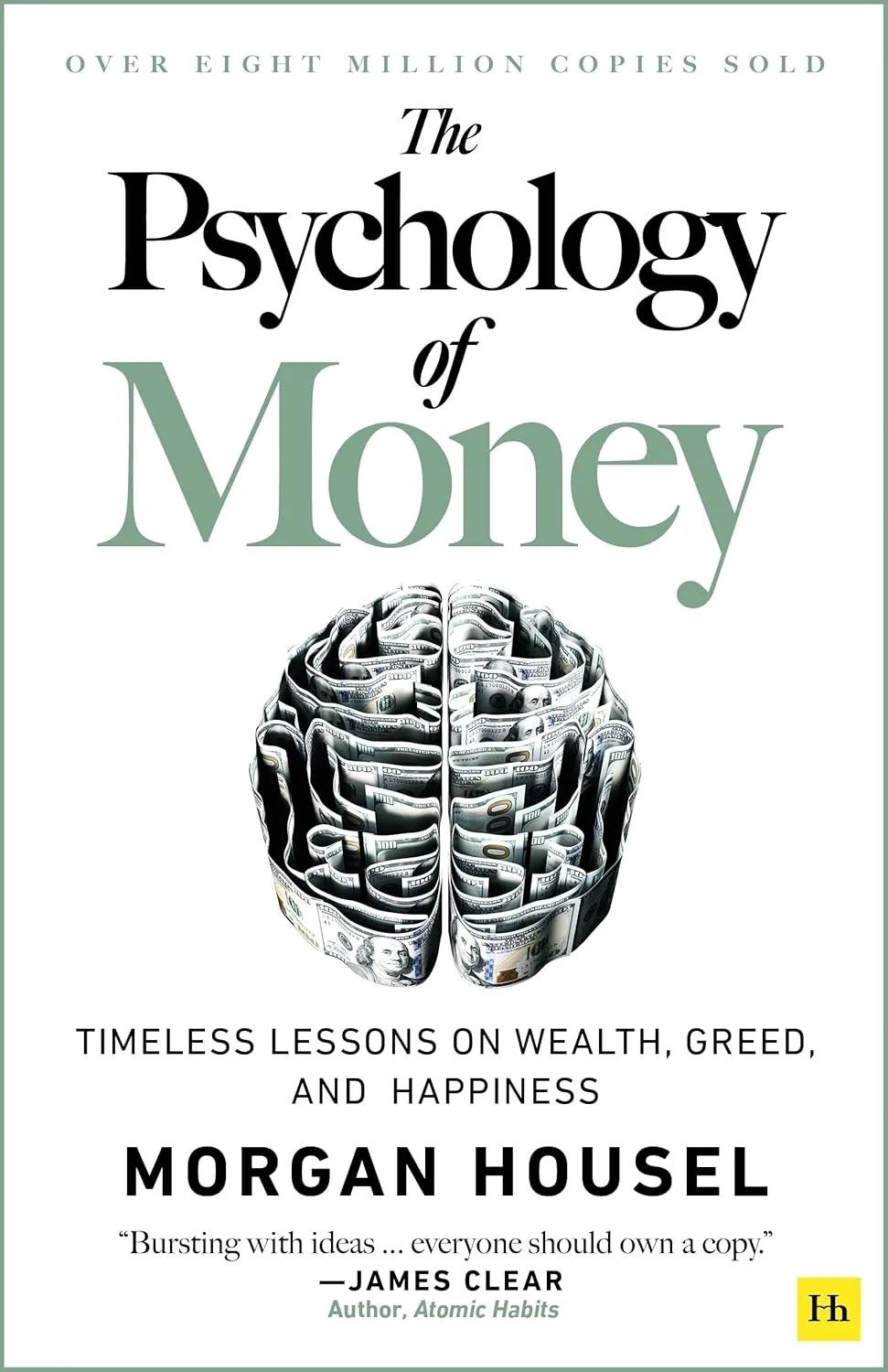
| The Psychology of Money (Housel) | Financial behavior mindset | Medium | Understanding why behavior matters more than math |
| The Intelligent Investor (Graham) | Value investing framework | High | Investors wanting analytical depth |
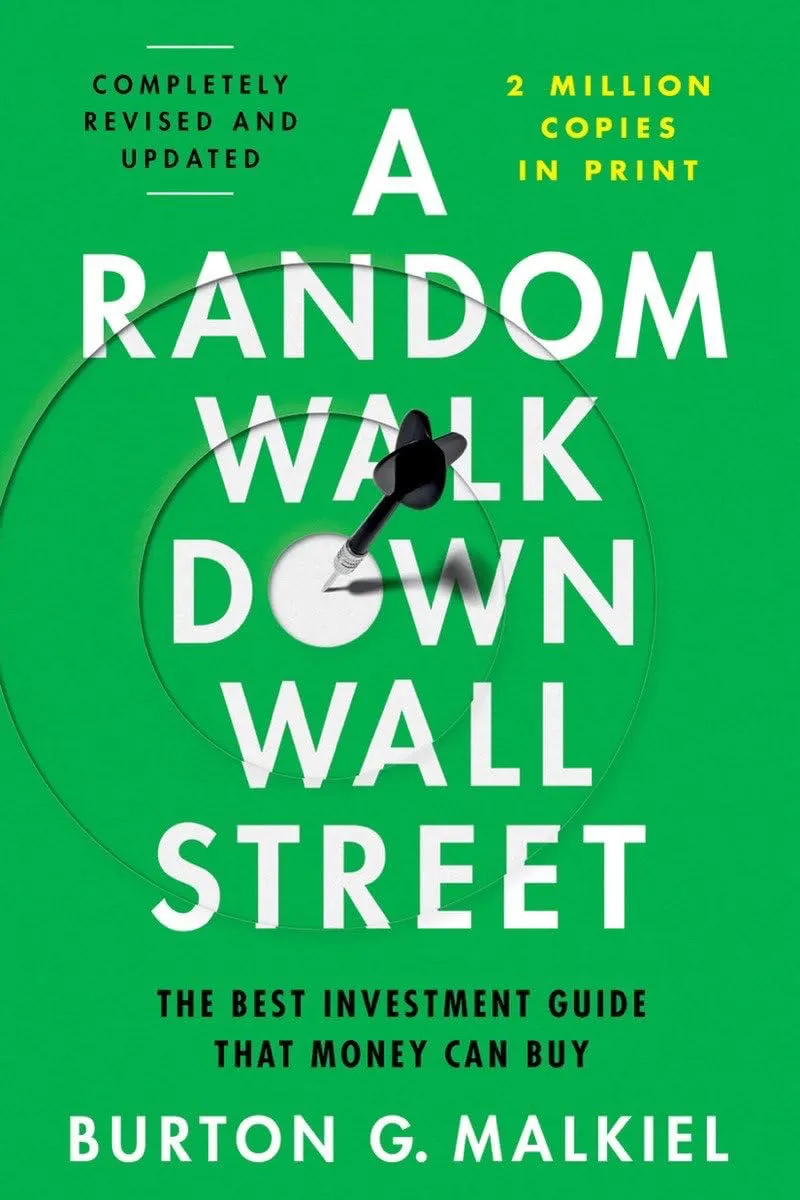
| A Random Walk Down Wall Street (Malkiel) | Market efficiency and indexing | High | Understanding the case for passive investing |
Implementation Guide
30-Day Unshakeable Action Plan
Week 1: Audit your current situation
Week 2: Optimize your portfolio
Week 3: Build your emotional infrastructure
Week 4: Plan for the long term
Frequently Asked Questions
Q: Is Unshakeable just a condensed version of Money: Master the Game?
A: Largely yes. If you have read Money, Unshakeable adds the fee analysis tables and correction data but covers most of the same principles. If you have not read either, start with Unshakeable for the concise version.
Q: Does the Creative Planning split affect the book's advice?
A: The fiduciary principles remain valid. The specific recommendation to work with Creative Planning is no longer relevant since the partnership ended in 2019. The general advice to seek a fiduciary advisor is sound regardless of which firm you choose.
Q: Is the All-Weather portfolio still a good allocation?
A: It remains a reasonable diversification strategy, but 2022 exposed its limitations: both stocks and bonds fell simultaneously, and the portfolio's bond-heavy allocation hurt. Modern portfolio construction may benefit from adding trend following or managed futures for crisis diversification. See our review of Trend Following for more on this.
Q: What does Robbins get wrong?
A: The book underestimates the difficulty of behavioral discipline. Knowing that you should not panic-sell is different from not panic-selling. Readers who want deeper behavioral guidance should pair this book with Thinking, Fast and Slow or The Psychology of Money.
Q: Is this book still relevant in 2026?
A: Yes. As Smart Money Advice noted in March 2025: "Financial freedom is not about timing the market but about having an unshakable mindset and strategy." The core principles of low-cost indexing, fee minimization, and emotional discipline are timeless. The specific tools for implementation (zero-commission trading, robo-advisors) have improved since 2017, making the advice easier to follow.
Final Verdict
Rating: 4.2/5
Unshakeable succeeds at what it sets out to do: provide a concise, actionable playbook for financial freedom that a beginner can read in a weekend and begin implementing on Monday. The fee analysis alone is worth the purchase price for investors who have never examined their portfolio costs. The correction data and behavioral guidance help normalize the market volatility that destroys most investors' returns.
The book's weaknesses are its lack of depth for experienced investors and the historical conflict of interest from the Robbins-Mallouk partnership. But the core advice, low-cost index funds, fiduciary advice, fee minimization, and emotional discipline, is well-supported and remains valid in 2026. For beginners, it is an excellent starting point. For experienced investors, it is a useful refresher that you can recommend to friends and family who need a clear introduction to sensible investing.
Get Your Copy
Paperback: Buy on Amazon
Kindle: Buy on Amazon
Audiobook: Buy on Amazon
Prices current as of publication date. Free shipping available with Prime.