
The Three-Fund Portfolio: The Simplest Investing Strategy That Works
Three funds. Total global diversification. Near-zero fees. The three-fund portfolio has been quietly outperforming complex strategies for decades. Here is exactly how to build one with 2026 data.

Most investors assume that building a good portfolio is complicated. They picture spreadsheets, sector rotations, earnings calls, and constant monitoring. The three-fund portfolio is proof that this assumption is wrong.
Three index funds covering U.S. stocks, international stocks, and bonds is all that most investors need for a complete, globally diversified portfolio. It requires about 15 minutes per year to maintain. And it consistently outperforms the vast majority of more complex strategies.
The numbers through mid-2026 confirm this. A classic 60/20/20 three-fund portfolio (VTI/VXUS/BND) returned 9.47% year-to-date through June 2026, with a 10-year annualized return of 11.25%, according to PortfoliosLab. The blended expense ratio is approximately 0.04%. Over the past 10 years, $10,000 invested in this portfolio grew to $27,873, a 10.79% compound annual growth rate.
What Is the Three-Fund Portfolio?
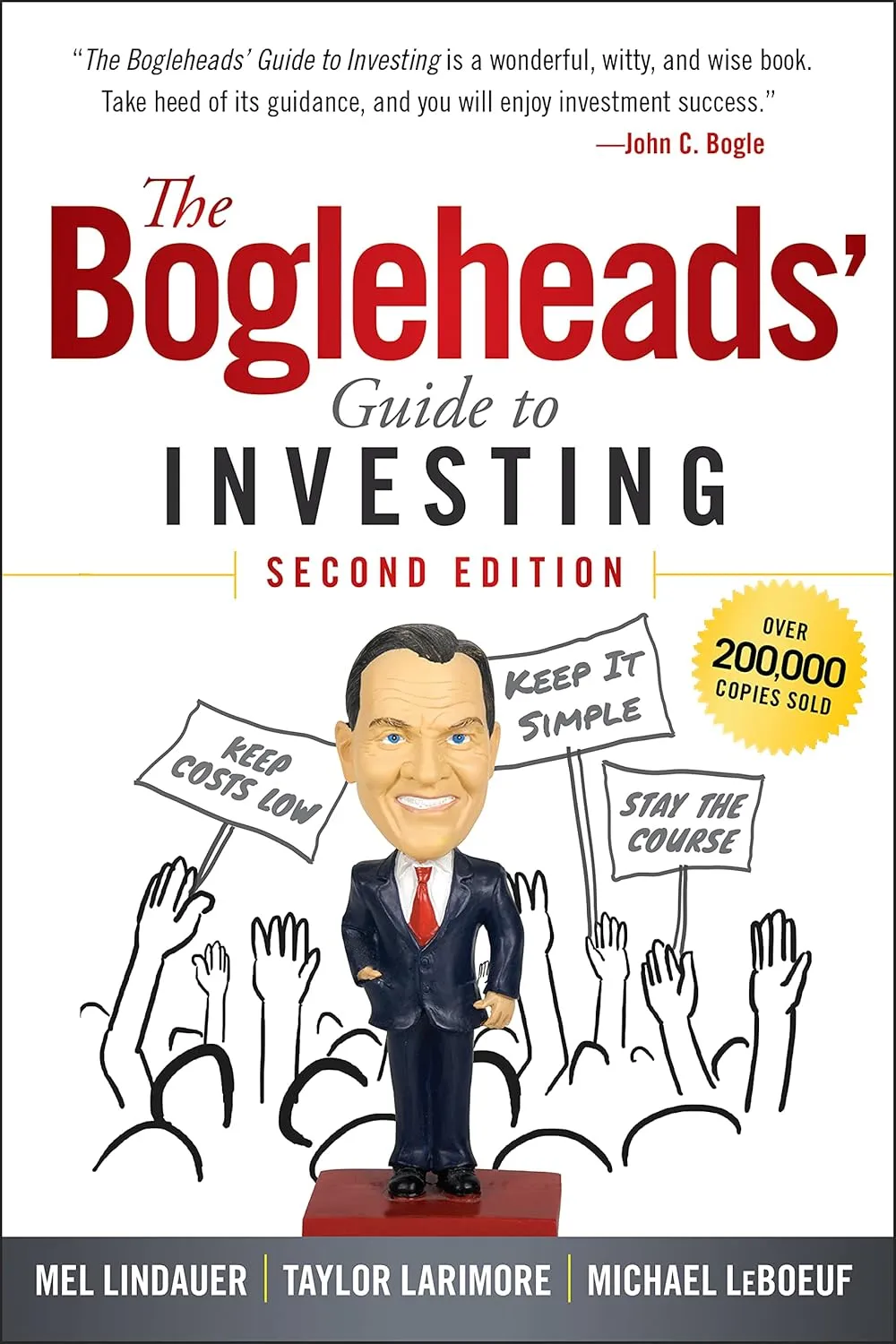
The three-fund portfolio is a straightforward approach to investing popularized by John Bogle, founder of Vanguard, and embraced widely by the Bogleheads community. It holds exactly three low-cost index funds:
- U.S. Total Stock Market fund: covers all publicly traded U.S. companies
- International Stock Market fund: covers developed and emerging market companies outside the U.S.
- U.S. Bond Market fund: covers investment-grade U.S. bonds for stability
That is the entire portfolio. No sector funds. No REITs. No individual stocks. No alternative assets. Just three funds that together own a slice of virtually every significant publicly traded company and bond in the world.
Why Three Funds Is Enough
U.S. Total Market Fund
This single fund gives you exposure to over 3,600 U.S. companies, everything from Apple and ExxonMobil down to small regional companies. When the U.S. economy grows, this fund grows. It is the core engine of most portfolios. As of February 2026, VTI manages approximately $585 billion in assets with a yield of roughly 1.1%.
International Fund
The U.S. represents roughly 60 to 65% of total global stock market capitalization. The remaining 35 to 40% is in companies across Europe, Japan, China, Australia, Canada, and dozens of emerging economies. Owning only U.S. stocks means betting that U.S. companies will permanently outperform the rest of the world, a bet most evidence-based investors are not willing to make unconditionally. As of February 2026, VXUS manages approximately $143 billion in assets with a yield of roughly 2.9%.
International diversification smooths volatility because different economies do not always move in sync. There have been extended periods where international stocks significantly outperformed U.S. stocks (1970s, 2000s) and periods where U.S. dominated (2010s). Owning both removes the need to predict which will lead.
Bond Fund
Bonds are loans: you lend money to corporations or governments and receive interest payments in return. Bonds are less volatile than stocks. When stocks fall sharply, bonds often hold their value or even rise, acting as a shock absorber in a portfolio. As of February 2026, BND manages approximately $153 billion in assets with a yield of roughly 3.8%.
How much to hold in bonds is an allocation question (addressed below), but their role is clear: reduce volatility and provide stability, particularly as you approach the stage of life where you will be drawing from the portfolio.
The Funds to Use
The three-fund portfolio can be built at any major brokerage. Here are the most commonly used options:
At Vanguard
| Role | Fund | Ticker | Expense Ratio |
|---|---|---|---|
| U.S. Stocks | Vanguard Total Stock Market Index Fund | VTSAX (mutual fund) / VTI (ETF) | 0.04% / 0.03% |
| International Stocks | Vanguard Total International Stock Index Fund | VTIAX / VXUS | 0.12% / 0.08% |
| Bonds | Vanguard Total Bond Market Index Fund | VBTLX / BND | 0.05% / 0.03% |
At Fidelity
| Role | Fund | Ticker | Expense Ratio |
|---|---|---|---|
| U.S. Stocks | Fidelity Total Market Index Fund | FSKAX | 0.015% |
| International Stocks | Fidelity Total International Index Fund | FTIHX | 0.06% |
| Bonds | Fidelity U.S. Bond Index Fund | FXNAX | 0.025% |
At Schwab
| Role | Fund | Ticker | Expense Ratio |
|---|---|---|---|
| U.S. Stocks | Schwab Total Stock Market Index Fund | SWTSX | 0.03% |
| International Stocks | Schwab International Index Fund | SWISX | 0.06% |
| Bonds | Schwab U.S. Aggregate Bond Index Fund | SCHZ | 0.03% |
All of these are excellent. The brokerage matters less than picking one and being consistent.
How to Set Your Allocation
The ratio of stocks to bonds is the most important decision in the three-fund portfolio. A common rule of thumb:
Bonds % = Your age (so a 30-year-old holds 30% bonds, a 50-year-old holds 50% bonds)
Many modern investors, particularly those with long horizons, push back on this rule as too conservative, arguing that bonds % = age minus 10 or 20 is more appropriate given longer life expectancies and lower bond yields. A 35-year-old might hold only 15 to 25% in bonds.
There is no universally correct answer. The right allocation depends on your risk tolerance, time horizon, and how you behave during market downturns.
Sample allocations by age and risk tolerance:
| Age | Conservative | Moderate | Aggressive |
|---|---|---|---|
| 25 | 80% stocks / 20% bonds | 90% stocks / 10% bonds | 100% stocks / 0% bonds |
| 35 | 75% stocks / 25% bonds | 85% stocks / 15% bonds | 95% stocks / 5% bonds |
| 45 | 70% stocks / 30% bonds | 80% stocks / 20% bonds | 90% stocks / 10% bonds |
| 55 | 60% stocks / 40% bonds | 70% stocks / 30% bonds | 80% stocks / 20% bonds |
| 65 | 50% stocks / 50% bonds | 60% stocks / 40% bonds | 70% stocks / 30% bonds |
Within the stock allocation, U.S. vs. International split
A common approach matches the market capitalization weight: roughly 60-70% U.S., 30-40% international.
Some investors choose to hold less international (80/20 or even 100% U.S.) based on a preference for home-country companies or a belief that U.S. companies have enough international revenue exposure. Both approaches are defensible. The important thing is being deliberate rather than defaulting. In 2026, international stocks (VXUS) are outperforming U.S. stocks for the first time in years, with VXUS up 14.73% year-to-date through June versus VTI's 9.62%, reinforcing why diversification matters.
Example allocation for a 32-year-old with moderate risk tolerance (90% stocks / 10% bonds):
- U.S. Total Market: 63%
- International: 27%
- Bonds: 10%
The Performance Case
You might assume a three-fund portfolio performs adequately but not impressively. The data says otherwise.
The Vanguard Balanced Index Fund (VBIAX), which is essentially a 60/40 U.S. stock and bond fund, has returned approximately 8.8% annually since its 1992 inception. A more equity-heavy three-fund portfolio has performed comparably or better.
A 10-year backtest of the classic 60/20/20 allocation using actual VTI, VXUS, and BND annual data from 2016 through 2025 shows $10,000 growing to $27,873, a 10.79% compound annual growth rate. The worst year was 2022, when all three funds dropped simultaneously and the portfolio fell 17.54%. The best year was 2023 at +19.94%. In 2025, VTI returned +17.10% while VXUS surged +32.35%, demonstrating the value of international diversification in years when U.S. stocks lag.
More importantly, the S&P Global SPIVA data consistently shows that the vast majority of actively managed funds, run by professionals with research teams and sophisticated tools, underperform their benchmark indexes over 10+ year periods. A simple three-fund portfolio does not need to beat those benchmarks. It essentially is the benchmark. Over 30 years at a 10% gross return, the $960/year fee difference between the three-fund portfolio (0.04% blended expense ratio) and the average active fund (1.00%) compounds to roughly $399,000 in extra wealth kept by the investor.
How to Actually Build It
Step 1: Decide your target allocation (e.g., 70% U.S. / 20% international / 10% bonds).
Step 2: Open accounts at your chosen brokerage. Use tax-advantaged accounts first (401k, Roth IRA), then taxable brokerage if needed.
Step 3: Purchase each fund according to your target allocation. If you have $10,000 to invest with a 70/20/10 split: $7,000 to U.S. fund, $2,000 to international fund, $1,000 to bond fund.
Step 4: Set up automatic monthly contributions and apply the same allocation percentages.
Step 5: Rebalance once per year. Sell the overweight funds slightly and buy the underweight ones to return to your target. This takes 15 minutes annually.
Tax Location: Which Fund Goes Where
If you have both tax-advantaged accounts (401k, Roth IRA) and a taxable brokerage account, asset location matters. Some funds are more tax-efficient than others.
| Fund Type | Where to Hold | Why |
|---|---|---|
| U.S. Total Market (low dividends, mostly growth) | Taxable account (acceptable) or Roth IRA | Relatively tax-efficient; qualified dividends |
| International (higher dividends, foreign tax credit) | Taxable account (preferable) | Foreign tax credit only available in taxable |
| Bonds (ordinary income from interest) | Tax-advantaged (401k, traditional IRA) | Interest taxed as ordinary income, shelter it |
This is a refinement, not a requirement. If your total portfolio fits in tax-advantaged accounts, put everything there and don't worry about tax location yet.
Real-World Examples
Example: Yusuf, 28, software engineer, $95,000 salary
Situation: Yusuf had $22,000 spread across 14 different ETFs he'd accumulated by following investing content online. He felt overwhelmed and unsure if the complexity was helping.
What he did: He sold everything and rebuilt into three funds: VTI (65%), VXUS (25%), BND (10%) inside his Roth IRA and 401(k). He set annual rebalancing calendar reminders.
Result: Yusuf's portfolio has performed comparably to his previous fragmented holdings — but he no longer spends hours managing it. His annual portfolio review takes 20 minutes.
Example: Renee, 51, accountant, 14 years to retirement
Situation: Renee had a target-date fund and two actively managed funds in her 403(b). She was paying an average of 0.78% in fees.
What she did: She identified the three cheapest index funds available in her plan: a domestic stock index, an international stock index, and a bond index. She set her allocation to 65% U.S. / 15% international / 20% bonds, matching her moderate risk profile at 51.
Result: Fee reduction from 0.78% to 0.08% on her $340,000 balance saves approximately $2,380/year that now compounds in her favor. Over 14 years, the fee savings alone add approximately $56,000 to her retirement balance.
Common Questions
Do I need a fourth fund? Rarely. Some investors add a small-cap tilt or a REIT fund. These are refinements. The three-fund portfolio is complete without them.
What if my 401(k) doesn't offer these exact funds? Find the closest equivalent in your plan, usually a total market or S&P 500 fund, an international fund, and a bond fund. Use the three-fund structure even if the specific tickers are different.
Should I use the ETF or mutual fund version? Both work. ETFs trade throughout the day like stocks; mutual funds trade once per day at closing price. For most long-term investors, this difference is irrelevant. ETFs often have slightly lower minimums.
Do I really need international exposure? You don't need it, but the diversification benefit is real. History shows extended periods where international stocks significantly outperformed U.S. stocks. In 2026, VXUS is outperforming VTI by 5 percentage points year-to-date through June. Whether you hold 20 to 30% or 0% international is a personal decision, but make it deliberately.
The One Sentence Summary
The three-fund portfolio gives you every major public company in the world plus bond stability, at near-zero cost, with one annual rebalancing session, and it outperforms the majority of active investors doing far more work. For more on how this fits into a broader investment strategy, see What Is Asset Allocation? and How to Open a Brokerage Account.
This post is for informational purposes only and does not constitute financial advice. Past performance does not guarantee future results. Consult a financial professional for personalized investment guidance.
Tags
Savvy Nickel Team
Financial education expert dedicated to making complex money topics simple and accessible for everyone.
Recommended Articles

How to Rebalance Your Portfolio (And When to Bother)
Rebalancing keeps your portfolio aligned with your target allocation, but doing it wrong or too often costs you money. Here is the right approach, how often to do it, and the tax-smart way to execute it.

What Is Asset Allocation and Why Does It Matter?
Asset allocation is the single most important decision in your investment portfolio, more impactful than stock selection or timing. Here is what it is, how to set it, and why it changes over time.

ETF vs Mutual Fund: What's the Difference?
ETFs and mutual funds both let you own hundreds of stocks at once, but they differ in ways that matter for taxes, costs, and how you invest. Here is the clear breakdown.
Run the Numbers
Free calculators related to this article.
Portfolio Allocation Calculator
Find the right mix of stocks, bonds, and cash for your age and risk tolerance, with dollar amounts and a glide path projection toward retirement.
Open calculator →Investment Return Calculator
See how a lump sum or regular contributions grow over time at any return rate. Compare nominal returns against inflation-adjusted results to get an honest picture of your real gains.
Open calculator →Compound Interest Calculator
See exactly how your money grows over time with compound interest. Enter your starting amount, monthly contributions, interest rate, and time horizon to watch your wealth build.
Open calculator →Recommended Books
Related Glossary Terms
Investment
An investment is an asset you buy with the expectation that it will generate income or appreciate in value over time. In 2026, with the S&P 500 CAPE ratio near 42, choosing the right investments and understanding the risk-return tradeoff matters more than ever.
Asset Allocation
Asset allocation is the strategy of dividing a portfolio among different asset classes like stocks, bonds, and cash based on your goals, time horizon, and risk tolerance to optimize the risk-return trade-off.
Asset Class
An asset class is a group of investments that share similar characteristics, behave similarly in the marketplace, and are subject to the same laws and regulations, with the major classes being equities, fixed income, cash, real estate, and commodities.
ETF
An ETF is a basket of securities that trades on an exchange like a single stock. The global ETF market hit $23 trillion in 2026. Learn how ETFs work.
Portfolio
A portfolio is the complete collection of financial investments held by an individual or institution, including stocks, bonds, cash, real estate, and other assets, managed together to achieve specific financial goals within an acceptable risk level.
Diversification
Diversification is the practice of spreading investments across different assets, sectors, and geographies to reduce risk, based on the principle that not all investments will decline at the same time.
Recommended Podcasts
The Money Guy Show
by Brian Preston, CPA/CFP & Bo Hanson, CFA/CFP
Two fee-only financial advisors break down the Financial Order of Operations, a 9-step wealth-building framework. 617K YouTube followers and a 4.8 Apple rating.
All Things Investing
by Aaron Powell & rotating co-hosts
A weekly show that breaks down ETFs, three-fund portfolios, and index investing without the fluff. Season 3 running as of August 2026, 30+ episodes deep.
The Long View
by Christine Benz, Amy Arnott & Ben Johnson
Morningstar's weekly deep-dive interview show on retirement, portfolio strategy, and fund analysis. 387 episodes, hosted by Christine Benz and the Morningstar research team.