
What Is a Target Date Fund and Is It Actually Good?
Target date funds promise a single fund that manages itself until retirement. Here is what is actually inside them, what they cost, and whether the simplicity comes at a meaningful price.

Target date funds are the default investment option in most 401(k) plans and the recommended starting point for millions of retirement investors. They promise one thing: invest in this single fund, name your retirement year, and never think about it again.
The market has voted with its dollars. According to the 2026 Morningstar Target-Date Fund Landscape, target-date strategies reached $4.8 trillion in assets by the end of 2025, a 20.3% increase over the prior year. The industry has grown 11.9% annualized over the past decade. Five firms control 80% of all assets, with Vanguard alone overseeing $1.8 trillion, or 37% of the entire market.
For many investors, the promise of a single fund that manages itself holds. For others, the simplicity hides trade-offs worth understanding. This post breaks down exactly what a target date fund contains, how its glide path works, what it costs, and whether it is genuinely the right choice for your situation.
What Is a Target Date Fund?
A target date fund (TDF) is a diversified fund of funds that automatically adjusts its asset allocation over time as you approach a target retirement date. You pick the fund closest to your expected retirement year: 2045, 2055, 2065, and it handles everything else.
What is inside a target date fund:
A target date fund does not hold individual stocks or bonds. It holds other funds, typically a mix of:
- U.S. stock index fund
- International stock index fund
- U.S. bond index fund
- International bond index fund
- Sometimes: real estate (REITs), inflation-protected bonds (TIPS)
As you get closer to the target date, the fund automatically shifts from a higher stock allocation (more growth, more volatility) to a higher bond allocation (lower growth, lower volatility). This automatic shift is called the glide path.
The Glide Path: How Allocation Changes Over Time
Vanguard Target Retirement 2055 Fund, approximate allocation by year:
| Years to Target Date | Stock Allocation | Bond Allocation |
|---|---|---|
| 40 years out (age ~25) | ~90% | ~10% |
| 30 years out (age ~35) | ~88% | ~12% |
| 20 years out (age ~45) | ~81% | ~19% |
| 10 years out (age ~55) | ~65% | ~35% |
| At target date (age ~65) | ~50% | ~50% |
| 7 years past target date | ~30% | ~70% |
The rationale: when you have decades until retirement, you can absorb stock market volatility because you have time to recover. As retirement approaches, you need to protect what you have built. Bonds provide stability.
Important distinction: "to" vs. "through" glide paths:
Some TDF providers use a "to retirement" glide path, reaching their most conservative allocation at the target date, then staying flat. Others use "through retirement," continuing to shift toward bonds for 10-20 years after the target date, assuming you will spend the portfolio gradually.
Vanguard uses a "through" glide path. Fidelity's Freedom Index funds also use "through." This matters because investors who are spending from their portfolio after retirement still need some growth to sustain a 20-30 year withdrawal period. Vanguard believes 72 is the most common age to start withdrawals, so their funds move to their final allocation of 30% stocks and 70% bonds seven years after the target date.
Expense Ratios: The Critical Variable
Not all target date funds are created equal. The biggest performance differentiator is cost, and costs have been falling steadily. According to Morningstar's 2026 landscape report, the asset-weighted average expense ratio for target-date mutual funds fell to 0.27% in 2025, down from 0.29% in 2024. A decade ago, the average was 0.55%. Fees have effectively been cut in half over the past ten years. The cheapest target-date mutual funds now charge just 4 basis points (0.04%).
That 2-basis-point drop across more than $2 trillion in target-date mutual funds saved investors over $80 million in 2025 alone.
Comparison of major target date fund families (2055 fund, 2026):
| Fund Family | Example Fund | Expense Ratio | Structure |
|---|---|---|---|
| Vanguard | Target Retirement 2055 (VFFVX) | 0.08% | Index funds inside |
| Fidelity | Freedom Index 2055 (FDEWX) | 0.12% | Index funds inside |
| Schwab | Target 2055 Index Fund (SWYNX) | 0.08% | Index funds inside |
| Fidelity | Freedom 2055 (non-index) (FDEEX) | 0.75% | Active funds inside |
| T. Rowe Price | Retirement 2055 (TRRNX) | 0.62% | Active funds inside |
| American Funds | 2055 Target Date (RFFTX) | 0.38% | Active funds inside |
The distinction between index-based and actively managed TDFs is enormous over long periods. Morningstar reports that the average active target-date fund charges roughly 0.52% in the 2065 category, about three times the cost of the average passive target-date fund. Over the trailing five-year period ended June 30, 2026, the average passive 2065 target-date fund returned 9.94% annualized, topping both the average active and blend peers.
A 0.08% vs. 0.75% expense ratio difference on $100,000 over 30 years at 8% return:
- 0.08% expense ratio: approximately $981,000 ending value
- 0.75% expense ratio: approximately $867,000 ending value
- Difference: approximately $114,000 lost to fees
Always choose the index-based TDF option when available. In a 401(k), look for "Index" in the fund name or check the expense ratio. Anything below 0.15% is index-based. Anything above 0.40% is likely actively managed.
The Rise of Collective Investment Trusts
One shift worth noting: target-date collective investment trusts (CITs) surpassed mutual funds as the dominant vehicle in 2024 and continued growing their share in 2025, reaching 54% of industry assets. CITs are lower-cost, more flexible pooled vehicles used mainly inside large employer retirement plans. If your 401(k) offers a CIT version of a target-date fund, it may be even cheaper than the mutual fund equivalent. CITs are less regulated and less transparent than mutual funds, but for most participants the lower cost is the relevant advantage.
What TDFs Do Well
True set-and-forget simplicity. Once enrolled, you never need to rebalance, pick funds, or adjust your allocation. The fund does it automatically. For investors who would otherwise react emotionally to market swings or neglect to rebalance, this automation is genuinely valuable.
Appropriate diversification from day one. A single TDF gives you U.S. stocks, international stocks, and bonds in a single purchase. A beginner who buys one TDF immediately has a globally diversified portfolio.
Prevents common allocation mistakes. Investors left to build their own 401(k) portfolios frequently make poor choices: concentrating in company stock, putting everything in a money market fund, or holding the same allocation for 40 years without rebalancing. TDFs systematically prevent all of these.
Low cost at major providers. Vanguard, Fidelity, and Schwab index-based TDFs are as cheap as building a portfolio from individual funds yourself. Vanguard's entire target-date lineup charges 0.08% across all vintages from 2020 to 2070.
What TDFs Do Less Well
One-size-fits-all allocation. A 2055 TDF assumes everyone retiring in 2055 has the same risk tolerance and financial situation. Someone who also has a defined-benefit pension, significant real estate equity, or substantial taxable account holdings may be over-allocated to bonds relative to their total financial picture.
No customization for personal circumstances. TDFs cannot adjust for: a spouse with different risk tolerance, plans to retire 5 years early or late, a specific desire for more international exposure, or other individual factors.
The "to" vs. "through" confusion. Many investors in a 2035 TDF do not realize it will continue shifting conservatively until 2042-2045. If you retire early or late relative to the fund's assumed timeline, the glide path may not match your actual needs.
Slight international allocation disagreements. Vanguard's TDFs hold roughly 40% of equities in international stocks, which is higher than many advisors recommend. Investors who want less international exposure need to build their own portfolio instead.
Is a Target Date Fund Right for You?
Yes, if:
- You are new to investing and want to start immediately without complexity
- Your only retirement account is a 401(k) and you want one fund to handle everything
- You are prone to tinkering or emotional reactions to market news (the automatic nature protects you)
- The TDF available has an expense ratio below 0.15%
Consider building your own allocation if:
- The TDFs in your plan are expensive (above 0.40%) and you have access to cheaper individual index funds
- You have a clear preference for a specific allocation that differs from the TDF's glide path
- You have multiple accounts (Roth IRA, taxable brokerage, 401k) and want to optimize across them
- You are already knowledgeable and comfortable managing a three-fund portfolio
A Common Practical Question: TDF vs. Three-Fund Portfolio
Both approaches using low-cost index funds produce nearly identical outcomes. The three-fund portfolio gives slightly more control; the TDF gives slightly more automation. Neither is meaningfully superior in expected return if the expense ratios are similar.
| Factor | Target Date Fund | Three-Fund Portfolio |
|---|---|---|
| Simplicity | Excellent: one fund | Good: three funds |
| Rebalancing | Automatic | Manual (annually) |
| Cost | 0.08-0.15% (index TDF) | 0.03-0.06% (individual funds) |
| Customization | Low | High |
| Behavioral protection | High | Moderate |
| Best for | Beginners, 401(k) investors | DIY investors with multiple accounts |
Real-World Examples
Example: Jordan, 24, just started first job
Situation: Jordan's 401(k) enrollment asked him to pick funds. He had no idea what to choose. His plan offered a Fidelity Freedom Index 2065 Fund at 0.12% expense ratio.
What he did: Put 100% in the 2065 target date fund. Set contribution to 6% (capturing the full employer match). Did not look at it again for a year.
Why this was correct: At 24, the most important actions are starting and capturing the match. A low-cost TDF handles everything else automatically. Perfecting the allocation matters far less than the behavior.
Example: Leila, 38, reviewing her 401(k) for the first time in years
Situation: Leila found she was in a T. Rowe Price 2050 target date fund at 0.62% expense ratio. Her plan also offered a Fidelity 500 Index fund (FXAIX) at 0.015%.
What she did: Built her own three-fund allocation using the cheaper funds available in her plan: 60% FXAIX, 25% international index (0.06%), 15% bond index (0.04%). Average blended expense ratio: approximately 0.03%.
The math: Saving 0.59% annually on a $95,000 balance compounds to approximately $67,000 in additional wealth over 25 years at 7% return. The switch took 20 minutes.
Example: Marcus, 55, approaching retirement
Situation: Marcus was in a Vanguard 2030 target date fund (appropriate for his approximately 7-year timeline). He worried it was becoming too conservative too fast.
What he found: At age 55, the 2030 fund held approximately 68% stocks and 32% bonds. Given his pension income and Social Security planned for 70, his need to draw on this account was limited. He moved to a 2035 fund instead (slightly more aggressive glide path).
The lesson: Target dates are guidelines, not mandates. Adjusting one fund designation to match your actual risk capacity is entirely reasonable.
For how target date funds fit into a broader retirement picture, see Three-Fund Portfolio: The Simple Investing Strategy That Works and What Is Expense Ratio and Why Does 1% Matter So Much?. If you are just starting to invest, How to Start Investing at 16 walks through the basics of opening an account and choosing your first funds.
This post is for informational purposes only and does not constitute financial advice. Expense ratios and fund allocations cited are approximate as of 2026 and change over time. Verify current figures at each fund provider's website before making investment decisions.
Tags
Savvy Nickel Team
Financial education expert dedicated to making complex money topics simple and accessible for everyone.
Recommended Articles

What Is a Safe Withdrawal Rate? The 4% Rule Explained
The 4% rule is the most widely cited retirement guideline, but most people don't know where it came from or when it breaks down. Here's the honest explanation with 2026 research.

Fractional Shares Explained: How to Invest in Amazon With $10
Fractional shares let you buy a slice of any stock or ETF regardless of its price. Here is how they work, which brokerages offer them, and when they actually matter for your portfolio.

How Real Estate Fits Into a Diversified Investment Portfolio
Real estate reduces portfolio volatility and provides income stocks and bonds cannot. With REITs returning 14.9% through mid-2026 and low correlation to the Magnificent 7, here is how to size your allocation and which vehicles to use.
Run the Numbers
Free calculators related to this article.
Portfolio Allocation Calculator
Find the right mix of stocks, bonds, and cash for your age and risk tolerance, with dollar amounts and a glide path projection toward retirement.
Open calculator →401(k) Calculator
Project your 401(k) balance at retirement based on your salary, contribution rate, employer match, and expected returns. See how tax-deferred growth and free employer money add up over decades.
Open calculator →Coast FI Calculator
Find out how much you need invested right now so that compound growth alone reaches your retirement number by 65, without saving another dollar. The number is smaller than you think.
Open calculator →Recommended Books
Related Glossary Terms
Target Date Fund
A target date fund is a mutual fund that automatically shifts your asset allocation from aggressive to conservative as you approach a specific retirement year. It is the default investment in most 401(k) plans and holds $4.8 trillion in assets as of 2025.
401(k)
A 401(k) is an employer-sponsored retirement plan that lets you invest pre-tax dollars, reducing taxable income while building long-term wealth with potential employer matching.
Broker
A broker is a licensed intermediary who executes buy and sell orders for securities, real estate, or other assets on behalf of clients, earning a commission or fee for the service.
Investment
An investment is an asset you buy with the expectation that it will generate income or appreciate in value over time. In 2026, with the S&P 500 CAPE ratio near 42, choosing the right investments and understanding the risk-return tradeoff matters more than ever.
Restricted Stock
Restricted stock units (RSUs) are company shares granted to employees that vest over time. Warrants give holders the right to buy shares at a fixed price before expiration. In 2026, 57% of companies are changing their equity plans and RSU grants have compressed 15-20% from 2021 peaks.
Vesting
Vesting is the process by which you earn full ownership of employer-provided assets over time. It applies to 401(k) employer matches, stock options, RSUs, and pension benefits, with schedules that can be immediate, cliff, or graded.
Recommended Podcasts
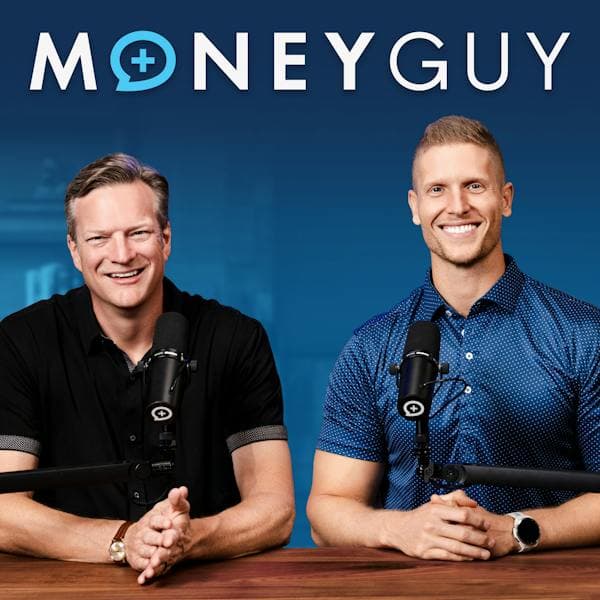
The Money Guy Show
by Brian Preston, CPA/CFP & Bo Hanson, CFA/CFP
Two fee-only financial advisors break down the Financial Order of Operations, a 9-step wealth-building framework. 617K YouTube followers and a 4.8 Apple rating.
The Long View
by Christine Benz, Amy Arnott & Ben Johnson
Morningstar's weekly deep-dive interview show on retirement, portfolio strategy, and fund analysis. 387 episodes, hosted by Christine Benz and the Morningstar research team.
Stacking Benjamins
by Joe Saul-Sehy & Josh 'OG' Bannerman, CFP
A former financial advisor and a CFP host a lighthearted show from Joe's mom's basement. Three episodes a week on investing, retirement, and behavioral finance.