
How to Automate Your Finances Completely in an Afternoon
You can set up your entire financial system to run automatically in one afternoon. Here is the step-by-step guide to automating savings, investing, bills, and debt payoff.

The average person makes over 200 financial decisions per month. Should I transfer money to savings? Did I pay the electric bill? Should I invest this week or wait? Automation reduces that to about 5 decisions. The less you have to think about money logistics, the fewer mistakes you make.
"Automate your finances" sounds like advice for people who already have money. In reality, automation helps most when you are starting out, because it removes willpower from the equation. You do not need discipline to save if the money leaves your checking account before you can spend it.
Here is a practical, step-by-step guide to automating your entire financial life in a single afternoon, including the order of operations and what to check monthly.
The 5-Part Automation System
The framework is simple: direct deposit split, automatic savings, automatic investing, autopay bills, automatic debt payoff. Money moves to its intended destination before you can spend it.
The principle behind this is well-documented in behavioral economics. A landmark NBER study by Madrian and Shea (2001) found that automatic enrollment in 401(k) plans increased participation from roughly 37% to 86% among newly hired employees. That is a 49 percentage point jump from a single change: switching from opt-in to opt-out. The employees did not become more disciplined. The system changed around them.
The same principle applies to every part of your financial life. If you have to manually decide to save $200 every month, you will skip it eventually. If $200 automatically moves to savings the day after payday, you save without deciding. For a broader framework on allocating your paycheck, read our guide on how to budget your first paycheck.
Step-by-Step Setup Guide
Step 1: Split your direct deposit (15 minutes)
Ask your HR department to split your paycheck into two accounts: checking (for bills and spending) and savings (for your emergency fund). Start with 10% to savings and 90% to checking.
If your employer does not support split deposit, set up an automatic transfer from checking to savings for the day after payday. The timing matters: if the transfer hits the same day as your deposit, you might overdraft if the deposit processes late. One day later gives you a safety buffer.
This single step is the foundation. Everything else builds on top of it.
Step 2: Automate your emergency fund (10 minutes)
Set up an automatic transfer from checking to a high-yield savings account on payday. Target 3 to 6 months of expenses. As of mid-2026, high-yield savings accounts are paying around 4.0 to 4.5% APY, compared to 0.01% at most traditional banks. Keeping your emergency fund in a 0.01% account costs you real money.
Once your emergency fund reaches its target, redirect this automatic transfer to investing. Do not just stop it. The habit of moving money out of checking is what keeps lifestyle inflation in check. For the full framework, read our guide on how to build an emergency fund.
Step 3: Automate your investing (15 minutes)
This is where automation has the biggest long-term impact. Three accounts to set up:
401(k): Set your contribution rate to at least capture the full employer match. If your employer matches 4% and you are contributing 3%, you are leaving free money on the table. Log into your 401(k) portal and increase the percentage.
IRA: Set up recurring automatic contributions at your brokerage. Fidelity, Vanguard, and Schwab all support recurring transfers from your bank account on a schedule you choose. Fidelity offers fractional share recurring investments, so you can invest $200/month even if your target fund costs $400 per share. Schwab offers a similar automatic investment plan.
Taxable brokerage: Set up automatic investments into your chosen index fund or ETF. The mechanics are the same as the IRA: pick an amount, pick a frequency, pick a fund.
This approach is called dollar-cost averaging, and it works because you buy more shares when prices are low and fewer when prices are high, without having to think about it.
Step 4: Automate your bills (20 minutes)
Set every recurring bill to autopay. The strategy depends on the bill type:
For fixed bills (rent, insurance, subscriptions): autopay to a credit card for rewards points, then autopay the credit card in full from checking. This earns you cashback on bills you have to pay anyway.
For variable bills (utilities, phone): autopay from checking. These amounts change monthly, so a credit card creates uncertainty about your balance.
Keep one bill on manual: your credit card statement. Review it before paying to catch fraudulent charges. Autopay is convenient, but it also means you might not notice a $340 charge from a subscription you forgot to cancel.
Step 5: Automate your debt payoff (10 minutes)
Set up automatic payments for at least the minimum on every debt. This prevents missed-payment credit damage, which can drop your score 60 to 80 points for a single 30-day late mark.
Then set up an additional automatic transfer toward your target debt. If you are using the debt avalanche method (highest interest rate first), direct the extra payment to your highest-interest card. If you prefer the snowball method (smallest balance first), direct it to your smallest balance. Either way, the automatic transfer removes the temptation to spend the debt payoff money on something else.
The Monthly Maintenance Check
Automation is not "set it and forget it forever." You need a monthly review. Schedule 15 minutes on the 1st of each month:
- Check that all transfers went through (sometimes banks change your account number after a card replacement and transfers fail silently)
- Review your credit card statement for unauthorized charges
- Verify investment contributions are still aligned with your target allocation
- Adjust your savings rate if your income changed
Quarterly: review whether your emergency fund target needs updating (did your monthly expenses change?), and rebalance investments if your allocation drifted more than 5% from target. Our guide on how to rebalance your portfolio walks through this process.
Real-World Examples
Example: Marcus, 24, earning $48,000/year
Situation: Marcus had no savings, no investments, and was living paycheck to paycheck on $4,000/month take-home pay. He wanted to start building wealth but kept spending whatever was in his checking account.
What he did: Set up split deposit (10% to savings, 90% to checking). Set his 401(k) contribution to 6% to capture the full 4% employer match. Enabled autopay on all four recurring bills. The initial fear of automating money was real: he worried he would overdraft. The first month, one transfer failed because his payday shifted by a day, but the bank waived the fee.
Result: In 12 months, accumulated $4,800 in savings and $2,880 in 401(k) contributions plus $1,920 employer match. Total: $9,600 in wealth built without actively thinking about it. The automation removed the daily decision of whether to save, which is where he had been failing.
Example: Jennifer, 38, $22,000 in credit card debt
Situation: Jennifer had four credit cards with balances ranging from $1,200 to $9,800. Interest rates between 19% and 26%. She was making minimum payments but the balances were barely moving. Every time she had extra money, she spent it instead of paying down debt.
What she did: Automated minimum payments on all four cards to prevent missed payments. Set up a $400/month automatic transfer to the highest-interest card (26% APR, $9,800 balance). Also automated $200/month to a savings account for a small emergency fund, so she would stop using credit cards for unexpected expenses.
Result: In 18 months, paid off $11,200 in debt (minimums plus the $400 extra) and built $3,600 in savings. The automation removed the temptation to spend the debt payoff money. The adjustment period lasted about 2 months: she felt broke because the money was leaving automatically, but after that, she adjusted to the new lower spending level.
What to Automate vs What to Keep Manual
| Financial Task | Automate or Manual | Why | How Often to Review |
|---|---|---|---|
| Paycheck split (savings vs checking) | Automate | Removes willpower from saving | Quarterly |
| Emergency fund contributions | Automate | Consistency builds the fund faster | Monthly until funded, then redirect |
| 401(k) contributions | Automate | Employer match is free money | Annually, or after a raise |
| IRA contributions | Automate | Removes timing decisions | Annually |
| Taxable brokerage investments | Automate | Dollar-cost averaging works | Quarterly |
| Fixed bills (rent, insurance) | Autopay to credit card | Earn rewards, never miss a payment | Monthly |
| Variable bills (utilities) | Autopay from checking | Avoid missed payment fees | Monthly |
| Credit card payment | Manual review, then autopay | Catch fraud before paying | Monthly |
| Debt payoff (extra payments) | Automate | Removes temptation to spend the money | Monthly until debt is gone |
| Investment rebalancing | Manual | Requires judgment about allocation | Quarterly or semi-annually |
Common Mistakes
Automating everything and then never reviewing. Subscriptions you forgot about, overdrafts from a failed transfer, and investment contributions going to the wrong fund all go unnoticed when you stop paying attention. The 15-minute monthly check prevents this.
Setting up autopay on a credit card without setting up autopay for the credit card itself. The bill gets paid automatically, but then you miss the credit card payment and get hit with a late fee and interest charges. Autopay the bills to the card, then autopay the card from checking.
Automating investments but not increasing the amount after a raise. If you get a 5% raise and your automatic investment stays the same, the extra money sits in checking and gets spent. Every time your income increases, increase your automated savings rate by at least half the raise.
Automating savings but leaving it in a 0.01% APY checking account instead of a high-yield savings account. On a $10,000 emergency fund, the difference between 0.01% and 4.5% APY is $449 per year. That is real money doing nothing.
The Bottom Line
Automation takes about 90 minutes to set up and saves you hundreds of decisions per month. The goal is not to stop thinking about money entirely. The goal is to spend your thinking time on strategy (should I increase my 401(k) contribution? Am I ready to buy a house?) instead of logistics (did I pay the electric bill? Did I transfer money to savings this month?).
Pick one step from this guide and set it up today. Bookmark this page and come back tomorrow for the next one. Once your system is running, check out our comparison of free investment tracking tools to monitor everything from one dashboard.
This post is for informational purposes only and does not constitute financial advice. APY rates and contribution limits are current as of July 2026 and change annually. Verify current rates and limits with your financial institution.
Tags
Savvy Nickel Team
Financial education expert dedicated to making complex money topics simple and accessible for everyone.
Recommended Articles

How to Set Up Automatic Investing So You Never Have to Think About It
You can set up your investments to run automatically every month with zero ongoing effort. Here is the exact step-by-step guide to automating your investing at Fidelity, Schwab, or Vanguard.

What to Do If You Lose Everything Financially
Chapter 7 stays on your credit report 10 years, Chapter 13 for 7. But 99% of non-dismissed Chapter 7 cases discharge. Here is how to rebuild from zero.

How to Freeze Your Credit and Why It Is the Single Best Fraud Prevention Step
A credit freeze is free, takes 30 minutes, and prevents anyone from opening credit accounts in your name. It is the single best fraud prevention step you can take. Here is exactly how to freeze your credit at all three bureaus.
Run the Numbers
Free calculators related to this article.
Millionaire Calculator
Find out when you will reach your first million (or any wealth target) based on your current savings, monthly contributions, and expected investment returns. See how different contribution levels change your timeline.
Open calculator →Dividend Calculator
Project your dividend income year by year, track your yield on cost, and see how reinvesting dividends accelerates portfolio growth. Includes tax adjustments and dividend growth.
Open calculator →Investment Calculator
Project how your starting amount and monthly contributions grow over time. See both nominal and inflation-adjusted results so you know what your money will actually be worth.
Open calculator →Recommended Books


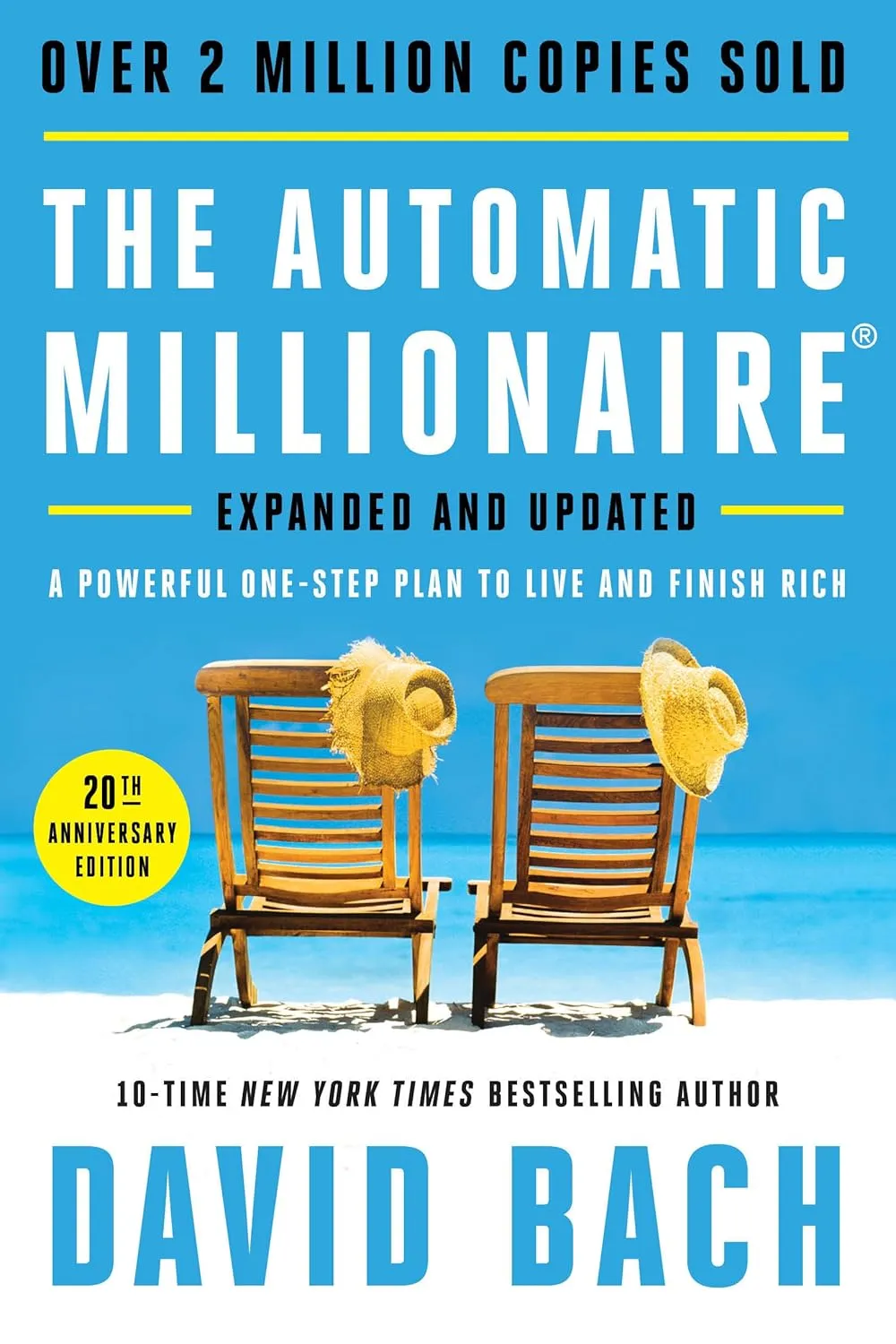
Related Glossary Terms
Finance
Finance is the system of allocating money across time and risk. It encompasses borrowing, lending, investing, budgeting, and the institutions that make all of those activities possible.
Savings
Savings is money set aside for future use rather than spent immediately. The US personal saving rate was 2.7% in June 2026, near historic lows, while top high-yield savings accounts pay up to 4.50% APY.
Vesting
Vesting is the process by which you earn full ownership of employer-provided assets over time. It applies to 401(k) employer matches, stock options, RSUs, and pension benefits, with schedules that can be immediate, cliff, or graded.
10-K
A 10-K is the annual report publicly traded companies must file with the SEC, containing audited financials, risk factors, and management's full analysis of business performance over the fiscal year.
401 K
A 401(k) plan is an employer-sponsored retirement savings account that lets employees contribute pre-tax or Roth dollars, often with an employer match, up to $24,500 in 2026 with higher limits for workers 50 and older.
401(k)
A 401(k) is an employer-sponsored retirement plan that lets you invest pre-tax dollars, reducing taxable income while building long-term wealth with potential employer matching.
Recommended Podcasts

The Money Guy Show
by Brian Preston, CPA/CFP & Bo Hanson, CFA/CFP
Two fee-only financial advisors break down the Financial Order of Operations, a 9-step wealth-building framework. 617K YouTube followers and a 4.8 Apple rating.
In My Finance Era
by Vanguard team
Vanguard's personal finance podcast for early-career investors. Short episodes on saving, investing, debt, and HSAs. Backed by Vanguard's February 2026 research on young adult money attitudes.

Financial Feminist
by Tori Dunlap
Tori Dunlap hosts the number one money podcast for women, covering debt payoff, investing, and salary negotiation. New episodes every Tuesday from Her First 100K.