
How to Set Up Automatic Investing So You Never Have to Think About It
You can set up your investments to run automatically every month with zero ongoing effort. Here is the exact step-by-step guide to automating your investing at Fidelity, Schwab, or Vanguard.

Over the 15-year period ending December 2024, 94% of actively managed domestic equity funds underperformed their benchmarks. The S&P Dow Jones Indices SPIVA Year-End 2024 report found that not a single equity category had a majority of active managers outperforming over that timeframe. The best investment strategy is not about picking the right stocks. It is about setting up a system that invests automatically and then getting out of the way.
Most people know they should invest more. The problem is not knowledge, it is friction. You have to remember to log in, decide how much, pick what to buy, and execute the trade. Automatic investing removes every one of those steps. The money moves on a schedule you set once, and it keeps moving whether you think about it or not.
Here is how to set up fully automatic investing at the three major brokerages (Fidelity, Schwab, Vanguard), what to buy, and the one annual task you cannot automate.
Why Automatic Investing Works
Dollar-cost averaging means investing a fixed dollar amount on a fixed schedule, regardless of what the market is doing. You buy more shares when prices are low and fewer when prices are high. The math works in your favor over time because you are always buying, including on the days when prices are beaten down and everyone else is panicking.
The behavioral benefit matters more than the math. When investing is automatic, you cannot forget to do it. You cannot procrastinate. You cannot talk yourself out of it during a market dip because the money has already moved before you had time to react.
Missing the 10 best trading days over a 20-year period can cut your returns in half. Those best days often come immediately after the worst days, when most people are selling or sitting on the sidelines. Automatic investing ensures you are always invested during the recovery. Read more about the mechanics in our guide to dollar-cost averaging.
The S&P 500 has delivered approximately 10% annualized returns over the long run, including dividends, and has risen in roughly 70% of all calendar years. Time in the market beats timing the market, and automation is the most reliable way to maximize time in the market.
What to Buy Before You Automate
The simplest option: a single target-date fund
A target-date fund automatically adjusts its allocation from aggressive to conservative as you approach your retirement year. You pick the fund closest to your expected retirement year (for example, Target Retirement 2060) and contribute to it every month. That is the entire strategy. Learn more in our guide to target-date funds.
The recommended option: a 3-fund portfolio
A 3-fund portfolio gives you exposure to the entire global market with three low-cost index funds: U.S. total market, international, and bonds. It is more customizable than a target-date fund and carries lower expense ratios.
| Brokerage | U.S. Total Market | International | Bonds | Expense Ratios |
|---|---|---|---|---|
| Fidelity | FZROX | FZILX | FXNAX | 0% (FZROX, FZILX), 0.025% (FXNAX) |
| Schwab | SWTSX | SWISX | SWAGX | All under 0.10% |
| Vanguard | VTI (ETF) | VXUS (ETF) | BND (ETF) | All under 0.10% |
Keep it simple. A 3-fund portfolio covers the entire global market. You do not need more funds than that. Read our full breakdown of the three-fund portfolio for allocation guidance.
For ETF investors, VTI, VXUS, and BND are commission-free at all three brokerages and support fractional share purchases at Fidelity and Schwab. If you want to understand why index funds work so well, see our guide on what an index fund is.
Step-by-Step Setup at Each Brokerage
Fidelity
Fidelity supports fractional shares for stocks and ETFs, which means you can invest exact dollar amounts regardless of share price.
- Open a Fidelity brokerage or IRA account (no minimum balance required)
- Link your bank account through the transfer setup page
- Set up a recurring transfer from your bank to Fidelity (Accounts > Transfers > Recurring transfers)
- Set up automatic investments into your chosen funds (Accounts > select fund > Automatic investments > set monthly amount and date)
- Enable dividend reinvestment (Accounts > Dividends and Capital Gains > set to "Reinvest")
The entire setup takes about 20 minutes. Once it is running, Fidelity handles the rest. You can change the amount or frequency at any time, but you never have to. See Fidelity's recurring investments page for official instructions.
Charles Schwab
Schwab supports fractional shares through Schwab Stock Slices and automatic mutual fund investing through their Automatic Investment Plan.
- Open a Schwab brokerage or IRA account (no minimum)
- Link your bank account
- Set up a Schwab Automatic Investment Plan for mutual funds (Accounts > Automatic investing > select fund > schedule)
- For ETFs, use Schwab Stock Slices for fractional share recurring buys
- Enable dividend reinvestment
Schwab's mutual fund automatic investing is well-established and reliable. ETF recurring buys require using the Stock Slices feature, which works but is slightly less flexible than Fidelity's approach. See Schwab's automatic investment plan page for details.
Vanguard
Vanguard supports automatic investing for Vanguard mutual funds and ETFs. The functionality is the same as Fidelity and Schwab, but the interface is less intuitive.
- Open a Vanguard brokerage or IRA account (no minimum for most accounts)
- Link your bank account
- Set up automatic bank transfers (Transfers > Recurring transfers)
- Set up automatic investments (Accounts > Buy > Automatic investments > select fund and schedule)
- Enable dividend reinvestment
Vanguard's website has improved over the years but still feels clunkier than Fidelity or Schwab. The underlying functionality works the same way. If you already have accounts at Vanguard, there is no reason to switch just for automation. If you are starting fresh, Fidelity or Schwab offer a smoother setup experience. Read our guide on how to open a brokerage account for more details.
The Order of Operations for Automatic Investing
Where you direct your automatic investments matters as much as setting them up. Follow this order:
- 401(k) up to employer match. If your employer matches contributions, that is free money. Contribute at least enough to get the full match before anything else.
- Emergency fund to 3 to 6 months. Investing without a safety net is risky. If an emergency hits and you have to sell investments at a loss, you undo months of progress. Read our guide on how to build an emergency fund.
- Roth IRA or Traditional IRA. The 2026 contribution limit is $7,500, or $8,600 if you are 50 or older. See our comparison of 401(k) vs Roth IRA to decide which is right for you.
- 401(k) up to annual limit. The 2026 limit is $24,500, or $32,500 if you are 50 or older, or $35,750 if you are 60 to 63.
- HSA if eligible. The 2026 family limit is $8,750 ($4,400 for self-only). An HSA offers triple tax advantages: contributions are tax-deductible, growth is tax-free, and withdrawals for qualified medical expenses are tax-free. Read our guide on HSA tax benefits.
- Taxable brokerage account. No limits. Once you have maxed out tax-advantaged accounts, direct your automatic investments here.
Automate each step before moving to the next. Each step takes 15 to 20 minutes to set up.
The One Thing You Cannot Automate
Annual rebalancing. Once per year, check whether your allocation has drifted from your target. If your target is 80% stocks and 20% bonds, but strong market performance has pushed you to 88% stocks, you need to sell some stock funds and buy more bond funds to get back to your target.
This takes about 30 minutes. Set a calendar reminder for January 1st or your birthday. Read our guide on how to rebalance your portfolio for step-by-step instructions.
After every raise, increase your automatic contribution by at least 1%. This prevents lifestyle inflation from silently eating your raise. If you get a 4% raise and your investments automatically increase by 1%, you still see more money in your paycheck while your savings rate grows.
Once per quarter, glance at your portfolio. Do not act. Just confirm the transfers are going through and nothing has broken. This takes two minutes.
Automatic Investing Features by Brokerage
| Feature | Fidelity | Schwab | Vanguard |
|---|---|---|---|
| Fractional shares | Yes (stocks and ETFs) | Yes (via Stock Slices) | Yes (Vanguard ETFs) |
| ETF recurring buys | Yes | Yes (via Stock Slices) | Yes |
| Mutual fund recurring buys | Yes | Yes (Automatic Investment Plan) | Yes |
| Minimum account | $0 | $0 | $0 (most accounts) |
| Dividend reinvestment | Yes (automatic) | Yes (automatic) | Yes (automatic) |
| Interface ease | Excellent | Good | Fair |
| Best for | ETF investors, beginners | Mutual fund investors | Existing Vanguard customers |
Real-World Examples
Example: A 25-year-old at Fidelity
Situation: She had just started her first salaried job and wanted to invest but had no idea where to start. She kept reading about investing but never actually opened an account.
What she did: She opened a Roth IRA at Fidelity, linked her checking account, and set up $300/month into FZROX and $100/month into FZILX. Total: $400/month, $4,800/year. The first transfer felt uncomfortable. She watched $400 leave her checking account and disappear into an account she did not fully understand.
Result: After three years with a 7% average return, her balance was approximately $15,800. She never logged in except to increase the amount after a raise. The automation removed the temptation to spend that $400 on other things. By year three, she stopped noticing the transfer at all.
Example: A 38-year-old who had been "planning to start" for 5 years
Situation: He had a good income, no debt, and $50,000 in a savings account earning 4% APY. He had been telling himself he would "start investing soon" for five straight years. The friction of choosing funds and timing the market kept stopping him.
What he did: He opened a Schwab brokerage account, set up an automatic investment of $500/month into SWTSX, and set up a recurring transfer from his bank. The first month was psychologically hard. He kept refreshing the account, watching the balance dip and rise with the market. By month three, he stopped checking.
Result: By month 12, he had $6,200 invested and wished he had started five years earlier. The system was running. He increased the contribution to $700/month after his next raise and never thought about it again.
Common Mistakes
Pausing automatic investments during a market downturn. This is exactly when you should keep buying. Market downturns are when shares go on sale. If you pause your automatic investments because the market dropped 15%, you are doing the opposite of what the system is designed for.
Setting the amount too high and having to cancel after two months. Start with an amount you can comfortably afford. You can always increase it later. If you start at $200/month and it feels easy, bump it to $300. If you start at $800/month and it stresses your budget, you will cancel it and lose the habit entirely.
Forgetting to enable dividend reinvestment. Unreinvested dividends sit in your settlement account earning little or nothing. Log in once and set dividends to automatically reinvest into the fund that paid them.
Not increasing contributions after raises. Your savings rate should grow with your income. If you get a 5% raise and your investment contribution stays the same, you are spending the raise instead of investing it.
Automating investments before building an emergency fund. If you have no cash buffer and your car needs $2,000 in repairs, you will have to sell investments at whatever price the market is at that day. Build the emergency fund first.
The Bottom Line
Automatic investing takes 30 to 60 minutes to set up and then runs forever. The hardest part is the first transfer. After that, it is background processing that builds wealth while you live your life.
The best investment strategy is the one you can maintain without thinking. Automatic investing into low-cost index funds is that strategy. Open an account at Fidelity, Schwab, or Vanguard today and set up your first recurring investment. Even $50/month is enough to start.
This post is for informational purposes only and does not constitute financial advice. Investment returns are not guaranteed and past performance does not predict future results. Contribution limits are for 2026 and change annually. Verify current figures at [IRS.gov](https://www.irs.gov). Consult a financial professional for guidance specific to your situation.
Tags
Savvy Nickel Team
Financial education expert dedicated to making complex money topics simple and accessible for everyone.
Recommended Articles

How to Automate Your Finances Completely in an Afternoon
You can set up your entire financial system to run automatically in one afternoon. Here is the step-by-step guide to automating savings, investing, bills, and debt payoff.

Passive Income: What's Real, What's Hype, and What's Worth Trying
The passive income industry is built on a specific kind of lie: that you can build income that requires no real work. Here is what the evidence actually shows as of July 2026, and which approaches hold up.

The Real Cost of Waiting 5 Years to Start Investing
Waiting feels harmless. It is not. Here is exactly what five years of delay costs you in real dollars, and why the math is far more brutal than most people realize, with 2026 contribution limits.
Run the Numbers
Free calculators related to this article.
Investment Return Calculator
See how a lump sum or regular contributions grow over time at any return rate. Compare nominal returns against inflation-adjusted results to get an honest picture of your real gains.
Open calculator →Compound Interest Calculator
See exactly how your money grows over time with compound interest. Enter your starting amount, monthly contributions, interest rate, and time horizon to watch your wealth build.
Open calculator →Dividend Calculator
Project your dividend income year by year, track your yield on cost, and see how reinvesting dividends accelerates portfolio growth. Includes tax adjustments and dividend growth.
Open calculator →Recommended Books
Related Glossary Terms
Index Fund
An index fund is a passively managed investment fund that tracks a market index like the S&P 500, offering broad diversification at minimal cost by holding the same securities in the same proportions as the index.
ETF
An ETF is a basket of securities that trades on an exchange like a single stock. The global ETF market hit $23 trillion in 2026. Learn how ETFs work.
Vesting
Vesting is the process by which you earn full ownership of employer-provided assets over time. It applies to 401(k) employer matches, stock options, RSUs, and pension benefits, with schedules that can be immediate, cliff, or graded.
Dollar-Cost Averaging
Dollar-cost averaging invests a fixed amount at regular intervals regardless of price. Learn how DCA works, its math advantage, and when lump sum beats DCA.
Mutual Fund
A mutual fund pools money from many investors to buy a diversified portfolio of stocks, bonds, or other securities, managed by professional portfolio managers.
Efficient Market Hypothesis
The Efficient Market Hypothesis says stock prices already reflect all available information, making it impossible to consistently beat the market. The 2026 debate centers on whether passive investing's growth has made markets more or less efficient.
Recommended Podcasts
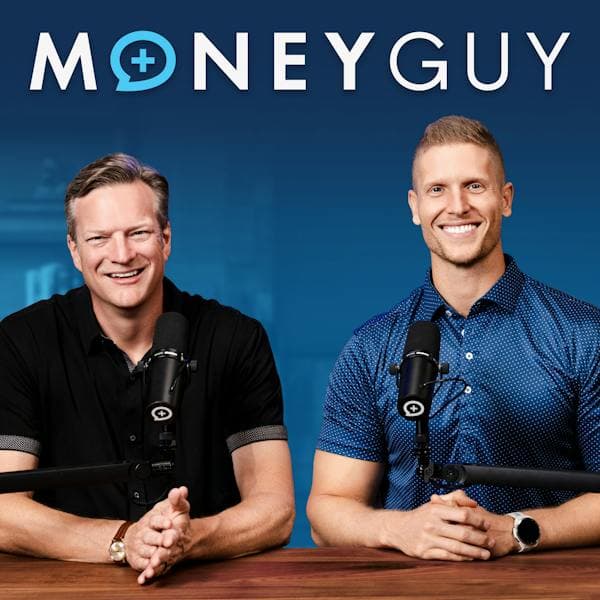
The Money Guy Show
by Brian Preston, CPA/CFP & Bo Hanson, CFA/CFP
Two fee-only financial advisors break down the Financial Order of Operations, a 9-step wealth-building framework. 617K YouTube followers and a 4.8 Apple rating.
Financial Feminist
by Tori Dunlap
Tori Dunlap hosts the number one money podcast for women, covering debt payoff, investing, and salary negotiation. New episodes every Tuesday from Her First 100K.
The Personal Finance Podcast
by Andrew Giancola
Andrew Giancola's Master Money show covers budgeting, investing, and side income with a systems-first approach. 350K monthly downloads and a 4.7 Apple rating.