Behavioral Economics
Quick Definition
Behavioral economics explains why people consistently make money decisions that look irrational on paper, from overspending on credit cards to cashing out winning stocks too early. It merges psychology with economic modeling to capture how the human brain actually weighs risk, reward, and time, instead of assuming everyone is a cold calculating machine.
What It Means
Classical economics built its theories on a fictional character called Homo economicus, a perfectly rational agent who always maximizes utility, has complete information, and processes every option without emotion. Behavioral economics throws that character out. Decades of experiments show that real humans use mental shortcuts, get swayed by framing, and weight losses far more heavily than gains. These are not random mistakes. They are predictable patterns, which means they can be measured, modeled, and even designed around.
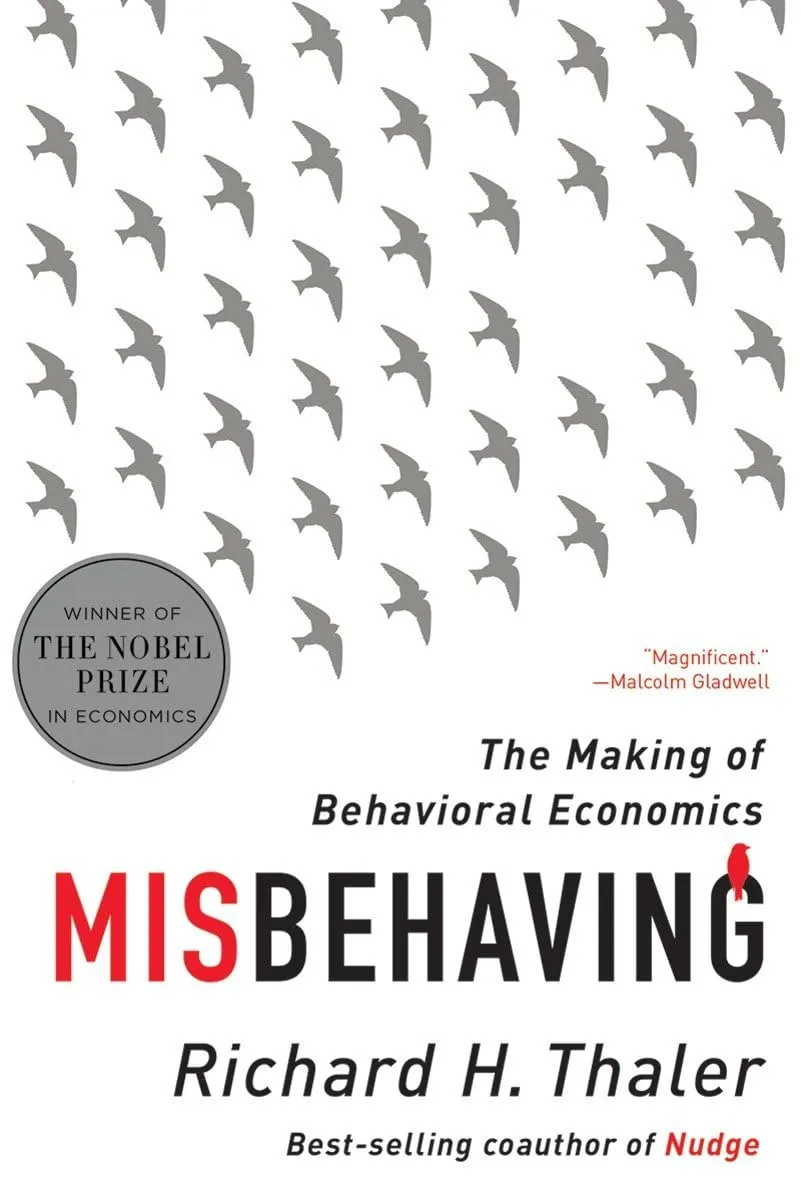
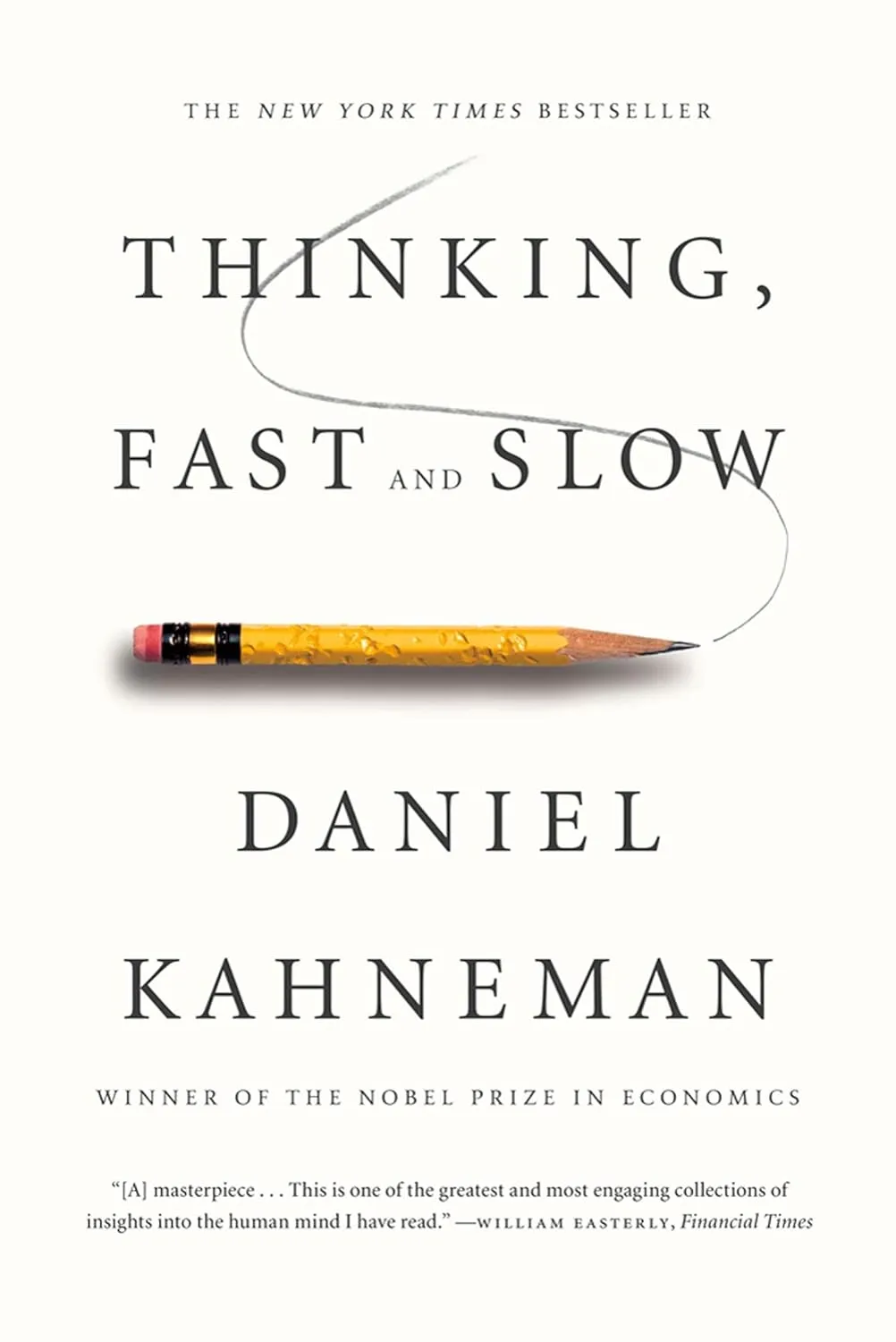
The field took off in the 1970s and 1980s through the work of Daniel Kahneman and Amos Tversky, who published prospect theory in 1979. Their key insight was that people evaluate outcomes relative to a reference point (usually the status quo) rather than in absolute terms, and that losses hurt roughly twice as much as equivalent gains feel good. Richard Thaler later connected these psychological findings to everyday financial behavior, documenting things like mental accounting and the endowment effect. Kahneman won the Nobel Prize in Economics in 2002, and Thaler won in 2017, signaling that the mainstream economics profession had fully absorbed the movement.
By 2026, behavioral economics has moved far beyond academic journals. Governments around the world run behavioral insights teams (sometimes called nudge units) that redesign forms, tax reminders, and retirement enrollment processes to improve outcomes without forcing anyone. The United Kingdom's Behavioural Insights Team, originally inside government and now a social purpose company, has been copied in dozens of countries. In the United States, automatic enrollment in 401(k) plans, default contribution rates, and opt-out organ donation rules all trace back to behavioral research showing that defaults stick because inertia is powerful.
A 2026 NBER working paper by John List, Matthias Rodemeier, Sutanuka Roy, and Gregory Sun, titled "The Value of Behavioral Policies," measured the welfare effects of nudges across five markets and compared them to traditional tools like taxes. The findings suggest that well-designed behavioral interventions can deliver meaningful welfare gains at a fraction of the cost of mandates, though their effectiveness varies sharply by context. This is the live edge of the field in 2026: moving from "do nudges work?" to "how big is the effect, and when do they backfire?"
How It Works
Behavioral economics rests on a handful of recurring mechanisms. Understanding them helps you spot your own blind spots.
1. Reference dependence. People judge gains and losses against a starting point, not against final wealth. A $1,000 bonus feels like a windfall if you expected nothing, and like a disappointment if you expected $2,000. The same dollars produce different emotions depending on the anchor.
2. Loss aversion. The pain of losing $100 is psychologically about twice as intense as the pleasure of gaining $100. This asymmetry, captured by the lambda parameter in prospect theory, explains why people refuse fair coin flips for money and why investors hold losing stocks rather than lock in the loss. See our deep dive on loss aversion.
3. Bounded rationality. The brain has limited processing power and time. Instead of optimizing every decision, people satisfice, meaning they pick a "good enough" option using shortcuts (heuristics). These shortcuts usually work but produce systematic errors in specific situations.
4. Framing effects. The wording of a choice changes the answer. A medical treatment described as "90% survival rate" is chosen more often than one described as "10% mortality rate," even though the math is identical. In finance, an investment pitched as "protecting your downside" feels different from one pitched as "capping your upside."
5. Present bias and hyperbolic discounting. People discount future rewards steeply and inconsistently. A reward tomorrow is valued far less than one today, but a reward in 12 months is valued about the same as one in 12 months plus one day. This produces procrastination on savings and overreliance on debt. Read more in our entry on hyperbolic discounting.
6. Mental accounting. Households sort money into mental buckets (vacation fund, emergency cash, "found money" from a tax refund) and treat the dollars differently even though money is fungible. This can help with self-control but also leads to inefficient choices, like carrying credit card debt while holding a low-yield savings cushion. Our mental accounting page covers the mechanics.
7. Choice architecture and nudges. Because defaults and ordering matter, the person who designs a choice set influences the outcome without removing freedom. Putting the salad at eye level in a cafeteria, or auto-enrolling employees into a retirement plan with an opt-out, are classic nudges. The ethical debate is whether this is helpful guidance or manipulation.
Real-World Examples
Retirement savings defaults. Before automatic enrollment, many workers sat out of their 401(k) for years simply because signing up required effort. Research from the Pension Research Council and others found that switching to auto-enrollment with a 3% default contribution rate lifts participation from roughly 40% to over 90% of eligible workers. The 2026 SECURE 2.0 Act rules require most new 401(k) and 403(b) plans established after December 2022 to auto-enroll employees at a rate between 3% and 10%, escalating each year. The default does the heavy lifting because most people never change it. You can model your own trajectory with the 401k Calculator.
Tax compliance reminders. The UK's Behavioural Insights Team found that adding a single line to tax reminder letters, "9 out of 10 people in your area pay their tax on time," increased payment rates by several percentage points. The nudge works by activating social norms, a behavioral lever that costs the government almost nothing to deploy.
Energy use feedback. Utility companies that show households how their electricity use compares to neighbors see measurable reductions in consumption. The now-famous Opower randomized trials, involving millions of households, found average energy savings of about 2%, achieved purely through a redesigned bill.
Credit card minimum payments. Behavioral research shows that presenting a low minimum payment anchor causes cardholders to pay down debt more slowly than they otherwise would, because the anchor feels like a "suggested" amount. Some regulators have pushed for disclosures that show the total interest cost and a faster payoff timeline. If you carry a balance, the Credit Card Interest Calculator shows the real cost of minimum payments.
| Mechanism | Everyday example | Financial consequence |
|---|---|---|
| Loss aversion | Refusing to sell a stock at a loss | Underdiversified portfolio, larger realized losses later |
| Present bias | "I'll start saving next month" | Smaller retirement balance, more debt |
| Mental accounting | Treating a tax refund as "fun money" | Lower net worth than if it went to debt |
| Framing | "Only $29/month" vs "$348/year" | Higher total spending on subscriptions |
| Default effect | Staying at the 3% 401(k) contribution | Saving far less than needed to retire |
Key Points to Remember
- People are predictably irrational, not randomly so. The same biases show up across cultures and income levels, which means you can plan around them.
- Losses hurt about twice as much as gains feel good. This single fact drives a huge share of investing and spending mistakes.
- Defaults are powerful. Whoever sets the default (your employer, your bank, your app) shapes your behavior more than you probably realize.
- Behavioral economics does not say people are stupid. It says the brain uses efficient shortcuts that misfire in modern financial environments designed to exploit them.
- Nudges are cheap but not magic. The 2026 research agenda is focused on measuring how big the effects actually are and where they fade.
Common Mistakes to Avoid
Treating biases as someone else's problem. Everyone, including trained economists and professional investors, exhibits these patterns. Assuming you are immune is itself a bias (overconfidence). The fix is building systems, like automatic investing and pre-set rebalancing, that do not rely on willpower in the moment.
Using behavioral insights to justify manipulation. Employers and fintech apps can use the same levers to push products that benefit them, not you. A "default" investment option with high fees still captures most participants. Always check the expense ratio and conflicts of interest, not just the convenience.
Overcorrecting into pure emotion. Recognizing that humans are emotional does not mean feelings should drive every money decision. The goal is to design environments where your rational intentions win by default, then let emotion operate within guardrails.
Ignoring the sunk cost trap. People keep funding failing projects, bad investments, and unused gym memberships because they have already spent the money. The money is gone regardless. Decisions should weigh only future costs and benefits. See sunk cost for the full breakdown.
Confusing nudge with mandate. A nudge preserves choice. A mandate removes it. Blurring the two leads to bad policy and bad personal decisions. If you want to change your own behavior, set defaults you can override, rather than banning yourself from everything.
Related Concepts
Behavioral economics overlaps with several ideas covered elsewhere on the site. The applied investing side lives in behavioral finance, which focuses specifically on how these biases move markets and portfolios. The tendency to sell winners too early and hold losers too long is the disposition effect. The steep discounting of future rewards shows up as hyperbolic discounting, and the bucketing of money into mental categories is mental accounting. On the policy side, the design of incentives and the psychology of scarcity both draw heavily on behavioral foundations. For practical application, our posts on the psychology behind impulse buying and why budgets fail and what actually works translate the theory into everyday money habits. The authoritative academic overview is Richard Thaler's 2016 American Economic Review paper, "Behavioral Economics: Past, Present, and Future".
Frequently Asked Questions
Q: Is behavioral economics just common sense? A: Some findings sound obvious in hindsight, but the field's value is in measuring the size and direction of effects precisely. "People dislike losses" is common sense; "losses hurt about twice as much as equivalent gains, and this changes how insurance markets should be priced" is a testable, useful claim.
Q: Does behavioral economics replace traditional economics? A: No. Traditional models still work well for many aggregate predictions, like how interest rates affect bond prices. Behavioral economics refines the models by adding realistic assumptions about individual decision making, especially in situations involving risk, time, and uncertainty.
Q: Can I use behavioral economics to trick myself into saving more? A: Yes, and that is a legitimate strategy. Automating transfers, increasing contribution rates on payday, and removing friction from good habits are all ways to make the default work in your favor. The Savings Goal Calculator can help you set the target, and automation does the rest.
Q: Are nudges ethical? A: The debate is active. Proponents argue that some choice architecture always exists, so designing it well is better than leaving it to chance. Critics worry about who gets to decide what "well" means. The 2026 literature, including work on "affective paternalism," is pushing the conversation beyond pure cognitive nudges toward interventions that reshape the emotional texture of choices.
Q: How does this affect my investing? A: Directly. Loss aversion, overtrading, and herding all drag down returns. Recognizing the patterns is the first step; building rules like a written investment policy statement and automatic rebalancing is the second. Our post on common investing mistakes beginners make walks through several of them.