
Tax Loss Harvesting: A Simple Strategy Most Investors Ignore
When investments lose value, most people feel only the loss. Tax loss harvesting turns that loss into a tax benefit that can save you real money today and for years to come, with 2026 capital gains brackets.

Markets go down. Individual stocks fall. Even well-diversified portfolios have positions that are underwater at any given time. Most investors sit on those losses and wait, hoping for a recovery.
Tax loss harvesting is a strategy that turns those paper losses into a concrete financial benefit right now, without abandoning your investment strategy.
It is one of the most practical tax-reduction tools available to individual investors, it costs nothing to implement, and the majority of people who could use it either do not know it exists or think it is only for wealthy investors with complex portfolios. It is not.
What Tax Loss Harvesting Is
Tax loss harvesting means deliberately selling an investment that has declined in value to realize the capital loss, then using that loss to offset capital gains or reduce ordinary income on your tax return.
The key: after selling, you immediately reinvest the proceeds in a similar (but not identical) investment to maintain your market exposure. You capture the tax benefit of the loss without actually leaving the market or changing your investment strategy in any meaningful way.
The loss is "harvested" in the sense that it is converted from an unrealized paper loss (which has no tax effect) into a realized loss (which has a real tax effect) while your overall portfolio position remains essentially unchanged.
How the Tax Benefit Works
Capital losses offset capital gains dollar for dollar. If you have $12,000 in capital gains and $5,000 in capital losses in the same tax year, your net taxable gain is $7,000. You only pay tax on $7,000 instead of $12,000.
If your losses exceed your gains, the IRS allows you to deduct up to $3,000 of net capital losses against ordinary income per year (for single filers and married filing jointly). Ordinary income includes wages, self-employment income, and other non-investment income. The IRS provides detailed guidance on capital gains and losses reporting.
Any losses beyond the $3,000 ordinary income deduction limit carry forward to future tax years indefinitely, where they continue offsetting future gains first, then up to $3,000 of ordinary income each year.
The math on $3,000 of ordinary income offset: If you are in the 22% federal income tax bracket, deducting $3,000 of capital losses against ordinary income saves you $660 in federal taxes ($3,000 x 22%). In the 24% bracket, that becomes $720. The savings are real and repeatable year after year if you carry forward sufficient losses.
A Step-by-Step Example
Example: Nomvula, 33, taxable brokerage account
Situation: Nomvula holds three ETFs in her taxable brokerage account. In November 2026, her portfolio looks like this:
>
| Holding | Current Value | Cost Basis | Gain/Loss |
|---|---|---|---|
| US Total Market ETF | $28,400 | $22,000 | +$6,400 |
| International ETF | $9,100 | $11,500 | -$2,400 |
| Real Estate ETF | $5,200 | $7,800 | -$2,600 |
>
She is planning to sell some shares of her US Total Market ETF for a home renovation, generating a $6,400 long-term capital gain.
>
Tax loss harvesting action: She sells both the International ETF and the Real Estate ETF, realizing $5,000 in losses ($2,400 + $2,600).
>
Net taxable gain after harvesting: $6,400 gain - $5,000 losses = $1,400 net long-term gain.
>
Tax saved: At her 15% long-term capital gains rate, she reduced her taxable gain by $5,000, saving $750 in federal tax. For 2026, the 15% long-term capital gains bracket applies to single filers with taxable income between $49,451 and $545,500, per IRS Revenue Procedure 2025-32.
>
Reinvestment: She immediately buys a similar international ETF from a different fund family (not the same fund, to avoid the wash sale rule) and a different REIT ETF. Her market exposure is nearly identical. She captured a $750 tax benefit with no meaningful change to her investment strategy.
The Wash Sale Rule: The Critical Constraint
The IRS is aware that investors might try to sell a loss position and immediately buy it back. The wash sale rule prevents this from generating a deductible loss.
A wash sale occurs when you sell a security at a loss and, within 30 days before or after the sale, you buy a "substantially identical" security. The 30-day window applies in both directions: 30 days before the sale AND 30 days after.
If a wash sale is triggered, the loss is disallowed for that tax year. It is not lost permanently. The disallowed loss is added to the cost basis of the replacement security, which means you effectively recover it when you eventually sell that security. But you lose the immediate tax benefit, which is the whole point of harvesting.
"Substantially identical" in practice:
- Selling a Vanguard S&P 500 ETF (VOO) and buying iShares S&P 500 ETF (IVV): almost certainly a wash sale. Both track the same index nearly identically.
- Selling a Vanguard S&P 500 ETF (VOO) and buying a Vanguard Total Market ETF (VTI): generally not considered a wash sale, as VTI tracks a different and broader index (though the IRS has not issued definitive guidance on every fund pair).
- Selling an international developed markets ETF and buying a different international developed markets ETF from a different fund family: generally acceptable if they track different underlying indexes.
The safest approach: switch to a fund that tracks a different index with similar but not identical exposure. The investor maintains broad market exposure in the same asset class while clearly avoiding the wash sale rule.
Watch for wash sales across all accounts: The rule applies across your taxable accounts, IRAs, and your spouse's accounts. Selling a stock at a loss in your taxable account and having the same stock in an IRA with automatic dividend reinvestment purchasing shares within the 30-day window can trigger a wash sale.
When Tax Loss Harvesting Makes Sense
Tax loss harvesting is most valuable when:
You have realized capital gains in the same year. Losses directly offset gains, so if you have sold appreciated positions, any harvested losses reduce the tax bill immediately.
You are in a moderate to high tax bracket. The higher your marginal rate, the more valuable a $3,000 ordinary income deduction or a long-term gains offset becomes. At 10% or 12% ordinary income rates, the benefit is smaller. At 22%, 24%, or higher, it is more meaningful.
You have positions with unrealized losses. The strategy only applies to positions below their cost basis. During market downturns or sector-specific declines, opportunities increase.
You invest regularly in a taxable brokerage account. People who invest paycheck to paycheck into a taxable account accumulate many small positions at different cost bases, creating frequent harvesting opportunities.
Tax loss harvesting is less valuable when:
- All your investments are in tax-advantaged accounts (401k, IRA, Roth IRA). Losses inside those accounts do not generate deductible losses.
- You are in the 0% long-term capital gains bracket (taxable income below $49,450 for single filers in 2026, or $98,900 for married filing jointly). If you owe no capital gains tax anyway, harvesting gains is a non-issue.
- Your investments have all appreciated significantly and have no positions underwater.
Carrying Losses Forward: The Multi-Year Benefit
One of the most underappreciated aspects of tax loss harvesting is how losses carry forward. If you harvest $20,000 in losses in a market downturn year but only have $8,000 in gains to offset, your net loss is $12,000. After the $3,000 ordinary income deduction, you carry forward $9,000.
In subsequent years, that $9,000 carryforward offsets future gains first. If you have $9,000 in gains in year two, they are entirely sheltered by the carryforward. You pay zero capital gains tax despite having $9,000 in gains.
This is why periods of market volatility create the most significant tax loss harvesting opportunities. The 2022 bear market, for example, allowed investors who harvested aggressively to accumulate substantial loss carryforwards that continued sheltering gains for years afterward.
Automated Tax Loss Harvesting
Several investment platforms now automate tax loss harvesting, including Betterment, Wealthfront, and Fidelity's Separately Managed Accounts. These services monitor portfolios daily and execute harvesting when loss thresholds are met, handling wash sale avoidance automatically across the accounts they manage.
Automated harvesting is most efficient for larger portfolios where manual monitoring is impractical. For portfolios with simpler structures (a few ETFs), manual harvesting once or twice per year at tax planning time is often sufficient and costs nothing.
Tracking and Reporting
Harvested losses are reported on Form 8949 and Schedule D of your tax return, exactly like any other capital gain or loss. Your brokerage issues a Form 1099-B showing each sale.
Tax software imports this automatically. Review the cost basis reported by your brokerage to confirm it reflects the correct purchase price for each lot you sold. Cost basis errors are the most common mistake in capital gains reporting.
Keep records of carryforward losses from year to year. Your tax software tracks this automatically when you use the same software consistently, but confirm the carryforward amount on Schedule D each year.
Real-World Examples
Example: Tyler, 28, market downturn creates opportunity
Situation: Tyler contributes $500/month to a taxable brokerage account in addition to maxing his 401k. During a market correction in mid-2026, several of his positions are down 15-22% from his purchase prices.
Action: He reviews his account and finds $6,200 in unrealized losses across three positions. He sells all three and immediately reinvests in similar funds tracking the same asset classes but through different fund families.
Tax year result: He has $1,800 in realized gains from selling a different position earlier in the year. The $6,200 in harvested losses offsets the $1,800 gain and then reduces ordinary income by $3,000. Remaining $1,400 carries forward to 2027.
Tax saved in 2026: At 22% marginal rate, the $3,000 ordinary income deduction saves $660. The $1,800 gain would have been short-term (22% rate), saving another $396. Total 2026 savings: $1,056. Plus $1,400 carried forward to offset future gains.
Example: Yuki, 45, building a loss carryforward during retirement transition
Situation: Yuki plans to retire at 55. She is building a taxable brokerage account alongside her 401k. She harvests losses every December as part of her annual tax review, typically finding $3,000-8,000 in losses each year.
Long-term effect: Over 10 years of consistent harvesting, she accumulates a substantial loss carryforward. When she retires and begins selling appreciated positions to fund living expenses, the carryforward offsets gains for several years, reducing or eliminating capital gains tax during her early retirement years when income is more controlled.
Common Misconceptions
"You lose the investment when you harvest." You maintain nearly identical market exposure by reinvesting immediately in a similar fund. The economic position is essentially unchanged. Only the tax position changes.
"You need a large portfolio to benefit." Even a $10,000 portfolio in a down year can have harvesting opportunities. The $3,000 ordinary income deduction is available regardless of portfolio size.
"Harvesting just delays the tax." This is partially true. Reinvesting in a replacement security resets your cost basis lower, which means a larger gain when you eventually sell. However, several factors make harvesting beneficial even accounting for this: (1) you get to use the tax savings today and invest them, (2) future gains may be taxed at lower long-term rates, (3) carryforwards that offset gains in years when you have large gains are very valuable, and (4) gains held until death receive a stepped-up basis, eliminating the eventual tax entirely.
"My ETFs never lose money." All assets experience periods of loss relative to specific purchase prices, even in generally rising markets. Individual lots purchased at local peaks may be underwater while the overall position is profitable. Tax software and brokerage portfolio views that show gain/loss by individual lot help identify these opportunities.
For the full picture on how capital gains are taxed, including rates, holding period rules, and real estate specifics, see Capital Gains Tax Explained: What Happens When You Sell Investments. For the account where harvesting happens, see What Is a Taxable Brokerage Account and When Should You Open One?. For a broader primer on how taxes work, see Taxes Explained for Beginners.
This post is for informational purposes only and does not constitute tax or financial advice. Tax loss harvesting involves complex rules including the wash sale rule. Individual circumstances vary significantly. Consult a qualified tax professional before implementing a tax loss harvesting strategy, particularly for large positions or complex portfolio situations.
Tags
Savvy Nickel Team
Financial education expert dedicated to making complex money topics simple and accessible for everyone.
Recommended Articles

Capital Gains Tax Explained: What Happens When You Sell Investments
Every time you sell a stock, fund, property, or crypto at a profit, a tax bill can follow. Here is how capital gains tax works, what the 2026 rates are, and how to legally reduce what you owe.

What to Do If You Lose Everything Financially
Chapter 7 stays on your credit report 10 years, Chapter 13 for 7. But 99% of non-dismissed Chapter 7 cases discharge. Here is how to rebuild from zero.

How to Freeze Your Credit and Why It Is the Single Best Fraud Prevention Step
A credit freeze is free, takes 30 minutes, and prevents anyone from opening credit accounts in your name. It is the single best fraud prevention step you can take. Here is exactly how to freeze your credit at all three bureaus.
Run the Numbers
Free calculators related to this article.
HSA Growth Calculator
A Health Savings Account is the only triple-tax-advantaged account in the U.S. See how much yours can grow if you invest it instead of spending it, and why many financial planners call it the best retirement account most people ignore.
Open calculator →Dividend Calculator
Project your dividend income year by year, track your yield on cost, and see how reinvesting dividends accelerates portfolio growth. Includes tax adjustments and dividend growth.
Open calculator →Income Tax Calculator
Calculate your 2026 federal income tax with a bracket-by-bracket breakdown. See how 401(k), IRA, and HSA contributions shrink your taxable income and your tax bill.
Open calculator →Recommended Books
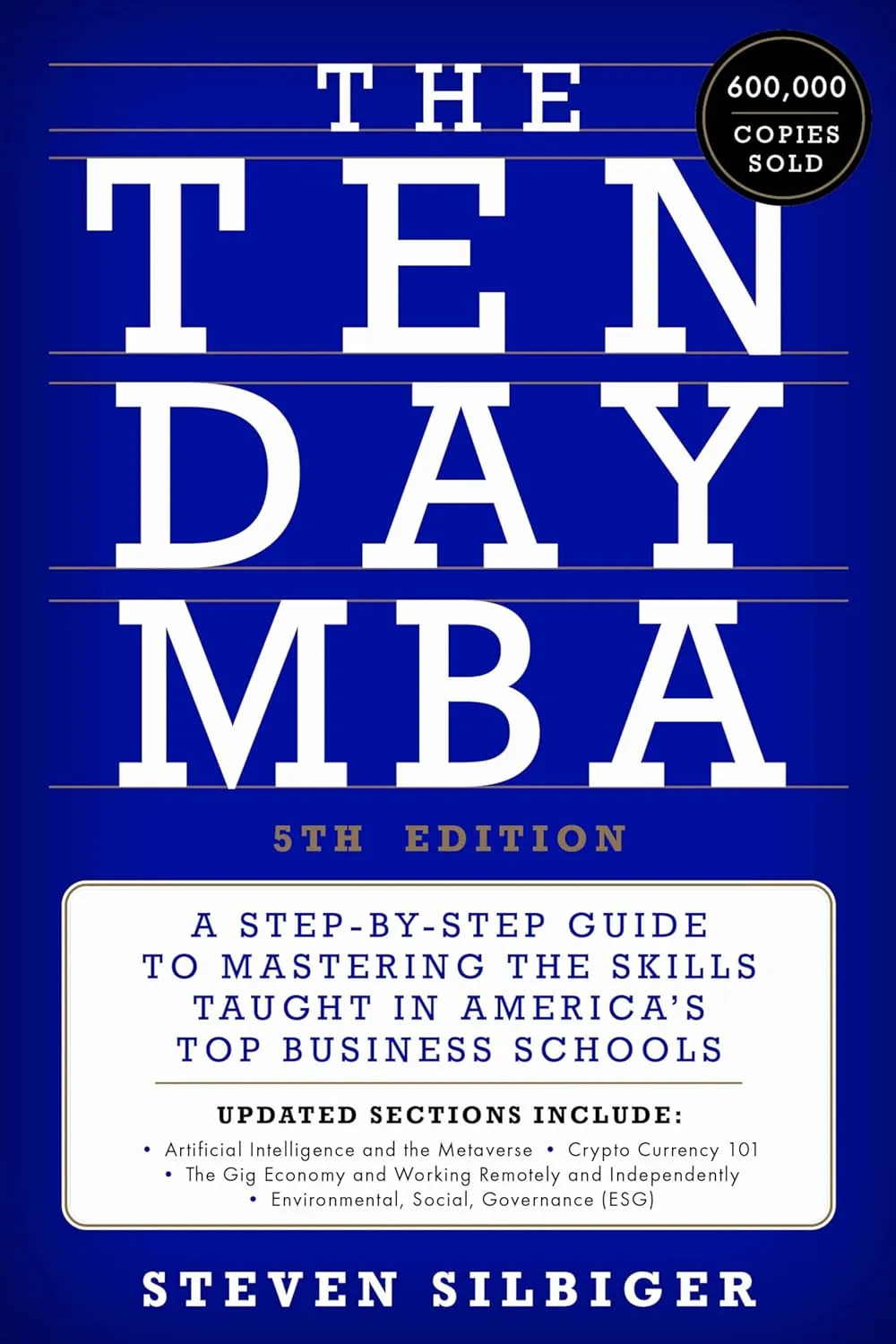
The Ten-Day MBA: A Step-by-Step Guide to Mastering the Skills Taught in America's Top Business Schools
by Steven Silbiger

I Will Teach You to Be Rich
by Ramit Sethi

The Hard Thing About Hard Things: Building a Business When There Are No Easy Answers
by Ben Horowitz
Related Glossary Terms
Tax Loss Harvesting
Tax loss harvesting is the practice of selling investments at a loss to offset capital gains and reduce your tax bill, then replacing the sold positions to maintain your portfolio allocation.
Tax
A tax is a mandatory financial charge imposed by a government on income, property, sales, or other transactions to fund public services and government operations.
Capital Gains
Capital gains are the profits earned when you sell an asset for more than you paid for it, taxed at either short-term rates (ordinary income) or preferential long-term rates depending on how long you held the asset.
Disposition Effect
The disposition effect is the tendency to sell investments that have gained value too early while holding onto losers too long. Driven by loss aversion, it quietly drags down returns and inflates tax bills for millions of investors.
83(b) Election
An 83(b) election lets recipients of restricted stock pay tax on the grant-date value instead of the vesting-date value, converting future appreciation into lower capital gains rates.
Capital Gains Tax
Capital gains tax is the tax owed on profits from selling assets like stocks, bonds, or real estate — with rates depending on how long you held the asset and your income level, ranging from 0% to 37%.
Recommended Podcasts

Financial Planning for Young Adults
by Skyler Fleming
A weekly podcast for young adults making real money for the first time. CFP candidate Skyler Fleming breaks down taxes, investing, debt, and retirement with case studies and action items. Active 2026.

The Money Guy Show
by Brian Preston, CPA/CFP & Bo Hanson, CFA/CFP
Two fee-only financial advisors break down the Financial Order of Operations, a 9-step wealth-building framework. 617K YouTube followers and a 4.8 Apple rating.

Stacking Benjamins
by Joe Saul-Sehy & Josh 'OG' Bannerman, CFP
A former financial advisor and a CFP host a lighthearted show from Joe's mom's basement. Three episodes a week on investing, retirement, and behavioral finance.