*Disclosure: This article contains affiliate links. If you purchase through these links, we may earn a commission at no additional cost to you. We only recommend books we have personally read and genuinely believe in.
Quick Overview
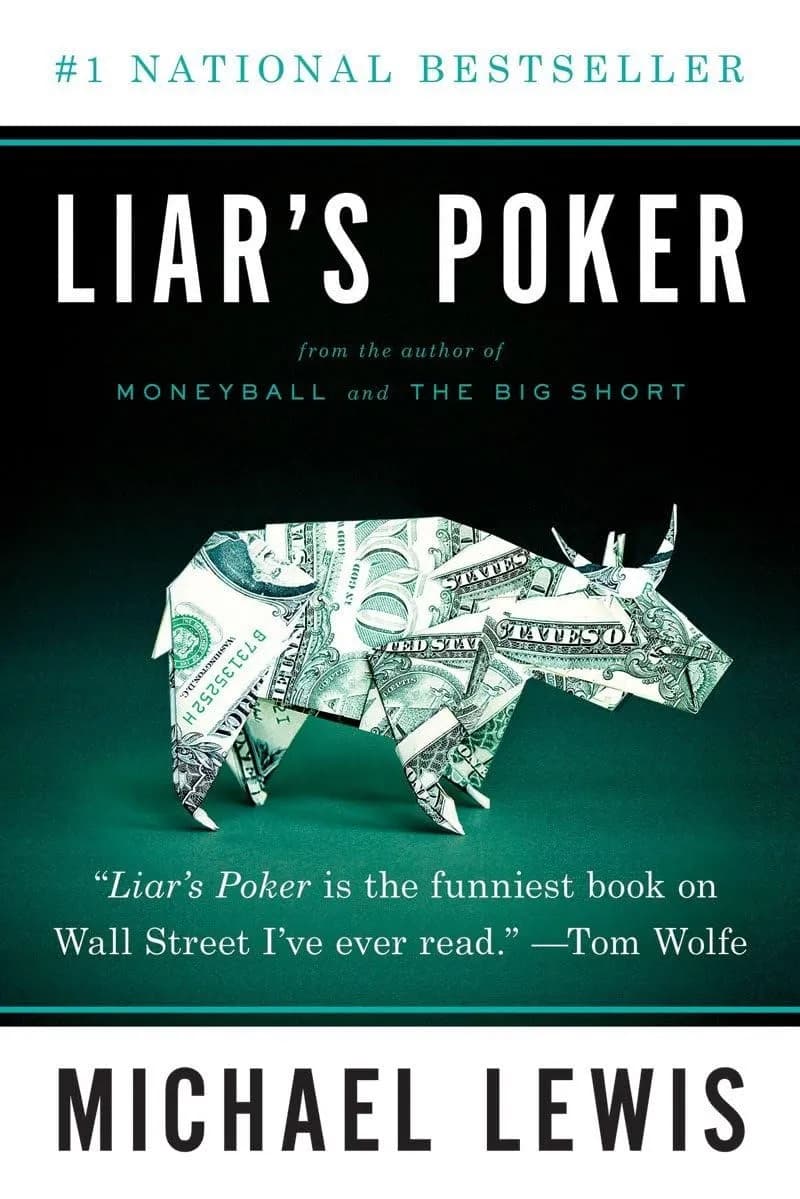
The most important lesson in this book is that your investment bank is not your friend. Michael Lewis learned this firsthand as a bond salesman at Salomon Brothers in the 1980s, where he was explicitly trained to identify clients' weaknesses and exploit them. Published in 1989, Liar's Poker became the defining account of 1980s Wall Street excess and remains the most entertaining book ever written about how investment banks actually work.
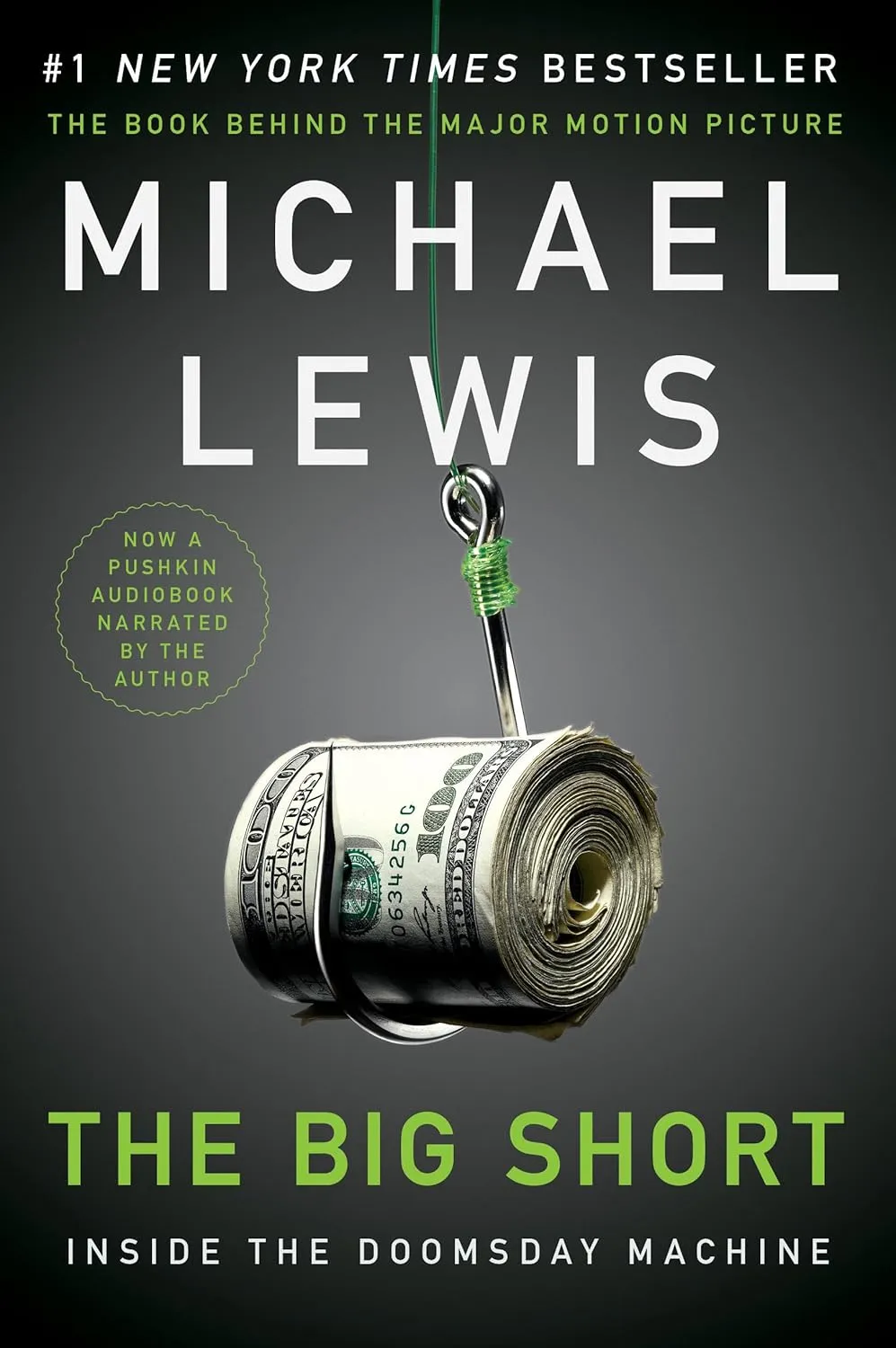
The book's relevance has not faded. The mortgage-backed securities Lewis describes in 1989 were the direct predecessors of the CDO structures that triggered the 2008 financial crisis. The incentive structures, conflicts of interest, and client-exploitation dynamics he documented are still recognizable in 2026, even after decades of regulatory reform. Lewis himself returned to this territory in The Big Short (2010) and Going Infinite (2023), but Liar's Poker is where the story begins.
Book Details
| Attribute | Details |
|---|---|
| Title | Liar's Poker |
| Author | Michael Lewis |
| Publisher | W.W. Norton |
| Published | 1989 |
| Pages | 320 |
| Reading Level | Beginner to Intermediate |
| Amazon Rating | 4.6/5 stars |
Get Your Copy
Paperback: Buy on Amazon
Kindle: Buy on Amazon
Audiobook: Buy on Amazon
About the Author
Michael Lewis was born in New Orleans, graduated from Princeton (art history), worked briefly at Salomon Brothers, and then became one of the most celebrated financial journalists of his generation. His subsequent books include The Big Short, Flash Boys, Moneyball, The Blind Side, and Going Infinite (2023), his account of Sam Bankman-Fried and the FTX collapse. He is the best writer working in financial journalism today by most assessments, someone who can make mortgage-backed securities or baseball statistics into genuinely gripping narratives.
The Setting: Salomon Brothers in the 1980s
Salomon Brothers was the dominant force in global bond markets during the 1980s. The firm pioneered mortgage-backed securities, ran the most profitable bond trading operation on Wall Street, and paid its traders sums that shocked even other Wall Street firms. The culture Lewis describes was simultaneously brilliant and deeply dysfunctional.
The hierarchy at Salomon (as Lewis experienced it):
| Level | Description | Characteristic |
|---|---|---|
| Senior traders (the "Big Swinging Dicks") | Generated most revenue | Arrogant, brilliant, often brutal |
| Managing directors | Senior management | Political survivors |
| Mid-level salespeople | Lewis's cohort | Trained to abuse clients |
| Trainees | First-year employees | Humiliated systematically |
| Clients | The outside world | Viewed as prey |
Lewis is funny about this hierarchy in a way that also makes it deeply uncomfortable. I re-read this section in 2025 while researching the FTX collapse for our blog coverage, and the parallels were striking. The same hierarchy, the same exploitation of less sophisticated clients, the same culture of bravado masking risk. The names change. The pattern does not.
Key Themes and Their Investment Lessons
The Conflict of Interest at the Heart of Investment Banking
Lewis's most important revelation for ordinary investors: the investment bank's interest is frequently opposed to its clients' interest.
The bond salesman's job:
A bond salesman at Salomon was not paid to find the best investment for clients. He was paid to sell bonds Salomon owned (or was underwriting) at the highest possible price. When Salomon needed to distribute bonds that were overpriced or poorly structured, the sales force found buyers.
Lewis's training:
He was explicitly taught to identify clients' weaknesses and exploit them. Clients who trusted their Salomon relationship and would not price-check. Clients under pressure to put capital to work. Clients with insufficient internal expertise to evaluate complex products.
The investment implication: When a financial institution recommends something, always ask: "What are they being paid to sell me? What is in their inventory?" This does not mean all recommendations are bad. It means the incentive structure must be understood. For a deeper look at how financial advisors get paid, read our guide to fiduciary standards.
The Birth of Mortgage-Backed Securities
Lewis provides the most accessible account of how mortgage-backed securities were invented and why they mattered.
Before MBS (1970s):
The MBS innovation (Ranieri at Salomon):
Lewis watched Lew Ranieri's mortgage department become the most profitable in the firm, and the model for financial innovation (and eventually financial engineering gone wrong) for the next 30 years.
The long-term consequence:
The MBS structure that Lewis describes in 1989 was the predecessor to the mortgage CDO structures that triggered the 2008 financial crisis. Understanding Liar's Poker makes The Big Short comprehensible. The 2008 crisis destroyed trillions in wealth, required massive government bailouts, and led to the Dodd-Frank Act. But the core innovation, bundling loans into securities and selling them to investors, survived. In 2026, the MBS market remains a multi-trillion dollar segment of the fixed income world, and the same structural conflicts Lewis identified persist in new forms. For a practical guide to investing in bonds safely, see our guide to bonds.
The "Geek" vs. "Big Swinging Dick" Culture
Lewis describes a cultural transformation at Salomon between the intuitive traders who built the firm and the quantitatively-trained academics ("geeks") who were beginning to take over:
| Old Guard | New Guard |
|---|---|
| Instinct-based traders | Quantitative models |
| "Feel" for the market | Mathematical arbitrage |
| Relationship-driven | Algorithm-driven |
| Read people | Read spreadsheets |
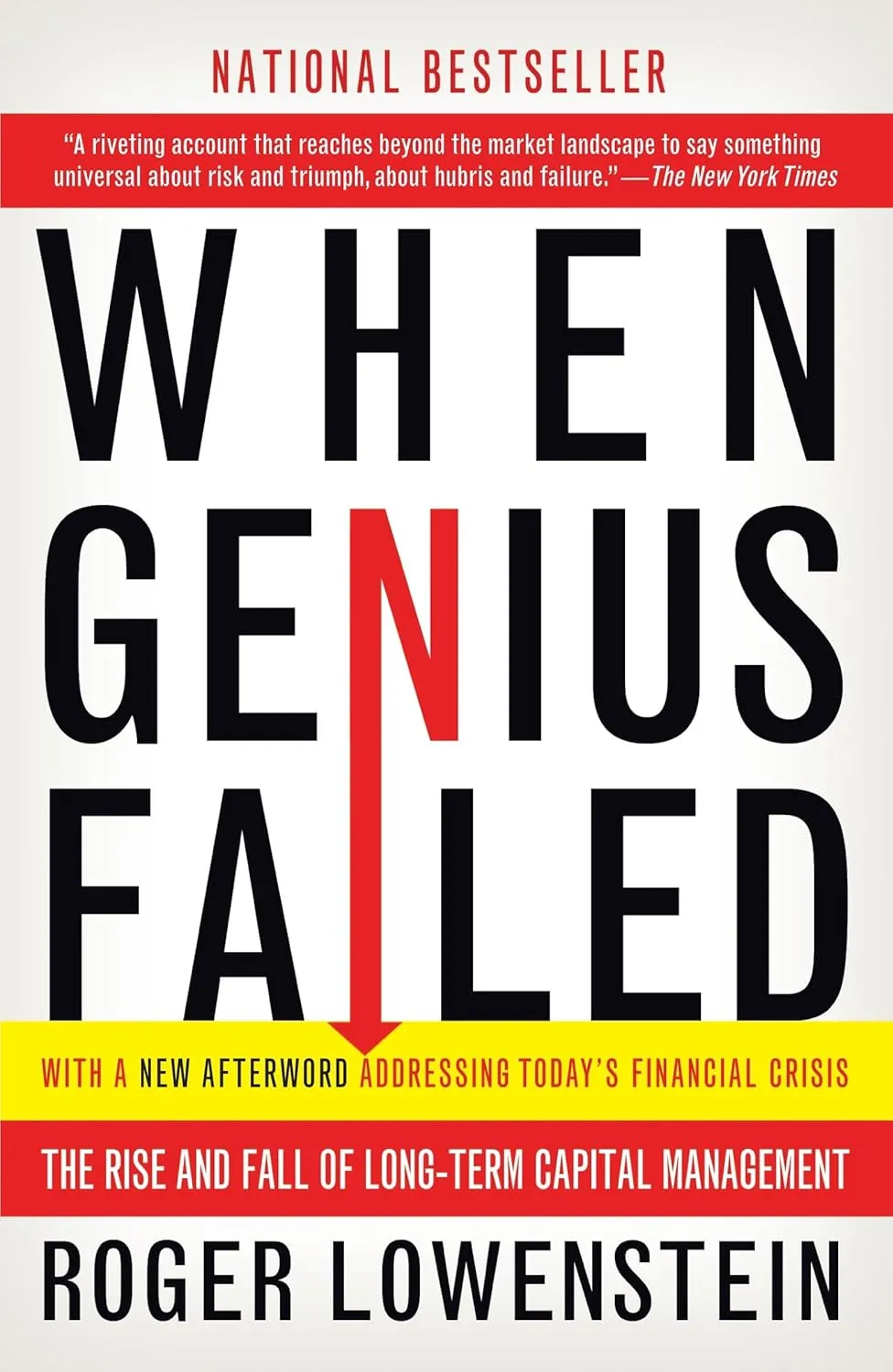
This tension was productive: the geeks found pricing inefficiencies the traders missed; the traders executed with speed the geeks lacked. But it also created the conditions for the model-driven disasters of the 1990s (LTCM, covered in When Genius Failed) and 2000s. The same tension is visible today in the debate between discretionary and quantitative investment approaches. For more on this, see our guide to ETFs vs mutual funds.
How Bond Markets Actually Work
For readers with no bond market background, Lewis provides essential education embedded in the narrative:
Bond basics:
| Concept | Explanation |
|---|---|
| Price and yield | Move inversely: when bond prices fall, yields rise |
| Duration | Sensitivity to interest rate changes; longer duration = more sensitive |
| Spread | The extra yield over Treasuries that a corporate or MBS bond offers |
| The bid-ask | The difference between what a dealer will buy and sell at; their profit margin |
| Mark to market | Valuing bonds at current market prices rather than cost |
The bond trader's edge in the 1980s:
Before electronic markets, bond prices were opaque. Investors could not compare what other dealers were charging. Salomon traders exploited this information advantage ruthlessly:
"A mortgage bond trader could mark his inventory at any price he pleased, as long as it was within some reasonable range of reality."
This opacity enriched Salomon at client expense. Electronic trading platforms and price transparency have largely eliminated this advantage, a genuine improvement for investors. For a practical tool to evaluate fixed-income investments, see our CD ladder calculator.
The Liar's Poker Game
The book's title comes from a game played with dollar bill serial numbers. Players hold their bills to their chests and bid on how many of a specific digit exist across all the bills in the game. The skill is reading your opponents' bids to determine what they are holding while bluffing about your own.
John Gutfreund, Salomon's CEO, challenged Meriwether (the head of bond arbitrage) to a single hand of liar's poker for $1 million. Meriwether responded: "If we're going to play for real money, let's play for $10 million. No tears."
Gutfreund backed down. Meriwether's counter-offer was brilliant: it called the bluff and revealed the CEO's actual risk tolerance.
The investor lesson: Every negotiation, every transaction, every financial interaction involves information you have, information you lack, and participants with different incentives. The liar's poker framework (what do they know? what do they want you to think they know?) is a useful lens for any financial transaction. I have applied this lens when negotiating mortgage rates, insurance premiums, and even when evaluating financial advisor pitches. The question "what do they know that I don't?" has saved me from several bad deals.
The Mortgage Desk: Where the Money Was Made
Lewis spent the most productive part of his Salomon career on the London desk selling mortgage bonds to European institutions. His description of the business explains:
How clients were selected: Those with the least sophistication in mortgage bond analysis and the greatest pressure to put capital to work.
How bonds were priced: At whatever the market would bear. Since few clients could accurately price complex MBS structures, "what the market would bear" was significantly above fair value.
How relationships were maintained: Regular entertainment, conferences, and the appearance of partnership, while the actual transactions favored Salomon.
What changed everything: The S&L crisis of the late 1980s destroyed many of Salomon's best mortgage bond customers. When S&Ls collapsed, the mortgage bond market contracted sharply. Salomon's most profitable era ended.
The Comedy: Lewis as Observer
What makes Liar's Poker enduringly readable is Lewis's eye for absurdity. Selected observations:
On the training program: "We were told we would be learning the business. We learned instead how to be afraid of the wrong things, of losing face, of falling behind, of not being aggressive enough."
On the trading floor culture: "The firm had around thirty managing directors. Not all of them were predators. But the predators set the tone."
On client relationships: "The less you said, the more you could charge. Clients who asked too many questions got worse prices."
On his own role: "I was not the most ethical person on Wall Street. But I was not the least ethical either. I had found my comfortable position in a system that rewarded not-quite-ethical behavior consistently."
Why This Book Matters for Investors Today
Understanding what banks are and are not. Investment banks are not on your side. They are profit-maximizing entities with significant information advantages over retail clients. Understanding this does not mean avoiding them. It means using them correctly. For guidance, see our guide to choosing a financial advisor.
The complexity premium. Complex financial products are not sold because they serve client needs. They are sold because they are harder to price and therefore easier to overcharge for. The simplest investment products (index funds, direct Treasury purchases) typically offer the best value precisely because they are transparent.
The information advantage game. Professional market participants spend enormous resources developing information advantages. Retail investors competing directly against them lose. The correct response: do not compete in markets where your disadvantage is greatest (individual bond selection, derivatives, short-term trading). Compete where you have advantages (long time horizon, no career risk, behavioral discipline). For a practical approach, read our guide to dollar-cost averaging.
History matters. The mortgage-backed securities Lewis describes in 1989 became the instruments at the center of the 2008 crisis. The same institutions, the same incentive structures, the same client-exploitation dynamic. Understanding 1980s Salomon makes 2000s CDO factories comprehensible. In 2023, Lewis documented a similar pattern in Going Infinite, his account of Sam Bankman-Fried and FTX, where retail investors trusted a charismatic founder with opaque operations and lost billions.
Strengths and Weaknesses
What We Loved
Areas for Improvement
Who Should Read This Book
Highly Recommended For
Probably Not For
Comparison to Similar Books
| Book | Era | Focus | Readability |
|---|---|---|---|
| Liar's Poker | 1980s | Salomon Brothers, MBS | Very High |
| The Big Short | 2000s | Mortgage crisis | Very High |
| Barbarians at the Gate | 1980s | RJR Nabisco LBO | Very High |
| When Genius Failed | 1990s | LTCM hedge fund | High |
Frequently Asked Questions
Q: Do I need financial background to understand this book?
A: No. Lewis writes for general audiences and explains financial concepts clearly within the narrative. No prior knowledge required.
Q: Should I read Liar's Poker before The Big Short?
A: Yes. The MBS structures Lewis describes in 1989 are the direct predecessors of the CDO structures at the center of The Big Short. Reading them in chronological order provides the complete narrative arc from innovation to disaster.
Q: Is the book still accurate about how Wall Street works?
A: The specific products and regulatory environment have changed significantly. Electronic trading has replaced much of the opacity Lewis describes. The Volcker Rule and Dodd-Frank reforms addressed some conflicts of interest. But the fundamental dynamics (conflicts of interest, information advantages, the mistreatment of less sophisticated clients) remain largely accurate. The 2023 FTX collapse demonstrated that the core pattern Lewis identified still operates in new markets. For a modern perspective, see our guide to avoiding investment scams.
Final Verdict
Rating: 4.7/5
Liar's Poker is the most entertaining financial book ever written. It is also genuinely educational about how investment banks operate, how mortgage-backed securities were invented, and why the financial system consistently produces crises. Nearly 40 years after publication, the patterns Lewis identified are still recognizable in 2026. Essential reading for any investor who wants to understand the institutions they are dealing with.
Get Your Copy
Paperback: Buy on Amazon
Kindle: Buy on Amazon
Audiobook: Buy on Amazon
Prices current as of publication date. Free shipping available with Prime.
For more on financial history and investing, read our guide to what is an index fund and how to start investing.