This review is for informational purposes only and does not constitute financial advice.
A Debt Show That Refuses to Shame You
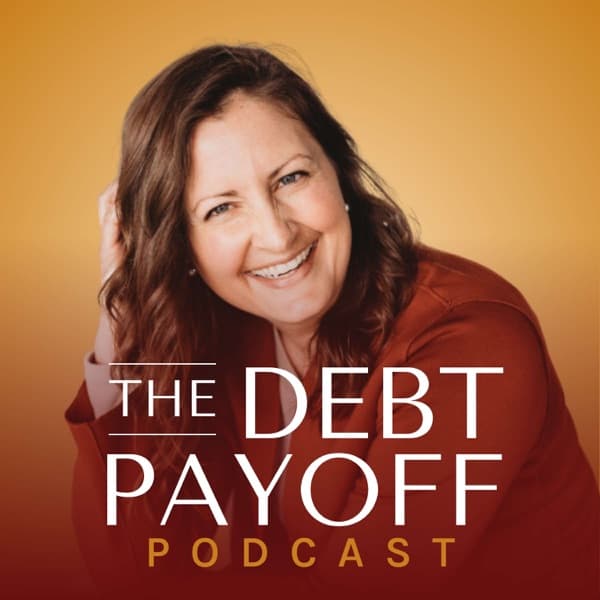
Most debt advice for women sounds the same: stop buying coffee, cut up the cards, suffer through it. Katy Almstrom built this podcast on the opposite premise. She was a high school teacher with $35,000 in debt and no idea where her money went, and the standard "cut your lattes and suffer" approach did not work for her. So she built a different framework, paid off the debt, retired from teaching after 13 years, and now coaches women through the same transition. Her clients have collectively eliminated over $1 million in debt.
The Debt Pay Off Podcast for Women publishes biweekly and has 188 episodes as of mid-2026. Almstrom hosts solo for most episodes, with occasional interviews. The tone is what she calls "cozy chats": practical, warm, and explicitly anti-shame. She was certified as a Master Financial Coach by Ramsey Solutions in 2018, but she has since moved away from that rigid framework toward something she describes as guilt-free spending aligned with your values.
If you are a woman carrying debt who is tired of advice that assumes you are irresponsible, this show is built for you. If you want a data-heavy investing show, look elsewhere.
What the Show Does Well
The strongest episodes are the structured series. The "Done With Debt" five-part series from April 2026 walked listeners from stopping credit card use through building a debt snowball game plan, with each episode tackling one obstacle: the first 30 days without cards, why you need savings before payoff, how to handle the urge to use cards again, and how to keep going when progress feels slow. That progression mirrors how debt payoff actually unfolds, and breaking it into steps keeps listeners from feeling overwhelmed by the whole picture at once.
The "5 Stages of Money Confidence" episode, replayed as a fan favorite in June 2026, laid out a framework Almstrom uses with clients: Money Avoidance, Money Awareness, Money Management, Money Confidence, and Money Mastery. Her observation that most women get stuck between stages two and three, managing their money okay but never feeling secure about their choices, is specific enough to be useful. It gives listeners a way to name where they are and what they need next, instead of treating financial confidence as a single switch you flip.
For the practical side of building a payoff plan, our debt avalanche vs. debt snowball comparison covers the methods Almstrom references, and our budget calculator lets you build the spending framework she describes.
The Anti-Shame, Anti-Restriction Approach
Almstrom's core argument is that restriction backfires. Telling someone to stop all spending on things they enjoy produces a cycle of deprivation and binge spending that keeps them in debt. Her alternative is intentional spending: keep what you value, cut what you do not, and build a system that runs without daily willpower. This is consistent with research on financial behavior. The Consumer Financial Protection Bureau publishes guidance on debt payoff that emphasizes sustainable plans over extreme cuts, and Almstrom's framework follows that logic.
The show also addresses the emotional and relational side of debt that most podcasts skip. Episodes cover money conflicts in relationships, the mental load of managing a household's finances, and how to plan for predictable expenses like summer camps and vacations without reaching for a credit card. The May 26, 2026 episode, "How to Plan for Summer Without Going Into Debt," walked through a brain-dump method: list every summer expense, add them up, figure out what you can afford, and make choices before the season starts instead of scrambling in September. That kind of concrete system is more useful than generic advice to "budget better."
For listeners working through the spending psychology underneath the debt, our guide to the psychology behind impulse buying covers the same behavioral patterns from a research angle.
Where the Show Has Limits
The show is solo-hosted and conversational, which means it lacks the back-and-forth that a panel or co-hosted show provides. If you prefer multiple perspectives on a question, the format will feel one-note. Almstrom is clear about her viewpoint, and the show reflects it consistently, but there is no one to push back or offer a competing take.
The show sells coaching programs, including the Moneywise Mastermind and a "Done with Debt" course, and the podcast functions partly as a funnel toward them. The free content stands on its own, but listeners should expect regular invitations to book a consultation call. Evaluate the paid programs against your budget before committing.
The biweekly cadence and the recent run of "fan favorite" replays mean the pace of new material has slowed in 2026. New listeners will find a deep back catalog useful, but subscribers caught up on the archive may wait between fresh episodes.
Who Should Listen
The show fits women in their 30s through 50s who carry debt, especially credit card balances, and who want a payoff plan that does not require giving up their life. It suits listeners who respond to encouragement over pressure, and who want to address the emotional side of money alongside the math. A listener working through the "Done With Debt" series would move from stopping card use to building a snowball to handling relapses, all in a sequence designed to keep momentum. That structure is what most people missing when they try and fail to pay off debt on their own.
It fits less well for listeners who want a pure numbers approach (the Get the Hell Out of Debt podcast covers similar ground with more listener call depth), men looking for debt content, or anyone already past debt and focused on investing and wealth building.
Getting Started
Begin with the "5 Stages of Money Confidence" episode to figure out where you are, then the "Done With Debt" series if you are ready to start paying off balances. Track what you owe with our debt payoff calculator and credit card interest calculator so the motivation from the show converts into visible progress, because the framework only works if you can see your balances dropping month over month.
The Debt Pay Off Podcast for Women will not tell you to stop living your life. It will help you build a money system that includes the life you want and the debt payoff you need, and for most listeners that combination is what makes the plan sustainable.
This post is for informational purposes only and does not constitute financial advice.