Index Fund
Quick Definition
An index fund is a type of mutual fund or ETF that passively tracks a market index by holding the same securities in the same proportions as the index it mimics. Rather than a manager trying to beat the market, an index fund tries to match it as closely as possible.
What It Means
If you had invested $10,000 in a low-cost S&P 500 index fund 20 years ago, you would have outperformed 91% of professional active fund managers over that same period. That is not a hypothetical. It is the finding of the S&P SPIVA Year-End 2025 Scorecard, the most widely cited study of active versus passive fund performance.
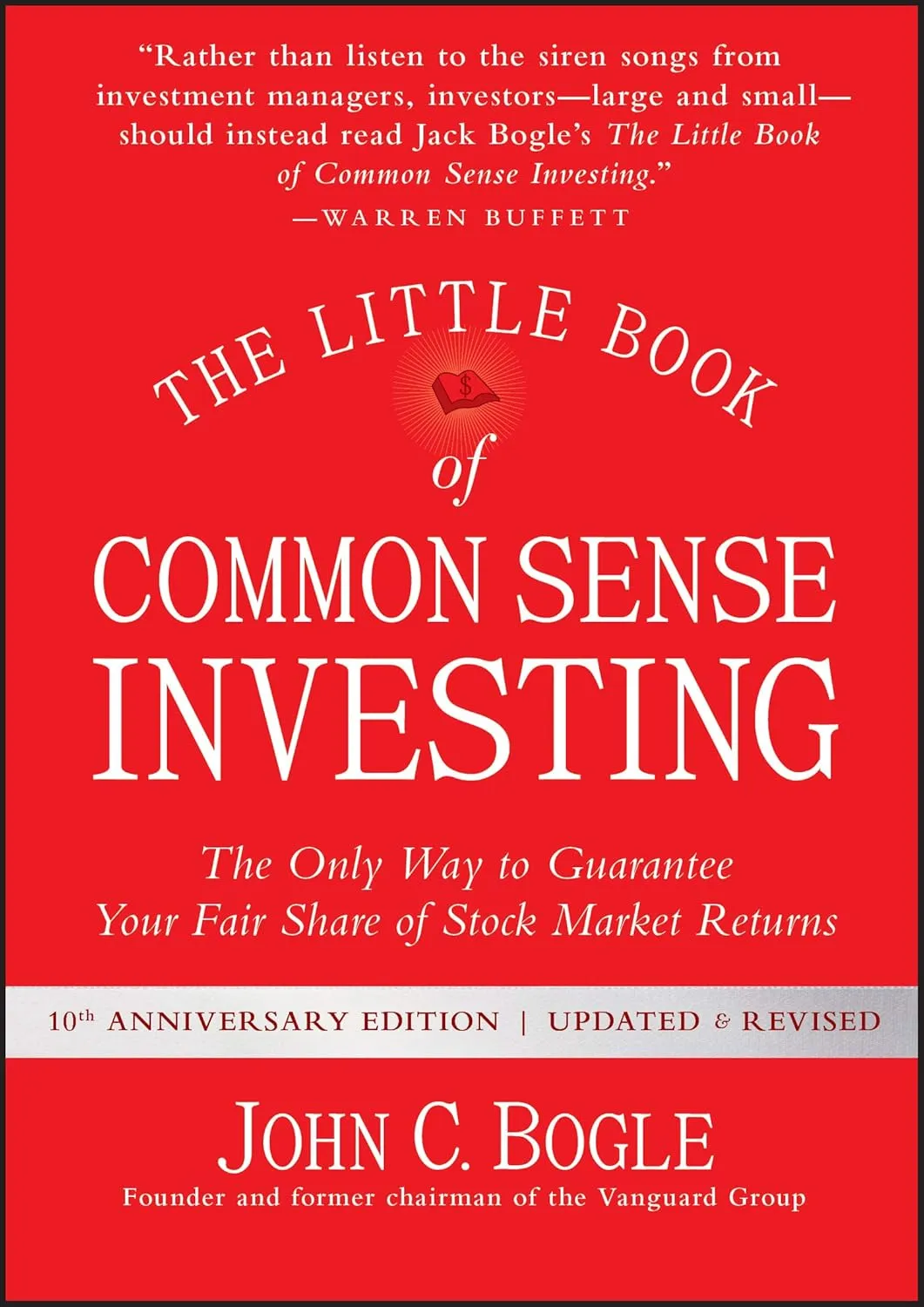
The index fund was invented by John Bogle, founder of Vanguard, who launched the first publicly available index fund for retail investors in 1976. Wall Street ridiculed it as "Bogle's Folly." Today it is the default investment recommendation from Warren Buffett, who instructs his estate to put 90% of cash in an S&P 500 index fund for his wife.
The core insight: if most active managers fail to beat the market over time, and if beating the market is theoretically impossible in an efficient market, then the rational strategy is to own the entire market at the lowest possible cost. Index funds have validated this insight with decades of data. According to the SPIVA U.S. Year-End 2025 Scorecard, 79% of actively managed large-cap U.S. equity funds underperformed the S&P 500 in 2025 alone. Over 5 years, that figure rises to 86.9%. Over 20 years, it reaches 91%.
How Index Funds Work
The Index-Tracking Process
- The index (e.g., S&P 500) is maintained by an index provider (S&P Dow Jones Indices, FTSE Russell, MSCI)
- The index has clear, rules-based criteria for inclusion (market cap, liquidity, profitability)
- The index fund buys all securities in the index at their index weights
- When the index adds or removes a stock, the fund rebalances accordingly
- The fund's return mirrors the index return, minus the tiny expense ratio
Common Indexes Tracked
| Index | What It Covers | Approx. # of Holdings |
|---|---|---|
| S&P 500 | 500 largest U.S. companies | 500 |
| Total U.S. Market | All U.S. public companies | ~3,600 |
| MSCI EAFE | Developed international markets | ~800 |
| MSCI Emerging Markets | Emerging market stocks | ~1,400 |
| Bloomberg U.S. Aggregate | U.S. investment-grade bonds | ~10,000 |
| Russell 2000 | 2,000 small U.S. companies | 2,000 |
| Nasdaq-100 | 100 largest Nasdaq-listed companies | 100 |
The Cost Advantage Is Everything
Index funds win primarily because they cost almost nothing to operate.
Annual cost comparison:
| Fund Type | Typical Expense Ratio | Cost on $100,000 Per Year |
|---|---|---|
| Fidelity ZERO Total Market | 0.00% | $0 |
| Vanguard Total Market (VTI) | 0.03% | $30 |
| Average U.S. index fund | 0.09% | $90 |
| Average active equity fund | 0.85% | $850 |
| Average hedge fund | ~2% + 20% of profits | $2,000+ |
30-Year Wealth Comparison
$10,000 invested once, 7% gross return:
| Option | Net Annual Return | 30-Year Value | Cumulative Fees |
|---|---|---|---|
| Index fund (0.03%) | 6.97% | $74,200 | $600 |
| Active fund (0.85%) | 6.15% | $59,800 | $14,400 |
| Active fund (1.50%) | 5.50% | $49,800 | $24,400 |
The index fund produces $24,400 more wealth on a $10,000 investment compared to a typical active fund, purely from the cost difference. Over 30 years, fees compound against you just as compound interest compounds for you. Use our investment return calculator to see the impact of fees on your own portfolio.
The Four Most Important Index Funds
For U.S. Stocks
| Fund | Provider | Expense Ratio | Tracks |
|---|---|---|---|
| FZROX | Fidelity ZERO | 0.00% | U.S. total market |
| VTI | Vanguard | 0.03% | U.S. total market |
| SWTSX | Schwab | 0.03% | U.S. total market |
| IVV | iShares | 0.03% | S&P 500 |
| VOO | Vanguard | 0.03% | S&P 500 |
For International Stocks
| Fund | Provider | Expense Ratio | Tracks |
|---|---|---|---|
| FZILX | Fidelity ZERO | 0.00% | International total market |
| VXUS | Vanguard | 0.07% | Total international |
| SWISX | Schwab | 0.06% | International index |
For Bonds
| Fund | Provider | Expense Ratio | Tracks |
|---|---|---|---|
| FXNAX | Fidelity | 0.025% | U.S. aggregate bond market |
| BND | Vanguard | 0.03% | U.S. total bond market |
| SCHZ | Schwab | 0.03% | U.S. aggregate bond |
Index Fund vs. Active Fund: The Long-Term Evidence
The SPIVA (S&P Indices Versus Active) Year-End 2025 Scorecard:
| Time Period | % of Active Large-Cap Funds Underperforming S&P 500 |
|---|---|
| 1 year | 79% |
| 5 years | 86.9% |
| 10 years | ~88% |
| 20 years | 91% |
The S&P 500 gained 18% in 2025, logging 39 record closing highs. It was the fourth-worst year for active large-cap managers in the 25-year history of the SPIVA study. The longer the time horizon, the more index funds dominate. This happens because the fee drag compounds relentlessly against active funds, consistently identifying superior stock-pickers in advance is nearly impossible, and active managers who beat the market in one period frequently fail to repeat.
Even in the bond market, active managers struggled. The SPIVA report found a 70% cross-category underperformance rate for fixed income funds in 2025, worse than the 62% average across equity categories.
Real-World Example: John Bogle's $1 Million Challenge
Jack Bogle often illustrated the power of index funds with this calculation:
Two investors, age 25, both invest $10,000/year for 40 years, both earn 7% gross market return:
- Active fund investor: Pays 1.5% in annual fees. Final balance: $1,022,000
- Index fund investor: Pays 0.05% in annual fees. Final balance: $1,991,000
The index fund investor ends up with nearly $1 million more despite identical market returns, purely from saving on fees. You can model your own scenario with our compound interest calculator.
Key Points to Remember
- Index funds track a market index passively rather than trying to beat it
- Their primary advantage is dramatically lower expense ratios that compound over decades
- 79% of active large-cap managers underperformed the S&P 500 in 2025, rising to 91% over 20 years (SPIVA Year-End 2025)
- The total U.S. market index is broader and more diversified than the S&P 500 index
- Fidelity offers zero expense ratio index funds (FZROX, FZILX) with no minimum investment
- Index funds are available as both mutual funds and ETFs. Both are excellent choices
Common Mistakes to Avoid
- Choosing the S&P 500 index and thinking you are fully diversified: The S&P 500 excludes small-cap stocks, mid-cap stocks, and international stocks. A total market fund is broader. See diversification for why this matters.
- Chasing specialized indexes: Funds tracking narrow themes (blockchain index, cannabis index) are index funds in structure but concentrated bets in practice.
- Paying for "enhanced indexing": Some funds claim to improve on plain indexing. Most add cost without adding return.
- Switching funds frequently: Index investing's power comes from holding through market cycles, not jumping between funds. Dollar-cost averaging into a broad index fund on a set schedule is the proven approach.
Frequently Asked Questions
Q: Is it too late to start investing in index funds? A: The best time to invest was yesterday. The second best time is today. Index funds benefit from time, but starting later is still far better than not starting. Even a 10-year investment horizon gives index funds meaningful compounding advantages over cash.
Q: Which is better, S&P 500 index or total market index? A: The total market index is marginally more diversified (includes small and mid-cap stocks in addition to large-cap). Over long periods, returns are very similar. Both are excellent. If you can only own one, either works well.
Q: Do index funds pay dividends? A: Yes. Index funds pass through dividends received from their holdings to shareholders. These are typically paid quarterly. In a retirement account, dividends automatically reinvest. In a taxable account, dividends are taxable in the year received.
Q: Can index funds lose money? A: Yes. If the underlying index declines, the fund declines proportionally. During the 2008-2009 financial crisis, the S&P 500 dropped approximately 57% peak to trough. Index funds tracking it fell the same amount. Long-term investors who held recovered fully within 5 years and then reached new highs. The S&P 500 also declined sharply in early April 2025 during tariff-related turmoil before staging a full recovery.