Expense Ratio
Quick Definition
An expense ratio is the annual fee that a mutual fund or ETF charges its shareholders, expressed as a percentage of the fund's average net assets. It is automatically deducted from fund returns. You never write a check for it, but it reduces your investment's growth every single day.
Example: A 1.00% expense ratio on a $10,000 investment costs $100/year in fees.
What It Means
The expense ratio is the single most controllable factor in long-term investment returns. You cannot control market returns, but you can choose how much of those returns you surrender to fees.
Every dollar paid in fees is a dollar that cannot compound. Over 30-40 years, the compounding of fees, just like the compounding of returns, creates enormous wealth differences between high-fee and low-fee investments in the same asset class.
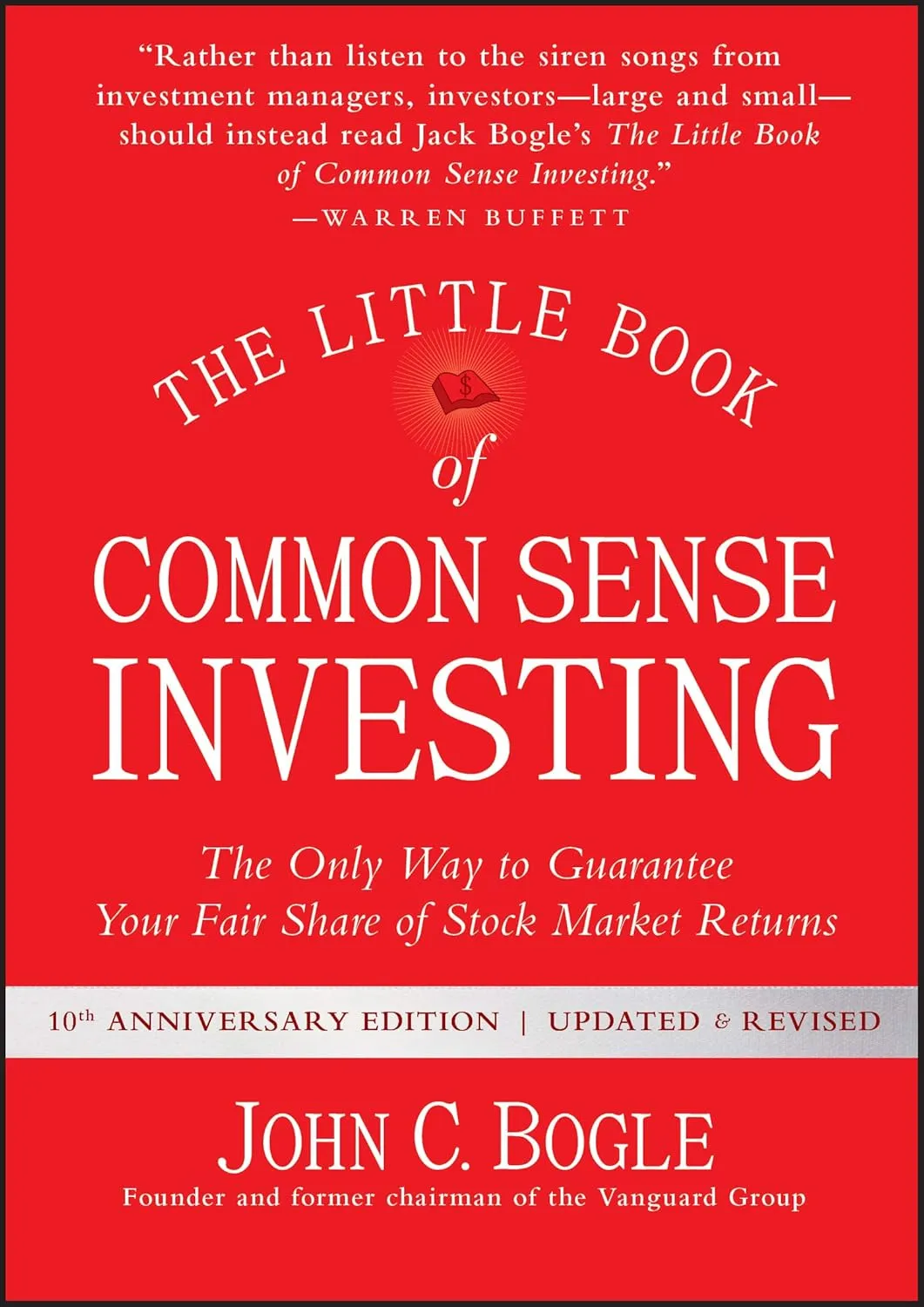
This is why John Bogle built Vanguard around a simple premise: if you own the market at the lowest possible cost, you will outperform the vast majority of investors over time. The data has validated this premise repeatedly.
The 2026 Fee Landscape
Morningstar's 2026 US Fund Fee Study (covering 2025 data) found that the asset-weighted average expense ratio for all US mutual funds and ETFs fell to 0.32% in 2025, a 5.6% decline from 0.34% in 2024. Between 2006 and 2025, this figure dropped from 0.80% to 0.32%, meaning investors pay less than half of what they did two decades ago. Morningstar estimates investors saved nearly $6.8 billion in fund expenses in 2025 alone.
The Investment Company Institute (ICI) reported in March 2026 that:
- Average equity mutual fund expense ratio: 0.40% (unchanged from 2024)
- Average bond mutual fund expense ratio: 0.36% (down 2 bps from 2024)
- Average index equity ETF expense ratio: 0.14% (unchanged from 2024)
- Average index bond ETF expense ratio: 0.09% (down 1 bp from 2024)
- From 1996 to 2025, average expense ratios fell 62% for equity mutual funds and 57% for bond mutual funds
Index mutual funds and index ETFs together accounted for 52% of long-term fund assets by end of 2025, up from 19% in 2010. In 2025, 92% of gross sales of long-term mutual funds went to no-load funds without 12b-1 fees, nearly double the share seen at the start of the century.
What the Expense Ratio Covers
| Component | Description |
|---|---|
| Investment management fee | Compensation for the portfolio manager(s) |
| Administrative costs | Record-keeping, shareholder services, legal, accounting |
| Distribution fees (12b-1) | Marketing, sales, and distribution expenses (not all funds) |
| Custodial fees | Costs of holding the fund's securities |
| Other operating expenses | Filing fees, insurance, audit costs |
The expense ratio does NOT include:
- Sales loads (front-end or back-end commissions)
- Transaction costs from trading within the fund
- Redemption fees (charged separately by some funds)
Expense Ratio Ranges by Fund Type
| Fund Type | Low End | Average | High End |
|---|---|---|---|
| Fidelity ZERO index funds | 0.00% | 0.00% | 0.00% |
| Vanguard index funds | 0.03% | 0.06% | 0.17% |
| Schwab/iShares index ETFs | 0.03% | 0.07% | 0.20% |
| Average US index mutual fund | 0.05% | 0.09% | 0.25% |
| Average actively managed bond fund | 0.30% | 0.55% | 0.90% |
| Average actively managed US equity | 0.40% | 0.85% | 1.25% |
| Average actively managed international | 0.50% | 1.00% | 1.75% |
| Typical variable annuity subaccounts | 1.00% | 2.00% | 3.50%+ |
| Typical hedge fund (management fee only) | 1.50% | 2.00% | 2.00%+ |
ETFs are substantially cheaper than mutual funds. Both the equal-weighted and asset-weighted average ETF fee measures around half the fee charged by mutual funds, according to Morningstar's 2026 study.
The Compounding Cost of Fees: 30-Year Illustration
$100,000 invested for 30 years at 8% gross annual return:
| Expense Ratio | Net Annual Return | Final Balance | Wealth Lost to Fees |
|---|---|---|---|
| 0.00% (Fidelity ZERO) | 8.00% | $1,006,266 | $0 |
| 0.04% (Vanguard VTI) | 7.96% | $993,400 | $12,866 |
| 0.20% (average index) | 7.80% | $953,000 | $53,266 |
| 0.85% (active average) | 7.15% | $796,000 | $210,266 |
| 1.50% (high-cost active) | 6.50% | $661,000 | $345,266 |
| 2.50% (variable annuity) | 5.50% | $516,000 | $490,266 |
The difference between a 0.04% index fund and a 2.50% annuity is $477,400 in lost wealth on a $100,000 investment over 30 years, purely from fees.
How to Find a Fund's Expense Ratio
- Fund prospectus: The expense ratio is in the fee table at the front of every fund's prospectus
- Fund website: Listed on the fund's overview page
- Financial data sites: Morningstar, Yahoo Finance, ETF.com all display expense ratios
- Brokerage screener: Filter by expense ratio when searching for funds
The Effective Cost After Tax Deductions
For taxable accounts, the actual after-tax cost of an expense ratio is slightly lower because investment expenses reduce taxable income in some structures. However, with the 2017 tax law changes eliminating the investment expense deduction for individuals, the gross expense ratio is your actual cost in most cases.
Real-World Comparison: Same Asset Class, Vastly Different Fees
Two investors both invest $500/month for 30 years in US large-cap equity. Same market return of 8% gross.
Investor A: Vanguard S&P 500 ETF (VOO), 0.03% expense ratio Investor B: American Funds Growth Fund of America Class A (AGTHX), ~0.64% expense ratio + 5.75% front-end load
| Investor A (VOO) | Investor B (AGTHX) | |
|---|---|---|
| Upfront sales charge | $0 | $1,725 (first year) |
| Annual expense | 0.03% | 0.64% |
| Final balance (30 years) | ~$680,000 | ~$581,000 |
| Difference | +$99,000 |
Investor A ends with nearly $100,000 more, despite identical market exposure.
The Active ETF Wave in 2025-2026
Morningstar's 2026 study highlighted a notable trend: of the 1,131 ETFs launched in 2025, 950 were actively managed. Many of these "active" ETFs test waters not usually charted by large incumbents, targeting categories that charge higher fees than traditional stock or bond funds. The average cost of new ETFs and new mutual funds both rose significantly in 2025, with the average cost of each new fund measuring higher than at any point in the past 10 years.
While cheap funds may not be able to get much cheaper, higher-cost funds have more room to cut expenses. The fee competition has shifted away from commoditized asset classes and toward relatively newer and more complex investment strategies.
Key Points to Remember
- The expense ratio is automatically deducted from fund returns. No check required, but it reduces growth every day
- The asset-weighted average expense ratio fell to 0.32% in 2025, saving investors $6.8 billion (Morningstar 2026 Fee Study)
- 0.03-0.10% is excellent; 0.85%+ is expensive for a comparable strategy
- The compounding effect of fees creates massive wealth differences over 30-40 year periods
- Index funds consistently offer lower expense ratios than actively managed funds in the same category
- ETFs charge roughly half what mutual funds charge on average
- Index mutual funds and index ETFs together accounted for 52% of long-term fund assets by end of 2025, up from 19% in 2010
- Always check the expense ratio before buying any fund. It is listed in the prospectus and on fund fact sheets
Common Mistakes to Avoid
- Ignoring expense ratios on 401(k) options: Many employer plans offer higher-cost funds. Always choose the lowest-cost option available in your plan's menu.
- Assuming higher fees mean better performance: Decades of data show the opposite. Higher-fee funds underperform lower-fee funds in the same category over time. The SPIVA scorecard consistently shows that higher-fee active funds underperform lower-fee index funds approximately 85-90% of the time over any 10-15 year period.
- Not comparing equivalent strategies: Compare a large-cap active fund's expense ratio to a large-cap index fund, not to a bond fund.
- Overlooking 12b-1 fees: Some funds charge up to 1.00% annually in distribution fees embedded within the expense ratio. A no-load fund with 1.00% 12b-1 fees is more expensive than a load fund in the long run.
- Assuming new funds are cheap: The average cost of new fund launches in 2025 was higher than at any point in the past 10 years, reflecting the proliferation of complex and active ETF strategies. Check the expense ratio of any new fund before investing.
Frequently Asked Questions
Q: Is a 1% expense ratio really that bad? A: Yes. On a $500,000 portfolio, 1% costs $5,000/year. Over 20 years with compounding, 1% excess fees reduce your final portfolio by roughly 20%. On a $1 million retirement account, that is $200,000 in lost wealth. The average asset-weighted expense ratio is now 0.32%, so 1% is more than triple what the average investor pays.
Q: Does a higher expense ratio guarantee better management? A: No. The SPIVA scorecard consistently shows that higher-fee active funds underperform lower-fee index funds over any 10-15 year period, approximately 85-90% of the time. Investors in the lowest-cost quartile of equity mutual funds held 82% of total equity mutual fund assets at year-end 2025 (ICI).
Q: What is the total expense ratio (TER)? A: Some countries and fund types use "Total Expense Ratio" to include trading costs and other expenses beyond the basic management fee. In the US, the SEC-defined expense ratio is the standard measure and includes all operating expenses except sales loads and transaction costs.
Q: Can expense ratios change? A: Yes. Fund companies periodically change expense ratios. Index fund expense ratios have trended downward for decades due to competition. Check your fund's current expense ratio annually.
Q: Why are ETFs cheaper than mutual funds? A: ETFs typically have lower distribution costs (no 12b-1 fees in most cases), benefit from the in-kind creation/redemption mechanism that avoids triggering capital gains, and face intense fee competition among major providers. Both the equal-weighted and asset-weighted average ETF fee measures around half the fee charged by mutual funds (Morningstar 2026).