
Bonds Explained: Do You Actually Need Them in Your Portfolio?
Bonds are the most misunderstood major asset class. Here is what they actually are, why they behave the way they do, and whether a young investor needs them at all.

Bonds are the part of investing that most beginners skip over. Stocks are exciting, index funds are widely understood, but bonds, fixed income, debt instruments, the boring parts, rarely get explained clearly to people who are not already financial professionals.
That is a problem, because bonds play a specific role in a portfolio, and not understanding them leads to two opposite mistakes: holding too many (sacrificing returns you could have had) or holding none (exposing yourself to more volatility than necessary as you approach retirement).
What a Bond Actually Is
A bond is a loan. When you buy a bond, you are lending money to the issuer, a government, municipality, or corporation, in exchange for regular interest payments and the return of your principal at a fixed future date.
The key terms:
| Term | Definition |
|---|---|
| Face value (par) | The amount the bond repays at maturity, typically $1,000 per bond |
| Coupon rate | The annual interest rate the bond pays, expressed as a percentage of face value |
| Maturity | When the bond expires and the issuer repays the face value |
| Yield | The actual return you receive based on current price (may differ from coupon rate) |
| Duration | A measure of how sensitive the bond's price is to interest rate changes |
Example: You buy a U.S. Treasury bond with a $1,000 face value, 4.7% coupon rate, and 10-year maturity. You receive $47 per year in interest payments ($23.50 every 6 months). After 10 years, you receive your $1,000 back. Total received: $1,470 over 10 years on a $1,000 investment.
The Most Important Thing About Bonds: The Interest Rate Relationship
This is where most beginners get confused. Bond prices move inversely to interest rates.
When interest rates rise, existing bond prices fall. When rates fall, existing bond prices rise.
Why: imagine you hold a bond paying 3% interest. The Federal Reserve raises rates and new bonds now pay 5%. Your 3% bond is now less attractive. Nobody wants to pay full price for a bond paying below-market interest. Its price drops until its effective yield equals the market rate.
Practical implication: In 2022, the Fed raised interest rates aggressively. Bond funds, including normally "safe" broad bond index funds, lost 13 to 15% in a single year. Many investors holding bonds for safety were surprised to see significant losses. This is normal behavior for bonds when rates rise sharply.
Duration risk quantified:
- A bond fund with 5-year duration loses approximately 5% for every 1% rise in interest rates
- A bond fund with 15-year duration loses approximately 15% for every 1% rise in rates
- Short-duration bond funds (1 to 3 year duration) lose much less when rates rise
This is why bond funds are categorized by duration: short-term, intermediate-term, and long-term. Those categories behave very differently during rate changes.
Types of Bonds: A Quick Reference
| Bond Type | Issuer | Credit Risk | Typical Yield (July 2026) | Tax Treatment |
|---|---|---|---|---|
| U.S. Treasury | Federal government | Essentially zero | 4.15% to 5.17% | Federal only (state tax exempt) |
| I Bonds | Federal government | Essentially zero | Inflation-adjusted | Federal only; deferred |
| Municipal (muni) | State/local government | Low | 3.0% to 4.0% | Often fully tax-exempt |
| Agency (GNMA, FNMA) | Government-sponsored | Very low | 4.5% to 5.2% | Federal only |
| Corporate investment grade | Large corporations | Low-moderate | 4.8% to 5.8% | Fully taxable |
| Corporate high yield (junk) | Riskier companies | High | 7.0% to 10%+ | Fully taxable |
| TIPS | Federal government | Essentially zero | Real yield 1.7% to 2.2% | Federal only |
Treasury yields as of July 23, 2026: the 2-year sits at 4.37%, the 5-year at 4.46%, the 10-year at 4.71%, and the 30-year at 5.17%. The yield curve is upward-sloping, meaning longer maturities pay more. This is the normal historical pattern, and it returned after the inverted curve of 2022 to 2024.
For most investors, the relevant bond options narrow down quickly:
- In a tax-advantaged account (IRA, 401k): Broad bond index fund like BND or FXNAX
- In a taxable account: Municipal bond fund (tax-exempt interest) or short-term Treasuries
- Inflation hedge: I Bonds (up to $10,000 per year per person, purchased at TreasuryDirect.gov)
Bond Funds vs. Individual Bonds
Individual bonds: you lend a fixed amount, receive guaranteed interest, and get your principal back at maturity (assuming no default). The to-maturity certainty removes interest rate risk if you hold to the end date.
Bond funds (ETFs or mutual funds): hold hundreds of bonds, provide instant diversification, but have no fixed maturity date. The fund's price fluctuates daily with interest rate changes. There is no guaranteed return of principal. You receive whatever the fund is worth when you sell.
For most investors, bond funds are the practical choice: cheap, liquid, and diversified. Individual bonds require larger capital and more management. But for retirees who need predictable income, individual bonds held to maturity eliminate the price risk that funds always carry. See How to Build a Bond Ladder for Retirement Income for how that works.
Best broad bond index funds:
| Fund | Type | Duration | Expense Ratio | Yield (approx.) |
|---|---|---|---|---|
| BND (Vanguard Total Bond Market ETF) | Broad U.S. | ~6 years | 0.03% | ~4.7% |
| FXNAX (Fidelity U.S. Bond Index) | Broad U.S. | ~6 years | 0.025% | ~4.7% |
| VGSH (Vanguard Short-Term Treasury) | Short-term | ~2 years | 0.04% | ~4.3% |
| VTIP (Vanguard Short-Term TIPS) | Inflation-protected | ~2.5 years | 0.04% | Real yield |
| VCIT (Vanguard Intermediate Corporate) | Corporate | ~7 years | 0.04% | ~5.2% |
Do You Actually Need Bonds?
The honest answer depends almost entirely on your time horizon and your psychological relationship with portfolio volatility.
The case for zero bonds when young: A 25-year-old investing for retirement has a 35 to 40 year horizon. Over any 20-year period in modern market history, a 100% stock portfolio has outperformed a stock/bond portfolio. Bonds reduce volatility but also reduce expected returns. With decades to recover from bear markets, the volatility reduction is not particularly valuable.
The classic rule of thumb, and why it is outdated: The old guideline said hold your age in bonds (a 30-year-old holds 30% bonds). This was developed when bond yields were significantly higher and life expectancy shorter. Most financial planners today suggest a modified version: bonds as a percentage closer to your age minus 20 (so a 30-year-old holds 10%, a 50-year-old holds 30%).
Vanguard's research has found that for investors with a 20+ year horizon, portfolios with 10 to 20% bonds showed only marginally lower long-term returns compared to 100% stocks, while reducing maximum drawdown (worst single-year loss) meaningfully. Below 10% bonds, the volatility reduction was negligible. Above 30% bonds for long-horizon investors, the return drag became significant.
When bonds start making real sense:
| Years to Retirement | Suggested Bond Allocation |
|---|---|
| 30+ years | 0 to 10% |
| 20 to 30 years | 5 to 15% |
| 10 to 20 years | 15 to 30% |
| 5 to 10 years | 30 to 50% |
| In retirement | 40 to 60% (depends on other income sources) |
These ranges assume no other fixed income sources. A person with a pension or expected Social Security that covers most of their living expenses can hold a higher stock allocation in retirement than someone entirely dependent on their portfolio. The retirement number calculator can help you think through your specific mix.
What Changed in 2026
The bond market landscape in 2026 looks different from the post-2022 period in several ways.
The Bloomberg U.S. Aggregate Bond Index delivered a 7% return in 2025 and now offers a starting yield of 4.7%, up about 40 basis points from year-end. According to Capital Group's midyear bond outlook, you would have to go back about 17 years to find another period where forward return expectations are as attractive as they have been recently.
The stock-bond correlation has shifted. From 2001 through 2021, bonds reliably served as a diversifier: when stocks fell, bonds tended to rise. That negative correlation has turned mildly positive in 2026, meaning bonds may not provide the same diversification benefit they did during the low-rate era. This does not mean bonds are useless. It means the case for holding them rests more on income generation and capital preservation than on diversification alone.
More than 80% of the global bond market now yields above 4%, according to BlackRock data. Starting yield has historically been the clearest predictor of subsequent five-year returns. At current yields, the forward outlook for bonds is more favorable than it has been in years.
The Federal Reserve has held rates at 3.50% to 3.75% since the start of 2026. The July 2026 Monetary Policy Report notes that inflation remains elevated relative to the 2% goal, partly reflecting supply shocks. Markets are pricing a more hawkish path than the Fed's own projections suggest, which could mean current yields represent an attractive entry point.
Real-World Examples
Example: Marcus, 29, deciding on bond allocation
Situation: Marcus had a three-fund portfolio and was debating whether to include bonds. He had a 35-year horizon and a stable job.
What he decided: 5% bonds (FXNAX), 65% total U.S. market, 30% international. His reasoning: a token bond allocation adds some diversification without meaningfully dragging returns at his age. He plans to increase to 15% at 40.
Result: A reasonable, defensible choice. The 5% bond allocation reduced his portfolio's worst-year losses by roughly 2 to 3 percentage points without materially affecting long-term expected returns.
Example: Sandra, 58, realized she held too few bonds
Situation: Sandra had been in a 90/10 stock/bond portfolio at 58, seven years from planned retirement. In the 2022 downturn, her portfolio dropped 22%.
What she changed: Shifted to 65/35 stocks/bonds. She accepted lower expected returns in exchange for a portfolio that would lose 10 to 12% in a major downturn rather than 22%.
The logic: At 58, she had limited time to recover from a severe bear market that hits right before retirement. The bond allocation reduced sequence-of-returns risk, the danger of large losses early in retirement when you are actively withdrawing funds.
Bonds are not exciting. That is why they work in a portfolio. Used appropriately, as a volatility dampener and income generator weighted to your time horizon, they serve a clear purpose. Used excessively in youth, they are a drag on the wealth you could have built. The right amount is the one that matches your specific timeline and how you actually respond to portfolio declines.
To see how different allocations affect your long-term outcome, try the investment return calculator. For the basics of asset allocation, the glossary entry covers the fundamentals. And if you are approaching retirement, the retirement number calculator ties your bond mix to your specific income needs.
Drop a question in the comments. I read every one.
This post is for informational purposes only and does not constitute financial advice. Bond yields, fund expense ratios, and allocation recommendations are illustrative and change over time. All investment carries risk, including possible loss of principal.
Savvy Nickel Team
Financial education expert dedicated to making complex money topics simple and accessible for everyone.
Recommended Articles

How Real Estate Fits Into a Diversified Investment Portfolio
Real estate reduces portfolio volatility and provides income stocks and bonds cannot. With REITs returning 14.9% through mid-2026 and low correlation to the Magnificent 7, here is how to size your allocation and which vehicles to use.

How to Rebalance Your Portfolio (And When to Bother)
Rebalancing keeps your portfolio aligned with your target allocation, but doing it wrong or too often costs you money. Here is the right approach, how often to do it, and the tax-smart way to execute it.

What Are Treasury Bonds and Why Do Investors Flee to Them in a Crisis
When stock markets plunge, investors rush into Treasury bonds. In July 2026, the 10-year Treasury yield hit 4.71%. Here is what Treasury bonds are, how they work, and whether they belong in your portfolio.
Run the Numbers
Free calculators related to this article.
Portfolio Allocation Calculator
Find the right mix of stocks, bonds, and cash for your age and risk tolerance, with dollar amounts and a glide path projection toward retirement.
Open calculator →Dividend Calculator
Project your dividend income year by year, track your yield on cost, and see how reinvesting dividends accelerates portfolio growth. Includes tax adjustments and dividend growth.
Open calculator →Investment Calculator
Project how your starting amount and monthly contributions grow over time. See both nominal and inflation-adjusted results so you know what your money will actually be worth.
Open calculator →Recommended Books
Related Glossary Terms
Bond
A bond is a fixed-income debt instrument where an investor lends money to a borrower in exchange for regular interest payments and return of principal at maturity.
Asset Allocation
Asset allocation is the strategy of dividing a portfolio among different asset classes like stocks, bonds, and cash based on your goals, time horizon, and risk tolerance to optimize the risk-return trade-off.
Investment
An investment is an asset you buy with the expectation that it will generate income or appreciate in value over time. In 2026, with the S&P 500 CAPE ratio near 42, choosing the right investments and understanding the risk-return tradeoff matters more than ever.
Asset Class
An asset class is a group of investments that share similar characteristics, behave similarly in the marketplace, and are subject to the same laws and regulations, with the major classes being equities, fixed income, cash, real estate, and commodities.
Duration
Duration measures how sensitive a bond or bond fund's price is to interest rate changes. A duration of 5 means the bond's price will fall roughly 5% for every 1% rise in interest rates, making it the single most important risk metric for fixed income investors.
Interest Rate Risk
Interest rate risk is the danger that changes in interest rates will reduce the value of your fixed-income investments. When rates rise, existing bonds and bond funds lose market value because newer bonds pay higher yields, making older ones less attractive.
Recommended Podcasts

The Money Guy Show
by Brian Preston, CPA/CFP & Bo Hanson, CFA/CFP
Two fee-only financial advisors break down the Financial Order of Operations, a 9-step wealth-building framework. 617K YouTube followers and a 4.8 Apple rating.
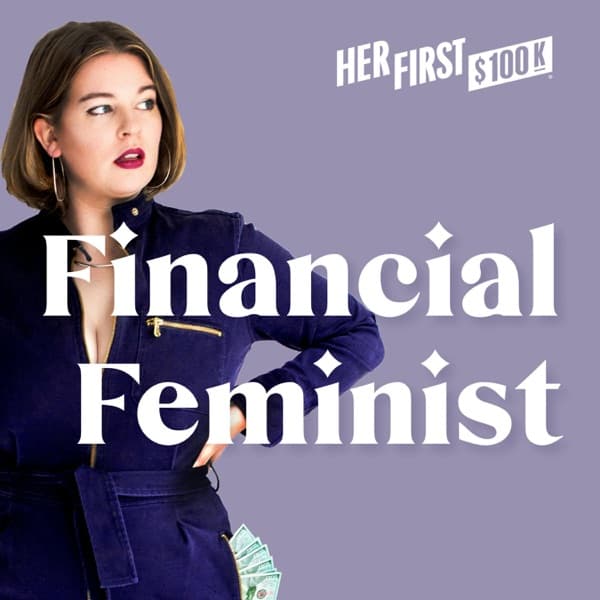
Financial Feminist
by Tori Dunlap
Tori Dunlap hosts the number one money podcast for women, covering debt payoff, investing, and salary negotiation. New episodes every Tuesday from Her First 100K.

The Personal Finance Podcast
by Andrew Giancola
Andrew Giancola's Master Money show covers budgeting, investing, and side income with a systems-first approach. 350K monthly downloads and a 4.7 Apple rating.