*Disclosure: This article contains affiliate links. If you purchase through these links, we may earn a commission at no additional cost to you. We only recommend books we genuinely believe in.
Quick Overview
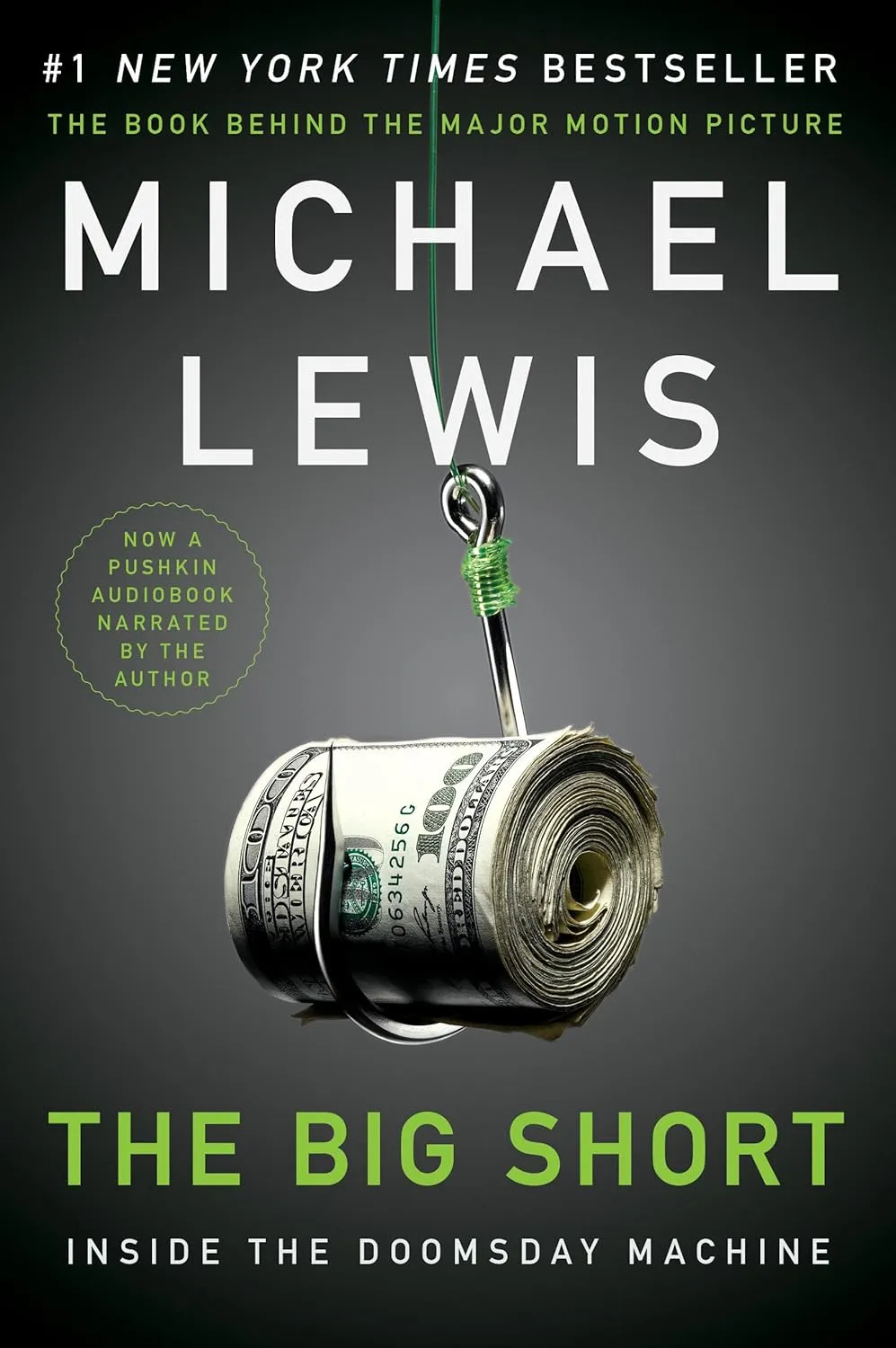
In 2010, Michael Lewis told the story of the 2008 financial crisis through the eyes of the small group of investors who saw it coming and made fortunes betting against it. The result is the most readable, most accurate, and most infuriating account of the greatest financial catastrophe since the Great Depression. A 2024 retrospective by the Financial Crisis Inquiry Commission noted that the systemic risks Lewis documented, misaligned incentives, opaque derivatives, and rating agency failures, have only partially been addressed by post-crisis regulation. The 2023 banking crisis, in which Silicon Valley Bank failed due to similar incentive misalignment and regulatory complacency, demonstrated that the patterns Lewis described have not been eliminated. If you read one book about how financial markets can fail and why ordinary investors suffered while institutions that caused the crisis were bailed out, it should be this one.
Book Details
| Attribute | Details |
|---|---|
| Title | The Big Short: Inside the Doomsday Machine |
| Author | Michael Lewis |
| Publisher | W.W. Norton |
| Published | 2010 |
| Pages | 290 |
| Reading Level | Beginner to Intermediate |
| Amazon Rating | 4.7/5 stars |
Get Your Copy
Paperback: Buy on Amazon
Kindle: Buy on Amazon
Audiobook: Buy on Amazon
About the Author
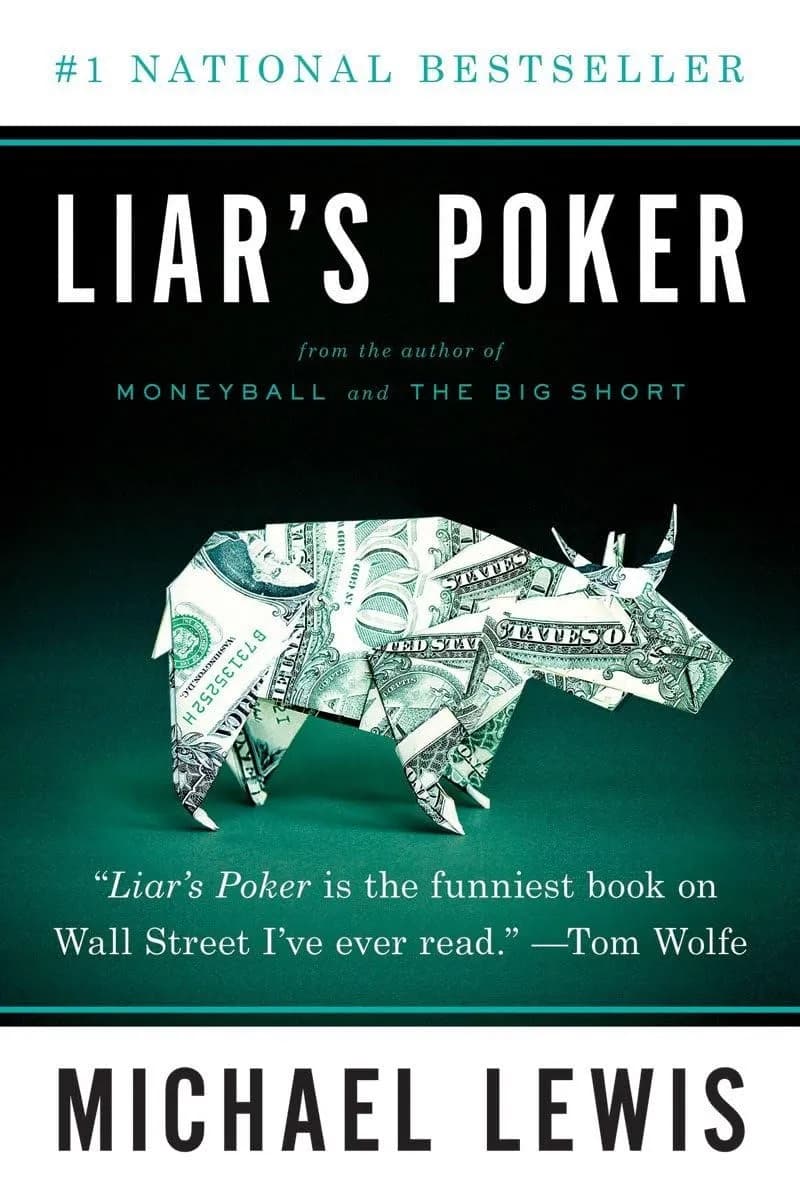
Michael Lewis wrote Liar's Poker (1989) after working at Salomon Brothers and Flash Boys (2014) about high-frequency trading. The Big Short demonstrates his singular ability to make complex financial instruments comprehensible to general readers without sacrificing accuracy. The book won the Financial Times and Goldman Sachs Business Book of the Year in 2010 and was adapted into an Academy Award-winning film in 2015.
The Main Characters
Lewis tells the crisis story through four distinct groups:
Michael Burry (Scion Capital)
A one-eyed physician turned hedge fund manager who diagnosed the housing bubble in 2003-2004 by reading the actual loan files underlying mortgage bonds. He identified that subprime mortgage underwriting had completely collapsed: borrowers were being approved with no income verification, no down payments, and adjustable rates that would reset sharply upward.
Burry's analysis:
He read thousands of mortgage prospectuses, documents that the major Wall Street banks assumed no one would actually read. He found loans being made to:
He calculated that when these adjustable rates reset, default rates would exceed the assumptions built into the CDO models by a factor of 5-10x.
His trade: He paid insurance premiums (credit default swaps) to bet that specific mortgage bond tranches would default. His investors thought he was crazy; by 2007-2008, the trade produced a 489% return net of fees.
Steve Eisman (FrontPoint Partners)
A hedge fund manager known for his contempt for Wall Street conventions and his willingness to say exactly what he thought. He came to the short position through interviews with mortgage originators, CDO managers, and rating agency analysts, and was horrified by what he heard.
His discovery: The rating agencies (Moody's and S&P) were rating packages of risky mortgage loans as AAA (the same rating as U.S. Treasury bonds) because:
Eisman's conclusion: the entire AAA rating on a synthetic CDO built on subprime mortgage bonds was fraudulent, not through deliberate deception (necessarily) but through systematic negligence.
Greg Lippmann (Deutsche Bank)
A bond trader at Deutsche Bank who independently identified the trade but faced internal resistance in getting his own firm to let him execute it. He eventually sold the short thesis to outside hedge funds including Eisman's.
His quantification:
Lippmann built a model showing that U.S. housing prices only needed to stop rising (not crash) to trigger massive losses in subprime mortgage bonds. The CDOs assumed:
All three assumptions failed simultaneously in 2006-2008.
Charlie Ledley and Jamie Mai (Cornwall Capital)
Two young investors running a tiny fund ($110,000 starting capital) from a garage in Berkeley. They had developed a philosophy of looking for mispriced options in situations of high uncertainty, and they identified the subprime market as the most extreme example of mispricing in financial history.
Their contribution to the book's argument: They came to the same conclusion as Burry and Eisman from a completely different direction. Multiple independent analyses converging on the same conclusion strengthens the case that the problem was as systemic as Lewis argues.
The Financial Instruments Explained
Lewis excels at making complex instruments comprehensible. Key concepts:
Subprime Mortgage Bond
A bond backed by a pool of subprime mortgages (loans to borrowers with poor credit). The pool generates cash flows (mortgage payments) which are distributed to bondholders.
Structure:
Subprime Mortgage Pool
         ↓
    Bond Tranches:
    AAA (top): 80% of pool
    AA: 5%
    A: 5%
    BBB: 5%        ← This is what Burry shorted
    BB: 2%
    Equity: 3%     ← First to absorb losses
The BBB tranche was designed to absorb losses before the AAA tranche. If 7% of loans defaulted, BBB was wiped out. If 20% defaulted, even AAA was impaired.
Collateralized Debt Obligation (CDO)
Wall Street took the lowest-rated tranches of subprime mortgage bonds (BBB, BB) and repackaged them into a new security, which was then rerated:
100 BBB-rated subprime bond tranches
         ↓
         CDO
         ↓
AAA tranche: 80% (of the BBB tranches!)
AA: 5%
...
This alchemy, turning BBB-rated bonds into new AAA-rated CDOs, was the core fraud of the crisis. The rating agencies applied a "diversification" benefit that was meaningless because all the underlying bonds were correlated: if housing nationwide declined, all the bonds declined simultaneously.
Credit Default Swap (CDS):
Effectively insurance against a bond defaulting. The protection buyer pays annual premiums; the protection seller pays the face value if the bond defaults.
Lewis's characters bought CDS protection on BBB subprime bond tranches for 1-2% annually. When those tranches defaulted, the CDS paid out at full face value, a 50-100x return on the premium cost.
The Systemic Failures Lewis Identifies
Rating Agency Failure
The conflict of interest: S&P and Moody's were paid by the issuers whose products they rated. An issuer could shop their deal to multiple agencies and give the business to whichever offered the best rating. This created competitive pressure to rate deals generously.
The model failure: Rating agency models used historical default data from an era (1990-2006) when:
The models had no data for what happened when underwriting standards collapsed entirely. The CDOs built on liar loans in 2005-2007 had no historical precedent in the models.
The organizational failure: Junior analysts who raised concerns about model assumptions were overruled. No one at the agencies had personal incentive to rock the boat: their bonuses depended on deal flow, not on accuracy five years later.
Wall Street Incentive Failures
Every participant in the mortgage food chain had incentives misaligned with long-term quality:
| Role | Incentive | Result |
|---|---|---|
| Mortgage originator | Volume: paid per loan regardless of quality | Lied about borrower income, inflated appraisals |
| Securitization desk | Fee per deal | Accepted any mortgage pool, packaged it |
| Rating agency analyst | Fee from issuer | Rated generously to win business |
| CDO manager | Fee on assets under management | Bought the garbage from securitization desks |
| CDO salesperson | Commission on sales | Sold AAA-rated garbage to pension funds |
| Pension fund manager | Yield pickup vs. Treasuries | Bought AAA CDOs without due diligence |
Every link in the chain was acting rationally given their incentives. The system as a whole was irrational.
The Regulatory Failure
Lewis touches on but does not deeply analyze the regulatory failure. The SEC, Federal Reserve, and OTS (Office of Thrift Supervision) had the authority and data to identify the problem but failed to act.
Contributing factors:
The Timeline of the Crisis
Lewis's narrative covers 2004-2008. The key dates:
| Year | Event |
|---|---|
| 2003-2004 | Burry reads mortgage prospectuses; identifies problem |
| 2005 | First CDS on subprime written; Eisman starts investigating |
| 2006 | Home price appreciation stalls; subprime default rates begin rising |
| 2006-2007 | Incredibly, banks continue issuing CDOs |
| Mid-2007 | Bear Stearns hedge funds collapse; first visible cracks |
| Late 2007 | Write-downs begin at major banks |
| March 2008 | Bear Stearns fails; acquired by JPMorgan at Fed pressure |
| September 2008 | Lehman Brothers fails; AIG bailed out; global crisis |
The most disturbing element: by mid-2006, Burry and others had identified the problem clearly. Banks and rating agencies continued creating and rating these instruments for another 18 months as if nothing was wrong.
What Every Investor Should Take From This Book
Beware AAA-Rated Complexity
Any financial product that requires significant complexity to justify its rating deserves extra scrutiny. If you cannot understand how a product generates its returns, you do not understand the risk you are taking.
The simplicity rule: The best investments for most people are the simplest: U.S. Treasury bonds, total market index funds, FDIC-insured savings accounts. Complexity in financial products almost always benefits the seller.
The Consensus Can Be Catastrophically Wrong
In 2006, the overwhelming consensus among regulators, economists, rating agencies, and major financial institutions was that:
The consensus was wrong. This does not mean the consensus is usually wrong. It means that when the consensus relies on assumptions that have never been stress-tested against adverse scenarios, it can fail catastrophically.
Incentives Determine Behavior
Every crisis in financial history can be traced to incentive misalignment. When the people who create risk are not the people who bear it, risk accumulates beyond what any participant individually understands or intends.
For investors: understand who benefits from every financial transaction you enter and how. If the counterparty profits from complexity and opacity, be skeptical. If the counterparty's fees align with your long-term returns, trust more.
Institutional Size Does Not Equal Safety
The 2008 crisis destroyed Bear Stearns (88 years old), Lehman Brothers (158 years old), Washington Mutual (119 years old), Wachovia (87 years old), and many others. Size and history provided no protection against the systemic failure.
For investors: Diversification across institutions (not just asset classes) matters. FDIC insurance limits ($250,000 per depositor per institution) exist for a reason.
Strengths & Weaknesses
What We Loved
Areas for Improvement
Who Should Read This Book
Highly Recommended For
Probably Not For
Frequently Asked Questions
Q: Is the movie as good as the book?
A: The movie is excellent but takes significant liberties with the facts and characters. Read the book for accuracy; the movie is fine for entertainment.
Q: Did the people responsible face consequences?
A: Almost none. No major Wall Street executive was criminally prosecuted for the mortgage crisis. Several institutions paid large civil settlements without admitting wrongdoing. The regulatory and legal response to the crisis has been criticized broadly as inadequate.
Q: Could this happen again?
A: Dodd-Frank (2010) increased capital requirements and added some regulatory oversight. Whether it prevents the next crisis depends on whether the next crisis takes a similar form. Systemic financial crises tend to originate in new areas rather than repeat exact patterns. The 2023 failure of Silicon Valley Bank, caused by unhedged interest rate risk rather than mortgage defaults, illustrated how the same regulatory complacency produces different symptoms. For practical steps to protect your deposits, see our guide on FDIC insurance limits.
Final Verdict
Rating: 4.8/5
The Big Short is the essential financial crisis book. Lewis's ability to explain credit default swaps and synthetic CDOs to general readers while simultaneously telling a gripping story is unmatched. Every investor should read it to understand how institutional incentive failures can produce systemic risk, and how to think about complex financial products they encounter.
If you want to understand how the 2008 crisis happened and why it could happen again in a different form, this is the book. The incentive failures Lewis documents are not unique to mortgage bonds. For investors who want a simpler approach that avoids complex financial products entirely, our guide on index fund investing covers the alternative.
Get Your Copy
Paperback: Buy on Amazon
Kindle: Buy on Amazon
Audiobook: Buy on Amazon
Prices current as of publication date. Free shipping available with Prime.