*Disclosure: This article contains affiliate links. If you purchase through these links, we may earn a commission at no additional cost to you. We only recommend books we genuinely believe in.
Quick Overview
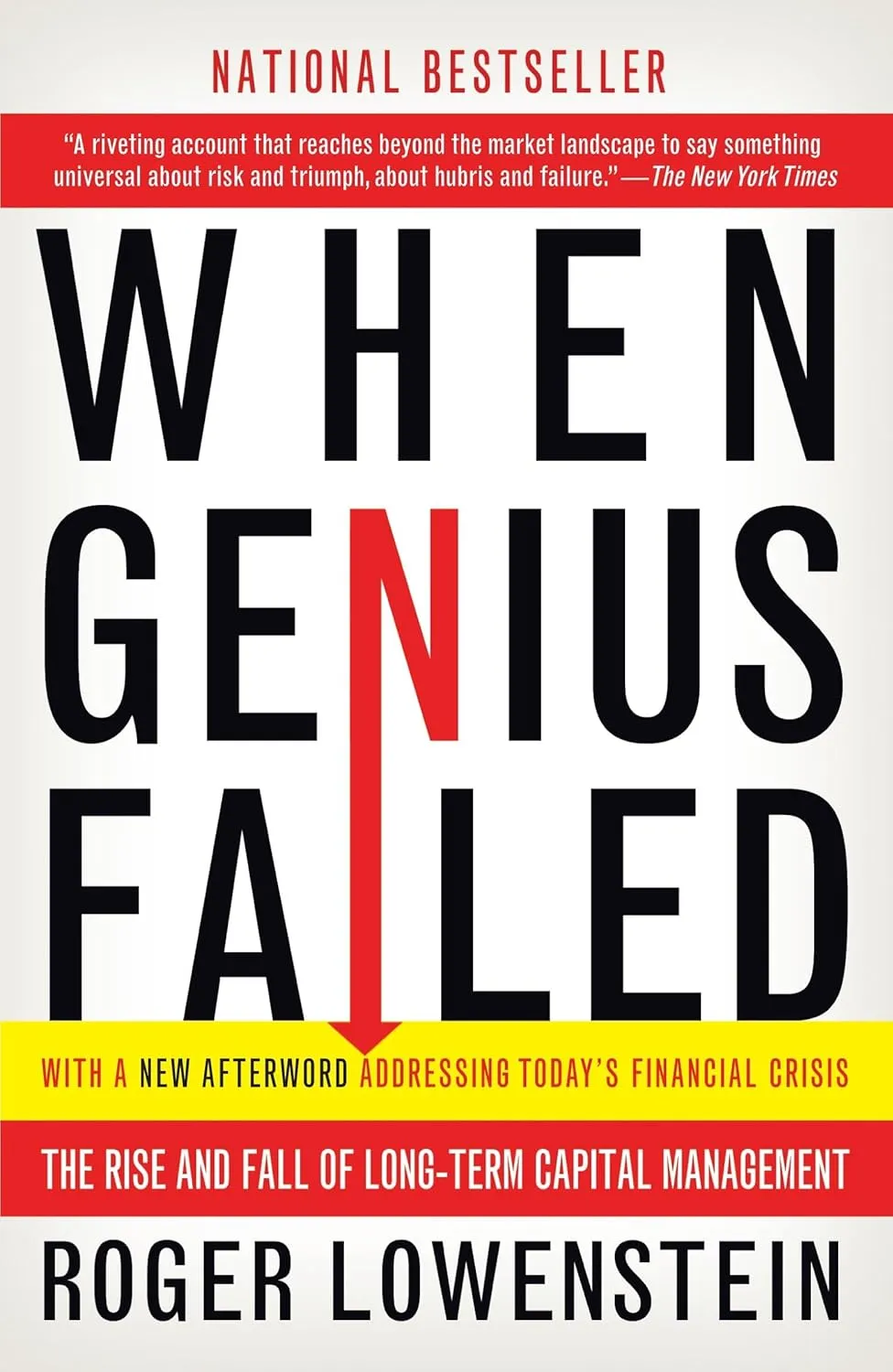
Long-Term Capital Management was founded in 1994 by John Meriwether (former Salomon Brothers bond arbitrage chief), Myron Scholes and Robert Merton (who would share the 1997 Nobel Prize in Economics), and some of the most respected traders in the world. By 1997 they had turned $1 billion into $7 billion. By 1998 they had lost everything and required a Federal Reserve-organized bailout to prevent a cascade failure that threatened global financial markets. When Genius Failed is the definitive account of how it happened, and why the same patterns keep repeating.
Nearly three decades later, the LTCM story remains the canonical case study in how brilliant quantitative thinking combined with extreme leverage and underestimation of correlation in stress can produce catastrophic results. A 2025 analysis published by Quant Decoded detailed how the margin spiral mechanism that killed LTCM, the mutual reinforcement of funding constraints and market illiquidity, continues to threaten leveraged institutions today. The Federal Reserve's 2024-2026 rate cycle showed how quickly funding conditions can shift, and how positions that looked safe in one rate environment can become untenable in another.
I first read this book in 2018, and it fundamentally changed how I think about risk. The lesson I took away was not that smart people are dumb, but that smart people are uniquely vulnerable to a specific type of failure: they trust their models, and their models cannot see the scenarios that have never happened before. That insight has kept me from using margin and from trusting any quantitative strategy that claims to have eliminated tail risk.
Book Details
| Attribute | Details |
|---|---|
| Title | When Genius Failed |
| Author | Roger Lowenstein |
| Publisher | Random House |
| Published | 2000 |
| Pages | 264 |
| Reading Level | Intermediate |
| Amazon Rating | 4.6/5 stars |
Get Your Copy
Paperback: Buy on Amazon
Kindle: Buy on Amazon
Audiobook: Buy on Amazon
About the Author
Roger Lowenstein is a financial journalist and author who has written for The Wall Street Journal and The New York Times. His other books include Buffett: The Making of an American Capitalist and The End of Wall Street. He is one of the best financial narrative writers working today, with a rare ability to make complex financial mechanics accessible without oversimplifying them.
The LTCM Story
The Beginning: Meriwether's Dream Team
John Meriwether built the most profitable bond arbitrage desk on Wall Street at Salomon Brothers in the 1980s. After a scandal over Treasury bond auctions, he left and assembled an extraordinary team to start a hedge fund:
| Partner | Background |
|---|---|
| John Meriwether | Salomon Brothers bond arbitrage chief |
| Myron Scholes | Black-Scholes options pricing model co-creator |
| Robert Merton | Options theory pioneer |
| David Mullins | Vice Chairman of the Federal Reserve |
| Eric Rosenfeld | Harvard Business School professor |
| Victor Haghani | Salomon derivatives trader |
| Arjun Krishnamachar | Salomon bond trader |
This team represented the highest concentration of financial and academic talent ever assembled in a single fund. They raised $1.25 billion from institutional investors who were honored to be admitted.
The Strategy: Convergence Trading
LTCM's core approach was convergence arbitrage: find pairs of securities that should be priced nearly identically (due to similar cash flows, similar risks) but were temporarily mispriced relative to each other. Buy the cheaper one, sell the more expensive one. Wait for prices to converge. Repeat thousands of times with enormous leverage.
Example convergence trade:
| Security | Expected Yield | Actual Yield | Action |
|---|---|---|---|
| On-the-run 30-year Treasury | 6.00% | 6.00% | Sell |
| Off-the-run 30-year Treasury | 6.00% | 6.04% | Buy |
The off-the-run bond pays slightly more because it is less liquid. Over time, as the on-the-run bond ages, the two bonds converge. The spread is tiny (0.04%) but with 25:1 leverage, the return on capital is significant.
Why leverage was necessary:
Each individual trade earned very small spreads (0.02-0.10%). Achieving 20-30% annual returns required applying leverage of 25:1 to 30:1.
The leverage math:
Trade spread: 0.05%
Leverage: 25:1
Return on equity: 0.05% × 25 = 1.25% per trade
With 20 uncorrelated trade types: 20-25% annual return
As long as the spread trades converge and the portfolio is sufficiently diversified, the model worked perfectly.
The Peak: 1994-1997
LTCM's results in its first four years:
| Year | Return |
|---|---|
| 1994 | 28% (first year, partial) |
| 1995 | 59% |
| 1996 | 57% |
| 1997 | 25% (weaker as the fund grew larger) |
By 1997, LTCM had $7 billion in equity and over $125 billion in assets (18:1 leverage). They had achieved what their models predicted. The Nobel Prize went to Scholes and Merton in 1997 for the options pricing work that underpinned the entire strategy.
The Collapse: 1998
The Russian Default
In August 1998, Russia defaulted on its government debt. This was not directly in LTCM's portfolio, but it triggered a global "flight to quality" that affected every market simultaneously.
The flight to quality cascade:
Russia defaults
→ Investors globally flee to safety
→ Demand for U.S. Treasury bonds surges
→ All off-the-run bonds, corporate bonds, mortgage bonds sell off simultaneously
→ Every spread LTCM was long widened dramatically
→ Every spread trade lost money simultaneously
LTCM's models assumed their trade types were not correlated. In the specific scenario of a global panic, all spread trades became correlated. The diversification that made the model safe evaporated in the precise moment it was needed. As a 2025 analysis noted, correlations in stress are not the same as correlations in normal times. This is the canonical lesson of LTCM, and it applies to any portfolio that relies on historical correlation data to estimate risk.
The Model's Fatal Assumption
LTCM's models were built on historical data. Historical correlations between trade types were low. But historical data captured a period when liquidity crises of the August 1998 type had not occurred. The models had never seen this scenario.
Nassim Taleb's concept applied:
A turkey that has been fed every day for 1,000 days has no reason to expect anything different on day 1,001. On day 1,001, the day before Thanksgiving, its model fails catastrophically. LTCM's model was the turkey.
The losses:
| Month | Equity Loss |
|---|---|
| May 1998 | -6.7% |
| June 1998 | -10.1% |
| July 1998 | -9.9% |
| August 1998 | -44.8% (Russian default) |
| September 1998 (first 3 weeks) | -44% of remaining capital |
From $7 billion in early 1998 to under $1 billion in September 1998. At 25:1 leverage, they were effectively insolvent.
The Systemic Risk
The Federal Reserve organized a $3.625 billion bailout by 14 major banks not to save LTCM's investors, they lost nearly everything, but to prevent a disorderly liquidation that could have:
This was the blueprint for the 2008 "too big to fail" bailouts. The lesson: when a single entity holds positions large enough to move markets, its failure becomes a systemic risk regardless of how sophisticated its risk management appears.
The Lessons for Every Investor
Lesson 1: Models Fail in Tail Events
The most dangerous time to rely on a model is the time when the model matters most, during extreme market stress. Models are built from historical data. Historical data underrepresents rare, extreme events (by definition). When those events occur, model-predicted correlations break down. A 2025 NBER working paper on present bias and asset pricing demonstrated that even sophisticated economic models systematically underestimate how investor behavior shifts under stress, creating priced discount rate risks that first-order models miss entirely.
The practical implication: Any investment strategy that depends on a quantitative model functioning correctly during a market crisis is riskier than the model suggests. This includes:
Lesson 2: Leverage Is a Multiplier of Both Gains and Losses
LTCM's leverage ratio meant that a 4% loss in their underlying positions could wipe out their entire equity capital. At 25:1 leverage, sustainability requires that every individual trade has very limited downside, which is only guaranteed when markets are orderly.
The leverage survival calculation:
| Leverage | Portfolio Loss That Wipes Out Equity |
|---|---|
| 2:1 | 50% |
| 5:1 | 20% |
| 10:1 | 10% |
| 25:1 | 4% |
| 50:1 | 2% |
LTCM's 25:1 leverage meant a 4% adverse move in their overall portfolio destroyed their equity. The Russian default produced far larger moves.
For individuals: Any use of margin, leveraged ETFs, or mortgage-financed investments involves leverage. The multiplier effect works identically on losses as on gains. Use our investment return calculator to model how different leverage scenarios affect your portfolio under adverse conditions.
Lesson 3: Liquidity Risk Is Real and Unpredictable
LTCM's trades were in liquid markets during normal conditions. During the August 1998 crisis, many of those same markets became illiquid. The bid-ask spread on their positions widened dramatically. They could not exit without moving prices against themselves.
Liquidity risk in individual portfolios:
| Asset | Normal Liquidity | Crisis Liquidity |
|---|---|---|
| S&P 500 index ETF | Excellent (penny spread) | Good (spread widens moderately) |
| Small-cap value ETF | Good (cent spread) | Moderate (spread widens significantly) |
| Individual small-cap stocks | Fair | Poor (market may be suspended) |
| High-yield bond ETF | Good | Poor (underlying bonds illiquid) |
| Real estate | Poor (weeks to sell) | Very poor (months with price concession) |
The portfolio that looks diversified in normal conditions may fail to provide liquidity precisely when you need it most.
Lesson 4: Intellectual Arrogance Is Fatal
LTCM's partners were not stupid. They were the smartest people in the room, and they knew it. This confidence caused them to:
The intellectual humility principle: The more sophisticated your model, the more dangerous your blind spots. Every quantitative model has assumptions. Every set of assumptions excludes scenarios. The excluded scenarios are where catastrophic risk lives.
Warren Buffett's equivalent: "I never use a model I can't understand in its entirety." He avoids the complexity that creates false confidence in specific outcomes. This philosophy has served Berkshire Hathaway shareholders well through multiple crises, and it stands in direct contrast to the LTCM approach.
The Parallels to 2008
Lowenstein wrote When Genius Failed two years before the forces that created 2008 were fully developed. The parallels are exact:
| LTCM 1998 | Financial Crisis 2008 |
|---|---|
| Convergence trades on bond spreads | Convergence trades on mortgage spreads |
| Models assumed low correlation | CDO models assumed low correlation |
| 25:1 leverage | Bank leverage of 30:1+ |
| Russian default triggered cascade | Housing price decline triggered cascade |
| Flight to quality hurt all spread trades | Mortgage losses hurt all credit instruments |
| Fed-organized bailout ($3.6B) | Government bailout ($700B+ TARP) |
| Fund destroyed; systemic crisis averted | Banks survived; economy severely damaged |
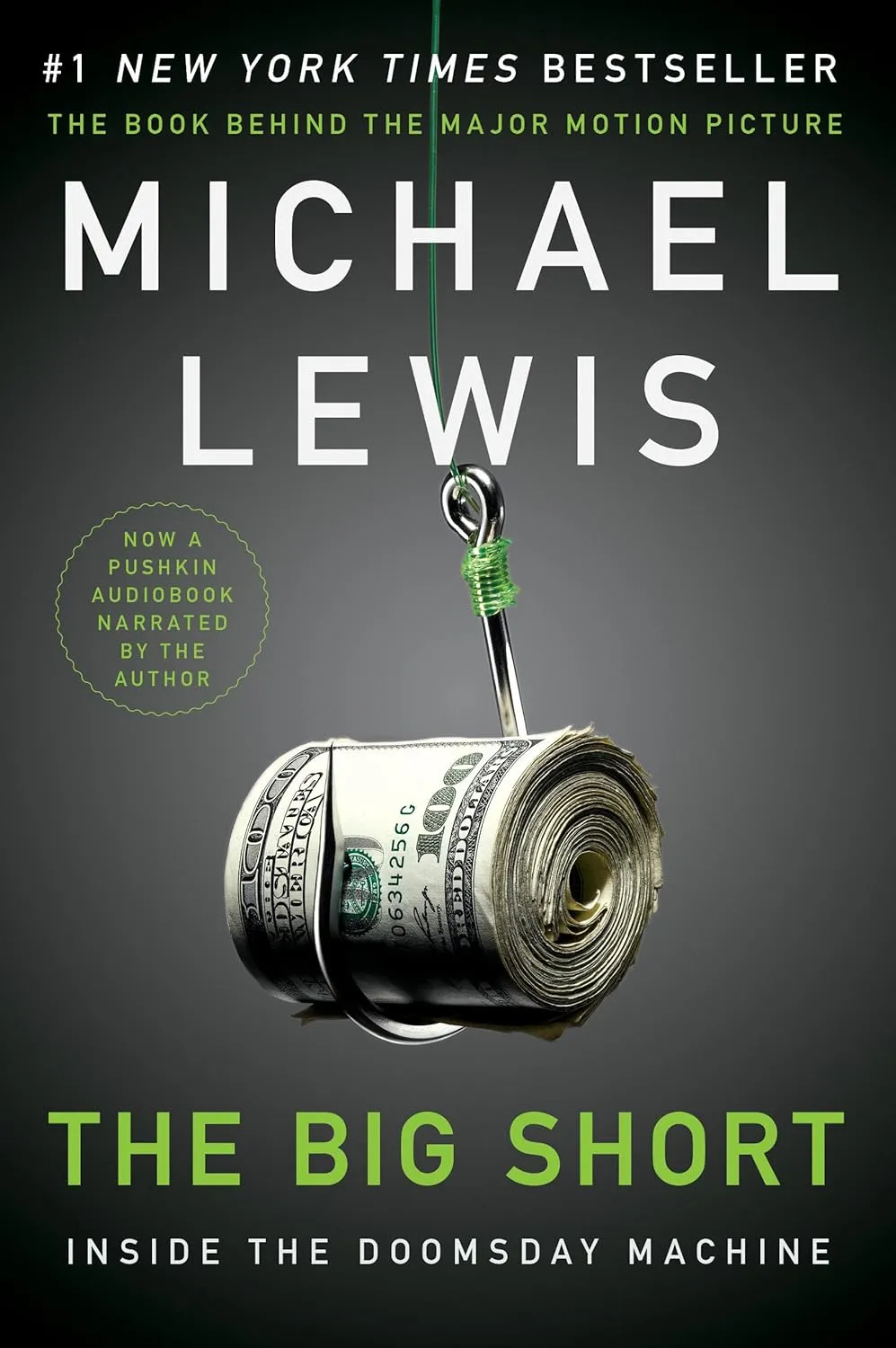
Reading When Genius Failed before The Big Short provides the intellectual framework for understanding why the 2008 crisis was not a surprise, it was an inevitability given the same structural conditions. The same patterns recurred in 2020 with the Archegos Capital Management collapse, where a family office using total return swaps amassed concentrated positions that unwound catastrophically when margin calls hit.
Strengths & Weaknesses
What We Loved
Areas for Improvement
Who Should Read This Book
Highly Recommended For
Probably Not For
Frequently Asked Questions
Q: Is leverage ever appropriate for individual investors?
A: Mortgage debt on your primary residence is typically the most appropriate form of leverage for most individuals (long-term, fixed-rate, against an asset you control). Margin accounts and leveraged ETFs carry the LTCM risk: losses are magnified and margin calls can force selling at the worst time.
Q: Did the LTCM partners face legal consequences?
A: No. They lost their own invested capital (estimated $1.9 billion among partners) and their reputations, but no criminal charges were filed. Meriwether later started two subsequent funds, both of which also eventually failed.
Q: Has anything like LTCM happened since?
A: Yes. The 2008 financial crisis followed the same pattern of leveraged convergence trades unwinding when correlations shifted. More recently, the 2020 Archegos Capital Management collapse involved a family office using total return swaps to build concentrated positions that unwound catastrophically when margin calls hit, causing billions in losses at major banks. The LTCM playbook keeps repeating because the structural incentives, leverage availability, and overconfidence cycle never fully disappear.
Final Verdict
Rating: 4.7/5
When Genius Failed is the essential case study in leverage risk, model failure, and the limits of quantitative finance. Every investor who uses leverage, trusts models, or underestimates tail risks should read it. Lowenstein's writing makes a complex story gripping, and the lessons have only grown more relevant with each subsequent crisis. If you want to understand why smart people keep losing everything in financial markets, this is where you start.
Get Your Copy
Paperback: Buy on Amazon
Kindle: Buy on Amazon
Audiobook: Buy on Amazon
Prices current as of publication date. Free shipping available with Prime.