*Disclosure: This article contains affiliate links. If you purchase through these links, we may earn a commission at no additional cost to you. We only recommend books we genuinely believe in.
Quick Overview
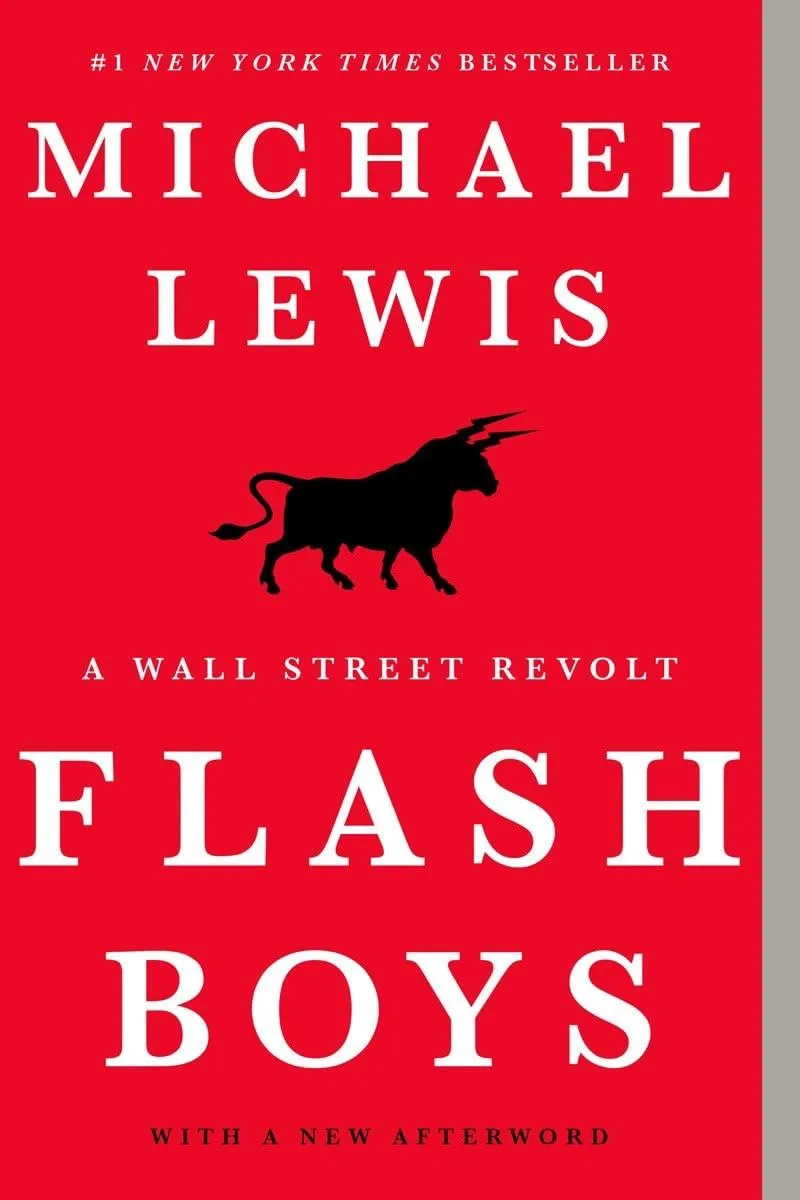
In 2014, Michael Lewis published Flash Boys and told millions of readers that the U.S. stock market was "rigged." The book follows Brad Katsuyama, a Royal Bank of Canada trader who discovered that his large orders were being front-run by high-frequency trading algorithms before they could reach all 12 public exchanges. His response was to build IEX, a new exchange with a built-in "speed bump" designed to neutralize the HFT advantage. Whether or not you agree with Lewis's framing, Flash Boys remains the most accessible explanation of modern market structure available.
Book Details
| Attribute | Details |
|---|---|
| Title | Flash Boys: A Wall Street Revolt |
| Author | Michael Lewis |
| Publisher | W.W. Norton |
| Published | March 2014 |
| Pages | 288 |
| ISBN-13 | 978-0393351595 |
| Reading Level | Beginner to Intermediate |
| Amazon Rating | 4.5/5 stars |
Get Your Copy
Paperback: Buy on Amazon
Kindle: Buy on Amazon
Audiobook: Buy on Amazon
About the Author
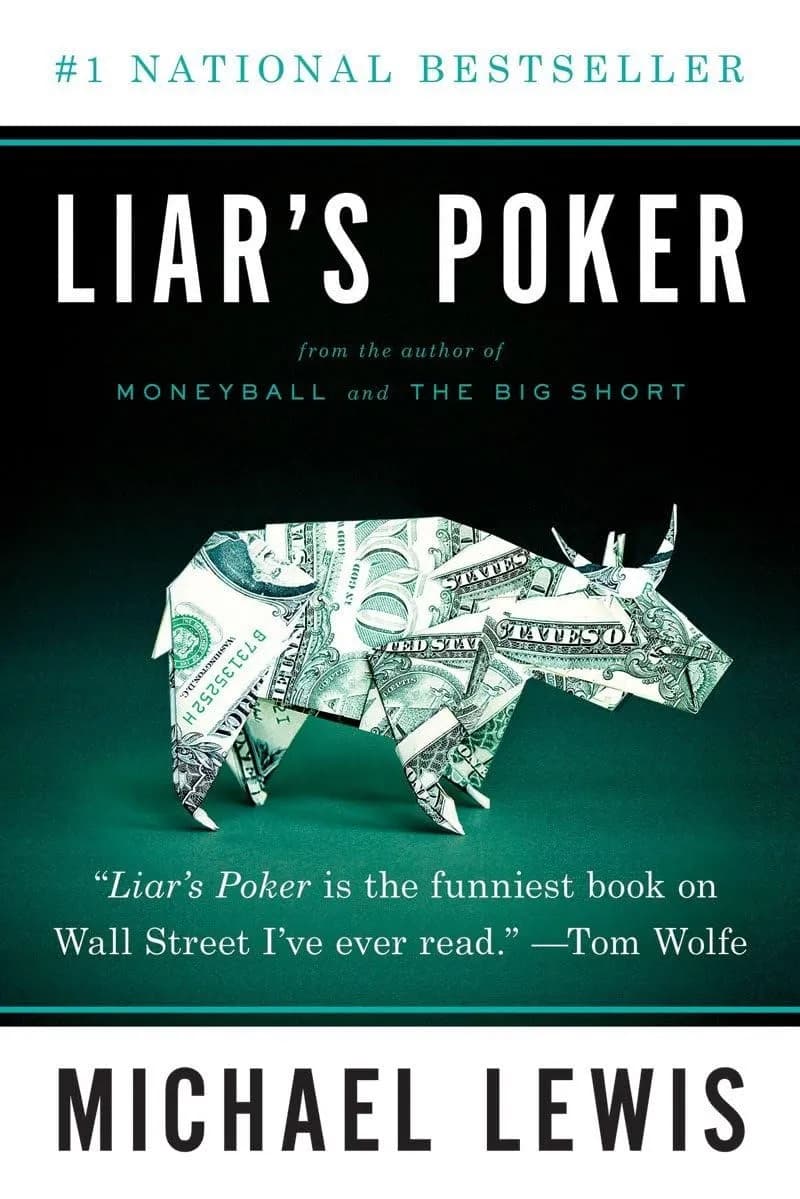
Michael Lewis is the author of Liar's Poker, The Big Short, Moneyball, and The Premonition. He worked as a bond salesman at Salomon Brothers before turning to journalism. His books combine deep reporting with character-driven narratives that make complex systems readable. Flash Boys was his investigation into high-frequency trading, a topic he knew nothing about before starting. He learned the business by following Brad Katsuyama through his investigation and the construction of IEX.
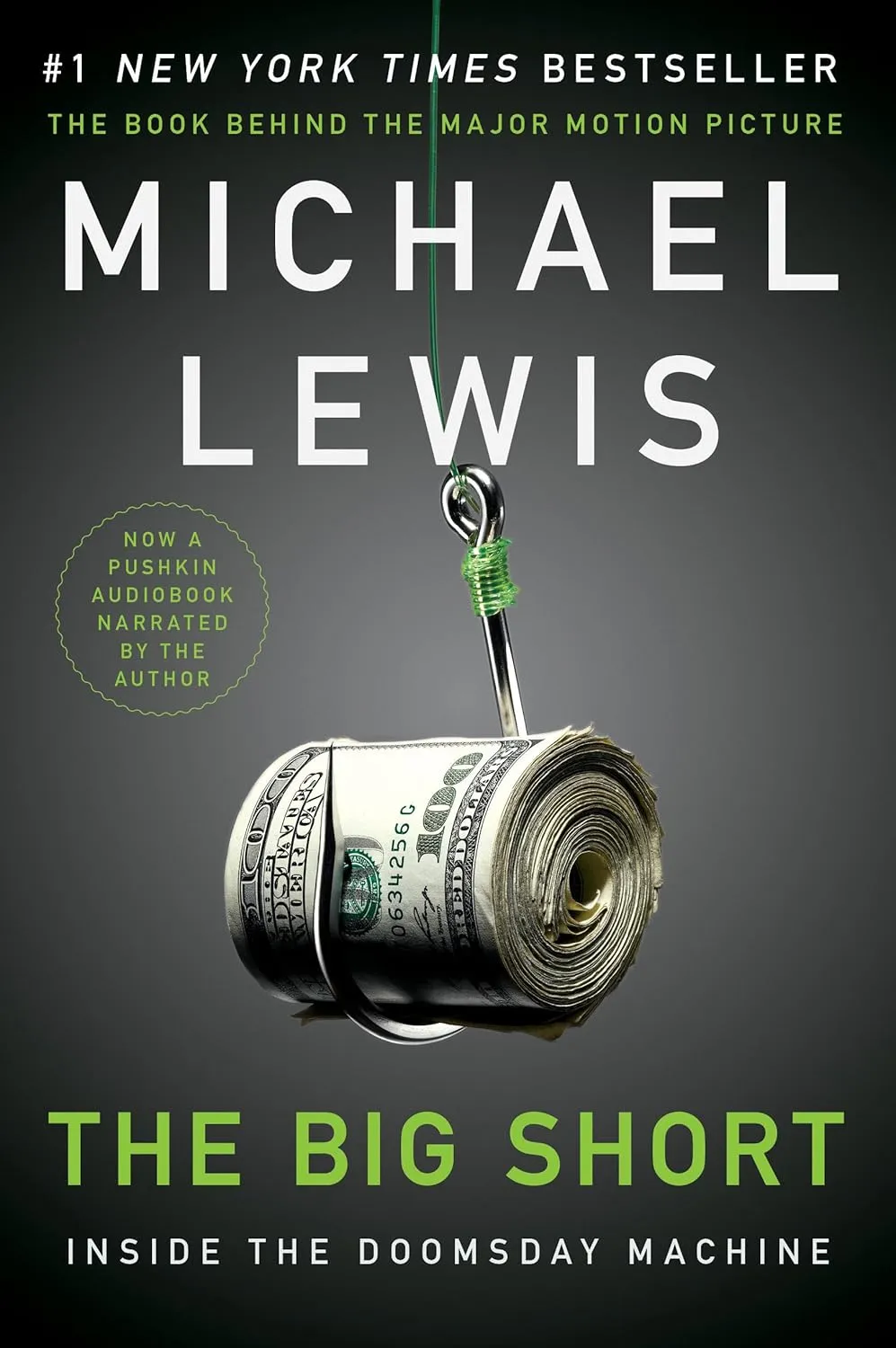
Lewis has a talent for finding people who see a broken system and try to fix it. In Moneyball, it was Billy Beane challenging baseball scouting. In The Big Short, it was Michael Burry challenging the housing market. In Flash Boys, it is Katsuyama challenging the architecture of U.S. equity markets.
The Problem Lewis Describes
What Is High-Frequency Trading?
High-frequency trading (HFT) uses algorithms and fiber-optic networks to execute thousands of trades per second. HFT firms invest enormous sums in speed infrastructure:
The speed advantage, visualized:
| Communication Method | New York to Chicago Latency |
|---|---|
| Standard fiber optic | 17 milliseconds |
| Optimized fiber optic | 14.5 milliseconds |
| Microwave towers | 8.5 milliseconds |
| Physics limit (speed of light) | ~7 milliseconds |
HFT firms have spent hundreds of millions of dollars to shave fractions of milliseconds off communication times. The Spread Networks fiber route through the Pennsylvania mountains cost $300 million to build and saved about 3 milliseconds. That investment paid for itself because being 3 milliseconds faster than competitors meant capturing arbitrage profits on every price discrepancy between Chicago and New York.
Brad Katsuyama's Discovery
Katsuyama ran the U.S. equity trading desk at Royal Bank of Canada. He noticed a frustrating pattern: when he tried to buy 100,000 shares of a stock spread across 12 exchanges, the first exchanges would fill his order but prices at subsequent exchanges would jump before his order arrived. He was buying the first 10,000 shares at $30.00, but the remaining 90,000 would be priced at $30.01 or $30.02.
What was happening:
This is called latency arbitrage or order anticipation. By being faster, HFT firms can effectively see where large orders are going and front-run them.
The scale of the problem:
| Year | HFT Share of U.S. Equity Trading Volume |
|---|---|
| 2005 | ~21% |
| 2009 | ~61% (peak) |
| 2012 | ~49% |
| 2019 | ~50% |
| 2024 | ~45-50% |
When I first read about latency arbitrage in Chapter 4, I had to put the book down and call my brother, who works in institutional trading. He confirmed that the front-running Lewis describes was real and well-known inside the industry. What was new was that someone was explaining it in plain English to the general public.
The IEX Solution
Katsuyama left RBC and founded IEX (Investors Exchange) in 2013. The exchange was designed from the ground up to eliminate the latency arbitrage advantage of HFT firms.
The Speed Bump
IEX's most innovative feature is a 350-microsecond artificial delay built from 38 miles of fiber optic cable coiled in a box before orders reach the matching engine.
How the speed bump works:
At IEX, a large institutional order cannot be front-run because by the time an HFT firm detects the order and attempts to adjust, the delay means both the original order and the response arrive at the matching engine simultaneously.
IEX vs. Traditional Exchanges
| Feature | NASDAQ/NYSE | IEX |
|---|---|---|
| Co-location available | Yes ($50,000+/month) | No |
| Speed bump | None | 350 microseconds |
| Flash orders | Available on some venues | No |
| Maker-taker rebates | Standard | No rebates |
| Designed for | All market participants | Long-term investors |
| Dark pool routing | Yes | Limited |
IEX became a registered national securities exchange in September 2016, after a contentious SEC approval process fought by NYSE and NASDAQ. As of 2024, IEX handles roughly 2-3% of daily U.S. equity volume. That is small, but its influence on market structure debates has been outsized.
The Debate: Is the Market "Rigged"?
Lewis's claim that the stock market is "rigged" generated intense controversy when the book launched. He appeared on 60 Minutes the night before publication, and the market structure debate dominated financial news for weeks.
The Case That It Is Rigged
The Case That It Is Not Rigged
Bid-ask spread comparison:
| Year | Average Bid-Ask Spread on S&P 500 Stocks |
|---|---|
| 1997 | ~$0.12 (6 cents per side) |
| 2001 | ~$0.05 (post-decimalization) |
| 2005 | ~$0.02 |
| 2014 (Flash Boys published) | ~$0.01 |
| 2024 | ~$0.005-0.01 |
The average retail investor pays dramatically less to trade today than before HFT dominated markets. Most academic research, including a 2014 study by the CFTC's Technology Advisory Committee, concluded that HFT has net benefited retail investors through tighter spreads, even while creating the latency arbitrage problem Lewis describes.
A 2020 paper in the Review of Financial Studies by Baron, Brogaard, and Kirilenko found that HFT profits from latency arbitrage averaged approximately $1.7 billion annually between 2010 and 2012, but declined significantly after 2014 as exchanges implemented speed bumps and institutions adopted smarter order routing.
What Flash Boys Means for Ordinary Investors
The Practical Impact on Long-Term Investors
For passive index fund investors who buy and hold for years, the HFT front-running Lewis describes has minimal impact:
The real victims of latency arbitrage are large institutional traders who make large block trades frequently. Pension funds paying slightly worse prices on every trade do have their long-term returns marginally impacted, but even this is small relative to other factors like management fees and asset allocation decisions.
If you want to see how trading costs affect your long-term returns, use our investment return calculator to model the impact of different cost assumptions.
Payment for Order Flow: The Real Retail Issue
Lewis's book is most directly relevant to retail investors through its treatment of payment for order flow (PFOF):
Is PFOF harmful to retail investors?
| Argument Against PFOF | Argument For PFOF |
|---|---|
| Orders may not get best available price | Retail spreads are still very tight |
| Creates conflict of interest for brokers | Enables zero-commission trading |
| Opacity: customers do not know | Regulatory disclosure required |
| Systematically advantages market makers | Market makers still provide price improvement |
The SEC has studied PFOF extensively. In 2023, the SEC proposed the Order Competition Rule, which would have required retail orders to be exposed to competitive auctions rather than internalized. The rule was ultimately withdrawn in 2024 after intense industry pushback. Most evidence suggests retail investors receive prices within 1-2 cents of the best available, a small but real disadvantage. The elimination of commissions (enabled by PFOF revenue) may offset this for small frequent traders.
Actionable Advice for Retail Investors
Given the market structure Lewis describes:
| Action | Benefit |
|---|---|
| Use limit orders instead of market orders | Control the price you pay; avoid paying the spread |
| Trade large quantities in smaller pieces (TWAP/VWAP) | Minimize market impact |
| Use IEX or venues with explicit best execution commitments | Avoid worst front-running venues |
| Avoid trading at the open and close | Most HFT activity and widest spreads occur here |
| For index funds: buy and hold (minimize trading) | Each trade has small frictional cost |
I started using limit orders exclusively after reading this book. Before, I used market orders for convenience. The difference on a single trade is pennies, but over hundreds of trades across years, those pennies compound. It is one of the simplest changes you can make to reduce trading costs.
Strengths & Weaknesses
What We Loved
Areas for Improvement
Who Should Read This Book
Highly Recommended For
Probably Not For
Comparison to Similar Books
| Book | Approach | Difficulty | Best For |
|---|---|---|---|
| Flash Boys (Lewis) | Narrative journalism | Beginner | Understanding market structure through story |
| Liar's Poker (Lewis) | Memoir of bond trading | Beginner | Understanding 1980s Wall Street culture |
| The Big Short (Lewis) | Narrative of housing crisis | Intermediate | Understanding the 2008 financial crisis |
| Trading at the Speed of Light (Wahal) | Academic analysis of HFT | Advanced | Quantitative understanding of HFT economics |
| Dark Pools (Patterson) | History of electronic trading | Intermediate | Pre-HFT market structure evolution |
Read Flash Boys first for the narrative, then Trading at the Speed of Light if you want the academic perspective with data.
Implementation Guide
What to Do After Reading
Step 1: Check your broker's order routing.
Brokers are required to publish Rule 606 reports quarterly, showing where they route customer orders. Look up your broker's 606 report and see what percentage of orders go to market makers versus exchanges. If 90%+ goes to a single market maker, your broker is heavily reliant on PFOF.
Step 2: Switch to limit orders.
Stop using market orders for any meaningful trade size. Set the limit price at or near the current bid (for buys) or ask (for sells). You may wait slightly longer for fills, but you control your execution price.
Step 3: Avoid trading at the open and close.
The first 10 minutes and last 10 minutes of the trading day have the widest spreads and most HFT activity. If you need to trade, use the middle of the day when spreads are tightest.
Step 4: Calculate your trading cost drag.
Use the investment return calculator to model how trading costs (spread + PFOF impact) affect your portfolio over 20 years. Even 0.1% annual drag compounds meaningfully.
Step 5: Read the SEC's Reg NMS.
The regulation that created the fragmented market structure Lewis describes is publicly available. Understanding Reg NMS explains why we have 16 exchanges and why orders route the way they do.
Frequently Asked Questions
Q: Should I route my orders to IEX?
A: For large trades, IEX is a reasonable choice. For typical retail investors making small periodic investments, the practical difference between IEX and other venues is negligible. The main benefit of IEX's speed bump is for institutional-size block trades.
Q: Is Robinhood bad because of PFOF?
A: It depends on usage. For small, infrequent trades, zero-commission trading (enabled by PFOF) is beneficial. For large trades or frequent traders, using a broker that prioritizes best execution over PFOF revenue may produce better prices. Robinhood was fined $70 million by FINRA in 2021 for best execution violations, which validated some of the concerns Lewis raised.
Q: Did Flash Boys change anything?
A: IEX gained exchange status in 2016, validating the speed bump model. The SEC increased regulatory attention to market structure significantly after the book's publication. The 2023 Order Competition Rule proposal was directly influenced by the PFOF debate Flash Boys sparked, though it was later withdrawn.
Q: Is the market still "rigged" in 2025?
A: The specific latency arbitrage problem Lewis described has diminished. Exchanges adopted speed bumps, institutions improved order routing, and HFT profit margins declined. The PFOF debate continues, but the market structure has evolved. The core lesson remains valid: understand how your orders are executed.
Q: How does this book compare to The Big Short?
A: The Big Short is about a one-time event (the housing crisis). Flash Boys is about an ongoing structural feature of markets. Both use Lewis's character-driven approach, but Flash Boys is more relevant to your daily trading decisions.
Final Verdict
Rating: 4.5/5
Flash Boys is the most accessible and entertaining account of modern market structure ever written. Its market microstructure education is genuinely valuable, the IEX story is inspiring, and the payment for order flow treatment is directly relevant to anyone who trades stocks. The "rigged" framing overstates the case, but the book's core insights about how your orders are executed are sound and worth understanding.
If you trade individual stocks, read this book. If you only buy index funds and never trade, the market structure details are interesting but less practically relevant to your returns.
Get Your Copy
Paperback: Buy on Amazon
Kindle: Buy on Amazon
Audiobook: Buy on Amazon
Prices current as of publication date. Free shipping available with Prime.