*Disclosure: This article contains affiliate links. If you purchase through these links, we may earn a commission at no additional cost to you. We only recommend books we have personally read and genuinely believe in.
Quick Overview
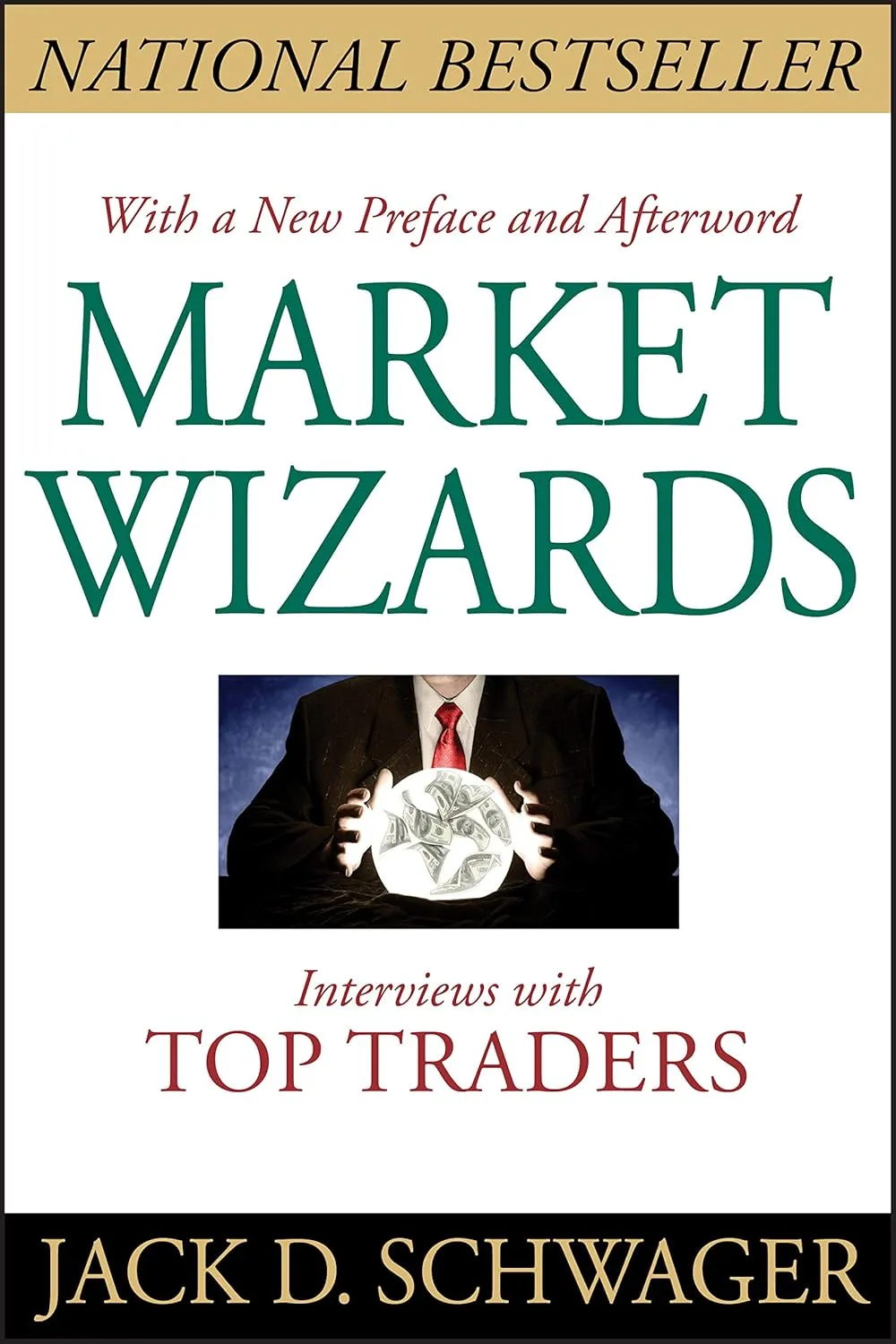
Jack Schwager was a futures analyst who gained access to some of the greatest traders of the 1980s and asked them a simple question: how do you consistently make money in markets that destroy most participants? The answers, collected in Market Wizards (1989), span wildly different approaches: trend following, fundamentals, options arbitrage, short selling. Yet they converge on a set of psychological and risk management principles that every successful trader shares. The specific strategies from 1989 do not all work in 2026 algorithmic markets. The principles do. This is the most important book on the psychology of trading ever assembled, and its core lessons about risk management, discipline, and independent thinking remain valid regardless of how markets have evolved.
Book Details
| Attribute | Details |
|---|---|
| Title | Market Wizards |
| Author | Jack D. Schwager |
| Publisher | Wiley |
| First Published | 1989 (Updated edition 2012) |
| Pages | 480 |
| Reading Level | Intermediate |
| Amazon Rating | 4.7/5 stars |
Get Your Copy
Paperback: Buy on Amazon
Kindle: Buy on Amazon
Audiobook: Buy on Amazon
About the Author
Jack Schwager worked as a director of futures research and managed futures funds before becoming an author. His research background gave him the technical credibility to interview professional traders as a peer, extracting insights that more superficial interviewers would have missed. The Market Wizards series (four volumes over 25 years) is the most comprehensive collection of practitioner wisdom in trading literature.
Schwager is not a legendary trader himself. This is a strength, not a weakness. He asks the questions a curious professional would ask, without the ego of someone who believes they already know the answers. His follow-up questions are where the real insights emerge: when a trader gives a generic answer about risk management, Schwager pushes for specifics. How much per trade? How do you decide? What happened when you broke your own rules?
The Traders Interviewed
Michael Marcus
Started with $30,000 and turned it into $80 million trading commodities. His approach: trend following with strict risk discipline.
Key insight: "Every trader has strengths and weaknesses. Some are good at holding positions. Some are good at getting in. The important thing is to know your strengths and play to them."
Bruce Kovner
Founded Caxton Associates, one of the world's largest macro trading firms, starting with $3,000 borrowed from a credit card. Grew to manage billions.
Key risk management principle: "I always ask myself, how much can I lose? Position sizing is the most important decision a trader makes. Before I enter a trade, I know where I'm getting out."
Kovner's position sizing rule:
| Account Risk Per Trade | Implication |
|---|---|
| 1% | Can withstand 100 consecutive losses before ruin |
| 2% | Can withstand 50 consecutive losses |
| 5% | Can withstand 20 consecutive losses |
| 10% | Can withstand 10 consecutive losses (risky for trend followers) |
Most successful traders risk 1-2% per trade. Most retail traders risk 5-20% and wonder why they blow up accounts.
Paul Tudor Jones
Predicted and profited from the 1987 crash. His firm manages billions; he donates aggressively to education philanthropy.
Key principle: "Don't focus on making money; focus on protecting what you have."
Jones on market timing: he uses a 200-day moving average as a filter. He will not buy a stock or index trading below its 200-day moving average. When markets are above the 200-day, he is bullish. Below, he is defensive.
The 5:1 reward-to-risk ratio:
Jones will not enter a trade unless the potential reward is at least 5 times the potential risk:
Risk: Stop loss 5% below entry
Required target: At least 25% above entry
Only then does the trade merit consideration
This ratio means Jones can be right only 20% of the time and still break even. In practice, his win rate is much higher, making the cumulative returns extraordinary.
Ed Seykota
Commodities trader who turned $5,000 into $15 million using trend-following algorithms he developed himself in the 1970s. One of the earliest systematic traders.
Seykota's trading rules (paraphrased):
His famous quote: "Win or lose, everybody gets what they want out of the market. Some people seem to like to lose, so they win by losing money."
This provocative statement points at a deep truth: behavior reveals priorities. If someone consistently makes the same losing trades, they are getting something from the behavior (excitement, hope, social belonging) that matters more to them than profit.
Marty Schwartz
Professional trader who went from losing to winning by switching from fundamental to technical analysis. Known for extreme discipline and emotional awareness.
Key insight on ego: "I became a winner when I was able to separate my ego from my trades. Losing a trade didn't mean I was a loser. It meant the trade was wrong, not me."
Schwartz's daily preparation ritual:
Before every trading session:
The daily loss limit is critical. Many traders have good systems but blow up in a single bad day when they abandon discipline. A daily limit prevents the emotional spiral.
Michael Steinhardt
Ran a hedge fund that compounded at 24% annually for 28 years. Known for making outsized macro bets based on deep fundamental analysis.
Steinhardt's variant perception: he traded only when his view differed significantly from the consensus AND he could identify specifically why the consensus was wrong.
"For every trade, I had to answer: What is the consensus view? Why is my view different? If I couldn't answer both questions clearly, I didn't trade."
This is almost identical to Howard Marks's second-level thinking framework, applied to trading rather than long-term investing.
The Common Threads: What All Market Wizards Share
Despite wildly different approaches (trend following vs. fundamental, short-term vs. long-term, discretionary vs. systematic), Schwager identifies universal characteristics:
1. Risk Management Is Paramount
Every single trader in the book discusses risk management before discussing returns. The specific implementations vary:
| Trader | Risk Rule |
|---|---|
| Bruce Kovner | 1-2% risk per trade |
| Paul Tudor Jones | 5:1 reward-to-risk minimum |
| Ed Seykota | Cut losses immediately |
| Marty Schwartz | Daily loss limit; stop trading if hit |
| Michael Marcus | Never risk more than you can afford to lose emotionally |
The common principle: limit downside before thinking about upside. This is the same as Graham's margin of safety applied to short-term trading.
2. Strong Psychological Fortitude
| Challenge | Common Response |
|---|---|
| Losing trades | Accepted as inevitable; quickly closed |
| Winning trades | Held longer with trailing stops |
| Market uncertainty | Reduced position size |
| Personal conviction vs. market action | Market action wins |
| Fear of being wrong | Separated from ego |
Every wizard discusses accepting losses without emotional distress. The ability to take a loss, assess it objectively, and move on is the most important psychological skill in trading.
3. Absolute Discipline
All wizards follow their trading rules without exception during trading hours. They may adjust rules between trading sessions based on new evidence, but they never abandon rules in the heat of a position.
The discipline paradox: the best traders are not trying harder in real-time. They design their rules in calm, rational moments and then follow them automatically when emotions run high.
4. Independence of Thought
No wizard follows other people's tips. Every trade is based on their own analysis. This is not arrogance. It is necessity. A trader who acts on tips cannot:
Schwager's synthesis: "The best traders I interviewed had their own approach, their own system. They didn't need to know what other traders thought. They had confidence in their own analysis."
5. They Love Trading
Every trader interviewed described trading as something they were genuinely passionate about, not just a way to make money. This passion drives the continuous learning and self-discipline that separates long-term winners from people who have a few good years and then blow up.
Trend Following in 2025: Do the Wizards' Approaches Still Work?
Ed Seykota pioneered systematic trend following in the 1970s. The question is whether that approach still generates returns in 2026 algorithmic markets. The 2025 data tells a nuanced story.
The Barclay CTA Index ended 2025 with a provisional return of +3.16%, marking the sixth positive year in the past seven. But the dispersion between styles was striking:
| Strategy | 2025 Return |
|---|---|
| Barclay Discretionary Traders Index | +8.72% |
| Barclay Systematic Traders Index | +1.66% |
| SG Trend Index | +2.39% |
| TTU Trend Following Index | +1.78% |
| BTOP50 Index | +2.81% |
| S&P 500 Total Return | +17.89% |
Source: Top Traders Unplugged, The Full FX
Discretionary traders outperformed systematic traders by a wide margin in 2025. This is a reversal of the pattern that held for most of the 2010s, when systematic approaches dominated. The SG CTA Index report notes that the average pairwise correlation between SG Trend Index constituents was 0.78 in 2024, but the range of returns was nearly 15%. The trend-following world has become more diverse in model speed, asset coverage, and style mix.
What does this mean for Market Wizards readers? The specific technical patterns and arbitrage opportunities described in the book have largely been exploited away by algorithmic trading. The book's primary value for modern readers is psychological, not tactical. Risk management discipline, position sizing, and emotional control do not become less effective because algorithms now execute trades faster than humans can.
The Ai For Alpha CTA replication study shows that pure trend-following replication returned -2.0% in 2025, while adaptive approaches that blend trend with market return factors returned +5.7%, and barbell strategies combining short-term trend with market factors returned +15.6%. The lesson: rigid adherence to a single approach, even one as robust as trend following, underperforms in transitional markets. The wizards who adapted their approaches over time (Kovner, Jones) outperformed those who did not.
Trading Lessons for Long-Term Investors
Even investors with no interest in active trading benefit from Market Wizards:
Risk management transfers directly. The principle of defining your exit before entering (knowing your stop loss) applies to long-term stock investing. Before buying a stock, define the conditions under which you would sell. This prevents panic selling at the wrong time and holding beyond the thesis.
Position sizing matters. Concentrating too heavily in any single position exposes you to losses that take years to recover. The wizards' 1-2% risk per trade translates to maintaining diversification in long-term portfolios.
Distinguish between a bad trade and a bad trader. A losing trade correctly executed is not a failure. A winning trade resulting from violation of your process is not success. Judge your process, not just your outcomes.
Markets humble everyone eventually. Every wizard describes periods of significant loss and humility. No approach works forever without adaptation. The long-term investor who believes they have found a permanent edge is as vulnerable as the overconfident trader.
The Best Chapters for Different Readers
| Interest | Best Interview |
|---|---|
| Systematic/trend following | Ed Seykota |
| Macro/fundamental | Michael Steinhardt, Bruce Kovner |
| Short-term trading | Marty Schwartz, Paul Tudor Jones |
| Risk management | Bruce Kovner (most explicit on position sizing) |
| Psychology | Michael Marcus, Ed Seykota |
| Starting from nothing | Paul Tudor Jones, Michael Marcus |
Strengths & Weaknesses
What We Loved
Areas for Improvement
Who Should Read This Book
Highly Recommended For
Probably Not For
Comparison to Similar Books
| Book | Focus | Format | Modern Relevance |
|---|---|---|---|
| Market Wizards | Trading psychology & risk | Interviews | High (principles), Low (tactics) |
| The New Market Wizards | Different traders, same themes | Interviews | High (principles) |
| Reminiscences of a Stock Operator | Trading psychology | Fictionalized biography | High (psychology) |
| Trading in the Zone (Douglas) | Trading mindset | Instructional | High |
| The Disciplined Trader (Douglas) | Emotional control | Instructional | High |
Read Market Wizards for the interviews and diverse perspectives. Read Trading in the Zone for a structured approach to trading psychology. Read Reminiscences of a Stock Operator for the narrative pleasure of a trading classic.
Implementation Guide
Applying Market Wizards Principles to Your Investing
Step 1: Define your risk per position before buying
Step 2: Set a daily loss limit
Step 3: Keep a trading journal
Step 4: Develop independent analysis
Step 5: Separate your ego from your outcomes
Frequently Asked Questions
Q: Should I read Market Wizards or The New Market Wizards first?
A: Market Wizards first. It is the original and more foundational. The New Market Wizards covers a different set of traders and is equally valuable as a follow-up.
Q: Can I replicate what these traders do?
A: The specific strategies (which require institutional infrastructure, leverage, and 60+ hour weeks) cannot be replicated by most individuals. The principles (risk management, discipline, independent thinking) can be applied to any investment approach.
Q: Are the 1989 approaches still valid in algorithmic markets?
A: The psychology principles are timeless. The specific technical patterns and arbitrage opportunities described have largely been exploited away by algorithmic trading. The book's primary value for modern readers is psychological, not tactical. The 2025 CTA data confirms that even systematic trend following has become harder, with returns of 1-3% compared to the S&P 500's 18%.
Q: What about the 5:1 reward-to-risk ratio? Is that realistic for regular investors?
A: Jones's 5:1 ratio is demanding but achievable for patient investors who wait for high-conviction setups. Most investors settle for much worse ratios because they do not have the discipline to wait. The principle (asymmetric risk/reward) applies regardless of your timeframe.
Final Verdict
Rating: 4.7/5
Market Wizards is the definitive collection of practitioner wisdom on trading. Its universal themes of risk management, psychological discipline, and independent thinking are as relevant to long-term investors as to active traders. The interview format makes abstract principles concrete through real stories of real losses and gains. The 2025 CTA data shows that even systematic approaches have become harder in algorithmic markets, which makes the psychological lessons more important, not less. Tactics change. Discipline does not.
Get Your Copy
Paperback: Buy on Amazon
Kindle: Buy on Amazon
Audiobook: Buy on Amazon
Prices current as of publication date. Free shipping available with Prime.