FIRE (Financial Independence, Retire Early)
Quick Definition
FIRE stands for Financial Independence, Retire Early. It is a lifestyle and financial strategy built on saving and investing a large percentage of your income, typically 50 to 70 percent, so that you accumulate enough invested assets to cover your living expenses indefinitely, often by age 40 or 50 instead of 65. The core math relies on the 25x rule: multiply your annual expenses by 25 to find your FIRE number, then withdraw 4 percent per year to live on.
What It Means
FIRE turns retirement planning upside down. Instead of saving 15 percent for 40 years and retiring at 65, FIRE practitioners save 50 to 70 percent for 10 to 15 years and retire in their 30s or 40s. The math works because of two compounding forces: aggressive saving builds the portfolio faster, and lower spending means you need less money to retire on.
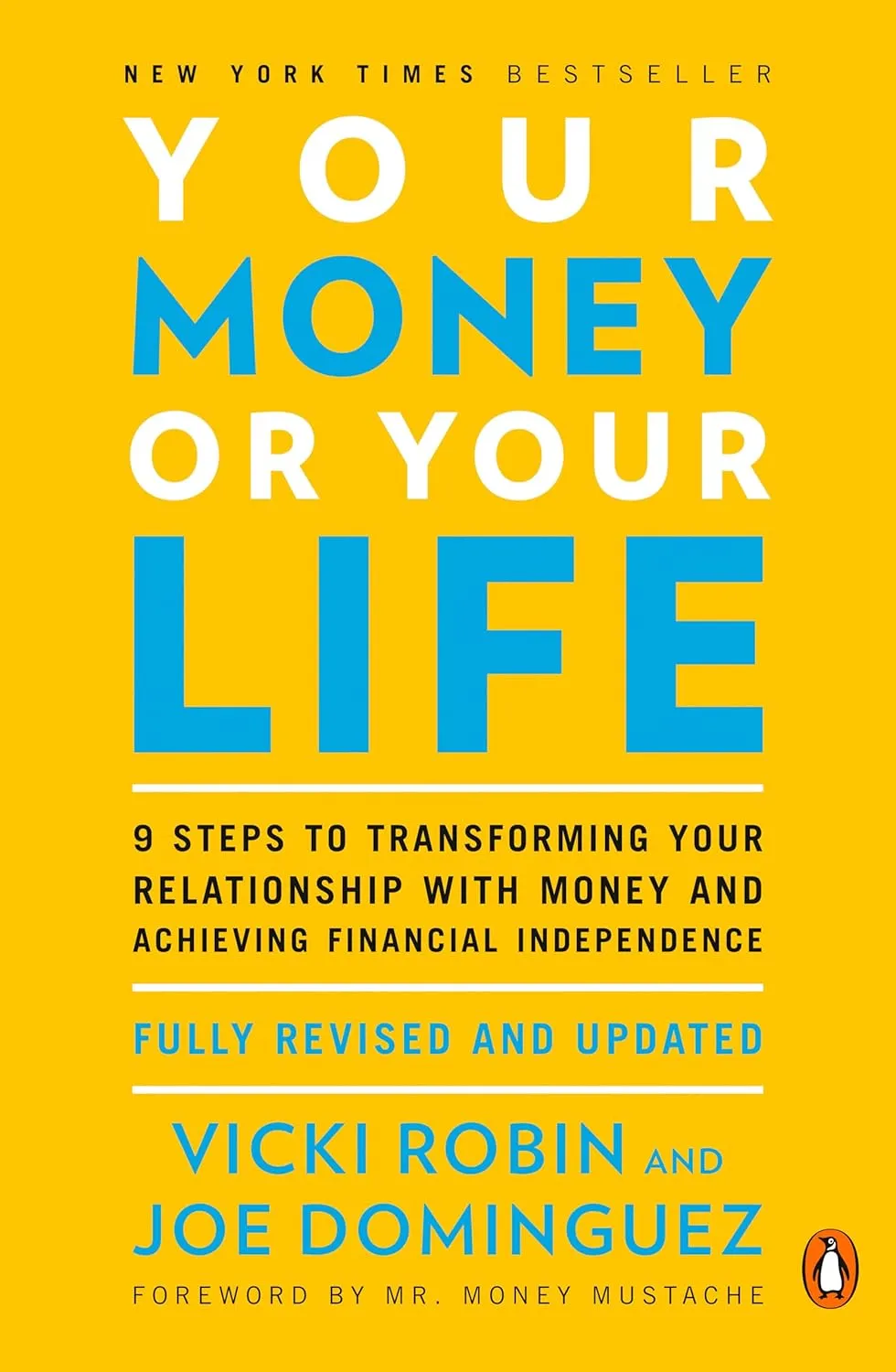
The movement traces back to Vicki Robin and Joe Dominguez's 1992 book "Your Money or Your Life," which framed spending as trading your life energy for possessions. The modern FIRE movement took off in the 2010s through blogs like Mr. Money Mustache and the Early Retirement Extreme blog. By 2026, the r/financialindependence subreddit has surpassed 700,000 members, and roughly 25 percent of Gen Z reports planning to retire before age 55, according to Deep Learning Finance's 2026 FIRE guide.
FIRE has evolved beyond its original frugal minimalist roots into several variants that accommodate different lifestyles and income levels:
- Lean FIRE: Retiring on a very frugal budget, typically $40,000 per year or less. Requires a portfolio of about $1 million or less. This is the original FIRE approach.
- Fat FIRE: Retiring with a comfortable or luxurious lifestyle, typically $100,000 or more per year. Requires a portfolio of $2.5 million or more. This appeals to high earners who want to maintain their standard of living.
- Barista FIRE: Reaching partial financial independence where you only need to work part-time or a low-stress job to cover expenses. Your portfolio covers most costs, and a small income covers the rest. This reduces the portfolio target significantly.
- Coast FIRE: You have enough invested that compound growth will carry you to full retirement by traditional retirement age without any additional contributions. You only need to earn enough to cover current expenses, with no more saving required.
The math behind FIRE is straightforward but demanding. Your FIRE number is 25 times your annual expenses. If you spend $40,000 per year, you need $1 million. If you spend $80,000, you need $2 million. The less you spend, the less you need, and the faster you get there. This is why expense optimization is the most powerful lever in the FIRE framework.
How It Works
The 25x Rule
Your FIRE number is calculated as:
FIRE Number = Annual Expenses x 25
This comes from the safe withdrawal rate of 4 percent (1 divided by 0.04 equals 25). If you withdraw 4 percent of your portfolio each year, adjusted for inflation, it should last 30 or more years based on historical market data.
| Annual Expenses | FIRE Number (25x) |
|---|---|
| $30,000 | $750,000 |
| $40,000 | $1,000,000 |
| $50,000 | $1,250,000 |
| $80,000 | $2,000,000 |
| $100,000 | $2,500,000 |
The Savings Rate Math
Your savings rate determines how fast you reach FIRE. The higher your savings rate, the fewer years you need. Here is the timeline at different savings rates, assuming a 5 percent real return (after inflation) and starting from zero:
| Savings Rate | Years to FIRE |
|---|---|
| 10% | 51 |
| 25% | 32 |
| 50% | 17 |
| 65% | 10 |
| 75% | 7 |
A 50 percent savings rate gets you to FIRE in about 17 years. A 65 percent rate gets you there in about 10 years. The relationship is exponential: doubling your savings rate does not halve your time to FIRE, it cuts it by much more, because you are both saving more and needing less.
The Investment Strategy
FIRE practitioners typically invest in low-cost, broadly diversified index funds. The most common portfolio is a three-fund portfolio of total US stock market, total international stock market, and total bond market. Some use a simpler two-fund approach or even a single target-date fund. The key principles are:
- Keep expense ratios below 0.10 percent
- Use tax-advantaged accounts first (401(k), IRA, HSA)
- Maintain a high stock allocation (80 to 100 percent) during the accumulation phase
- Shift to a more balanced allocation (60 to 75 percent stocks) near FIRE
The 2026 contribution limits matter for FIRE savers trying to max out every available account:
| Account | 2026 Limit | With Catch-Up (50+) |
|---|---|---|
| 401(k) | $24,500 | $32,500 ($35,750 ages 60-63) |
| IRA | $7,500 | $8,600 |
| HSA (self) | $4,400 | $5,400 |
| HSA (family) | $8,750 | $9,750 |
A FIRE saver who maxes out a 401(k) and IRA in 2026 can put away $32,000 per year in tax-advantaged accounts, or $41,100 with catch-up contributions. The IRS published these limits in October 2025.
The Early Withdrawal Challenge
The biggest practical challenge for FIRE is accessing retirement account money before age 59.5. Since most FIRE savers concentrate their savings in tax-advantaged accounts, they need strategies to access those funds penalty-free:
- Rule of 55: If you separate from your employer at age 55 or later, you can withdraw from that employer's 401(k) without the 10 percent penalty.
- SEPP (72(t)): Set up substantially equal periodic payments based on your life expectancy. This requires taking fixed withdrawals for at least 5 years or until age 59.5, whichever is longer.
- Roth IRA contributions: Contributions (not earnings) can be withdrawn at any age without taxes or penalties.
- Roth conversion ladder: Convert traditional IRA money to Roth IRA each year, then wait 5 years to withdraw the converted amount penalty-free.
- Taxable brokerage account: Keep several years of expenses in a taxable account to bridge the gap until penalty-free access opens up.
Real-World Examples
Example 1: The Standard FIRE Path
Sarah and Tom earn $120,000 combined after tax and spend $50,000 per year. Their savings rate is 58 percent. They invest $70,000 per year in low-cost index funds. Starting from zero at age 28:
| Age | Portfolio (7% return) | Annual Investment |
|---|---|---|
| 28 | $0 | $70,000 |
| 33 | $425,000 | $70,000 |
| 38 | $1,050,000 | $70,000 |
| 43 | $1,900,000 | $70,000 |
At 43, they reach $1.25 million (25x their $50,000 expenses) and can retire. Their portfolio provides $50,000 per year at a 4 percent withdrawal rate. They use a Roth conversion ladder and taxable account withdrawals to bridge the gap to age 59.5. Read our guide on what is the FIRE movement for more details.
Example 2: Barista FIRE on a Moderate Income
Maria earns $60,000 after tax and spends $30,000 per year. She saves 50 percent, or $30,000 per year. Her FIRE number for full retirement is $750,000. But she decides on Barista FIRE instead: she only needs her portfolio to cover $20,000 per year (she will work part-time for $10,000 to cover the rest). Her Barista FIRE number is $500,000.
| Age | Portfolio (7% return) |
|---|---|
| 25 | $0 |
| 30 | $180,000 |
| 35 | $430,000 |
| 37 | $530,000 |
Maria reaches Barista FIRE at 37. She quits her stressful full-time job and works 15 hours per week at a coffee shop or freelance gig for $10,000 per year. Her portfolio covers the remaining $20,000. Read our guide on barista FIRE and coast FIRE for more on this approach.
Example 3: Coast FIRE
James, age 30, has $200,000 invested in index funds. He does not want to save aggressively anymore. At 7 percent real return, his $200,000 will grow to about $1.5 million by age 60 without another dollar added. That is enough to withdraw $60,000 per year at 4 percent. He has reached Coast FIRE. He only needs to earn enough to cover his current expenses of $40,000 per year, with no further saving required. He can take a lower-stress job, switch careers, or work part-time. Use our coast FI calculator to check if you have reached Coast FIRE.
Key Points to Remember
- Your FIRE number is 25 times your annual expenses. The less you spend, the less you need and the faster you get there.
- Savings rate is the biggest lever. A 50 percent savings rate reaches FIRE in about 17 years. A 65 percent rate reaches it in about 10 years.
- FIRE has several variants: Lean FIRE (frugal), Fat FIRE (comfortable), Barista FIRE (part-time work), and Coast FIRE (no more saving needed).
- The biggest practical challenge is accessing retirement account money before age 59.5. Plan your withdrawal strategy using the rule of 55, SEPP, Roth conversions, or a taxable bridge account.
- FIRE practitioners typically invest in low-cost index funds with expense ratios below 0.10 percent.
- The 4 percent withdrawal rate was updated to 4.7 percent by Bill Bengen in 2025, which could lower FIRE numbers slightly. However, for retirements lasting 40 to 50 years, a 3.5 percent rate is safer.
Common Mistakes to Avoid
- Underestimating expenses in early retirement: Healthcare is the biggest blind spot. Before Medicare at 65, private insurance can cost $1,000 to $2,000 per month. Budget for this or plan to use ACA subsidies with income management.
- Using 4 percent for a 50-year retirement: The 4 percent rule was tested for 30-year periods. If you retire at 40 and live to 90, you need a 50-year horizon. Use 3.5 percent or lower, which means your FIRE number should be 28 to 30 times expenses, not 25.
- Ignoring sequence of returns risk: If the market crashes in your first few years of FIRE, your portfolio may never recover. Keep 2 to 3 years of expenses in cash to avoid selling during downturns. Read about sequence of returns risk.
- Not accounting for taxes on withdrawals: Money in traditional 401(k) and IRA accounts is taxed as ordinary income when withdrawn. A $40,000 withdrawal in the 12 percent bracket nets $35,200 after federal taxes. Plan your tax strategy before reaching FIRE.
- Sacrificing too much during accumulation: Extreme frugality for 15 years can lead to burnout and missed life experiences. Find a savings rate that is sustainable for your mental health and relationships. Read about the financial cost of burnout.
- Forgetting that expenses change: Many FIRE planners assume constant expenses, but costs change over time. Children, healthcare, housing repairs, and aging parents can all increase spending. Build a buffer into your FIRE number.
Related Concepts
FIRE is built on the foundation of retirement planning but accelerates the timeline through extreme savings. The safe withdrawal rate and your withdrawal rate determine how much income your portfolio generates. Compound interest is the engine that grows your investments over the accumulation phase. Your asset allocation drives your returns and risk during both accumulation and withdrawal. Financial independence is the state FIRE practitioners pursue. The FIRE calculator and coast FI calculator help you model your timeline. Read our guides on what is the FIRE movement, barista vs coast vs lean FIRE, FIRE on a low income, retiring early without a six-figure salary, and the minimalist path to early retirement.
Frequently Asked Questions
Q: How much do I need to save to reach FIRE? A: Multiply your annual expenses by 25 to get your FIRE number. Your savings rate determines how fast you get there. A 50 percent savings rate takes about 17 years. A 65 percent rate takes about 10 years. Use our FIRE calculator to model your specific situation.
Q: Can I do FIRE on a low income? A: Yes. FIRE depends on your savings rate, not your income. Someone earning $50,000 who lives on $25,000 has a 50 percent savings rate and can reach FIRE in about 17 years. Someone earning $150,000 who lives on $120,000 has only a 20 percent savings rate and needs about 37 years. Read our guide on FIRE on a low income.
Q: How do I access my retirement accounts before age 59.5? A: Several strategies exist: the rule of 55 (if you leave your employer at 55 or later), SEPP/72(t) substantially equal periodic payments, withdrawing Roth IRA contributions at any age, Roth conversion ladders (convert to Roth, wait 5 years, withdraw penalty-free), and keeping money in a taxable brokerage account as a bridge.
Q: Is FIRE realistic for most people? A: FIRE requires a savings rate of 50 percent or higher, which is difficult for most households. The median household income in the United States is around $80,000, and median spending leaves little room for 50 percent savings. However, the principles of FIRE (high savings rate, low-cost investing, expense optimization) benefit everyone, even if full early retirement is not the goal. Read our guide on retiring early without a six-figure salary.
Q: What is the difference between FIRE and traditional retirement? A: Traditional retirement assumes saving 10 to 15 percent for 40 years and retiring at 65 with Social Security and Medicare. FIRE assumes saving 50 to 70 percent for 10 to 20 years and retiring at 40 or 50, which requires managing healthcare, early withdrawals, and a much longer retirement horizon. The SEC's investor resources provide information on retirement account rules that FIRE planners need to understand.