Financial Independence
Quick Definition
Financial independence (FI) is the point at which your invested assets generate enough returns to cover your living expenses indefinitely, making employment optional rather than necessary. The most common benchmark is a portfolio equal to 25 times your annual spending, based on the 4% withdrawal rule.
What It Means
Most people trade time for money. They work because they need income to survive. Financial independence breaks that link. When your portfolio produces enough investment income and growth to fund your life, work becomes a choice instead of an obligation.
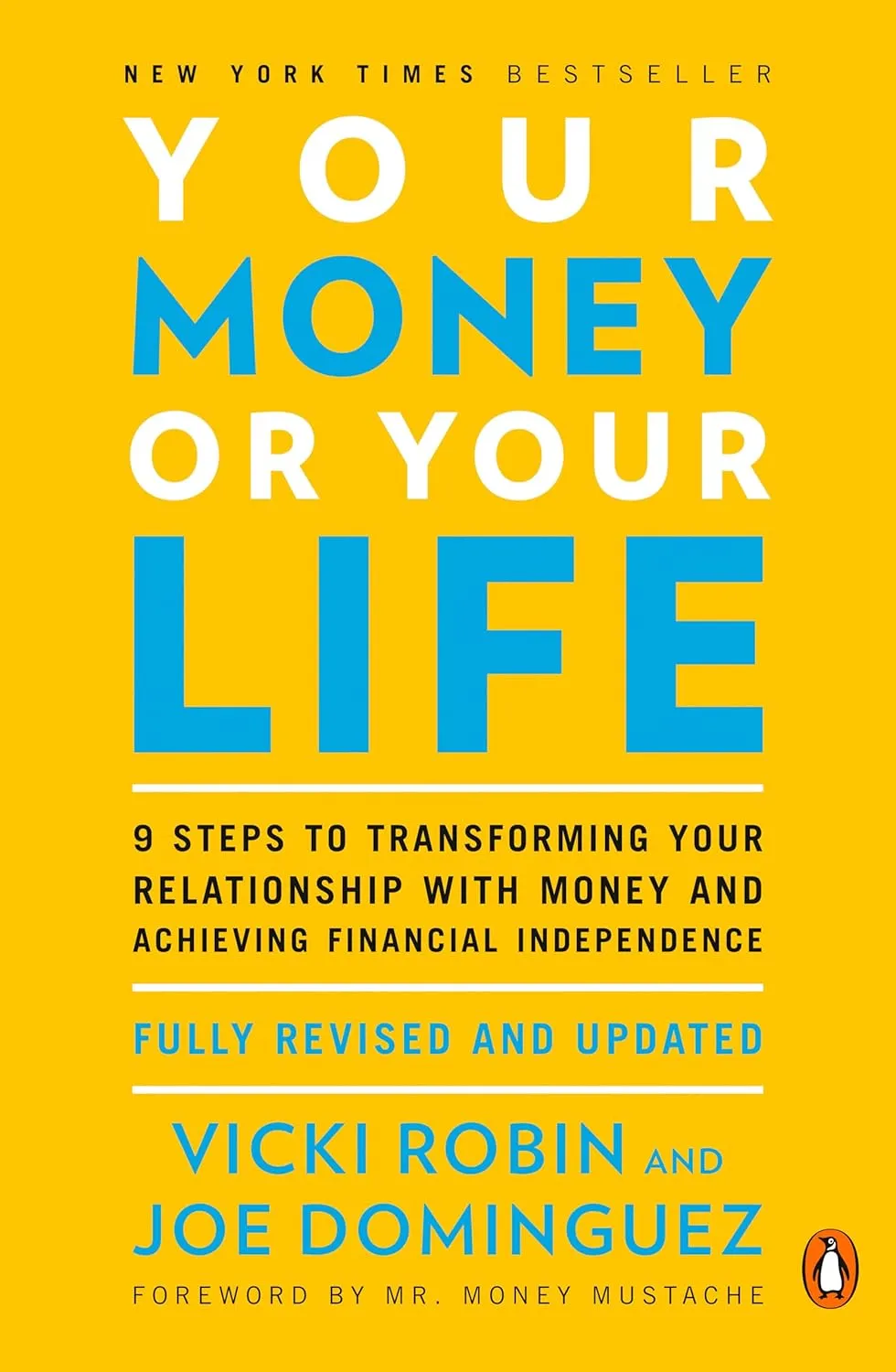
The concept gained mainstream attention through the FIRE movement (Financial Independence, Retire Early), which traces its roots to the 1992 book Your Money or Your Life by Vicki Robin and Joe Dominguez and the 2010 book Early Retirement Extreme by Jacob Lund Fisker. The movement spread through blogs, podcasts, and online communities in the 2010s, primarily among millennials.
Financial independence does not require retiring. Many people who reach FI continue working, but on their own terms. They switch careers, start businesses, reduce hours, or take lower-paying jobs they enjoy. The freedom is in having the option, not in exercising it.
How It Works
The 25x Rule
The math behind financial independence is straightforward. If you can safely withdraw 4% of your portfolio each year without depleting it, you need a portfolio worth 25 times your annual spending:
FI Number = Annual Spending x 25
| Annual Spending | FI Number (25x) |
|---|---|
| $30,000 | $750,000 |
| $40,000 | $1,000,000 |
| $50,000 | $1,250,000 |
| $75,000 | $1,875,000 |
| $100,000 | $2,500,000 |
Someone who spends $50,000 per year needs $1,250,000 invested. At a 4% withdrawal rate, that produces $50,000 annually.
The 4% Rule
The 4% rule comes from the 1994 research by financial planner William Bengen and the 1998 Trinity Study. Bengen tested every 30-year retirement window from 1926 onward and found that a portfolio of 50% to 75% stocks could sustain a 4% initial withdrawal rate, adjusted for inflation each year, without running out of money in any historical period.
Some researchers now recommend a more conservative 3.5% withdrawal rate. Tanja Hester and economist Karsten Jeske have argued that 3.5% or lower is safer given current market valuations and longer retirement horizons. At 3.5%, the FI number becomes 28.6x annual spending instead of 25x.
Savings Rate and Time to FI
The most important variable in reaching financial independence is not your income. It is your savings rate: the percentage of income you save and invest.
| Savings Rate | Years to FI (at 5% real return) |
|---|---|
| 10% | ~51 years |
| 20% | ~37 years |
| 30% | ~28 years |
| 40% | ~22 years |
| 50% | ~17 years |
| 60% | ~12.5 years |
| 70% | ~8.5 years |
Source: Mr. Money Mustache's savings rate chart, based on the relationship between spending, saving, and time to financial independence.
A household earning $80,000 and spending $40,000 saves 50% and reaches FI in approximately 17 years. A household earning $200,000 and spending $180,000 saves 10% and reaches FI in approximately 51 years. The second household earns more than double but takes three times as long because they spend most of it.
The Role of Compound Interest
Compound interest is the engine of financial independence. The earlier you invest, the less you need to contribute because the growth does more of the work.
Three investors each investing $5,000 per year at 7% real return:
| Investor | Starts At | Stops At | Total Contributed | Balance at 65 |
|---|---|---|---|---|
| Early | 25 | 65 | $200,000 | $1,068,000 |
| Late | 35 | 65 | $150,000 | $567,000 |
| Very Late | 45 | 65 | $100,000 | $263,000 |
Starting 10 years earlier contributes $50,000 more but produces $501,000 more in final wealth. Time is the most powerful input.
Real-World Examples
Example 1: Lean FIRE on $40,000/year
A single person in a low-cost-of-living area spends $40,000 per year. Their FI number is $1,000,000. They invest in low-cost index funds inside a Roth IRA and a 401(k), saving 50% of their $80,000 salary. They reach FI in approximately 17 years.
Example 2: Fat FIRE on $120,000/year
A couple in a high-cost city spends $120,000 per year. Their FI number is $3,000,000. They earn $300,000 combined and save 60%. They reach FI in approximately 12.5 years, but they need a much larger portfolio to sustain their lifestyle.
Example 3: Coast FIRE
Someone invests $50,000 by age 30 in a total stock market index fund. At 7% real return, that $50,000 grows to approximately $535,000 by age 60 without any additional contributions. If their FI number is $750,000, they need to save only enough to cover the remaining $215,000 over 30 years, which is approximately $2,000 per year. They can "coast" in a lower-stress job that just covers living expenses.
FIRE Variants
The FIRE movement has several sub-approaches, each with different spending levels and portfolio targets:
| Variant | Annual Spending | FI Number | Description |
|---|---|---|---|
| Lean FIRE | Under $40,000 | Under $1M | Minimalist lifestyle, very low expenses |
| Regular FIRE | $50,000 to $75,000 | $1.25M to $1.875M | Comfortable middle-class retirement |
| Fat FIRE | $100,000 to $200,000+ | $2.5M to $5M+ | Early retirement without lifestyle cuts |
| Coast FIRE | Varies | Varies | Invest early, then stop saving and just cover expenses |
| Barista FIRE | Varies | Partial | Part-time work covers some expenses, portfolio covers the rest |
For a deeper comparison, read our guide on Barista FIRE, Coast FIRE, and Lean FIRE.
Key Points to Remember
- Your FI number is 25 times your annual spending. Spend less, and you need less.
- The savings rate, not the income level, determines how fast you reach FI. A 50% savings rate reaches FI in about 17 years at 5% real returns.
- Compound interest rewards starting early. Ten years of early investing can outperform 30 years of late investing.
- The 4% rule is a planning heuristic, not a guarantee. Some researchers recommend 3.5% for longer retirements or high-valuation environments.
- Financial independence does not require early retirement. Many FI adherents continue working on their own terms.
- Inflation erodes purchasing power. Your FI number should account for rising costs over a 40 to 50 year retirement.
Common Mistakes to Avoid
- Confusing income with wealth: Earning $200,000 does not make you financially independent. Spending $180,000 of it keeps you dependent on that paycheck.
- Underestimating expenses in retirement: Healthcare costs before Medicare (age 65) can run $400 to $1,200 per month on the ACA marketplace in 2026. Long-term care, home maintenance, and inflation add up.
- Using 4% as a guarantee: The 4% rule survived every historical 30-year period, but a 50-year retirement with poor early returns can still deplete a portfolio. Consider a more conservative rate or flexible spending.
- Ignoring taxes on withdrawals: Traditional 401(k) and IRA withdrawals are taxed as ordinary income. A $50,000 withdrawal from a traditional account nets less than $50,000 after taxes. Roth IRA withdrawals are tax-free.
- Concentrating in one stock: Tech workers holding company stock face outsized risk. If the company falls, both the job and the portfolio drop simultaneously. Diversify.
Frequently Asked Questions
Q: Do I need to retire early to be financially independent? A: No. Financial independence means work is optional. Many people who reach FI continue working, but they choose projects, hours, and careers they enjoy rather than jobs they need for survival. Read our guide on what the FIRE movement is and whether you can retire at 40 for more.
Q: Is the 4% rule still safe? A: The 4% rule is a starting point, not a guarantee. It was calibrated against historical worst cases. With current market valuations elevated (the Shiller CAPE ratio sat near 41 in July 2026), some researchers recommend 3.5% or lower. Flexibility in spending during downturns improves outcomes significantly.
Q: How do I calculate my FI number if my spending will change in retirement? A: Estimate your retirement spending separately from your current spending. You may spend less on commuting and work clothes but more on healthcare and travel. Use your estimated retirement spending, not your current spending, to calculate 25x. Use our FIRE calculator or retirement number calculator to model different scenarios.
Q: Can I reach financial independence without a high salary? A: Yes. The savings rate matters more than the income. A person earning $50,000 and saving 30% reaches FI in approximately 28 years. A person earning $100,000 and saving 10% takes approximately 51 years. Read our guide on retiring early without a six-figure salary for the full strategy.
Q: Should I pay off my mortgage before pursuing FI? A: It depends on your interest rate. If your mortgage rate is below 4%, investing the difference historically produces more wealth. If your rate is above 6%, paying it off may be the better guaranteed return. Many FI adherents prefer the psychological benefit of a paid-off home in retirement, even if the math favors investing.