*Disclosure: This article contains affiliate links. If you purchase through these links, we may earn a commission at no additional cost to you. We only recommend books we genuinely believe in.
Quick Overview
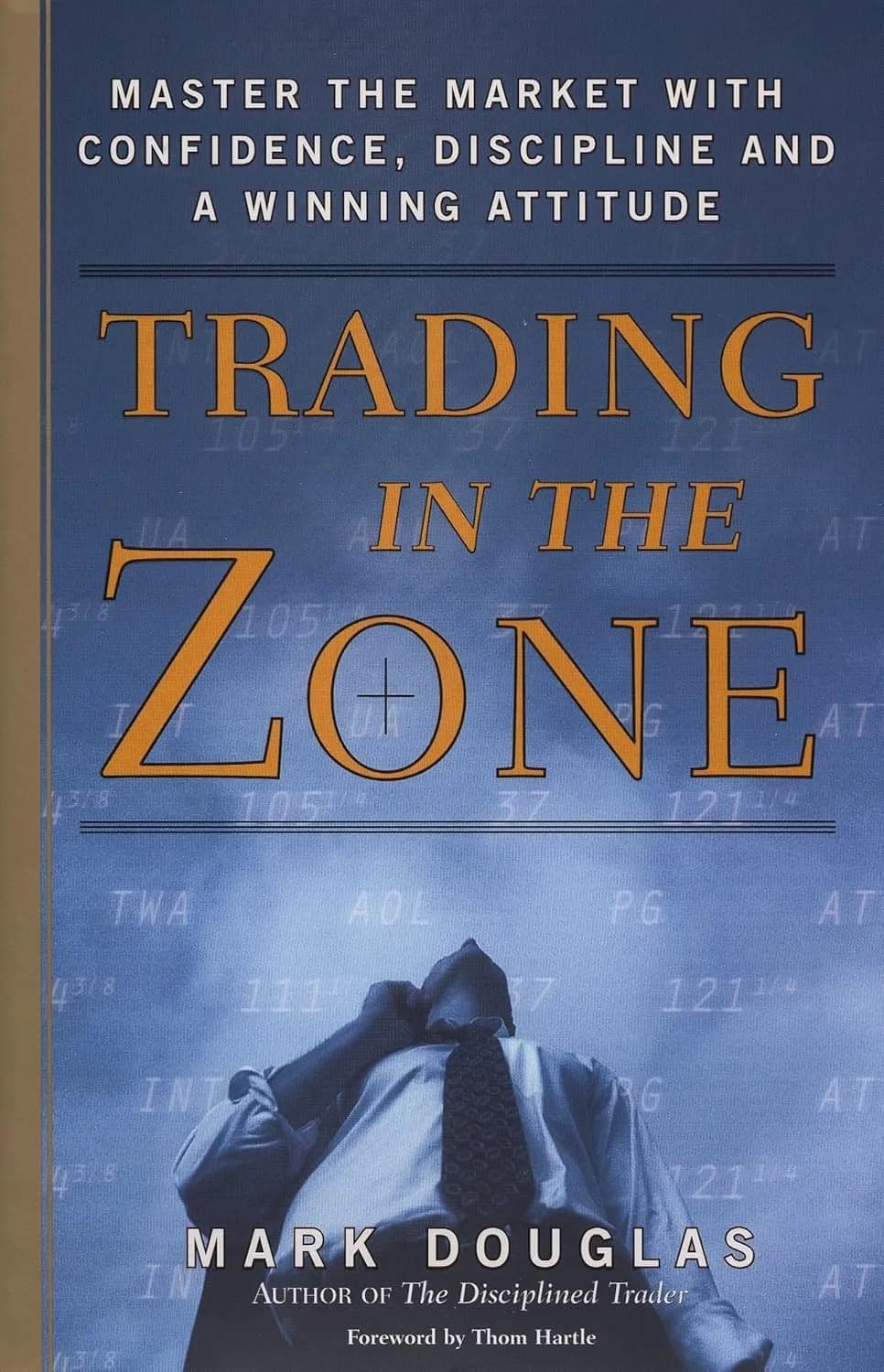
Mark Douglas spent years as a trading coach and observed a consistent pattern: traders with technically sound strategies consistently lost money because of psychological failures. They violated their own rules, held losers too long, cut winners too early, and chased trades they had missed. Trading in the Zone addresses these psychological barriers directly and builds a framework for developing the consistent, disciplined mindset that produces consistent trading results. More than two decades after publication, it remains required reading for retail traders, hedge fund professionals, prop firm challengers, and portfolio managers around the world. The psychological challenges Douglas identified in 2000 have been amplified, not replaced, by modern markets.
Book Details
| Attribute | Details |
|---|---|
| Title | Trading in the Zone |
| Author | Mark Douglas |
| Publisher | New York Institute of Finance |
| Published | 2000 |
| Pages | 240 |
| ISBN-13 | 978-0735201446 |
| Reading Level | Intermediate |
| Amazon Rating | 4.7/5 stars |
Get Your Copy
Paperback: Buy on Amazon
Kindle: Buy on Amazon
Audiobook: Buy on Amazon
About the Author
Mark Douglas (1948-2015) began his career in financial services in the early 1980s and became a trading coach after observing the psychological obstacles that prevented technically skilled traders from executing consistently. He founded Trading Behavior Dynamics, Inc. and spent 30+ years coaching traders from retail beginners to hedge fund managers, delivering seminars for major financial institutions and floor traders at the Chicago Board of Trade. He wrote The Disciplined Trader (1990) before this book and spent the rest of his life speaking and coaching traders worldwide on mental discipline.
His work emerged from personal experience. Like many aspiring traders, he initially struggled despite possessing market knowledge. Over time, he realized that psychological barriers, not technical limitations, were responsible for most trading failures. As multiple 2025 analyses confirm, his teachings remain the foundational text for anyone serious about trading psychology.
The Central Problem: Why Technically Sound Traders Lose
Douglas identifies the fundamental paradox: traders who understand market analysis intellectually still consistently lose because their psychological response to uncertainty overrides their analytical framework.
| What Traders Think Will Work | What Actually Determines Results |
|---|---|
| Better entry signals | Consistency of execution |
| Better indicators | Psychological discipline under pressure |
| More market knowledge | Ability to accept losses without distress |
| Bigger position sizes | Risk management followed without deviation |
| Finding the perfect strategy | Probabilistic thinking about outcomes |
Douglas's observation after years of coaching: the psychological problem is almost universal among losing traders and almost entirely absent among consistently profitable ones.
The Five Fundamental Truths
Douglas builds his framework around five truths that, once internalized, transform trading results:
Truth 1: Anything Can Happen
The market can produce any outcome on any given trade. No analysis eliminates this uncertainty. A perfectly formed chart pattern can fail. A company with no visible problems can gap down 30% on unexpected news.
The acceptance required: Every trade is uncertain. The trader who has genuinely internalized this does not experience surprise or emotional distress when a trade fails. They expected that possibility from the start.
Truth 2: You Don't Need to Know What Will Happen Next to Make Money
This is counterintuitive for most traders who spend enormous energy trying to predict market direction. Douglas argues the goal is not prediction but probability management.
The casino analogy: A casino does not need to know which specific hand will win to be consistently profitable. It knows that over a large number of hands, the house edge produces consistent positive expected value. A consistent trader operates the same way: they have a strategy with positive expected value and execute it over a large number of trades without emotional involvement in any individual outcome.
Truth 3: There Is a Random Distribution Between Wins and Losses
Even a strategy with a 60% win rate will produce streaks of 5, 8, or even 10 losses in a row. This is a mathematical certainty, not a sign that the strategy has stopped working.
| Consecutive Losses | Probability (60% win rate) |
|---|---|
| 3 in a row | 6.4% |
| 5 in a row | 1.0% |
| 7 in a row | 0.16% |
| 10 in a row | 0.006% |
Over 1,000 trades, you can statistically expect to experience a streak of 5+ consecutive losses approximately 10 times. If you abandon your strategy after losing streaks, you will consistently underperform the strategy's statistical edge.
Truth 4: An Edge Is Nothing More Than an Indication of a Higher Probability
Trading edges are probabilistic, not certain. A 55% win rate is a meaningful edge over thousands of trades but provides no guarantee on any individual trade.
| Win Rate | Loss Amount | Win Amount | Expected Value per Trade |
|---|---|---|---|
| 55% | -$100 | +$100 | +$10 |
| 55% | -$100 | +$150 | +$27.50 |
| 55% | -$100 | +$200 | +$45 |
A 55% win rate with equal win and loss amounts produces $10 of expected value per trade. Over 1,000 trades, that is $10,000. The key is executing the full 1,000 trades without deviation.
Truth 5: Every Moment in the Market Is Unique
No two market situations are exactly alike. A pattern that "always works" cannot always work because the context is never identical. This prevents over-reliance on any single signal or pattern.
The Three Zones of Trading Psychology
Zone 1: Reckless Risk
The beginner trader is unaware of the true odds against them. They make large, concentrated bets with no consistent framework. Results are chaotic: some large wins, larger losses, eventual account destruction.
Psychological state: Excitement, hope, overconfidence.
Zone 2: Fear-Based Trading
After experiencing significant losses, the trader swings to excessive caution. They cut winners early (afraid to lose the profit), hold losers hoping to break even (refusing to accept the loss), and hesitate on valid entries (paralyzed by fear of another loss).
Psychological state: Fear, revenge trading, inconsistency.
The paradox: Fear-based trading often produces worse results than reckless trading because it violates the statistical edge in both directions simultaneously.
Zone 3: Consistent, Disciplined Trading
The consistent trader has developed the psychological foundation to execute their strategy without emotional distortion. They define risk before entering. They accept losses without distress. They do not chase trades or over-stay winners.
Psychological state: Calm, present-focused, objective.
As a February 2026 review put it: "It's not just a book about how to trade. It's a book about how to think." The zone Douglas describes is not a mystical state. It is the mental condition that results from genuinely believing the five fundamental truths.
Building the Trader's Mindset
The Beliefs That Create Inconsistency
Belief 1: "I need certainty before acting."
The market never provides certainty. Replace with: "I have a probabilistic edge; I will execute it over many trades without requiring certainty on any single one."
Belief 2: "A loss means I was wrong."
Losses are a normal statistical outcome of any edge-based strategy. Replace with: "A loss is the cost of doing business. My strategy wins over time; this is one of the expected losses."
Belief 3: "I should be able to predict the market."
Replace with: "I cannot predict the market. I can execute my strategy with discipline over many trades and let the statistics work."
Belief 4: "The market owes me for my analysis."
The market owes nothing. Replace with: "The market produces outcomes I cannot control. I control only my entries, exits, and position sizes."
The Five Exercises for Developing Consistency
Exercise 1: Define your edge clearly. Write down the specific conditions that must be present for you to enter a trade. Be specific enough that you could program them into a computer.
Exercise 2: Pre-define your risk on every trade. Before entering any trade, answer: "Where am I wrong? At what specific price does this thesis fail?" Set your stop at that price. Do not move it.
Exercise 3: Execute your edge over a series of 20 trades. Commit to executing your defined edge on the next 20 qualifying opportunities without variation. Do not skip trades because you "don't feel good about this one." Do not add size because you "really like this setup." Execute identically, 20 times.
Exercise 4: Monitor your internal state. Notice when you feel the urge to move your stop loss, exit early to protect a profit, add to a losing position, or chase a trade you missed. Awareness is the first step; following your pre-defined rules despite the urge is the discipline.
Exercise 5: Review your trades for process, not outcome. A trade that followed the rules and lost is a success. A trade that violated the rules and won is a failure. Focus on process quality, not trade-by-trade outcomes.
Why Douglas Matters More in 2026 Than in 2000
The psychological challenges Douglas identified have been amplified by modern market conditions:
| Factor | 2000 | 2026 | Impact |
|---|---|---|---|
| Market speed | Minutes to execute | Millisecond algorithmic trading | Faster feedback loops amplify emotional reactions |
| Information flow | Daily newspapers, periodic data | Real-time feeds, push notifications | Constant stimulation prevents System 2 engagement |
| Social pressure | Trading forums, chat rooms | Social media influencers, Reddit, X | Herd behavior amplified and gamified |
| Product complexity | Stocks, basic options | 0DTE options, crypto, leveraged ETFs | More ways to destroy capital quickly |
| Retail participation | Brokerage phone calls | App-based zero-commission trading | Friction removed, discipline more important |
As The Reborn Trader noted in 2025: "In 2025, the challenge isn't lack of information. It's emotional noise. Markets move faster, data flows in real-time, and algorithms compete for milliseconds. Yet the real edge, as Douglas taught, remains psychological."
The explosion of prop firm trading challenges in 2025-2026 has brought Douglas's framework to a new generation. Traders who can execute consistently over 30-day evaluation periods succeed. Those who cannot, fail. The difference is not strategy quality. It is psychological discipline, exactly as Douglas described.
Application to Long-Term Investing
Douglas's framework is explicitly for traders but contains important lessons for long-term investors:
Position sizing: Define your maximum investment in any single position as a percentage of portfolio. Never exceed it regardless of conviction.
Pre-defining "wrong": Before buying any stock, define: "I will sell if [these conditions change]." Having a pre-defined exit prevents the decision being made under emotional pressure.
Accepting uncertainty: No fundamental analysis guarantees a particular outcome. Great businesses can underperform for years. Accepting this prevents panic selling at the worst time.
Statistical thinking: Over a well-diversified portfolio held for decades, the statistical edge of owning equities has historically produced positive returns. Individual losing positions are the expected distribution around that edge.
Dollar-cost averaging as probabilistic execution: Dollar-cost averaging is the long-term investor's version of Douglas's 20-trade exercise. You execute the same action (buying) on a fixed schedule regardless of market conditions, removing emotional interference from the process.
Use the investment return calculator to model how consistent, disciplined investing compares to emotional market timing.
Strengths & Weaknesses
What We Loved
Areas for Improvement
Who Should Read This Book
Highly Recommended For
Probably Not For
Comparison to Similar Books
| Book | Focus | Best For |
|---|---|---|
| Trading in the Zone (Douglas) | Trading psychology, probabilistic mindset | Traders with strategy but inconsistent results |
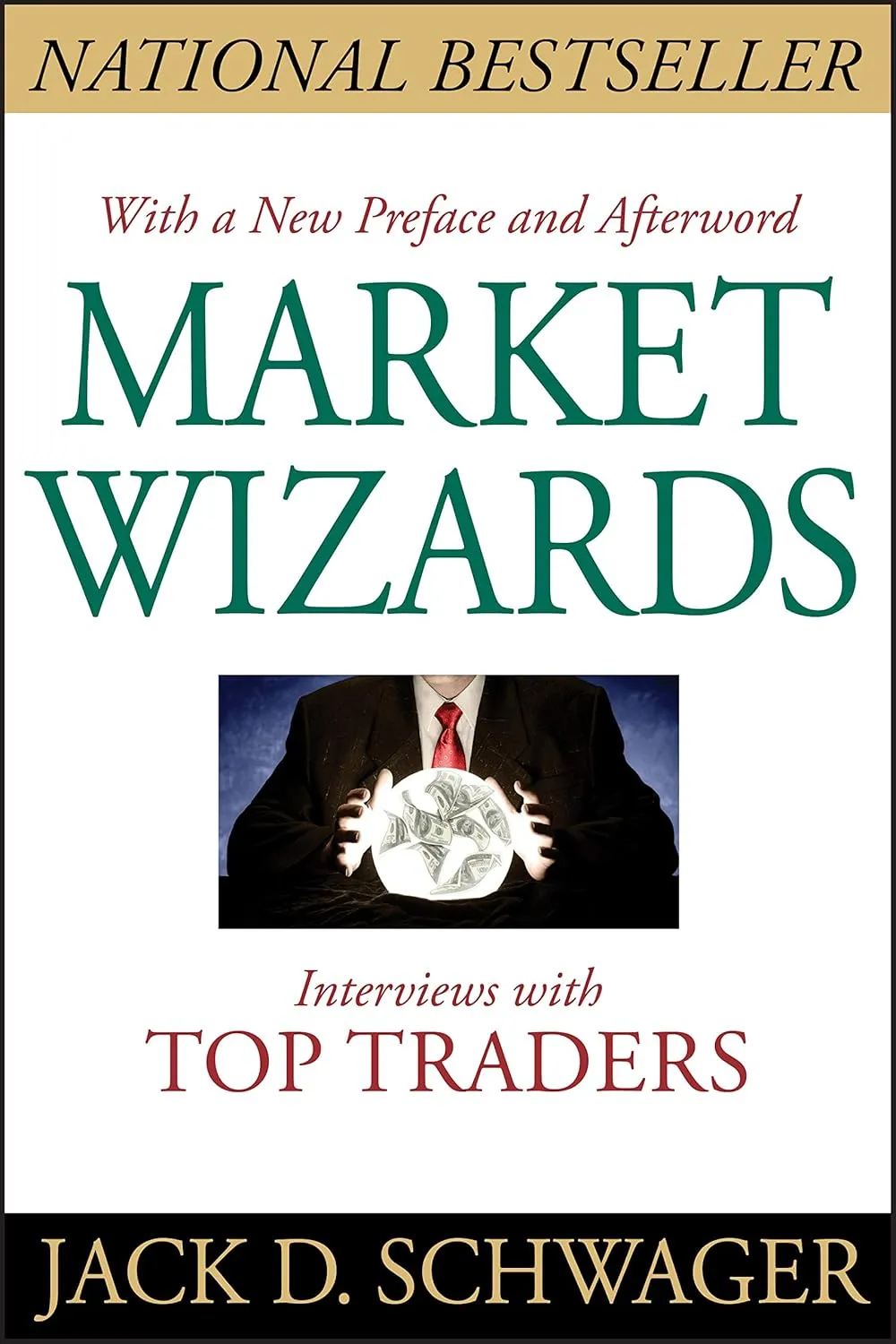
| Market Wizards (Schwager) | Interviews with top traders | Understanding how professionals think |
| The Disciplined Trader (Douglas) | Earlier, less polished version of same ideas | Douglas completists |
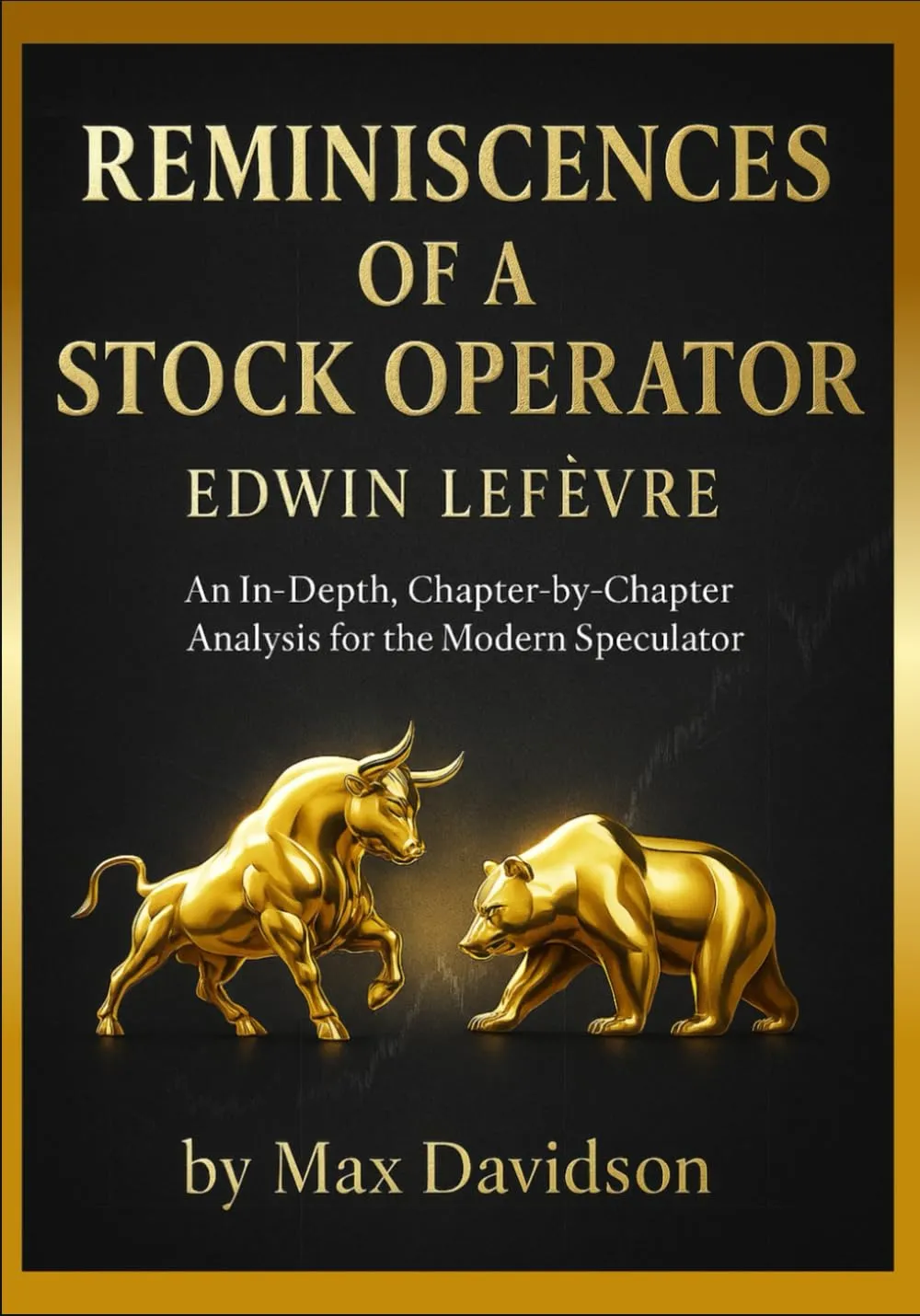
| Reminiscences of a Stock Operator (Lefevre) | Narrative trading wisdom | Historical perspective on trader psychology |
| Thinking, Fast and Slow (Kahneman) | Cognitive science of decision-making | Understanding the neuroscience behind Douglas's observations |
Read Trading in the Zone for the trading-specific framework. Read Kahneman for the science behind it.
Implementation Guide
21-Day Trading Psychology Reset
Days 1-7: Read and absorb
Days 8-14: Define your edge and risk parameters
Days 15-21: Execute the 20-trade exercise
Ongoing: Monthly process review
Frequently Asked Questions
Q: Does this book provide actual trading strategies?
A: No. It assumes you have a strategy and addresses the psychological obstacles to executing it consistently. For strategy development, read Market Wizards or Technical Analysis of Financial Markets.
Q: Is this only for day traders or applicable to longer-term traders?
A: Applicable to any active trader with a defined entry/exit system. The psychological principles are the same whether your average holding period is minutes or months. As Trasignal's 2026 analysis noted, the framework applies to forex, stocks, futures, commodities, cryptocurrency, and options trading.
Q: Is this book still relevant in 2026?
A: More relevant than ever. Technology has changed. Human behavior has not. Social media amplifies herd behavior. Zero-commission trading removes friction that once served as a natural brake on impulsive decisions. 0DTE options and crypto markets create new ways to destroy capital through emotional trading. As BroBillionaire noted, the book "isn't a strategy book. It does something far more valuable: it explains why you keep sabotaging yourself, and exactly how to stop."
Q: What is the single most important concept?
A: The random distribution of outcomes within a statistically valid edge. Once you truly believe that losses are normally distributed around your win rate (not evidence that your system is broken), you stop emotional interference and execute consistently.
Q: Should I read this if I am a long-term investor, not a trader?
A: Yes, for the probabilistic thinking framework. The idea of pre-defining what would make you wrong before buying, accepting uncertainty, and evaluating process over outcome applies directly to long-term investing. The specific trading exercises are less relevant, but the mindset is universal.
Final Verdict
Rating: 4.7/5
Trading in the Zone is the most important book on trading psychology ever written. Its five fundamental truths, the concept of probabilistic thinking, and the 20-trade exercise provide the complete psychological foundation for consistent trading. Every active trader should read it before blaming their strategy for results that are actually the product of psychological inconsistency.
The book has not been updated since 2000, but it does not need to be. The psychology of trading under uncertainty does not change with market technology. If anything, the removal of trading friction, the speed of information flow, and the gamification of investing through apps and social media have made Douglas's lessons more critical, not less.
Get Your Copy
Paperback: Buy on Amazon
Kindle: Buy on Amazon
Audiobook: Buy on Amazon
Prices current as of publication date. Free shipping available with Prime.