*Disclosure: This article contains affiliate links. If you purchase through these links, we may earn a commission at no additional cost to you. We only recommend books we have personally read and genuinely believe in.
Quick Overview
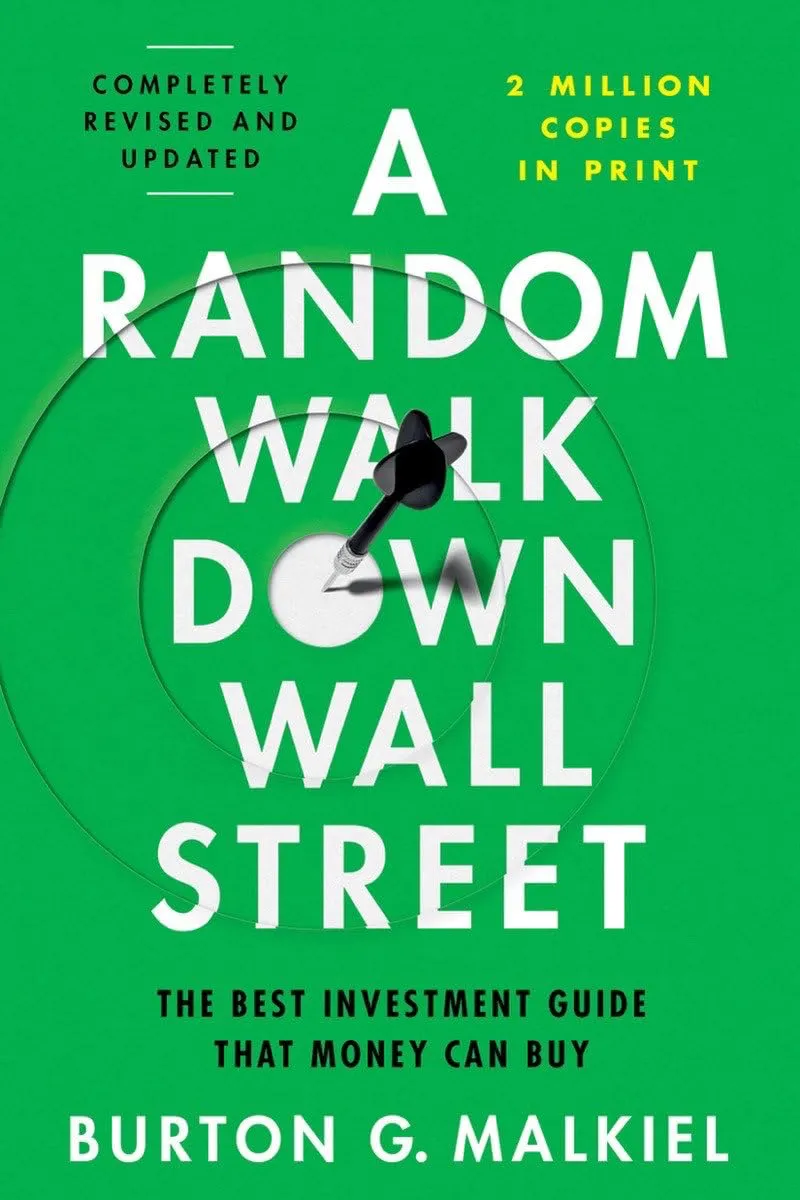
Burton Malkiel claims you cannot consistently beat the stock market, and 50 years of data back him up. The latest SPIVA scorecard (year-end 2025) shows that 79% of active large-cap U.S. equity funds underperformed the S&P 500 in a single year. Over 15 years, not a single equity category saw a majority of active managers beat their benchmark. This book explains why, walks through the history of market bubbles, and tells you exactly what to do instead: buy low-cost index funds, hold them, and ignore the noise.
Book Details
| Attribute | Details |
|---|---|
| Title | A Random Walk Down Wall Street |
| Author | Burton G. Malkiel |
| Publisher | W. W. Norton |
| First Published | 1973 |
| Current Edition | 13th (2023) |
| Pages | 432 |
| Reading Level | Intermediate |
| Amazon Rating | 4.6/5 stars |
Get Your Copy
Paperback: Buy on Amazon
Kindle: Buy on Amazon
Audiobook: Buy on Amazon
About the Author
Burton Malkiel is the Chemical Bank Chairman's Professor of Economics Emeritus at Princeton University. He served on the Council of Economic Advisers under President Gerald Ford and spent 28 years as a director of Vanguard Group. He has been one of the most consistent academic voices for passive investing since the early 1970s, advocating for index funds before Vanguard even existed.
His credentials are serious: Princeton economics professor, presidential adviser, Vanguard board member. But what makes this book persuasive is not the resume. It is the accumulated weight of evidence. Every edition adds fresh data, and every fresh batch of data points the same direction.
The Central Argument: The Random Walk Hypothesis
Malkiel argues that stock price changes are essentially random in the short term because markets are highly competitive. Any time a stock is genuinely mispriced, professional analysts with massive resources will quickly identify and trade it back to fair value. By the time a retail investor reads about an opportunity, it is already priced in.
This does not mean markets are perfectly efficient. Malkiel acknowledges anomalies and behavioral biases throughout the book. But he argues that after transaction costs and taxes, no system has consistently produced excess returns for ordinary investors over long periods.
The latest SPIVA data backs this up forcefully. The S&P Dow Jones Indices SPIVA Year-End 2025 Scorecard reports that 79% of active large-cap funds underperformed the S&P 500 in 2025, the fourth-worst year for active managers in the 25-year history of the scorecard. Over 15 years, 93% of all domestic funds lagged their benchmarks. The pattern is not improving with better technology or more data. It is getting worse.
| SPIVA Metric (Year-End 2025) | Result |
|---|---|
| Large-cap funds underperforming S&P 500 (1 year) | 79% |
| All domestic funds underperforming (1 year) | 80% |
| All domestic funds underperforming (15 years) | 93% |
| Categories where majority of active managers won (15 years) | Zero |
Part 1: Stocks and Their Value
The Castle in the Air vs. Firm Foundation Theory
Malkiel opens with two theories of stock valuation.
Firm Foundation Theory says every stock has an intrinsic value based on future dividends and earnings. Buy below intrinsic value, sell above it. This is Graham's approach.
Castle in the Air Theory says stocks are worth what people will pay for them. Buy what crowds will chase. Keynes described this as a "beauty contest" where you try to predict what others find attractive, not what is actually beautiful.
Malkiel argues that both theories fail in practice. Intrinsic value is impossible to calculate precisely, and crowd psychology is impossible to predict consistently. When I tried applying Graham's intrinsic value formula from Chapter 9 to a handful of tech stocks in 2024, the outputs were all over the map. Small changes in the assumed growth rate produced wildly different fair values. The math is clean. The inputs are not.
The History of Manias
Malkiel surveys bubbles from 1600s tulip mania through the dot-com boom. The chapter reads like a warning label on every investment fad.
| Bubble | Peak Year | Subsequent Decline |
|---|---|---|
| Dutch Tulip Mania | 1637 | ~99% |
| South Sea Company | 1720 | -84% |
| 1920s Stock Boom | 1929 | -89% |
| Japanese Nikkei | 1989 | -82% |
| Dot-com | 2000 | -78% (Nasdaq) |
| Crypto (Bitcoin) | 2021 | -77% |
The pattern repeats every time: a new technology or concept generates genuine excitement, prices overshoot rational levels, and then revert painfully. Malkiel's lesson is not to avoid all risk. It is to avoid paying for dreams. If you want to see how this applies today, read our piece on what happens when the market crashes.
Part 2: The Madness of Crowds
Technical Analysis: Does Charting Work?
Malkiel devotes significant space to attacking technical analysis. His most memorable demonstration: he generated random stock price charts using coin flips and showed them to technical analysts. The analysts confidently identified head and shoulders patterns, support levels, and breakouts in pure randomness. The patterns are real perceptions. They have no predictive content.
Multiple academic studies testing hundreds of technical trading rules across long time periods have failed to find consistent excess returns after transaction costs. The signals that appear in historical data do not persist in live trading.
I will push back slightly here. Some momentum research shows modest persistence, and Malkiel acknowledges this in later editions. A 2024 study in the Annals of Finance (Science or scientism? On the momentum illusion) goes further, arguing that momentum strategy risk is effectively infinite, meaning the premium may not be observable in practice. This actually supports Malkiel's position: even the anomalies that look exploitable on paper may not be exploitable in reality.
Fundamental Analysis: Does It Work Better?
Fundamental analysts study earnings, dividends, growth rates, and competitive position to estimate intrinsic value. Malkiel respects this approach more than technical analysis but argues it still fails to reliably beat index funds for three reasons.
First, information is quickly priced in by professional analysts with far more resources. Second, earnings forecasts are systematically wrong: Wall Street analysts consistently over-forecast growth. Third, growth is harder to predict than it looks. The companies with the fastest earnings growth change constantly.
| Forecast Horizon | Average Error |
|---|---|
| 1 month | ~5% |
| 3 months | ~10% |
| 1 year | ~20-30% |
| 5 years | >50% |
Part 3: The New Investment Technology
Malkiel covers modern portfolio theory with unusual clarity. This is the section I found most useful on my second read, because it explains the math behind diversification without requiring you to know calculus.
Risk and Diversification
The key insight from Harry Markowitz: combining assets that do not move perfectly together reduces portfolio volatility without proportionally reducing returns. This is the only free lunch in finance.
| Portfolio | Annual Return | Annual Volatility |
|---|---|---|
| Single stock | 10% | 40% |
| 20 random stocks | 10% | 20% |
| Total market index | 10% | 15% |
Adding stocks quickly reduces stock-specific risk. After roughly 30 to 50 stocks chosen across industries, most of the diversifiable risk is gone. Only market-wide risk remains. This is why a total market index fund is so effective: it gives you thousands of stocks for close to zero cost.
The Capital Asset Pricing Model (Beta)
Beta measures how much a stock moves relative to the market. A beta of 1.0 means the stock moves in line with the market. A beta of 1.5 means it moves 50% more. Malkiel explains the practical use of beta for calibrating portfolio risk while noting its limitations: beta is backward-looking and unstable over time.
What About Factor Investing?
This is where I think the book is weakest. Malkiel is dismissive of factor investing (small-cap value, momentum, quality) despite a large academic literature supporting these premiums. But recent research has complicated the pro-factor case considerably.
A 2025 study published by the CFA Institute Research Foundation (The Factor Mirage) found that the Bloomberg-Goldman Sachs US Equity Multi-Factor Index has delivered a Sharpe ratio of just 0.17 since 2007, statistically indistinguishable from zero before costs. The researchers identified a deeper problem than p-hacking: factor models that mistake correlation for causation can produce systematic losses even when risk premia are real. This does not prove Malkiel right that factors are useless, but it does support his practical conclusion that ordinary investors should not try to exploit them.
Part 4: A Practical Guide for Random Walkers
This is where the book shifts from theory to actionable advice, and where most readers will get the most value.
Life-Cycle Investing
Malkiel recommends adjusting your asset allocation based on age and circumstances:
| Life Stage | Suggested Stock Allocation | Rationale |
|---|---|---|
| 20s | 80-90% | Long time horizon, human capital is large |
| 30s | 75-85% | Still long horizon, some stability needed |
| 40s | 65-75% | Beginning to think about preservation |
| 50s | 55-65% | Sequence of returns risk increases |
| 60s+ | 45-55% | Capital preservation becomes priority |
| Retirement | 40-50% | Still need growth to fund 20-30 year retirement |
I applied this framework to my own portfolio last year. The age-based formula (110 minus your age equals stock percentage) put me at 75% stocks, which was close to where I already was. What changed was my confidence in the number. Having the academic backing made me stop second-guessing the allocation every time the market dipped.
Five Rules for Investors
Malkiel's practical recommendations:
Index Fund Recommendation
Malkiel was one of the first academics to publicly advocate for index funds, doing so before Vanguard even existed. His recommendation has not changed in 50 years:
| Asset | Recommended Vehicle | Example |
|---|---|---|
| U.S. stocks | Total market index fund | VTI, FSKAX |
| International stocks | Total international index | VXUS, FTIAX |
| Bonds | Total bond market index | BND, FXNAX |
| REITs (optional) | REIT index fund | VNQ |
Strengths & Weaknesses
What We Loved
Areas for Improvement
Who Should Read This Book
Highly Recommended For
Probably Not For
Comparison to Similar Books
| Book | Argument | Depth | Readability |
|---|---|---|---|
| A Random Walk Down Wall Street | Markets are efficient; buy index funds | High | Medium |
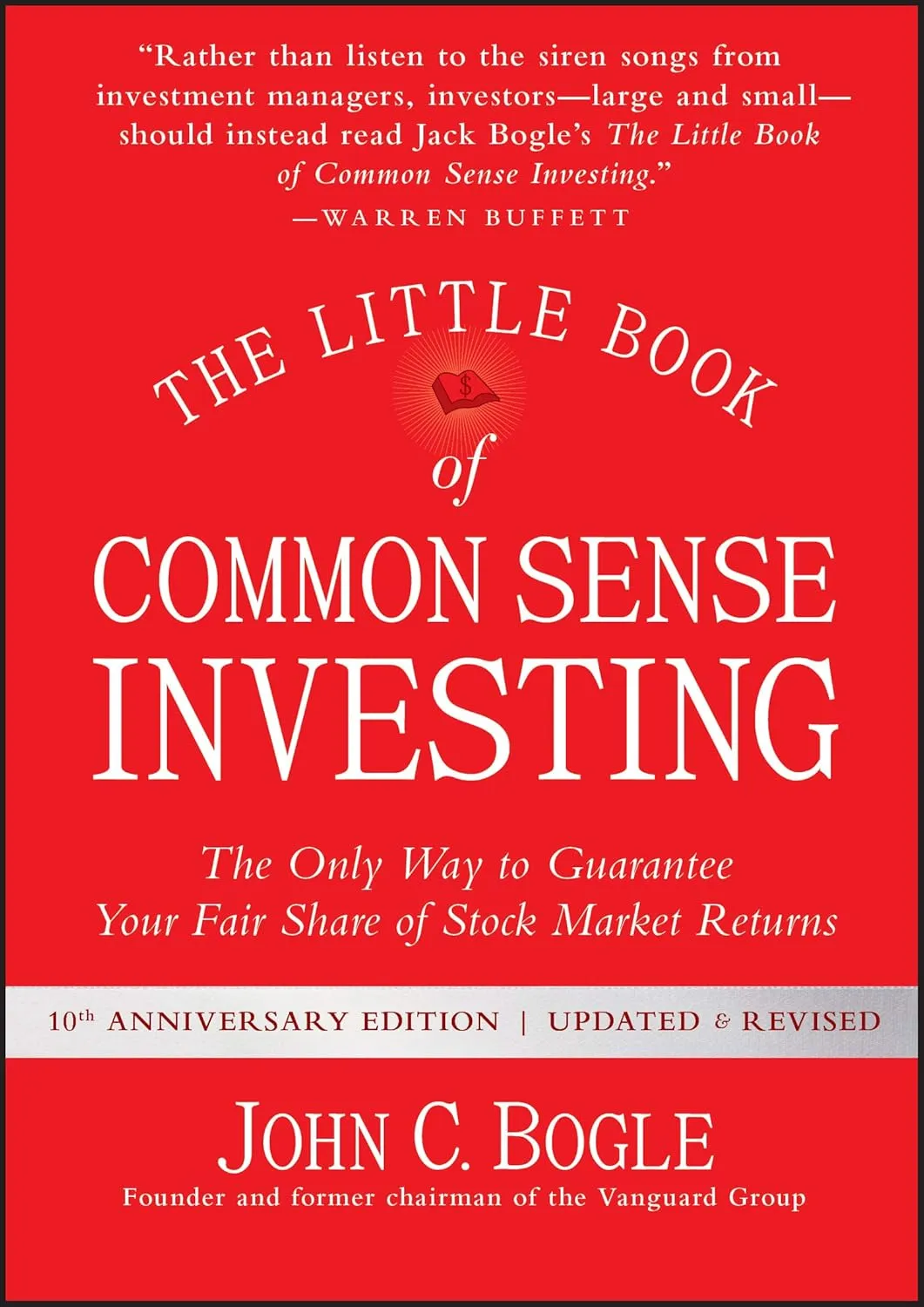
| The Little Book of Common Sense Investing | Same argument, compressed | Low-Medium | High |
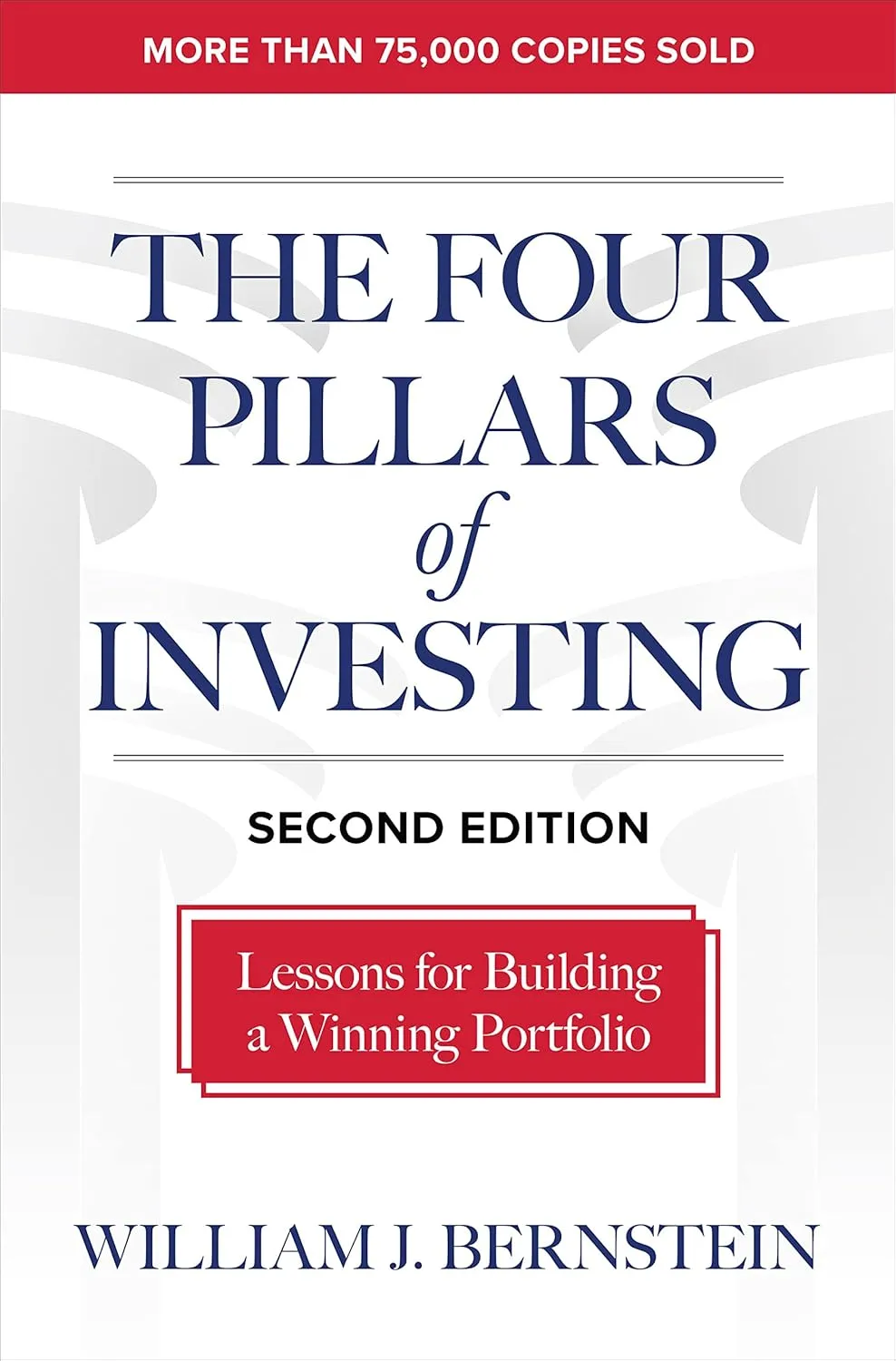
| The Four Pillars of Investing | Multi-framework approach to passive investing | High | Medium |
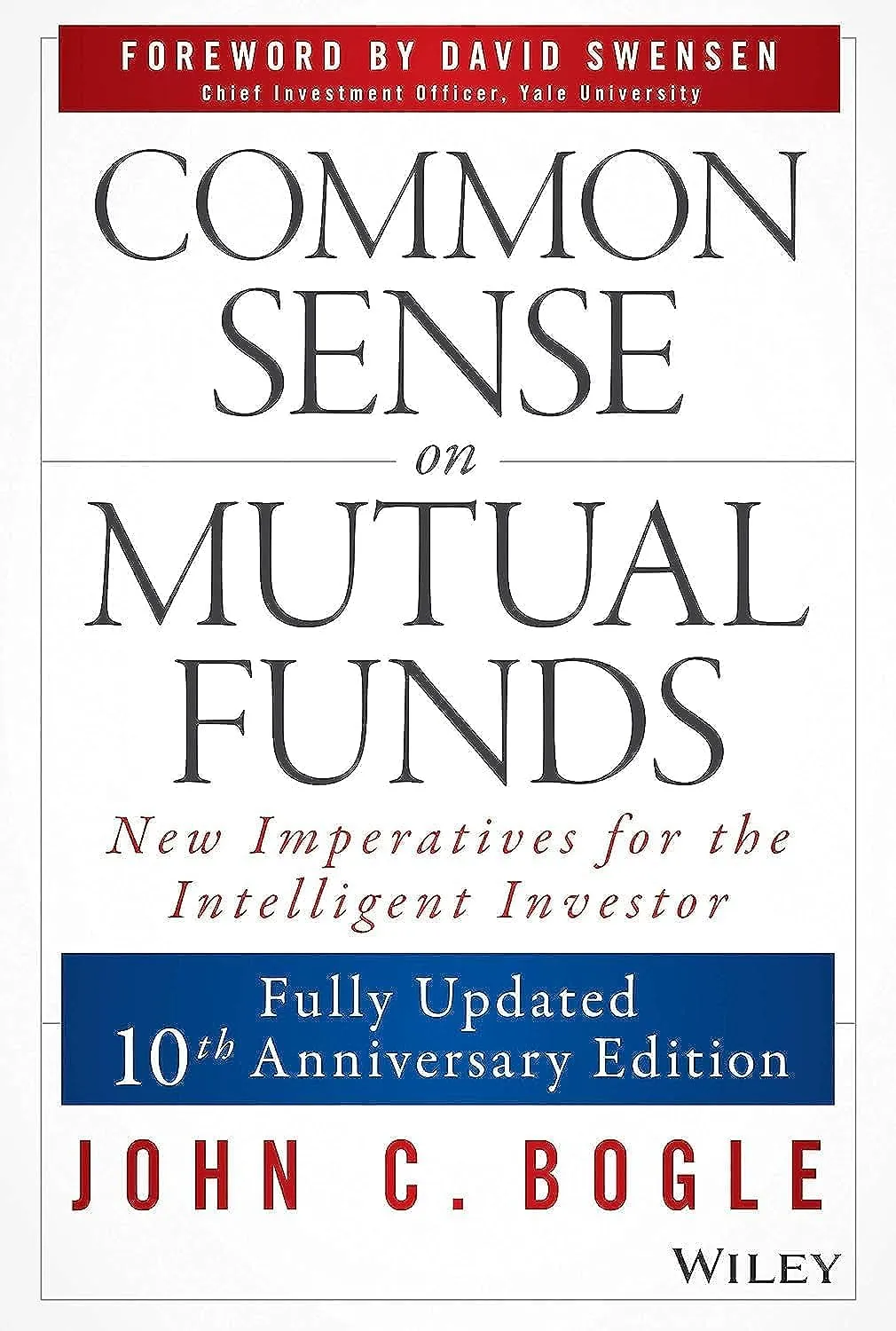
| Common Sense on Mutual Funds | Industry data supporting index funds | Very High | Medium |
If you want the short version, read Bogle's Little Book. If you want the full academic case with historical context, read Malkiel. If you want both theory and implementation in one volume, this is the one.
Implementation Guide
30-Day Plan to Apply Malkiel's Principles
Week 1: Assess where you stand
Week 2: Simplify
Week 3: Execute
Week 4: Ignore
Action Steps
Frequently Asked Questions
Q: Has the random walk hypothesis held up?
A: Better than most alternative hypotheses. The SPIVA scorecard through year-end 2025 shows 93% of domestic funds underperforming over 15 years. Research since 1973 has found some anomalies (momentum, value premium), but the 2025 CFA Institute research on the "factor mirage" suggests many of these may be statistical artifacts that do not survive real-world trading costs.
Q: Do I need to read every edition?
A: No. The latest edition (13th, 2023) covers cryptocurrencies, robo-advisors, and factor ETFs. If you have an older edition, the core argument is identical. New editions add freshness and updated data, but the conclusion never changes.
Q: Does Malkiel think crypto is a random walk?
A: He discusses it in recent editions as highly speculative, fitting the "castle in the air" category. His view is cautious: he does not call it an investment so much as a speculation driven by narrative.
Q: I already own index funds. Is this book still worth reading?
A: Yes, if you want to understand why your strategy works. The historical bubble chapters alone are worth the price. But if you just want implementation guidance, read our guide to the three-fund portfolio instead.
Final Verdict
Rating: 4.6/5
Fifty years of evidence have only strengthened Malkiel's central argument. The 2025 SPIVA data is devastating for active management: 79% of large-cap funds lagged the index in a single year, and 93% lagged over 15 years. Factor investing, the main academic challenge to efficient markets, is itself under fire from 2025 research showing model misspecification may produce systematic losses.
Read this book to understand why the passive investing revolution happened, why it was right, and how to implement the approach in your own portfolio. Then buy your index funds, automate your contributions, and go live your life.
Get Your Copy
Paperback: Buy on Amazon
Kindle: Buy on Amazon
Audiobook: Buy on Amazon
Prices current as of publication date. Free shipping available with Prime.