*Disclosure: This article contains affiliate links. If you purchase through these links, we may earn a commission at no additional cost to you. We only recommend books we genuinely believe in.
Quick Overview
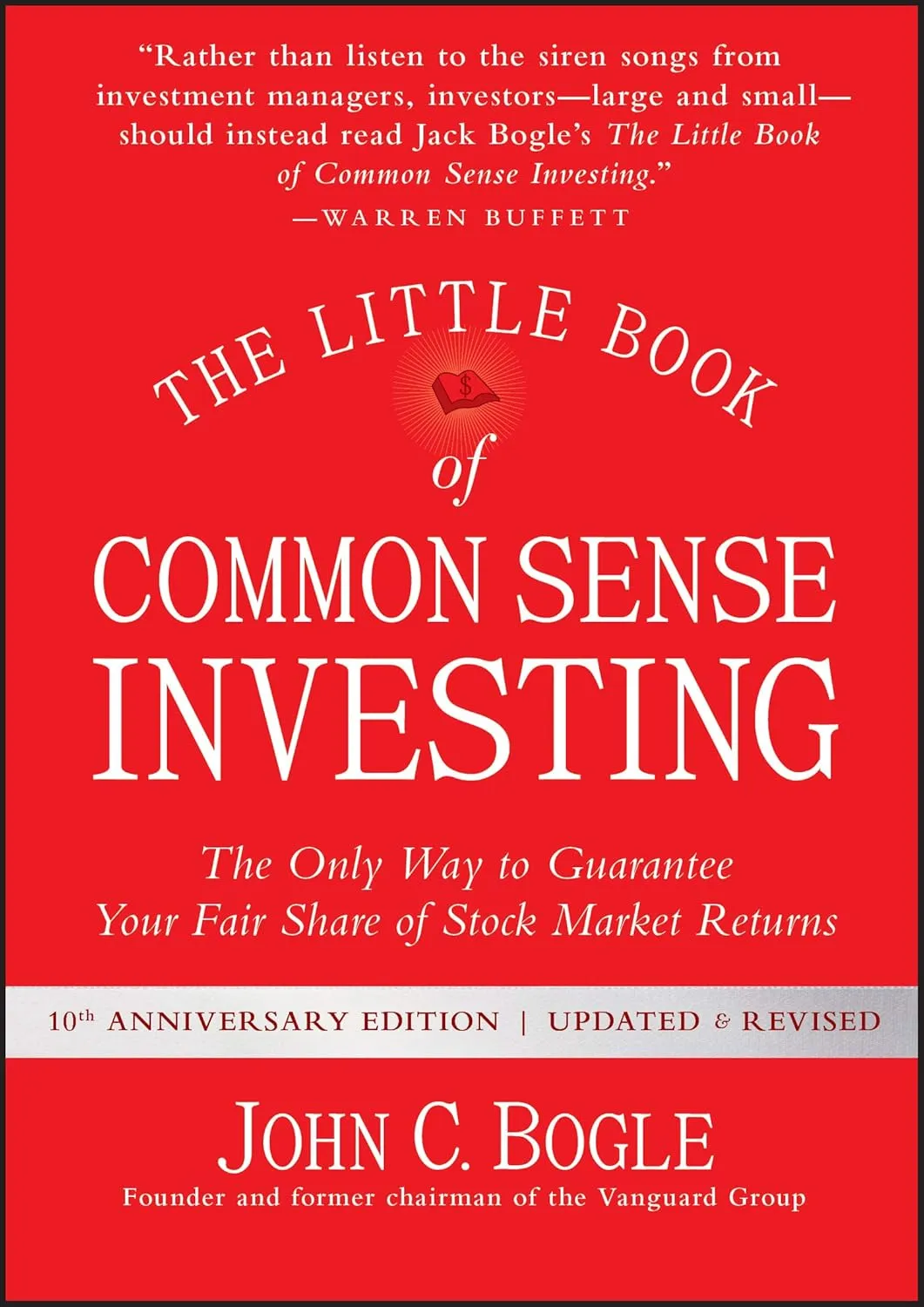
If you read only one investing book, this is the one. In 216 readable pages, Jack Bogle delivers the most important truth in investing: the simplest strategy beats nearly everyone else. Buy a total stock market index fund, hold it forever, reinvest dividends, and never pay high fees. The data behind this argument is overwhelming, the logic is airtight, and millions of investors have benefited from following it. The updated 2017 edition adds chapters on ETFs, factor investing, and the ongoing collapse of active management.
Bogle died in January 2019, but his argument has only strengthened since. The SPIVA 2025 year-end report showed that 87% of large-cap active fund managers underperformed the S&P 500 over a 15-year period. Vanguard's total stock market index fund, VTI, now charges 0.03% annually, down from 0.07% when the updated edition was published. The industry that Bogle spent his life fighting has been steadily losing assets to index funds for two decades, and the trend shows no sign of reversing.
I gave this book to my younger brother when he started his first job in 2022. He had been reading about stock picking on Reddit and was ready to put his entire signing bonus into a handful of tech stocks. After reading Bogle, he opened a Roth IRA, bought VTI, set up automatic contributions, and has not touched it since. That single decision will likely save him hundreds of thousands of dollars over his investing lifetime. This is the power of Bogle's message: it does not require intelligence or expertise, just discipline.
Book Details
| Attribute | Details |
|---|---|
| Title | The Little Book of Common Sense Investing |
| Author | John C. Bogle |
| Publisher | Wiley |
| Published | 2007 (Updated 2017) |
| Pages | 216 |
| Reading Level | Beginner |
| Amazon Rating | 4.8/5 stars |
Get Your Copy
Hardcover: Buy on Amazon
Kindle: Buy on Amazon
Audiobook: Buy on Amazon
About the Author
John C. Bogle (1929-2019) founded the Vanguard Group in 1974 and launched the first index mutual fund available to retail investors in 1976. He spent the next four decades fighting for the ordinary investor against an industry built to profit from their ignorance and activity. The Little Book is his most accessible work, distilling a lifetime of research into a single compact argument. Bogle's legacy extends far beyond Vanguard: by the time of his death in 2019, index funds held roughly $6 trillion in assets. By mid-2026, that figure has grown to over $15 trillion globally, with passive investments surpassing active fund assets in the U.S. in 2024. Every dollar saved in fees is a dollar of Bogle's legacy.
The Central Argument in One Equation
Bogle builds the entire book around what he calls the "relentless rules of humble arithmetic":
Net Investor Return = Gross Market Return - CostsThis seems obvious. Its implications are not. Since all investors together own the entire market, they must collectively earn the market return before costs. After costs, they must collectively underperform the market by exactly the amount of those costs.
The cost of active management (historical averages):
| Cost Type | Annual Drag |
|---|---|
| Expense ratio (active fund) | 1.00-1.50% |
| Transaction costs within fund | 0.50-1.00% |
| Sales loads (amortized) | 0.30-0.50% |
| Tax cost (capital gains distributions) | 0.50-1.00% |
| Total annual drag | 2.30-4.00% |
Against a market earning 10%, an investor in a typical active fund nets 6-8%. The index fund investor nets 9.9%+. Over 40 years:
| Annual Net Return | $10,000 Grows To |
|---|---|
| 10.0% (market) | $452,592 |
| 9.9% (index fund) | $440,213 |
| 8.0% (active fund) | $217,245 |
| 6.0% (expensive active) | $102,857 |
The difference between 10% and 6% over 40 years is $350,000 on a $10,000 starting investment. Costs are not a minor inconvenience. They are the primary determinant of long-run returns. Use our investment return calculator to see how fees eat into your returns over time.
Key Chapters and Concepts
On the Stock Market as a Business
Bogle opens with a powerful reframe: when you buy a total stock market index fund, you own a proportional share of every publicly traded business in America. You are not trading pieces of paper. You are becoming a permanent partner in corporate America, entitled to your share of its earnings growth and dividends forever.
This frame changes how you respond to volatility. If you owned a rental property, you would not check its value daily and consider selling every time interest rates moved. Stock market ownership deserves the same patience.
The Grand Illusion of Active Management
Bogle documents the persistent underperformance of active funds:
Equity fund performance vs. Vanguard 500 Index (1970-2005):
| Percentile of Active Funds | Annual Underperformance |
|---|---|
| Top 25% | -0.5% |
| Median | -2.0% |
| Bottom 25% | -4.5% |
Even the best-performing quartile of active funds underperformed the index. The median active fund underperformed by 2% annually. Over 35 years, a 2% annual drag on $100,000 costs the investor $400,000+.
Survivorship bias makes it worse: Morningstar tracked 355 stock funds that existed in 1970. By 2005, only 140 survived. The funds that disappeared were the worst performers. Studies that only include surviving funds dramatically overstate active management results. The SPIVA 2025 report confirmed this pattern persists: when survivorship bias is accounted for, active fund underperformance is even worse than headline figures suggest.
The Relentless Rules of Humble Arithmetic
Bogle illustrates what market returns are actually composed of:
Total Return = Dividend Yield + Earnings Growth + P/E ChangeHistorical decomposition (S&P 500, 1900-2005):
| Component | Annual Contribution |
|---|---|
| Dividend yield | 4.5% |
| Earnings growth | 4.7% |
| Total investment return | 9.2% |
| P/E expansion/contraction | +/- speculative return |
The dividend yield and earnings growth are real, durable, and fundable. P/E expansion (everyone getting more optimistic simultaneously) cannot continue forever and reverses. Over long periods, investment return dominates speculative return.
On ETFs (Updated 2017 Edition)
Bogle's nuanced view of ETFs is one of the more valuable additions to the updated edition. He distinguishes between:
Good ETF use: Buying a broad market ETF (VTI, SPY) and holding it exactly as you would a mutual fund. Low cost, tax efficient, liquid.
Bad ETF use: Trading ETFs daily, rotating between sector ETFs based on momentum, or using leveraged/inverse ETFs. The ETF structure enables speculation. The market-timing impulse it enables destroys returns.
His conclusion: ETFs are excellent tools for patient investors and dangerous toys for active traders. The vehicle matters less than the behavior.
On Factor Investing (Smart Beta)
The 2017 edition addresses the proliferation of "smart beta" or factor ETFs:
| Factor | Historical Premium | Caution |
|---|---|---|
| Value | +2-3% vs. market | Decade-long underperformance possible |
| Small cap | +2-3% vs. large cap | Higher volatility |
| Momentum | +3-4% | High turnover, tax inefficient |
| Low volatility | +1-2% | May be crowded post-2010 |
Bogle's position: factor premiums may be real, but most investors are better served by the simplest approach. Chasing factors adds complexity and creates opportunities for behavioral mistakes. A decade of factor investing data post-publication has largely vindicated Bogle's skepticism. The SPIVA 2025 report showed that most factor-based ETFs have underperformed plain index funds after fees over the 2015-2025 period.
Bogle's Five Investment Recommendations
The Math of Staying the Course
Scenario: $10,000 invested annually for 30 years at 9% returns
| Strategy | Ending Value |
|---|---|
| Stayed fully invested | $1,363,000 |
| Missed the 10 best days | $890,000 |
| Missed the 20 best days | $627,000 |
| Missed the 30 best days | $456,000 |
The best market days cluster around the worst market periods. Investors who sell during panics miss the recovery. The cost of market timing is not hypothetical; it is quantified and enormous. This is why dollar-cost averaging through automatic contributions is so powerful: it removes the temptation to time the market.
Strengths & Weaknesses
What We Loved
Areas for Improvement
Who Should Read This Book
Highly Recommended For
Probably Not For
Comparison to Similar Books
| Book | Length | Depth | Best For |
|---|---|---|---|
| The Little Book of Common Sense Investing | 216 pages | Medium | Every investor |
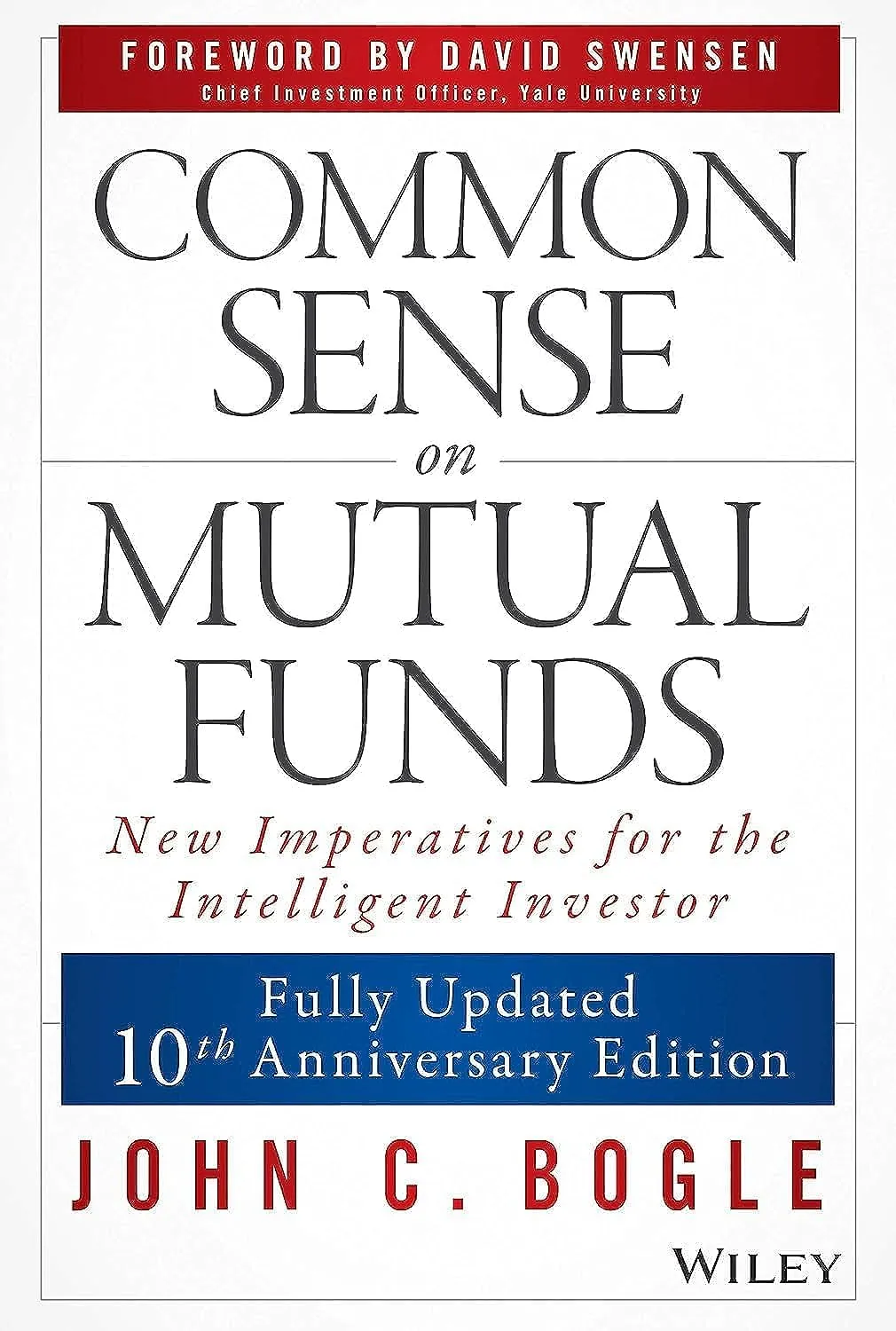
| Common Sense on Mutual Funds | 656 pages | Very High | Serious students |
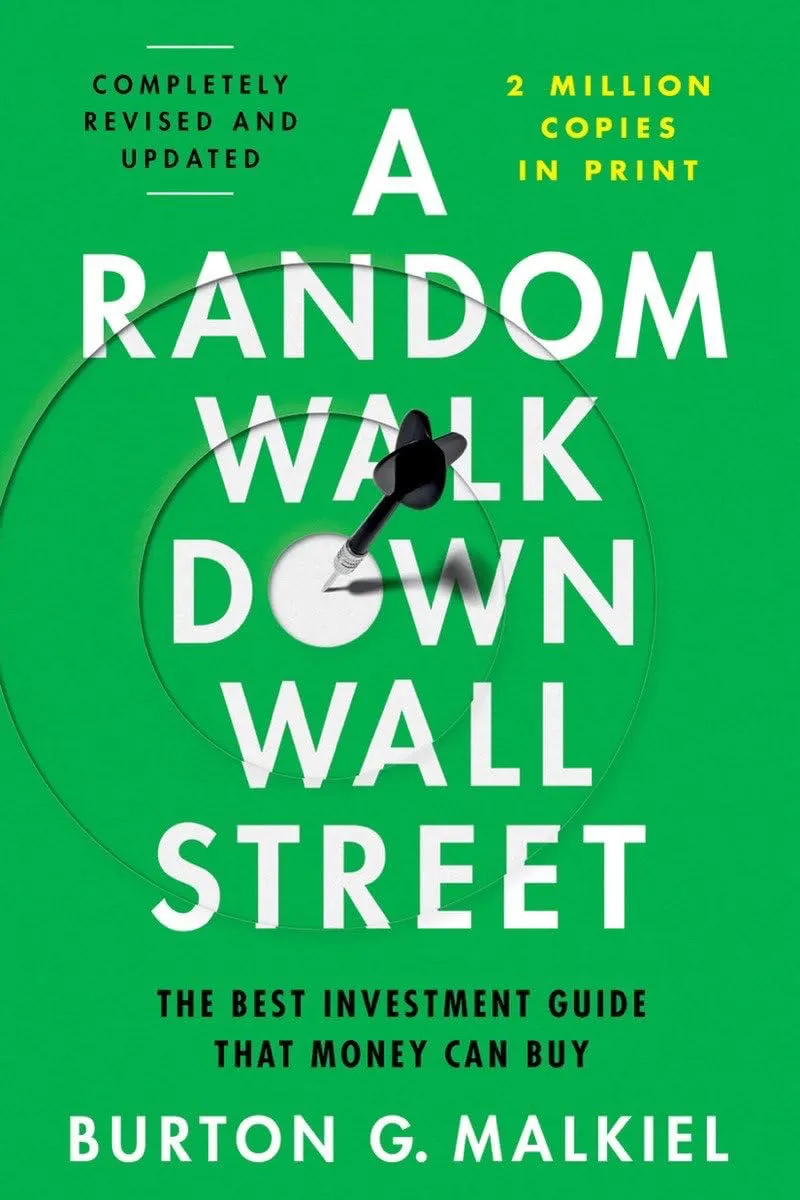
| A Random Walk Down Wall Street | 432 pages | High | Academic-minded investors |
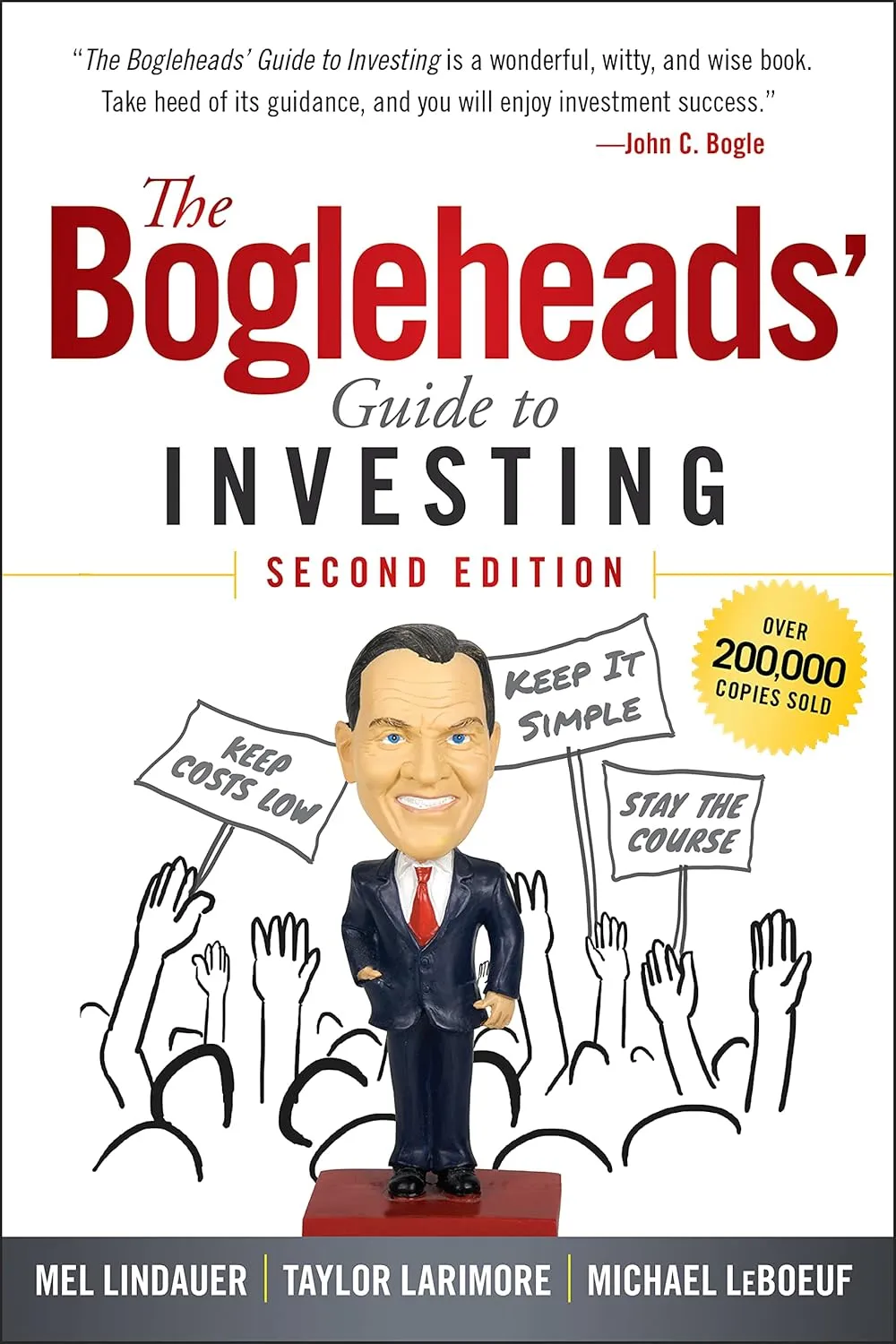
| The Bogleheads' Guide to Investing | 336 pages | Medium | Practical implementation |
Frequently Asked Questions
Q: Is one index fund really enough?
A: A total U.S. stock market index fund owns every publicly traded company in America, weighted by size. That is 3,600+ companies across every sector and market capitalization. For U.S. equity exposure, one fund is genuinely sufficient.
Q: What about international diversification?
A: Bogle argued that U.S. companies earn roughly 40-50% of revenue internationally, providing natural diversification. Most other experts recommend adding an international index fund for explicit global exposure. Both approaches are reasonable. The Vanguard Total International Stock ETF (VXUS) charges just 0.07% for exposure to 8,000+ non-U.S. stocks.
Q: How do I actually implement this?
A: Open an account at Vanguard, Fidelity, or Schwab. Buy VTI (Vanguard Total Stock Market ETF) or FSKAX (Fidelity Total Market Index Fund). Set up automatic monthly contributions using dollar-cost averaging. Rebalance with bonds once per year. That is the entire strategy.
Q: What is the best index fund specifically?
A: For U.S. stocks: VTI (0.03% expense ratio) or FSKAX (0.015%). For international: VXUS or FTIHX. For bonds: BND or FXNAX. All four together cover the entire investable world for approximately 0.05% per year in total costs.
Final Verdict
Rating: 4.8/5
The Little Book of Common Sense Investing is the best first investing book ever written. Its argument is simple, its data is overwhelming, and following it requires almost no time or expertise. The only people who should not read it are those who already fully understand and implement passive index investing. Everyone else should read it immediately.
Bogle's central insight, that costs matter more than anything else an investor can control, has been validated by every decade of data since the book was published. The SPIVA 2025 report is just the latest confirmation: 87% of active managers lose over 15 years. Passive investments surpassed active fund assets in the U.S. in 2024. Bogle won the argument, and ordinary investors are richer for it.
If you want to understand why active management fails, read this book. If you want to understand why fees are the silent killer of returns, read this book. If you want a strategy you can implement in 30 minutes and maintain for 40 years, read this book. For a deeper dive into the behavioral side of staying the course, pair it with The Little Book of Behavioral Investing by James Montier.
Get Your Copy
Hardcover: Buy on Amazon
Kindle: Buy on Amazon
Audiobook: Buy on Amazon
Prices current as of publication date. Free shipping available with Prime.