*Disclosure: This article contains affiliate links. If you purchase through these links, we may earn a commission at no additional cost to you. We only recommend books we genuinely believe in.
Quick Overview
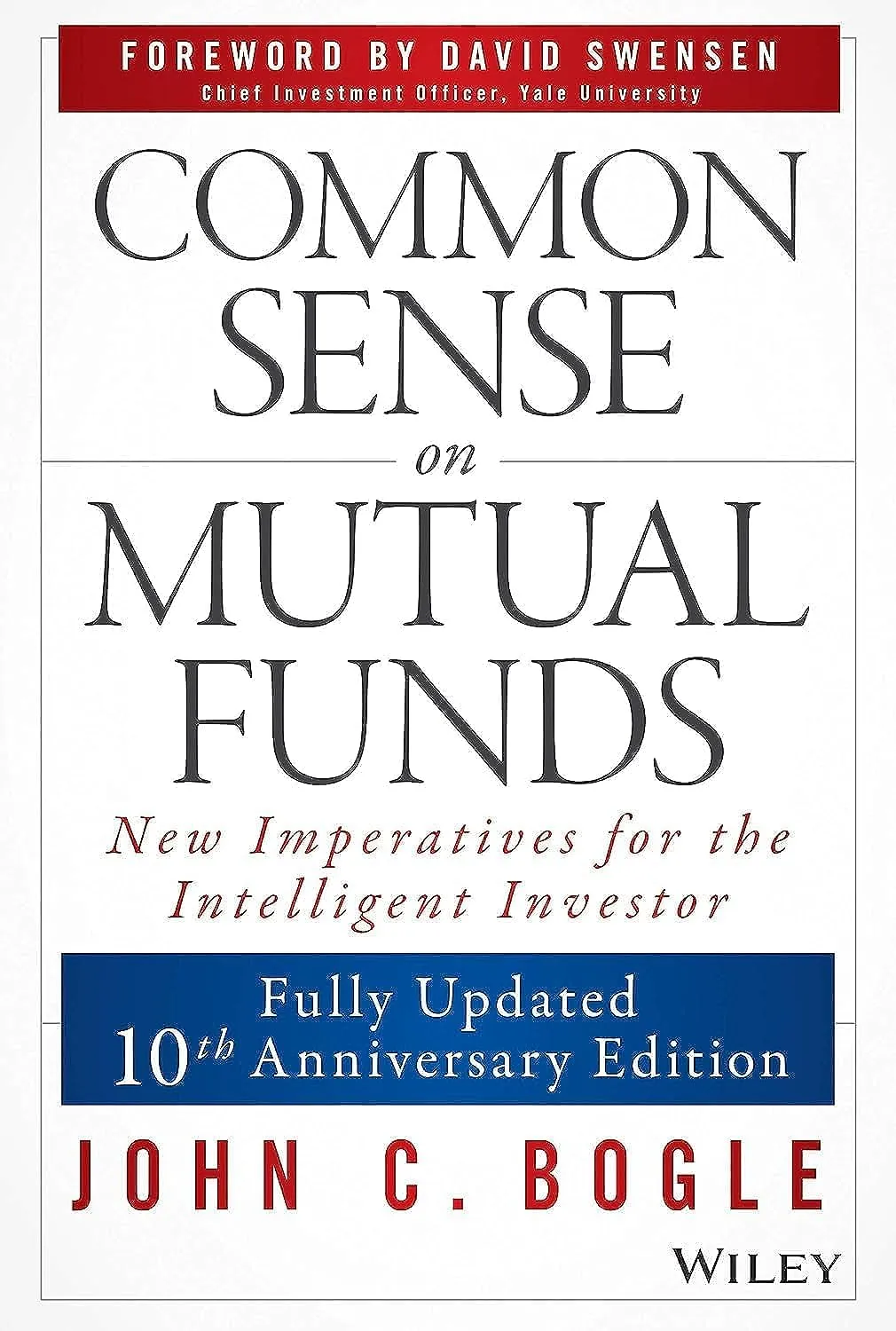
Over the 20-year period ending December 2024, 94.11% of actively managed U.S. domestic equity funds underperformed the S&P Composite 1500. That is not Bogle's number. That is from the SPIVA U.S. Scorecard, published by S&P Dow Jones Indices. Bogle saw this outcome coming decades before the data confirmed it. Common Sense on Mutual Funds is his definitive argument for why low-cost indexing beats active management, assembled from decades of fund performance data. It is not a light read. It is the most data-rich case for passive investing ever assembled in a single volume. Every claim Bogle makes in this book has been validated by subsequent research, and the case has only gotten stronger since publication.
Book Details
| Attribute | Details |
|---|---|
| Title | Common Sense on Mutual Funds |
| Author | John C. Bogle |
| Publisher | Wiley |
| Published | 1999 (10th Anniversary Edition 2009) |
| Pages | 656 |
| Reading Level | Intermediate to Advanced |
| Best For | Serious investors wanting data behind passive investing |
Get Your Copy
Hardcover: Buy on Amazon
Kindle: Buy on Amazon
About the Author
John Clifton Bogle (1929-2019) built Vanguard into the world's largest mutual fund company on a single principle: investors deserve to keep what the market earns, not surrender the majority to intermediaries. He was fired from Wellington Management in 1974, founded Vanguard from that wreckage, and spent the rest of his career proving that the simplest investing strategy was also the best one.
He received the Presidential Medal of Freedom in 2016. Warren Buffett wrote in his 2016 letter to Berkshire shareholders: "If a statue is ever erected to honor the person who has done the most for American investors, the choice should be Jack Bogle." If you want to understand why index funds dominate today's investment landscape, Bogle is the reason.
The Core Argument
Bogle's argument is mathematical before it is philosophical. He calls it the "Cost Matters Hypothesis":
Before costs: Active funds and index funds together must earn the market return (they are the market).
After costs: Active funds must underperform by exactly the amount of their costs.
Investor Return = Market Return - Costs - TaxesIf the market returns 10% and active funds charge 1.2% in expenses plus generate 0.5% in transaction costs and 0.3% in tax drag, investors net approximately 8%. Index funds charging 0.04% deliver approximately 9.96%.
Over 30 years on $100,000:
| Strategy | Net Return | Ending Value |
|---|---|---|
| Market return (10%) | 10.00% | $1,744,940 |
| Index fund (0.04% cost) | 9.96% | $1,718,000 |
| Active fund (2.0% cost) | 8.00% | $1,006,266 |
The active fund investor ends up with $711,000 less, which is more than seven times the original investment, paid to the fund industry for the privilege of underperforming.
The latest SPIVA data confirms Bogle's math with brutal clarity. As of year-end 2024, the asset-weighted average expense ratio for actively managed domestic equity mutual funds was 0.64%, versus 0.05% for index equity mutual funds (per the ICI's 2025 report). Over 30 years, that 0.59% gap on a $10,000 initial investment with $500 monthly contributions and a 10% average annual return produces a $162,739 difference. And that assumes the active fund matches the index before fees. Since 90%+ of active funds actually underperform the index before accounting for fees, the real gap is larger.
Key Sections
Part I: On Investment Strategy
The Long Run: Bogle shows that stock returns over long periods converge toward earnings growth plus dividend yield. Speculative excess (price-to-earnings expansion or contraction) averages out over decades.
Long-Run Stock Return = Earnings Growth + Dividend Yield + P/E ChangeHistorical decomposition of S&P 500 returns (1926-2009):
| Component | Annual Contribution |
|---|---|
| Dividend yield | 4.5% |
| Earnings growth | 4.8% |
| P/E change | 0.1% |
| Total | 9.4% |
The lesson: dividend yield and real earnings growth drive most long-run returns. Valuation changes are largely noise over multi-decade periods.
Asset Allocation: Bogle is pragmatic about stocks vs. bonds. His rule of thumb: hold your age in bonds. A 40-year-old holds 40% bonds, 60% stocks. He acknowledges this is a rough guide requiring adjustment for risk tolerance.
Part II: On Investment Choices
This section compares fund categories systematically using decades of performance data.
Active vs. Index Performance (SPIVA Year-End 2024 data):
| Time Period | % of Active Funds Underperforming Benchmark |
|---|---|
| 1 year | 65% (large-cap U.S. equity) |
| 5 years | 77% |
| 10 years | 87% |
| 15 years | 92% |
| 20 years | 95% |
The longer the period, the worse active management looks. Survivorship bias inflates even these figures, because the worst-performing funds are closed or merged before the period ends. Over 15 years, zero of 22 domestic equity categories showed majority active outperformance. The SPIVA data is published by S&P Dow Jones Indices, not by Vanguard or any index fund company, which makes it difficult for the active management industry to dismiss.
Bond Funds: Bogle applies the same cost logic to bonds. In a 5% yield environment, a bond fund charging 1% surrenders 20% of your yield. An index bond fund charging 0.05% surrenders 1% of your yield.
Money Market Funds: Essentially commodities. Buy the lowest-cost fund available.
International Funds: Bogle is somewhat skeptical of international diversification (his most contested position), arguing that U.S. multinationals provide sufficient global exposure. Most academics disagree. Modern guidance from Vanguard itself recommends 30-40% international exposure. If you want to learn more about how ETFs make international diversification cheap and simple, check our glossary entry.
Part III: On Investment Performance
Bogle dissects how the mutual fund industry measures and markets performance:
The Star Rating Problem: Funds earning 4-5 Morningstar stars based on past performance revert to average within 3-5 years. Past performance is the most-marketed metric and the least predictive one.
Manager Turnover: The average mutual fund manager holds their position for less than five years. The "Magellan Fund under Peter Lynch" cannot be bought. You can only buy the Magellan Fund under whoever replaced Lynch's replacement.
Taxes: Active funds typically generate 1-2% annually in taxable capital gains distributions, even in flat markets. Index funds hold and rarely sell, keeping distributions minimal. This tax efficiency compounds significantly over decades.
Part IV: On Fund Management
Bogle turns from data to philosophy in this section, arguing that mutual funds have lost their original purpose. They were designed to serve investors; they now serve managers and distributors.
The Principal-Agent Problem:
Fund companies (agents) are paid on assets under management. This incentivizes:
None of these incentives align with investor outcomes.
Bogle's Investment Principles Summarized
The Recommended Portfolio (Bogle's Version)
| Asset | Fund | Approx. Expense Ratio |
|---|---|---|
| U.S. stocks | Total Stock Market Index | 0.04% |
| International stocks | Total International Index | 0.07% |
| U.S. bonds | Total Bond Market Index | 0.04% |
Allocate based on age and risk tolerance. Rebalance annually. Hold for life. For a deeper dive into building a simple portfolio, read our guide on the three-fund portfolio.
Strengths & Weaknesses
What We Loved
Areas for Improvement
Who Should Read This Book
Highly Recommended For
Probably Not For
Frequently Asked Questions
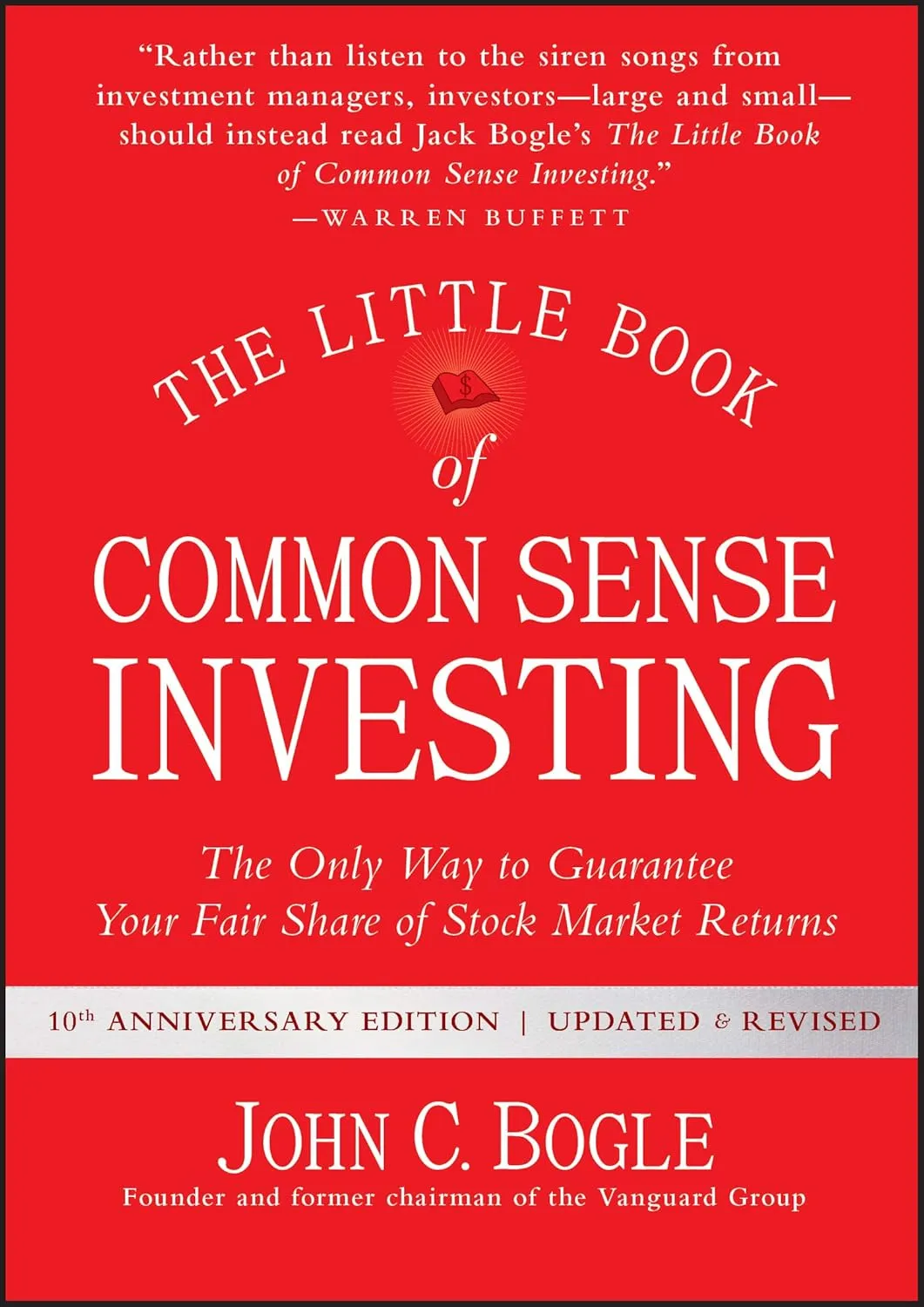
Q: Is this different from *The Little Book of Common Sense Investing*?
A: Yes. The Little Book is Bogle's 200-page summary version. Common Sense on Mutual Funds is six times longer with far more data, historical analysis, and philosophical depth. Read the Little Book first; graduate to this one.
Q: Has Bogle's international equity skepticism been proven right or wrong?
A: Wrong by the weight of evidence. International diversification has reduced volatility and provided meaningful return contributions during periods of U.S. underperformance (2000-2009 was a lost decade for U.S. stocks, while international stocks gained). Modern guidance from Vanguard itself recommends 30-40% international exposure. For practical implementation, see our guide on asset allocation.
Q: Is there a free version of this information?
A: Bogle gave speeches, wrote articles, and testified before Congress for decades. Much is available free online. But the book assembles it coherently with full data tables that are not available elsewhere.
Final Verdict
Rating: 4.7/5
Common Sense on Mutual Funds is the most data-rich single-volume case for passive investing ever written. Its data is overwhelming, its author's integrity is unimpeachable, and its core argument has only grown stronger since 1999. It is long and sometimes repetitive, but for investors who want to truly understand why low-cost indexing works, no other book comes close.
If you have ever been tempted to chase a hot mutual fund or pay an advisor 1% to pick active funds for you, read this book first. The math is simple, and Bogle lays it out with decades of evidence. Then check our S&P 500 index fund guide to get started with the simplest, lowest-cost portfolio you can build.
Get Your Copy
Hardcover: Buy on Amazon
Kindle: Buy on Amazon
Prices current as of publication date. Free shipping available with Prime.