*Disclosure: This article contains affiliate links. If you purchase through these links, we may earn a commission at no additional cost to you. We only recommend books we genuinely believe in.
Quick Overview
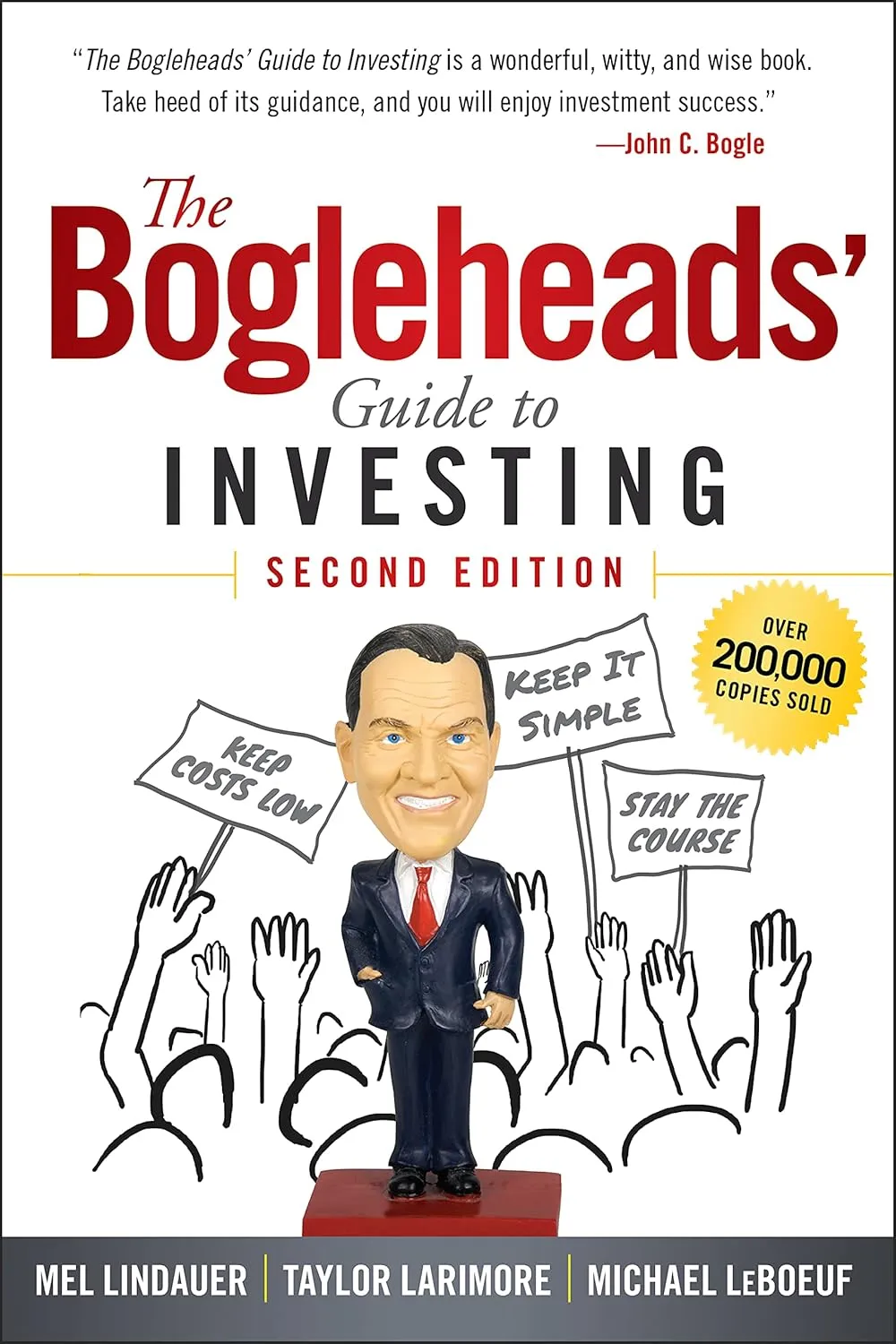
Roughly 88% of large-cap active mutual funds underperformed the S&P 500 over the trailing 15-year period, according to the S&P Dow Jones Indices SPIVA U.S. Scorecard. Over 20 years, that number rises to about 93%. The Bogleheads' Guide to Investing tells you what to do with that information. Written by three members of the Bogleheads online community, it walks you through every practical step from eliminating debt to opening accounts, selecting funds, managing taxes, and drawing down assets in retirement. It is the most actionable passive investing guide in print.
Book Details
| Attribute | Details |
|---|---|
| Title | The Bogleheads' Guide to Investing |
| Authors | Taylor Larimore, Mel Lindauer, Michael LeBoeuf |
| Publisher | Wiley |
| Published | 2006 (2nd edition 2014) |
| Pages | 336 |
| Reading Level | Beginner to Intermediate |
| Amazon Rating | 4.7/5 stars |
Get Your Copy
Paperback: Buy on Amazon
Kindle: Buy on Amazon
Audiobook: Buy on Amazon
About the Authors
Taylor Larimore is often called the "King of the Bogleheads." A WWII veteran, he began investing in index funds in 1986 and has spent decades spreading Bogle's principles through the Bogleheads forum, which he co-founded. He wrote his portion of this book in his late 70s.
Mel Lindauer is a financial columnist and long-time Bogleheads moderator. His expertise is in the practical implementation of tax-efficient investing.
Michael LeBoeuf is the author of several management books and brought his writing experience to make the financial content accessible to ordinary readers.
None of them are financial professionals in the traditional sense. They are disciplined long-term investors who have seen the Boglehead approach work over decades of personal practice.
What Makes This Book Unique
Most investing books either make the philosophical case for an approach or describe investment products. The Bogleheads' Guide does neither exclusively. It follows an investor from their first dollar saved through their last withdrawal in retirement, addressing practical questions at each stage. The result is a book you can use as a reference guide rather than just reading once and putting away.
Part 1: Essentials of Successful Investing
Getting Started: The Foundation
The book opens with basics most investing books skip:
Before you invest:
| Priority | Action | Why |
|---|---|---|
| 1 | Build 3-6 month emergency fund | Prevents forced selling in downturns |
| 2 | Pay off high-interest debt (above 6%) | Risk-free guaranteed return |
| 3 | Capture employer 401(k) match | Instant 50-100% return |
| 4 | Max out Roth IRA if eligible | Tax-free growth forever |
| 5 | Max out 401(k) above match | Tax-deferred growth |
| 6 | Invest in taxable brokerage account | For additional savings |
This sequence maximizes your risk-adjusted return at every stage. Investing in stocks while carrying 24% APR credit card debt is financially irrational.
Investment Principles
The authors summarize the Boglehead philosophy in 12 principles:
Part 2: Assembling Your Portfolio
Asset Allocation
The authors present several approaches to determine your stock/bond split:
Age-based rule of thumb:
| Your Age | Stocks | Bonds |
|---|---|---|
| 25 | 75-90% | 10-25% |
| 35 | 70-80% | 20-30% |
| 45 | 60-70% | 30-40% |
| 55 | 50-60% | 40-50% |
| 65 | 40-50% | 50-60% |
Risk tolerance test: How much of a portfolio drop could you endure without selling?
| Maximum Tolerable Drop | Suggested Stock Allocation |
|---|---|
| 10% | 20-30% |
| 20% | 40-50% |
| 30% | 60% |
| 40% | 70% |
| 50%+ | 80-90% |
The true test is not what you say in advance but what you do during the next bear market. The authors recommend being more conservative than your theoretical risk tolerance suggests. For a deeper look at this topic, read our guide to asset allocation.
The Three-Fund Portfolio
The book's most famous contribution is popularizing the three-fund portfolio. Three index funds give you exposure to essentially every publicly traded stock on Earth plus the U.S. investment-grade bond market. No stock picking, no market timing, no complicated strategies. Just broad diversification at minimal cost.
2026 fund options and expense ratios:
| Fund | Purpose | Vanguard ETF | Vanguard Mutual Fund | Expense Ratio |
|---|---|---|---|---|
| U.S. Total Market | U.S. equity | VTI | VTSAX | 0.03% |
| International Total Market | Global equity | VXUS | VTIAX | 0.08% |
| U.S. Bond Market | Fixed income | BND | VBTLX | 0.03% |
Fidelity offers zero-expense-ratio alternatives: FZROX (0.00%) for U.S. stocks, FZILX (0.00%) for international, and FXNAX (0.025%) for bonds. Schwab offers SCHB (0.03%), SCHF (0.06%), and SCHZ (0.03%). The weighted average expense ratio across any of these three-fund setups is approximately 0.03-0.04%.
Why expense ratios matter so much:
For $100,000 invested for 30 years at a 7% annual return, here is what different expense ratios actually cost you:
| Expense Ratio | Final Portfolio Value | Lost to Fees vs. 0.03% |
|---|---|---|
| 0.03% (Vanguard) | $755,000 | baseline |
| 0.10% | $740,500 | $14,500 |
| 0.25% | $709,700 | $45,300 |
| 0.50% | $661,500 | $93,500 |
| 1.00% | $574,300 | $180,700 |
Small differences in fees compound over time to substantial amounts. As Bogle put it: "Where returns are concerned, time is your friend. But where costs are concerned, time is your enemy." You can see this compounding effect yourself using our compound interest calculator.
Sample allocations:
| Investor Profile | U.S. Stocks | International | Bonds |
|---|---|---|---|
| Aggressive 30-year-old | 60% | 20% | 20% |
| Moderate 45-year-old | 45% | 15% | 40% |
| Conservative 60-year-old | 35% | 15% | 50% |
The classic Bogleheads allocation is 60% U.S. stocks, 20% international, 20% bonds. This portfolio owns more than 10,000 securities across 50+ countries. No single stock failure can meaningfully damage it. No fund manager's ego can inflate it with speculation.
The international allocation debate in 2026:
The book follows Bogle's skepticism toward international stocks, recommending 0-20%. The Bogleheads forum consensus has shifted toward 20-30% since the book was written. Vanguard's own target-date funds hold around 30-40% of their equity allocation in international stocks. The argument for more international exposure is that U.S. and international stocks trade leadership over long stretches. In the 2000s decade, international outpaced U.S. large caps. In the 2010s, the reverse happened. Owning both means you never have to guess which one wins the next 10 years. For a full walkthrough, read our guide to the three-fund portfolio.
Part 3: Minimizing Taxes
This section is one of the most valuable in any investing book.
Asset Location
Different account types receive different tax treatment. The Bogleheads optimize by holding the right assets in the right accounts:
| Asset Type | Best Account Location | Reason |
|---|---|---|
| Total stock market index | Taxable brokerage | Low turnover, qualified dividends |
| International stock index | Taxable brokerage | Foreign tax credit claimable |
| Bond index | Tax-advantaged (IRA/401k) | Interest taxed as ordinary income |
| REITs | Tax-advantaged | High ordinary income distributions |
An investor with $500,000 split between taxable and tax-advantaged accounts can gain 0.2-0.5% in annual after-tax return purely by holding assets in the right locations. Over 20 years, this compounds to $25,000-$75,000 in additional wealth.
Tax-Loss Harvesting
When a taxable fund position falls below your purchase price, you can sell it, claim the tax loss, and immediately buy a similar (but not identical) fund to maintain market exposure.
Example:
The IRS "wash sale rule" prohibits repurchasing the same or "substantially identical" security within 30 days. Using two different but similarly structured ETFs sidesteps this rule legally. Read our full guide to tax-loss harvesting for more details.
Roth vs. Traditional IRA
| Factor | Favor Roth | Favor Traditional |
|---|---|---|
| Current tax rate | Low (early career) | High (peak earnings) |
| Expected future tax rate | Higher than now | Lower than now |
| Time horizon | Long | Shorter |
| Expected tax law change | Rates rising | Rates falling |
| Flexibility needed | Yes (contributions accessible) | No |
The authors recommend most young investors favor Roth. Peak earners in high brackets favor Traditional. Many investors benefit from holding both. Use our Roth vs. Traditional IRA calculator to run the numbers for your situation.
Part 4: Investing Through Life
The Accumulation Phase (Working Years)
Key disciplines during accumulation:
The power of automation (10% savings rate, 30 years, 8% return):
| Annual Income | Annual Savings | Ending Value |
|---|---|---|
| $50,000 | $5,000 | $566,000 |
| $75,000 | $7,500 | $849,000 |
| $100,000 | $10,000 | $1,132,000 |
The Retirement Phase (Decumulation)
The book addresses withdrawal strategy in detail, a topic most investing books skip.
The 4% Rule:
Research (the "Trinity Study") suggests a 4% initial withdrawal rate, adjusted for inflation annually, has a 95%+ success rate over 30-year retirement periods for balanced portfolios.
| Portfolio Size | 4% Annual Withdrawal |
|---|---|
| $500,000 | $20,000/year |
| $750,000 | $30,000/year |
| $1,000,000 | $40,000/year |
| $2,000,000 | $80,000/year |
The authors note that the 4% rule is a starting guideline, not a guarantee. Sequence of returns risk (a bear market early in retirement is far more damaging than one later) argues for slightly more conservative initial withdrawal rates of 3-3.5%. Read our full analysis of the 4% rule for more context.
Withdrawal sequence:
Strengths & Weaknesses
What We Loved
Areas for Improvement
Who Should Read This Book
Highly Recommended For
Probably Not For
Comparison to Similar Books
| Book | Focus | Practical Detail | Best For |
|---|---|---|---|
| Bogleheads' Guide to Investing | Full lifecycle implementation | Very High | Self-directed index investors |
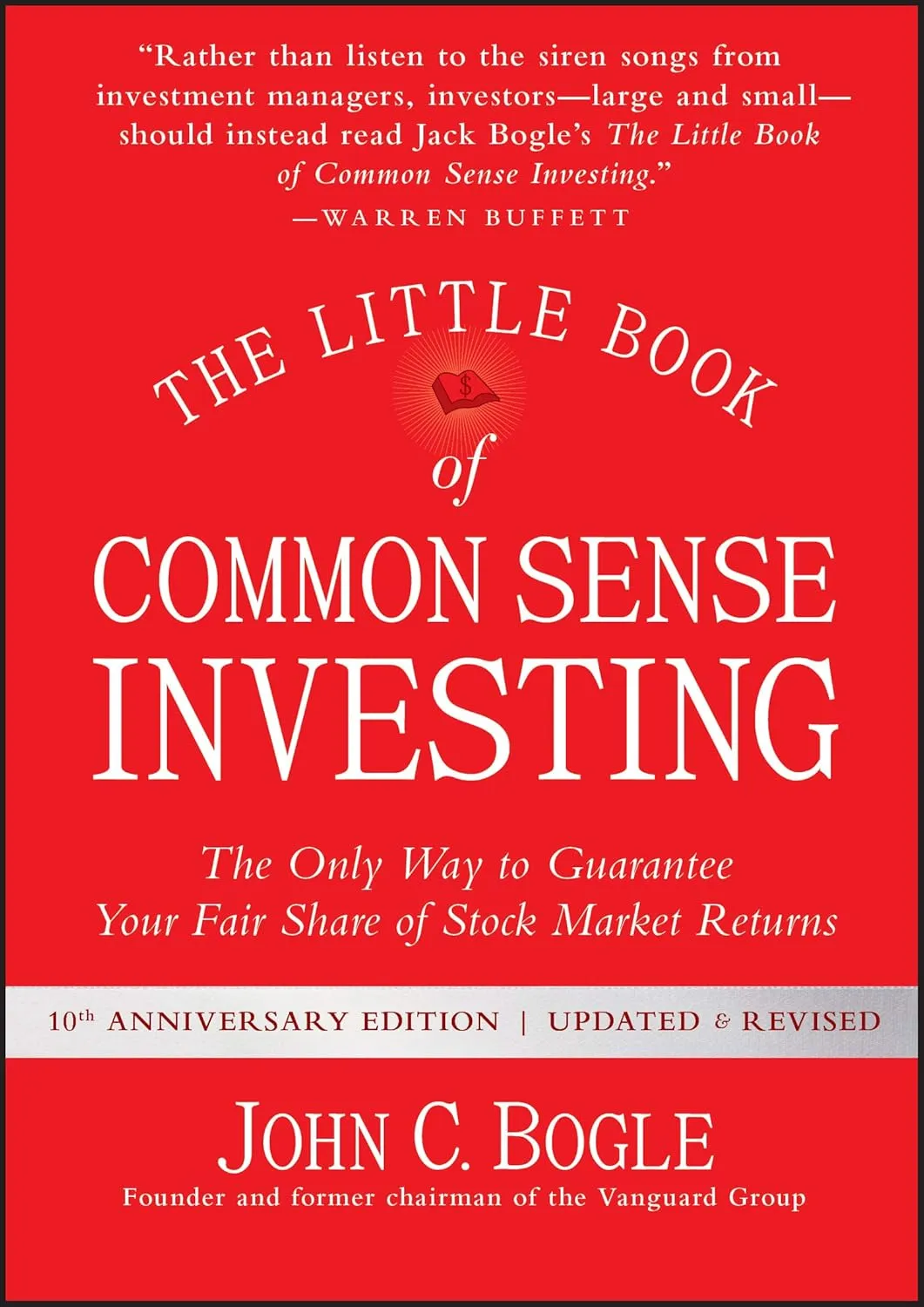
| The Little Book of Common Sense Investing | Why to index | Low | First-time readers |
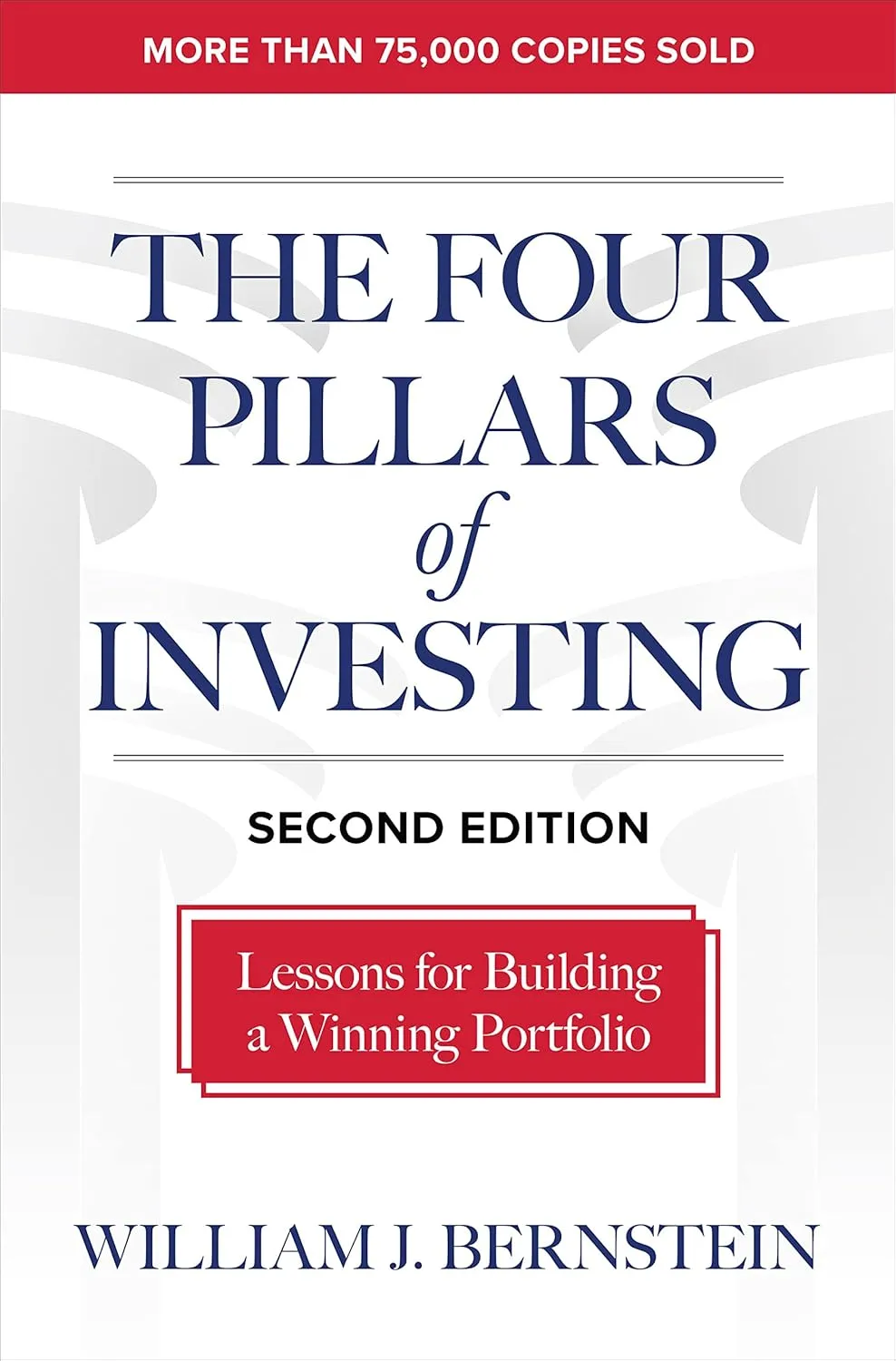
| The Four Pillars of Investing | Theory and history | Medium | Intermediate students |
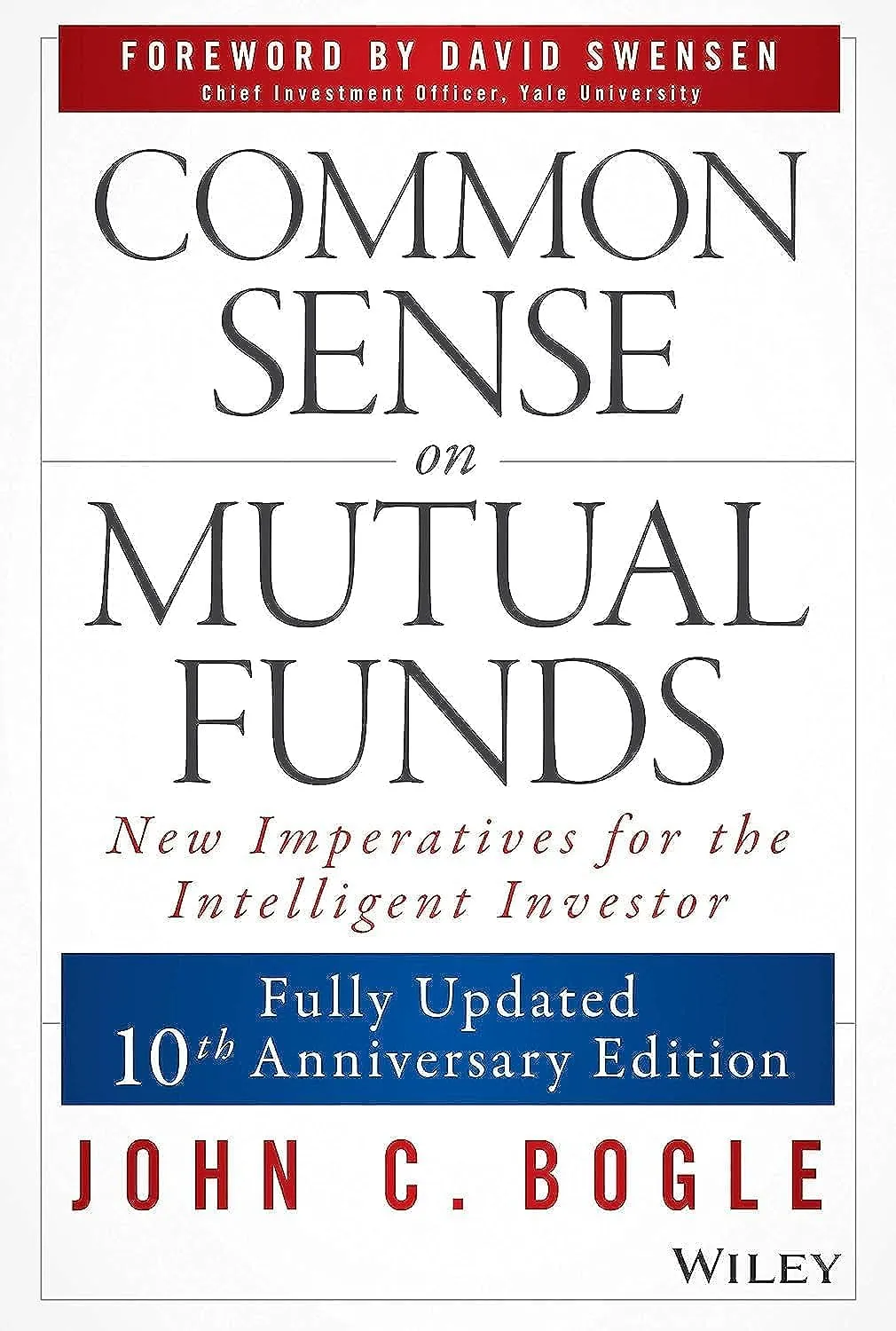
| Common Sense on Mutual Funds | Industry data | Very High | Data-driven investors |
Frequently Asked Questions
Q: Is the 2nd edition significantly better than the 1st?
A: Yes. The 2014 second edition updates fund expense ratios, adds ETF guidance, and revises the retirement withdrawal section with newer research including updates to the Trinity Study.
Q: The book was written in 2006. Is it outdated?
A: The principles are entirely current. Some specific numbers (expense ratios, contribution limits) are outdated, but the logic is timeless. Supplement with the Bogleheads Wiki (bogleheads.org/wiki) for current figures. As of 2026, Fidelity offers zero-expense-ratio index funds and Vanguard's weighted average expense ratio for a three-fund portfolio is approximately 0.04%.
Q: Can I implement the three-fund portfolio in my 401(k)?
A: Usually yes, using your plan's available index funds. If your plan lacks a total international fund, use a large-cap international index. If it lacks a bond index, use the closest equivalent. The forum at bogleheads.org has specific guidance for hundreds of common 401(k) plans.
Q: What if my 401(k) has no good index funds?
A: Contribute enough to capture the full employer match (free money), then direct additional savings to a Roth or Traditional IRA where you have full control over fund selection.
Q: How much should I allocate to international stocks?
A: The book suggests 0-20%, following Bogle's skepticism. The Bogleheads forum consensus in 2026 is 20-30%, and Vanguard's own target-date funds hold around 30-40% of equity in international. A reasonable sweet spot is 20-30% of your stock allocation.
Final Verdict
Rating: 4.7/5
The Bogleheads' Guide to Investing is the most practically useful investing book in existence for someone who has decided to invest passively and needs to know exactly how. Its combination of principle and practice, covering everything from debt payoff priority to retirement withdrawal sequencing, makes it a reference you will return to at each new life stage. The three-fund portfolio it popularizes has outperformed roughly 90% of professional fund managers over the past 20 years, and you can build one today for close to zero cost.
Ready to start? Pick up the book, then use our retirement number calculator to figure out your target and our investment return calculator to model how a three-fund portfolio gets you there.
Get Your Copy
Paperback: Buy on Amazon
Kindle: Buy on Amazon
Audiobook: Buy on Amazon
Prices current as of publication date. Free shipping available with Prime.