*Disclosure: This article contains affiliate links. If you purchase through these links, we may earn a commission at no additional cost to you. We only recommend books we genuinely believe in.
Quick Overview
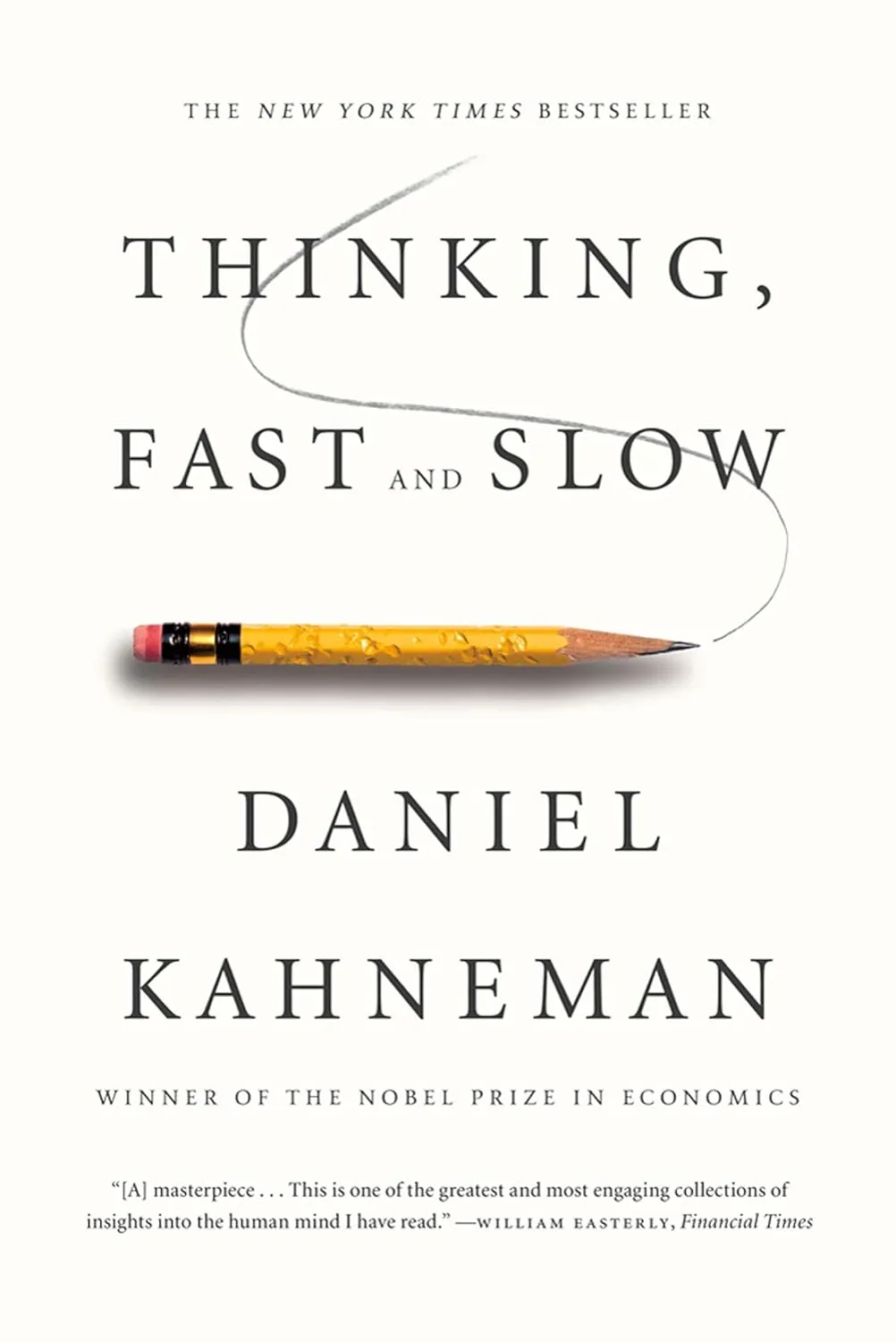
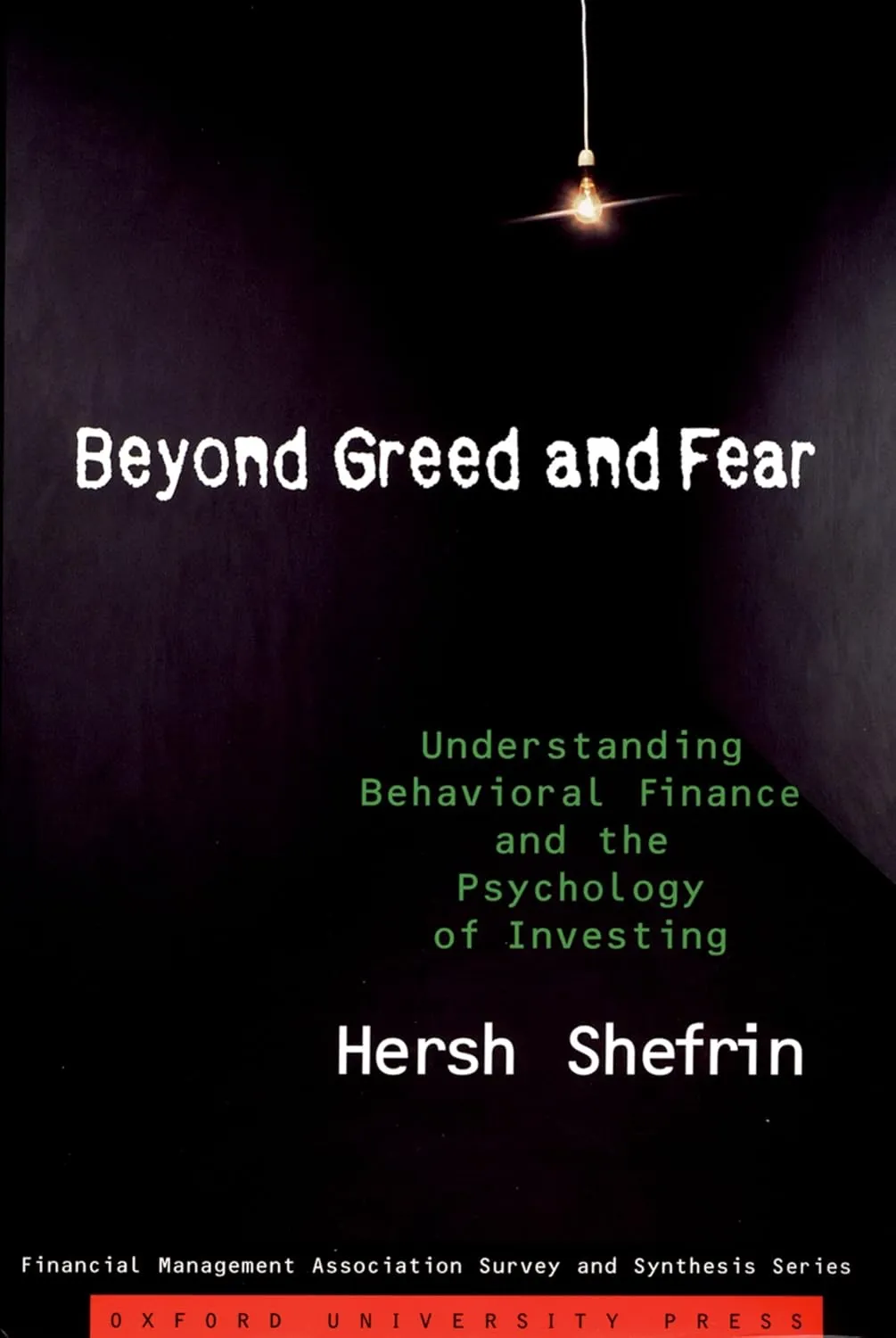
Every investor knows they should buy low and sell high. Most do the opposite. Hersh Shefrin, the Mario Belotti Professor of Finance at Santa Clara University, wrote the book on why. Beyond Greed and Fear, first published in 1999 and updated in 2007, is the most academically rigorous treatment of behavioral finance that a non-academic can actually read. It connects Kahneman and Tversky's prospect theory to real portfolio decisions, analyst forecasts, and market pricing anomalies. If you have read Thinking, Fast and Slow and want the investment-specific deep dive, this is the next book on your list.
Book Details
| Attribute | Details |
|---|---|
| Title | Beyond Greed and Fear |
| Author | Hersh Shefrin |
| Publisher | Oxford University Press |
| Published | 1999 (updated 2007) |
| Pages | 368 |
| Reading Level | Intermediate to Advanced |
| Amazon Rating | 4.2/5 stars |
Get Your Copy
Paperback: Buy on Amazon
Kindle: Buy on Amazon
About the Author
Hersh Shefrin is the co-developer, with Meir Statman, of behavioral portfolio theory and behavioral asset pricing theory. He coined the term "disposition effect" with Statman in their 1985 paper, which has since become a foundational concept in finance. His h-index of 32 and nearly 14,000 citations place him among the most influential behavioral finance scholars alive. He has collaborated with Richard Thaler on behavioral economics research, and his work connects academic psychology to investment practice more rigorously than almost any other author in the field.
In a 2013 article for the Loyola University Chicago Law Journal, Shefrin reflected on how the disposition effect framework he and Statman developed has been used to analyze rogue trading cases, including Nick Leeson's $1.3 billion loss at Barings Bank and Jerome Kerviel's $7.3 billion loss at Societe Generale. The framework he built in Beyond Greed and Fear has proven durable enough to explain both everyday investor mistakes and catastrophic institutional failures.
The Behavioral Finance Framework
Shefrin organizes behavioral finance around three themes: heuristics, frame dependence, and inefficient markets. Each theme connects a well-documented psychological phenomenon to a specific type of investment error.
Theme 1: Heuristics and Biases
Heuristics are mental shortcuts that simplify complex decisions. They are often useful, but they produce systematic errors in investment contexts.
Representativeness:
People judge the probability of an event by how closely it resembles a typical example of that category. In investing:
Shefrin documents that analysts give higher ratings to companies that "look like" growth stocks (high past growth, attractive industry) than to companies whose actual prospects are superior but less glamorous. This is representativeness distorting professional judgment.
Availability:
People judge the probability of events by how easily examples come to mind. Vivid, recent, or emotionally salient events are overweighted:
Individual investors dramatically overweight companies they interact with personally. Employees concentrate in their employer's stock. Consumers buy stocks of companies whose products they use. This is availability bias toward familiar names, and it produces underdiversified portfolios.
Overconfidence:
People overestimate the accuracy of their forecasts and the quality of their information. Shefrin documents:
A 2025 study presented at the American Economic Association conference provided a new mechanism for how overconfidence persists. Researchers found that the disposition effect itself fuels overconfidence: investors who sell winners more readily than losers build a biased mental track record, selectively remembering gains and forgetting losses. This biased learning process makes them more confident in their stock-picking ability, which leads to more trading and lower profits. The disposition effect and overconfidence are not separate biases. They feed each other in a loop that Shefrin's framework anticipated.
Theme 2: Frame Dependence
Rational decision-making requires evaluating options on their objective merits regardless of how they are presented. Frame dependence is the empirical finding that how options are described dramatically affects choices.
Loss aversion and the S-curve:
Kahneman and Tversky's prospect theory describes how people evaluate outcomes relative to a reference point:
Value Function:
- Gains: concave (diminishing marginal utility)
- Losses: convex (increasing marginal disutility)
- Losses feel roughly 2x as bad as equivalent gains feel good
The reference point in investing:
The reference point for most investors is their purchase price. A stock bought at $50 that falls to $35 generates more psychological pain than one bought at $40 that falls to $35, despite identical current situations. The $50-buyer has a more negative reference point.
This causes the disposition effect: selling winners too soon (to lock in the gain relative to the reference point) and holding losers too long (to avoid realizing the loss relative to the reference point). It also causes break-even seeking, where investors take excessive risk on losing positions hoping to get back to the reference point.
The disposition effect evidence:
Shefrin and Statman documented the disposition effect empirically in their 1985 paper by studying actual investor trading records. Investors in their sample were 1.5x more likely to sell a winning stock than a losing stock, after controlling for other factors. This is the opposite of what tax optimization alone would predict, which would suggest selling losers to harvest tax losses. You can read more about this in our guide to tax-loss harvesting.
A 2025 study published in the Journal of Financial and Quantitative Analysis tested the disposition effect among 237 financial professionals using a lab-in-the-field experiment. The results were striking: 34% of professionals exhibited the disposition effect, and it appeared to be driven primarily by non-Bayesian beliefs rather than risk preferences. When faced with new information about their asset's performance, these professionals failed to update their beliefs sufficiently. They were too pessimistic when the asset had gained value and too optimistic when it had lost value. This confirms Shefrin's core argument: the disposition effect is not just a retail investor problem. It affects professionals who manage billions of dollars.
Mental accounting in portfolio construction:
Investors do not evaluate their portfolio as a unified whole. They maintain mental accounts for different "buckets":
This mental segmentation leads to portfolios that are poorly optimized from a mean-variance perspective. A portfolio constructed as separate mental accounts will typically have higher total risk for the same expected return than a portfolio optimized as a whole.
Shefrin's behavioral portfolio theory:
The "layered" portfolio structure most investors actually use:
Layer 1 (Bottom): Safety assets, protect against catastrophe
Layer 2 (Middle): Market exposure, match or beat inflation
Layer 3 (Top): Speculation, potential for large gains
Each layer has different goals and risk tolerances, treated as separate mental accounts. This explains why many investors simultaneously hold Treasury bonds for safety and lottery tickets for speculation. These behaviors seem contradictory from a traditional mean-variance framework but make sense within mental accounting. If you want to see how a rational portfolio looks by contrast, read our guide to asset allocation.
Theme 3: Inefficient Markets
Shefrin addresses whether markets price securities efficiently, and how behavioral biases can cause systematic mispricings.
Excess volatility:
Robert Shiller demonstrated that stock price volatility is far greater than can be justified by changes in expected dividends. If stocks were priced rationally as the present value of future dividends, price changes should reflect only revisions in dividend forecasts. Actual price changes are much larger.
The behavioral explanation: sentiment-driven buying and selling causes prices to overshoot fundamental value in both directions.
Earnings surprises and price drift:
After a positive earnings surprise, stocks continue to drift upward for several months, not as an immediate one-time adjustment. After a negative surprise, they continue to drift downward. If markets were fully efficient, the information content of an earnings surprise would be immediately and completely incorporated in prices.
The behavioral explanation: anchoring and under-reaction cause initial price adjustments to be incomplete. Analysts revise their estimates gradually rather than immediately, and prices follow the gradual revision.
The momentum puzzle:
Stocks that have performed well over the past 6-12 months tend to continue performing well over the next 6-12 months, and vice versa. This momentum contradicts the efficient market hypothesis, which predicts no relationship between past and future returns.
The behavioral explanation: investor under-reaction to information (anchoring keeps estimates close to the prior) produces continuation of trends as information gradually gets incorporated.
The Behavioral Errors of Professional Investors
Shefrin dedicates significant coverage to how behavioral biases affect professional investors, not just retail investors. This is what sets the book apart from most behavioral finance titles that focus only on individual mistakes.
Analyst Errors
Optimism bias:
Analysts systematically produce optimistic forecasts. The incentive structure (maintain access to management, generate investment banking business) creates systematic optimism.
Base rate neglect:
Analysts extrapolate company-specific growth without adequately weighing the base rate. How often do companies actually sustain high growth rates for 5+ years? Rarely. But analysts model high growth indefinitely, then repeatedly reduce estimates as reality fails to match the model.
The halo effect:
Companies with strong recent performance receive high ratings on all dimensions: management quality, competitive position, earnings quality. Companies with poor recent performance receive low ratings on all dimensions. The halo effect causes analysts to rate a company as a whole based on recent performance rather than evaluating each attribute independently.
Fund Manager Errors
Herding:
Professional fund managers herd. They follow each other into and out of positions. The career risk of being wrong alone is worse than the career risk of being wrong with the crowd. "No one ever got fired for buying IBM" reflects this logic.
The career concern distortion:
Fund managers' evaluation periods are short, typically annual. This causes:
The closed-end fund puzzle:
Closed-end funds trade at discounts to their net asset value, typically 10-15% below the value of the underlying securities. Rational investors should arbitrage this away: buy the fund at $85, sell the underlying securities at $100, profit $15.
But the discount persists because transaction costs make full arbitrage difficult, the discount may widen before narrowing, and investor sentiment drives the discount in unpredictable ways.
Shefrin uses the closed-end fund discount as evidence that behavioral factors genuinely affect prices. It is a pure arbitrage opportunity that the market cannot eliminate.
Practical Applications
Checklist for Avoiding Behavioral Errors
Shefrin's framework generates specific debiasing practices:
Against representativeness:
Against availability:
Against overconfidence:
Against frame dependence and loss aversion:
Against mental accounting:
How This Differs from Other Behavioral Finance Books
| Book | Audience | Depth | Application Focus |
|---|---|---|---|
| Beyond Greed and Fear (Shefrin) | Intermediate-Advanced | Academic rigor | Professional investors, portfolio construction |
| Thinking, Fast and Slow (Kahneman) | General | Deep theory | All decision-making |
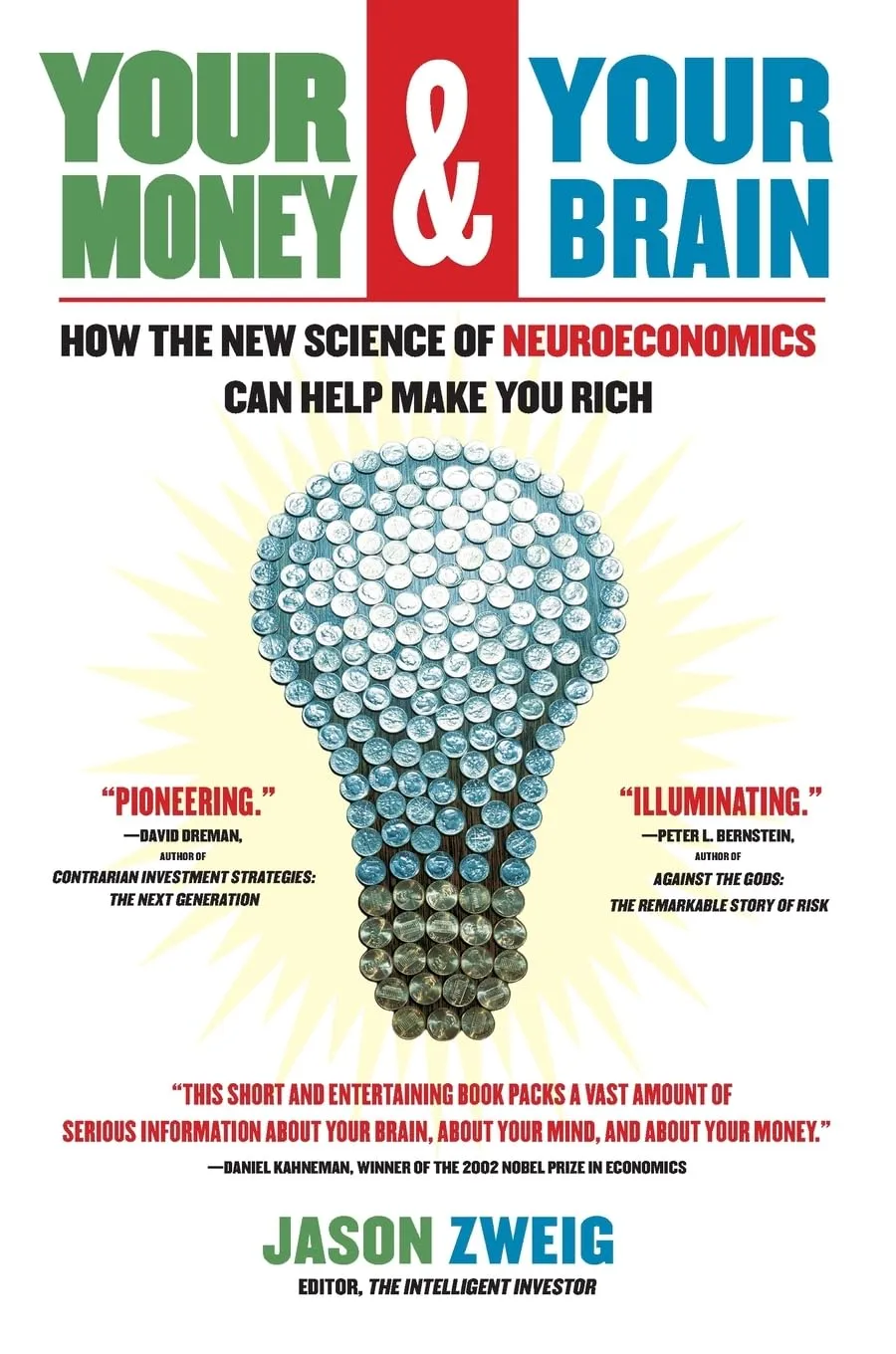
| Your Money and Your Brain (Zweig) | General | Neuroscience focus | Individual investors |
| Why Smart People Make Big Money Mistakes (Belsky-Gilovich) | Beginners | Accessible | Personal finance decisions |
| The Little Book of Behavioral Investing (Montier) | Intermediate | Practitioner focus | Stock selection |
Shefrin's book is the most academically rigorous and most applicable to professional portfolio management. It is harder reading than the others but provides the deepest framework.
Strengths & Weaknesses
What We Loved
Areas for Improvement
Who Should Read This Book
Highly Recommended For
Probably Not For
Frequently Asked Questions
Q: Should I read this or Thinking, Fast and Slow?
A: Both, in this order. Thinking, Fast and Slow for the theoretical foundation, Beyond Greed and Fear for the investment-specific applications and deeper treatment of professional investor errors.
Q: Is this book still relevant despite being published in 1999?
A: The behavioral finance principles are timeless. The heuristics, biases, and frame dependence Shefrin documents are stable features of human psychology. A 2025 study in the Journal of Financial and Quantitative Analysis confirmed that 34% of financial professionals still exhibit the disposition effect Shefrin described in 1985. The frameworks are as applicable today as they were when the book was written.
Q: Has the disposition effect been confirmed in more recent research?
A: Yes. A 2025 AEA conference paper showed that the disposition effect and overconfidence feed each other in a loop. Investors who sell winners more readily than losers build a biased mental track record that makes them overconfident, leading to more trading and lower profits. This confirms the mechanism Shefrin outlined in the book.
Final Verdict
Rating: 4.3/5
Beyond Greed and Fear is the most academically rigorous behavioral finance book accessible to non-academics. Its behavioral portfolio theory, professional investor error analysis, and disposition effect research are uniquely valuable for serious investors. The 2025 research confirming that 34% of financial professionals still exhibit the disposition effect validates Shefrin's core thesis: behavioral biases are not a retail-only problem. They are a human problem that affects every level of the investment industry.
If you are serious about understanding why you make the money mistakes you do, pick up this book. Then use our investment return calculator to see what avoiding just one or two behavioral errors per year could mean for your portfolio over a decade.
Get Your Copy
Paperback: Buy on Amazon
Kindle: Buy on Amazon
Prices current as of publication date. Free shipping available with Prime.