*Disclosure: This article contains affiliate links. If you purchase through these links, we may earn a commission at no additional cost to you. We only recommend books we genuinely believe in.
Quick Overview
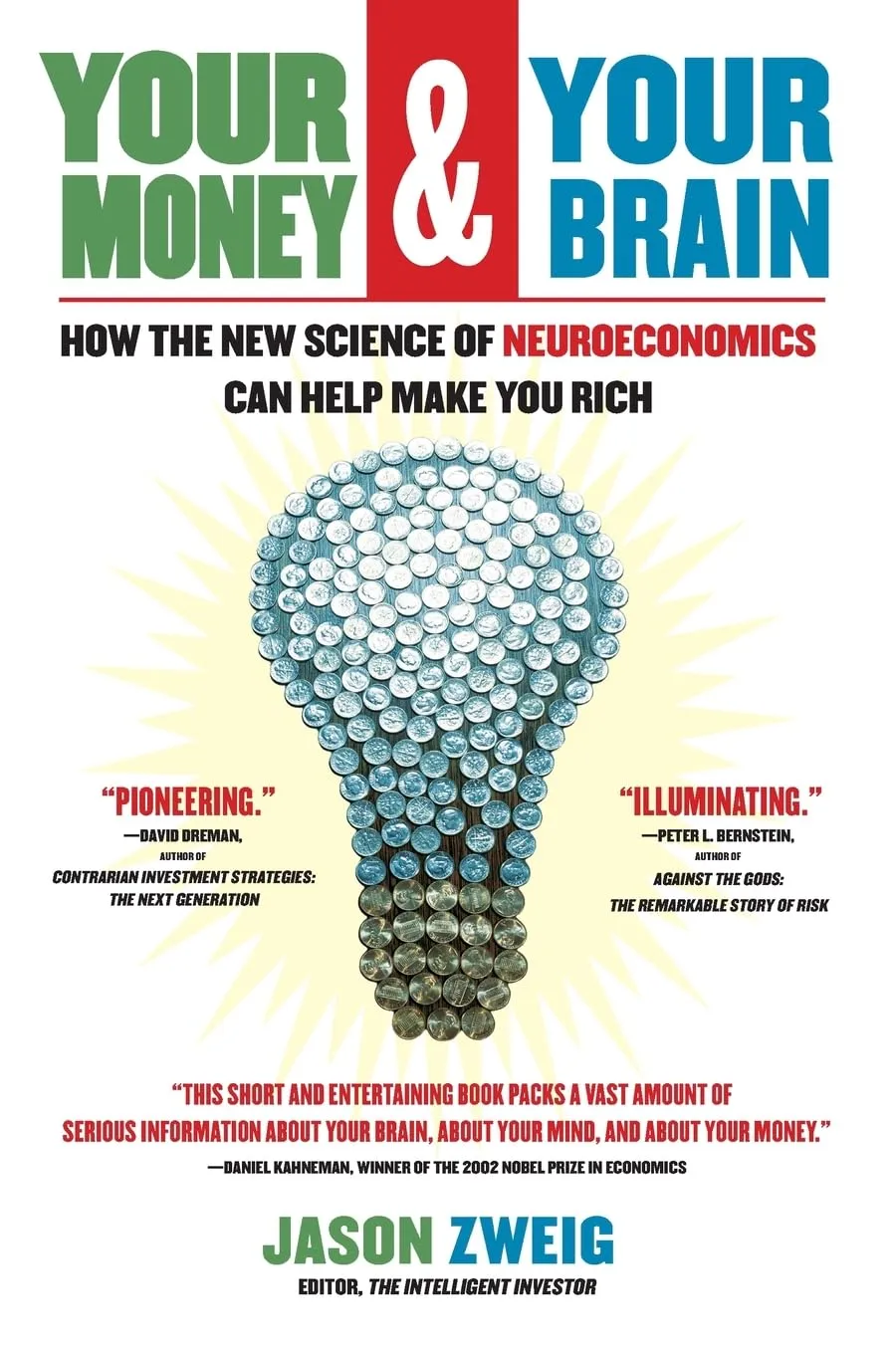
Jason Zweig is the personal finance columnist for The Wall Street Journal and one of the sharpest minds in behavioral finance. He spent two years interviewing leading neuroscientists and reviewing brain imaging studies to understand the biological roots of investment mistakes. Your Money and Your Brain reveals that investment errors are not just psychological habits. They are driven by deep neural circuitry that evolved for a world very different from financial markets. Understanding the hardware explains why willpower alone is not enough to fix investment behavior.
The field of neuroeconomics has advanced significantly since the book was published. A 2026 NBER working paper by Chen, Lin, Wu, Zheng, and Zou titled "Beta for Alpha: Neural Engagement in Financial Trading" extended the neural trading research that Zweig helped popularize. Zweig himself continues to write about neuroeconomics on his website, noting in a recent CFA Institute interview with Duke University's Scott Huettel that the biological responses he described in 2007 are "automatic and involuntary," making it vital for investors to put policies in place before the heat of the moment. A 2026 study in the Journal of Economic Behavior & Organization provided the first causal evidence that the "pain of paying" activates genuine affective pain circuits in the anterior insula, confirming the neural basis for the financial behaviors Zweig described.
I read this book after experiencing my own panic sell during a market correction. What I learned was that my reaction was not a character flaw. It was my amygdala doing exactly what it evolved to do. That understanding, combined with Zweig's practical debiasing techniques, fundamentally changed how I manage my portfolio. I now check my portfolio quarterly instead of daily, and I have written investment rules that I follow regardless of how I feel.
Book Details
| Attribute | Details |
|---|---|
| Title | Your Money and Your Brain |
| Author | Jason Zweig |
| Publisher | Simon & Schuster |
| Published | 2007 |
| Pages | 288 |
| Reading Level | Beginner to Intermediate |
| Amazon Rating | 4.4/5 stars |
Get Your Copy
Paperback: Buy on Amazon
Kindle: Buy on Amazon
About the Author
Jason Zweig has been the personal finance and investing columnist at The Wall Street Journal since 2008. He previously worked at Money magazine and Forbes. He edited the revised edition of Benjamin Graham's The Intelligent Investor (2003), adding contemporary commentary to each chapter. His writing is known for combining rigorous research with practical advice and dry wit. He continues to write about neuroeconomics on his website, jasonzweig.com, where he maintains a collection of articles extending the research from Your Money and Your Brain.
The Neuroscience of Investment Mistakes
Zweig's central insight: the brain structures that generate investment errors evolved to help our ancestors survive in an uncertain, resource-scarce environment. They are not bugs. They are features that are simply miscalibrated for modern financial markets.
The Reflexive vs. Reflective Brain
Zweig describes two brain systems (predating Kahneman's System 1/System 2 framework by several years):
The reflexive system: Fast, automatic, emotional, pattern-seeking. Evolved over millions of years. Reacts instantly to threats and rewards. Cannot be turned off.
The reflective system: Slow, deliberate, logical, forward-looking. Evolved more recently. Requires conscious effort. Can be overridden by the reflexive system under emotional stress.
Investment decisions require the reflective system but are routinely hijacked by the reflexive system under conditions of:
The Seven Financial Emotions
1. Greed
The neuroscience: the nucleus accumbens (the brain's reward center) responds to the anticipation of gains. Brain imaging studies show that anticipating a financial gain activates the same neural pathways as cocaine or sex. The anticipation, not the gain itself, drives the behavior.
Why this creates problems:
When returns have been high recently, the anticipation of continued gains creates a dopamine-driven state that suppresses risk assessment. Investors in this state:
Historical greed spikes and their consequences:
| Period | Indicator | Subsequent Return |
|---|---|---|
| 1999 Q4 | AAII sentiment 75% bullish | S&P down 49% over next 3 years |
| 2007 Q3 | Household equity allocation at record highs | S&P down 55% over next 18 months |
| 2021 Q1 | Retail trading volume at all-time highs | S&P down 25% through 2022 |
The debiasing technique: When you feel excited about an investment because it has recently done well, that excitement is a warning signal, not a buy signal. Force a cold analysis of current valuation before buying more.
2. Prediction
The brain is a prediction machine. It seeks patterns obsessively and finds them even in random data. This creates an illusion of predictability in markets that are substantially random.
The neuroscience:
Brain imaging shows that after a random sequence of wins and losses, the brain begins constructing a predictive model regardless of whether any predictable pattern exists. Areas of the brain involved in pattern recognition activate even when they are being applied to pure noise.
The investment consequence:
Investors believe they can predict:
The evidence on all of these:
| Prediction Type | Hit Rate of Professionals | Hit Rate of Random Guess |
|---|---|---|
| Market timing calls (correct direction) | ~50-52% | 50% |
| Fund manager future outperformance | ~45% (below random) | 50% |
| Economic forecasts | ~55% | 50% |
| Analyst earnings estimates | Wrong by >20% over 2 years in majority of cases | - |
The debiasing technique: Every time you feel confident about a market prediction, recall the base rate: professionals are barely better than random. Apply the outside view: what percentage of such predictions are actually correct?
3. Fear
The amygdala (the brain's fear center) responds to financial losses roughly twice as powerfully as it responds to equivalent gains, a biological basis for Kahneman's loss aversion.
The neuroscience of financial fear:
Brain imaging during simulated trading shows:
Why investors sell at market bottoms:
Market bottoms are precisely the moments of maximum fear, and therefore the moments when the amygdala is most suppressing reflective reasoning. Selling at the bottom is not irrational human weakness; it is a predictable consequence of biological hardware responding exactly as designed.
Historical fear spikes:
| Event | VIX Peak | Market Action | 12-Month Forward S&P Return |
|---|---|---|---|
| 2008-09 Crisis | 80 | Mass panic selling | +68% from March 2009 low |
| 2020 COVID | 83 | Mass panic selling | +74% from March 2020 low |
| 2022 Bear Market | 37 | Significant outflows | +26% from October 2022 low |
The highest-fear periods have historically been the best buying opportunities, but the biological fear response makes buying at these moments extremely difficult. This is why maintaining appropriate asset allocation through a rules-based process matters more than trying to time the market.
The debiasing technique: Pre-commit to specific rules for market declines before they happen. Write down: "If the market falls 20%, I will [buy more / hold steady / rebalance]. I will not sell." Having this commitment written before the fear state arrives is more effective than trying to reason through it during the panic.
4. Surprise
The brain responds intensely to unexpected events, both positive and negative. Unexpected gains produce larger dopamine spikes than expected gains of the same magnitude. Unexpected losses produce more fear than expected losses.
The earnings surprise phenomenon:
Companies that beat earnings estimates more than expected produce larger stock price reactions than companies that meet expectations. Companies that miss estimates produce larger selloffs than companies that meet lowered expectations. The surprise element matters as much as the absolute magnitude.
Investment implication: The market's reaction to news reveals information about expectations. A stock that falls on good news was priced for great news. A stock that rises on mediocre news was priced for terrible news. The direction of reaction relative to the news is often more informative than the news itself.
5. Overconfidence
The brain systematically overestimates its own capabilities. This is not simply a cognitive error but is likely adaptive: slightly overconfident individuals take more risks and achieve more on average than accurately self-assessed individuals (who might not attempt difficult goals).
The financial damage:
Overconfidence drives:
Gender differences:
Multiple studies show that male investors trade approximately 45% more frequently than female investors and earn approximately 1.4% less annually as a result. The overconfidence is gender-differentiated in degree, not kind.
The debiasing technique: Zweig's most actionable: keep an investment journal. Before every trade, write down:
Review these predictions annually. The documented gap between predicted and actual outcomes will calibrate overconfidence more effectively than any intellectual argument.
6. Risk
The brain does not evaluate risk in absolute terms. It evaluates risk relative to a reference point. This creates the framing effects that Kahneman documented.
Reference-point dependence:
| Scenario | Framing | Typical Choice |
|---|---|---|
| Choose between certain $5K gain or 50% chance at $10K | Gain frame | Certain gain (risk averse) |
| Choose between certain $5K loss or 50% chance at $10K loss | Loss frame | Gamble (risk seeking) |
The same expected value ($5K) produces opposite risk preferences depending on whether it is framed as a gain or a loss. This is why investors hold losers too long (hoping to avoid "locking in the loss") and sell winners too early (wanting to secure the gain).
The debiasing technique: Remove the original purchase price from your analysis. Ask only: "Given today's price, does this position represent the best use of this capital going forward?" The purchase price is irrelevant. It is a number from the past that no longer exists.
7. Regret
The anticipation of regret drives investors to make decisions that minimize the feeling of having been wrong, even when they increase the probability of poor outcomes.
Regret-driven behaviors:
| Behavior | Regret Being Avoided | Actual Effect |
|---|---|---|
| Buying popular index fund rather than contrarian pick | "I missed the crowd" | Suboptimal: herd behavior |
| Holding losers rather than selling | "I locked in the loss" | Suboptimal: sunk cost fallacy |
| Not rebalancing aggressively | "I sold the winner too soon" | Suboptimal: drift from target |
| Buying after run-up | "I missed the move" | Suboptimal: chasing returns |
The debiasing technique: Distinguish between errors of commission (doing something wrong) and errors of omission (not doing something right). Most investors regret actions more than inactions. But the financial costs of missing opportunities (omission) are often just as large as the costs of making mistakes (commission). Balanced regret assessment leads to better decisions.
The Neural Basis of Common Investment Mistakes
The Hot Hand Fallacy (Neural Version)
Brain imaging shows that after a series of wins, the nucleus accumbens and caudate nucleus (both dopaminergic reward areas) become increasingly active with each additional win. This creates a biological expectation of continued winning that is not grounded in probability.
The "hot hand," the belief that winning streaks continue, is a neural phenomenon, not just a cognitive one. It drives chasing behavior (buying funds or strategies that have recently won) despite strong evidence that past performance predicts nothing.
Loss Aversion (Neural Version)
The amygdala activates more strongly to losses than to equivalent gains. This is not a cognitive bias that can be "corrected" through education. It is a biological reality. The brain is built to feel losses more intensely than gains.
What this means for portfolio management:
The Zweig principle: "The more often you check your portfolio, the more frequently you will experience losses (because short-term returns are roughly random), and the more loss-aversion responses you will trigger. Check quarterly at most."
Practical Applications
Building a Brain-Proof Investment System
Zweig's recommendation for designing an investment system that accounts for your neural limitations:
| System Feature | Neural Problem Addressed |
|---|---|
| Automatic contributions | Prevents loss-aversion-driven pauses during declines |
| Automatic rebalancing | Removes greed/fear from buy/sell decisions |
| Minimal checking frequency | Reduces loss-aversion trigger frequency |
| Written investment policy | Pre-committed rules override emotional states |
| Pre-mortem analysis | Counteracts overconfidence before investing |
| Investment journal with predictions | Calibrates overconfidence and prediction accuracy |
| Long-term benchmark (10+ years) | Prevents short-term pattern-matching to noise |
The Most Important Rule
Zweig's summary: design your investment system so that the correct action (hold through declines, buy more during crashes, rebalance) requires the least effort, while the harmful action (panic selling, chasing winners) requires the most effort.
Automation achieves this. Automatic contributions, automatic rebalancing, and minimum checking frequency make the correct behavior the default and the harmful behavior an active override.
Strengths & Weaknesses
What We Loved
Areas for Improvement
Who Should Read This Book
Highly Recommended For
Probably Not For
Frequently Asked Questions
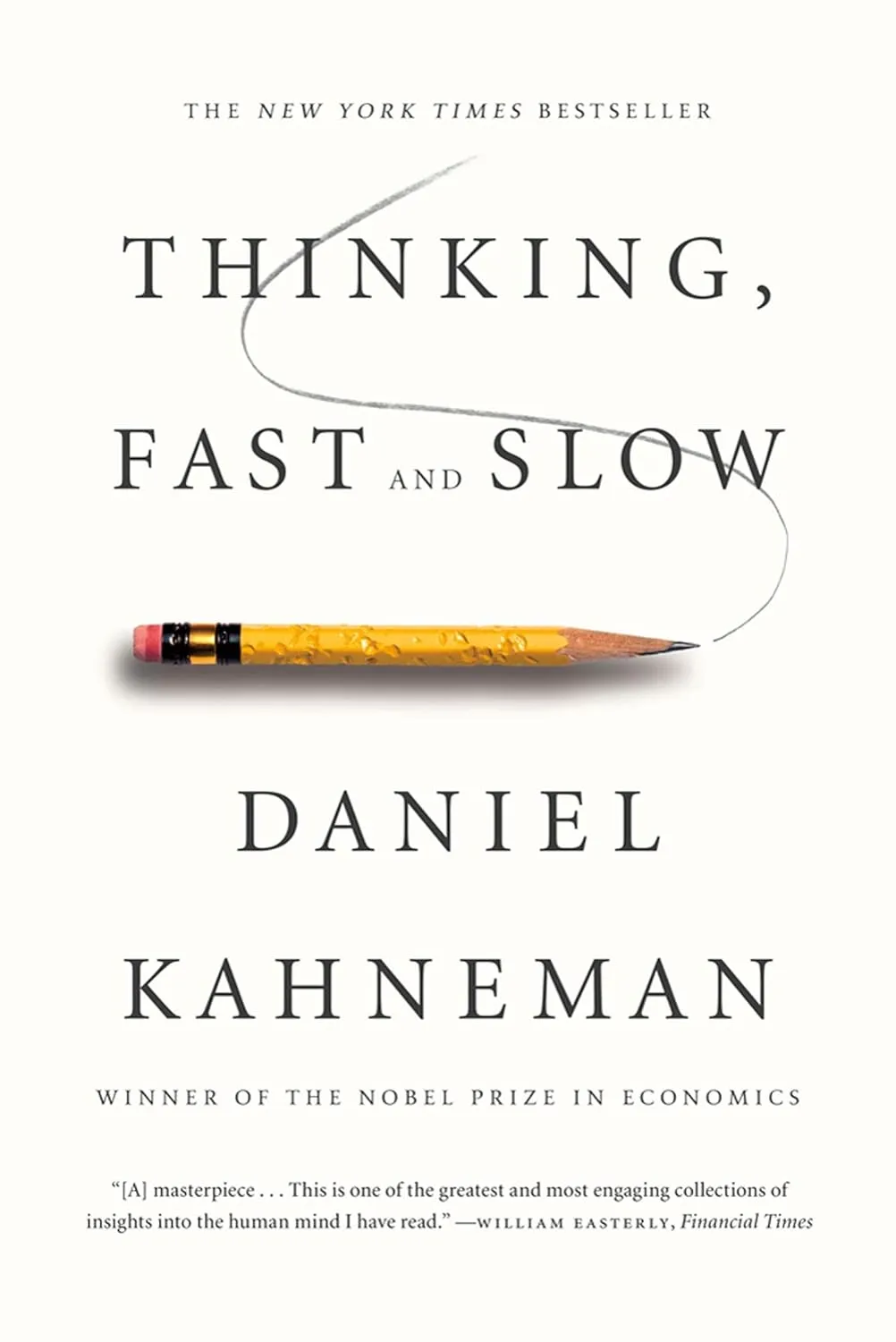
Q: Is this different from Thinking, Fast and Slow?
A: Yes. Kahneman's book is broader and more theoretical. Zweig's is narrower and more specifically focused on investment decisions, with practical debiasing techniques for each bias. Read both for the complete picture.
Q: Does knowing about these biases actually help?
A: Research shows that awareness alone reduces but does not eliminate bias. The most effective interventions combine awareness with process design, automating decisions so the biased brain never gets to act on its impulses. A 2026 NBER working paper on neural engagement in financial trading confirmed that the biological responses Zweig described remain automatic and involuntary, reinforcing the need for pre-commitment rules.
Final Verdict
Rating: 4.5/5
Your Money and Your Brain is the essential neuroeconomics guide for investors. Its biological explanation of investment errors is more convincing than purely cognitive accounts, and its practical debiasing techniques are specific and implementable. The investment journal recommendation alone is worth the price of the book. Nearly two decades after publication, the core neuroscience remains robust, and 2026 research on neural engagement in financial trading has only reinforced Zweig's central message: your brain's automatic responses to financial gains and losses are involuntary, and the only effective defense is pre-commitment rules that take the decision out of your hands before the heat of the moment. If you have ever sold at the bottom or bought at the top and wondered why, this book will explain exactly what happened in your brain and how to prevent it from happening again.
Get Your Copy
Paperback: Buy on Amazon
Kindle: Buy on Amazon
Prices current as of publication date. Free shipping available with Prime.