*Disclosure: This article contains affiliate links. If you purchase through these links, we may earn a commission at no additional cost to you. We only recommend books we genuinely believe in.
Quick Overview
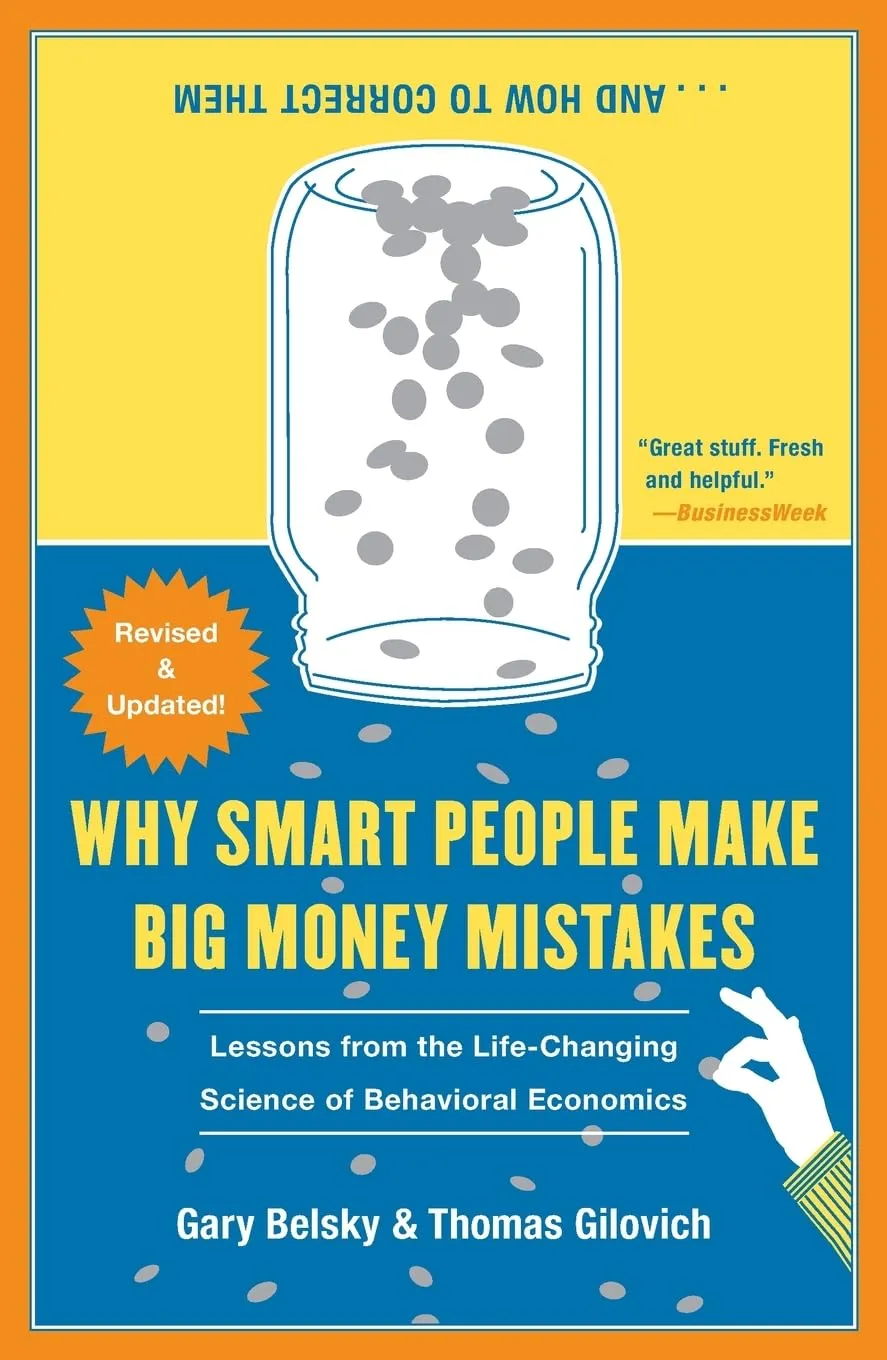
Gary Belsky was a personal finance writer at Money magazine; Thomas Gilovich is a Cornell psychology professor and leading researcher on cognitive biases. Together they produced the most directly actionable behavioral finance book for personal financial decisions, cataloging specific mistakes with specific remedies, written for people who have never studied economics or psychology. If you want to understand why you make the financial decisions you do and how to make better ones, this is the right starting point.
The book's eight-mistake framework remains remarkably durable. A 2025 study published in the Review of Behavioral Finance introduced a Behavioral Performance Attribution framework that quantified how biases like action bias and portfolio concentration bias explain between 43% and 64% of retail investors' excess returns. The biases Belsky and Gilovich described in 1999 are not just anecdotal patterns. They are measurable, significant drivers of underperformance that modern research continues to validate. A 2026 study published in the Journal of Economic Behavior & Organization provided the first causal evidence that the "pain of paying" activates genuine affective pain circuits in the brain, confirming the neural basis for the mental accounting and loss aversion chapters.
I have recommended this book to more friends than any other finance title. The reason is simple: most people know they should save more, invest in index funds, and avoid timing the market. They fail not because they lack knowledge but because their brains are wired to sabotage their financial decisions. This book names the specific biases and gives you specific fixes for each one.
Book Details
| Attribute | Details |
|---|---|
| Title | Why Smart People Make Big Money Mistakes |
| Authors | Gary Belsky & Thomas Gilovich |
| Publisher | Simon & Schuster |
| Published | 1999 |
| Pages | 272 |
| Reading Level | Beginner to Intermediate |
| Amazon Rating | 4.3/5 stars |
Get Your Copy
Paperback: Buy on Amazon
Kindle: Buy on Amazon
About the Authors
Gary Belsky was a senior editor at Money magazine and is co-founder of Elias Sports Bureau. Thomas Gilovich is a professor of psychology at Cornell University whose research on cognitive biases, luck, and money has been cited thousands of times. His academic work on the hot hand fallacy and hindsight bias are among the most replicated findings in psychology. A 2025 study in the Journal of Financial and Quantitative Analysis extended Gilovich's work on belief updating, showing that even financial professionals exhibit non-Bayesian belief updating that drives the disposition effect, selling winners too early and holding losers too long.
The Eight Most Costly Money Mistakes
Mistake 1: Mental Accounting
People divide money into mental accounts, "vacation money," "investment money," "windfall money," and treat each differently even though every dollar has identical purchasing power regardless of its source.
The practical examples:
House money effect: Someone who just won $500 at a casino treats it as "gambling money" and bets it more recklessly than they would their regular savings. The $500 is just as real and just as useful regardless of how it was obtained.
Segregated budgets: A couple has a "going out" budget of $200/month and a "grocery" budget of $500/month. They will skip a dinner they both want because the going-out budget is exhausted, while $200 sits unused in the grocery budget. The optimal choice, use the grocery surplus to fund the dinner, is blocked by the mental account separation.
Investment paralysis: An investor holds a losing stock because selling it would "make the loss real." The loss is real now regardless of whether they sell. The only relevant question is whether the stock represents the best use of that capital going forward. This connects directly to the sunk cost fallacy discussed below.
The fixes:
| Mental Accounting Error | Fix |
|---|---|
| House money recklessness | Treat every dollar identically regardless of source; convert windfalls to checking account immediately |
| Budget rigidity | Review all discretionary budgets together monthly; shift freely between categories |
| Break-even holding | Ask "Would I buy this today at this price?" If no, sell regardless of purchase price |
Mistake 2: Loss Aversion
Losses feel approximately twice as painful as equivalent gains feel pleasurable. This causes systematic mistakes:
Selling winners too early: The pleasure of locking in a gain overcomes the rational calculation that a still-undervalued winner should be held.
Holding losers too long: The pain of locking in a loss causes investors to hold losing positions waiting to break even, sometimes for years, even when the money is better deployed elsewhere. A 2025 study in the Journal of Financial and Quantitative Analysis found that 34% of financial professionals exhibit this disposition effect, driven primarily by non-Bayesian belief updating rather than risk preferences. If professionals struggle with this, individual investors face an even steeper battle.
The Belsky-Gilovich loss aversion test:
Would you accept this bet: a coin flip where you win $200 on heads and lose $100 on tails?
Expected value: +$50. Most people refuse. The potential $100 loss (painful) outweighs the expected $50 gain (pleasant). This is loss aversion making you reject positive expected value.
The stock-specific version:
Most investors hold stocks until they either double or return to their purchase price. Both rules are loss aversion in action, they are pegged to a reference point (purchase price) rather than to a rational assessment of current value.
The fixes:
Mistake 3: Sunk Cost Fallacy
Money already spent is gone. It should not influence future decisions. Yet it powerfully does.
The restaurant example:
You have a $100 non-refundable restaurant reservation. The day arrives and you feel ill. You go anyway because you "already paid." This is the sunk cost fallacy. The $100 is gone whether you go or not. The relevant question is whether going to the restaurant while ill is better than staying home. For most people, the answer is no.
Investment examples:
| Sunk Cost Decision | The Error | The Correct Question |
|---|---|---|
| Holding bad stock to break even | Past price is sunk | Is this the best investment at today's price? |
| Keeping subscription you don't use | Past months are sunk | Does the future value justify the cost? |
| Finishing a bad book | Time already spent is sunk | Is the next hour better spent reading this or something else? |
| Staying in a bad job because of "invested years" | Past years are sunk | Is this the best use of my future career time? |
The fix: When evaluating whether to continue anything, an investment, a project, a relationship, treat the past as a sunk cost and ask only about the future: "Given where things are today, what is the best path forward?"
Mistake 4: Anchoring
People rely too heavily on the first piece of information encountered (the "anchor") when making numerical estimates.
The home price anchor:
When sellers set an asking price, buyers anchor to it. Studies show that higher listing prices produce higher final sale prices for identical homes. The listing price anchors the negotiation.
The stock price anchor:
Investors often anchor to a stock's 52-week high or their purchase price. These numbers are irrelevant to the stock's intrinsic value but powerfully influence whether investors perceive it as "cheap" or "expensive."
Example: A stock that traded at $80 six months ago and is now at $40 feels cheap (50% off the anchor). A stock that traded at $20 six months ago and is now at $40 feels expensive (doubled). Neither feeling has anything to do with intrinsic value or fair value.
The salary negotiation anchor:
The first number stated in a salary negotiation strongly anchors the final outcome. Candidates who state a specific (high) number first typically achieve better outcomes than those who let the employer anchor the negotiation.
The fixes:
Mistake 5: Gambler's Fallacy (and the Hot Hand)
The gambler's fallacy: believing that a random sequence "must" reverse. "The roulette wheel has landed on red six times, it's due for black."
The hot hand fallacy: believing that a random sequence "must" continue. "This fund has beaten the market three years in a row, it's on a roll."
Both represent the same error: treating random sequences as if they have memory.
Investment applications:
| Fallacy | Investment Behavior | Why It's Wrong |
|---|---|---|
| Gambler's fallacy | Buying fallen stocks expecting reversal (mean reversion) | Individual stocks don't "owe" reversals |
| Hot hand fallacy | Buying recent top-performing funds | Past fund performance does not predict future |
Note: Some mean reversion is real. Market P/E ratios do revert toward historical averages over very long periods. The difference is that this reversion is grounded in economics (overvaluation corrects), not in random sequence properties.
The fix: Distinguish between economically-grounded mean reversion (market valuations, corporate profit margins) and random sequence fallacy (individual stock or mutual fund performance). Require an economic mechanism to justify any mean-reversion expectation.
Mistake 6: Overconfidence
People consistently overestimate the accuracy of their own knowledge and the quality of their own judgment.
The calibration test:
When people say they are "90% confident" in their answer to a trivia question, they are correct only about 70% of the time. People are systematically overconfident in ways that research consistently documents.
Investment overconfidence:
The overconfidence in prediction hierarchy:
| Prediction Type | Actual Accuracy | Felt Confidence |
|---|---|---|
| Market direction next year | ~50% | Very high |
| Individual stock return | ~50% | High |
| Earnings forecast 2 years out | Wrong by >20% in majority of cases | High |
| Economic recession timing | Widely missed | High |
The fix: Deliberately seek out and engage with the strongest arguments against your investment thesis. Find people who disagree and understand their arguments. Explicitly state a probability rather than a direction, "I think there's a 65% chance this works," which forces acknowledgment of the 35% chance it does not.
Mistake 7: Herd Behavior
People follow the crowd even when the crowd is clearly wrong, because going against the crowd feels psychologically costly even when it is analytically correct.
The conformity research:
Solomon Asch's famous line-matching experiments demonstrated that people will state clearly wrong answers to match a group consensus. The same pressure operates in investment decisions, it is socially costly to hold contrarian positions that your peers, advisors, and financial media are ridiculing.
The investment cost of herd behavior:
Mutual fund flows consistently show investors putting money into markets after strong performance (when prices are high) and withdrawing after weak performance (when prices are low). This perfectly anti-optimal behavior is driven by herding, going where the crowd is going. You can see this pattern in volatility spikes where retail outflows peak exactly at market bottoms.
The Belsky-Gilovich observation: The best investment opportunities almost always feel uncomfortable. A truly cheap stock is cheap because most investors are selling it. A truly expensive sector is expensive because most investors are buying it. Comfort and investment quality are inversely correlated at the extremes. This is why maintaining appropriate asset allocation through a rules-based process matters more than picking the right stocks.
The fix:
Mistake 8: Status Quo Bias
People prefer the current state of affairs even when alternatives are objectively better. Inertia is more powerful than rational analysis.
Financial examples of status quo bias:
| Situation | Status Quo | Better Alternative | Why Status Quo Wins |
|---|---|---|---|
| 401(k) contribution | 3% default | 10% for retirement security | Default enrollment creates inertia |
| Fund selection | Original fund selected | Cheaper index fund | Switching feels effortful and scary |
| Insurance | Current insurer | Comparable coverage 25% cheaper | Switching is work |
| Savings rate | Current rate | Higher rate enabling earlier retirement | Change is uncomfortable |
| Asset allocation | Whatever it was 10 years ago | Target allocation after rebalancing | Rebalancing requires selling winners |
The fix:
The most powerful remedy for status quo bias is automation, making the better alternative the default. Once an automatic 401(k) contribution is set up, the status quo is the optimal behavior. Once automatic rebalancing is configured, the status quo is a well-managed portfolio. Design your financial systems so that the correct behavior is the path of least resistance. Use our budget calculator to identify where status quo bias is costing you the most.
The Practical Remedies Summary
Belsky and Gilovich provide specific, implementable remedies for each bias:
| Bias | Quick Fix |
|---|---|
| Mental accounting | Treat every dollar identically regardless of source or category |
| Loss aversion | Evaluate positions from today's price, not purchase price |
| Sunk cost fallacy | Ask "What's the best path from here?" not "How do I recover what I've lost?" |
| Anchoring | Estimate value before looking at price; set your own anchors in negotiations |
| Gambler's/Hot hand fallacy | Require economic mechanism for any trend expectation |
| Overconfidence | Assign probabilities; engage with counterarguments |
| Herd behavior | Pre-commit to rules; buy what's unpopular |
| Status quo bias | Automate optimal behavior as the default |
How This Book Differs From Kahneman
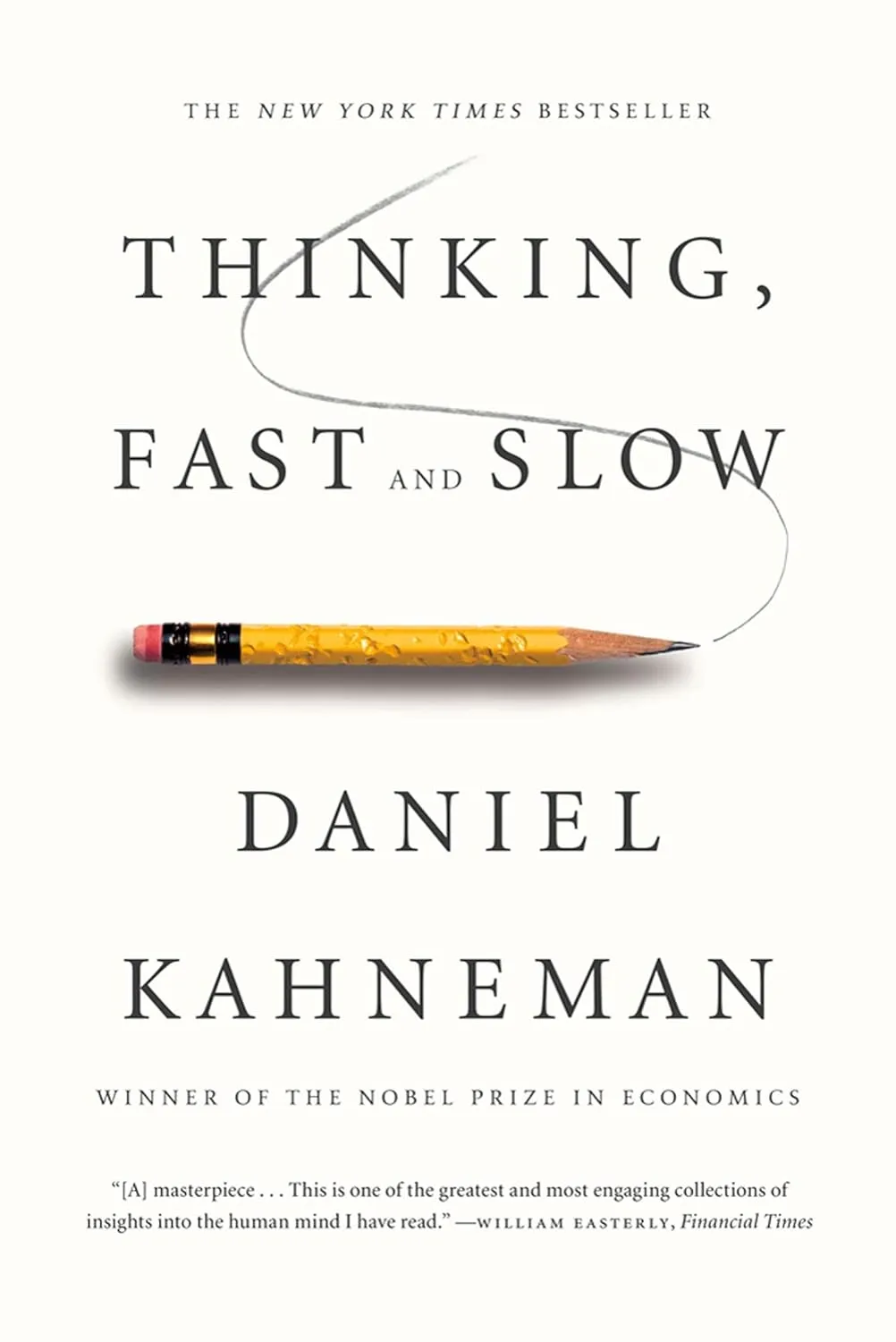
Kahneman's Thinking, Fast and Slow provides the deep theoretical framework for all these biases. Belsky and Gilovich provide a more accessible, more directly actionable treatment focused on personal financial decisions specifically. The two books are complementary:
A 2026 study in Discover Psychology (Springer Nature) confirmed that financial literacy significantly moderates the relationship between behavioral biases and investment decisions, reducing the negative impact of biased behavior. This validates the Belsky-Gilovich approach: understanding the biases plus having practical fixes produces better outcomes than either alone.
Strengths & Weaknesses
What We Loved
Areas for Improvement
Who Should Read This Book
Highly Recommended For
Probably Not For
Frequently Asked Questions
Q: Should I read this or Thinking, Fast and Slow?
A: Both, but in different situations. Belsky-Gilovich for immediately actionable personal finance guidance; Kahneman for deep theoretical understanding. Belsky-Gilovich is a much faster read.
Q: What is the single most impactful fix in the book?
A: Automation to override status quo bias, particularly maximizing 401(k) contributions and setting up automatic rebalancing. These two changes compound to hundreds of thousands of dollars difference over a career. Use our FIRE calculator to see how increasing your savings rate changes your timeline to financial independence.
Q: Are these biases still relevant in 2026?
A: More than ever. A 2025 Behavioral Performance Attribution study found that action bias and portfolio concentration bias explain up to 64% of retail investor excess returns. The biases have not gone away. If anything, the rise of zero-commission trading and social media investing communities has amplified herd behavior and overconfidence.
Final Verdict
Rating: 4.4/5
Why Smart People Make Big Money Mistakes is the most accessible behavioral finance book for personal financial decisions. Its eight-mistake framework and concrete fixes provide immediate value. Every investor will recognize their own patterns in at least several of the mistakes. Nearly three decades of subsequent research, including 2025 and 2026 studies on behavioral performance attribution and the neural basis of the pain of paying, have validated rather than superseded its core insights. If you want one book that will change how you make financial decisions, this is it.
Get Your Copy
Paperback: Buy on Amazon
Kindle: Buy on Amazon
Prices current as of publication date. Free shipping available with Prime.