*Disclosure: This article contains affiliate links. If you purchase through these links, we may earn a commission at no additional cost to you. We only recommend books we genuinely believe in.
Quick Overview
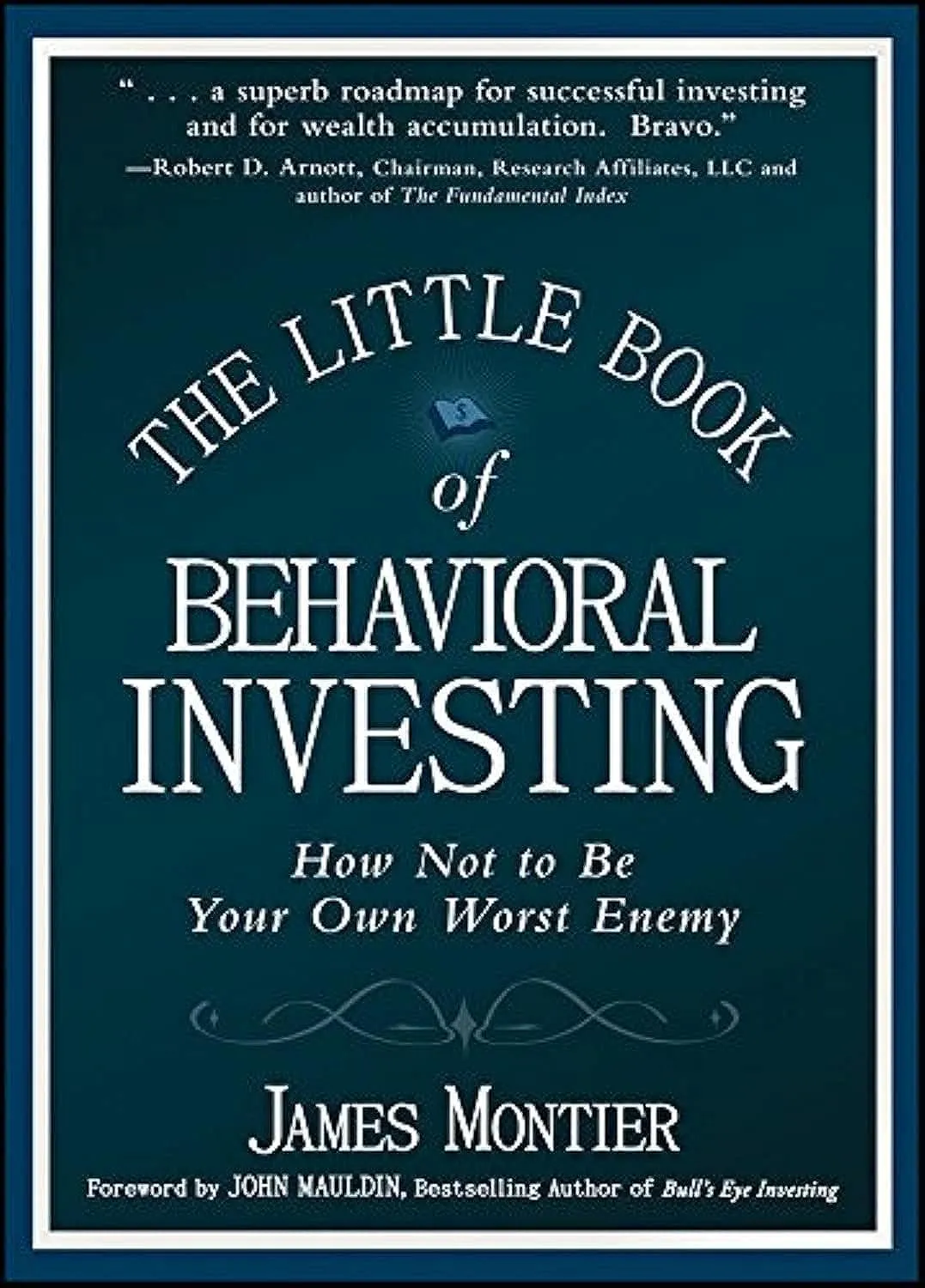
Every investor knows they should buy low and sell high. Almost nobody does it. James Montier spent years as a global equity strategist at Societe Generale, one of the top-rated strategy teams on the Street, before joining GMO (Grantham Mayo Van Otterloo), Jeremy Grantham's legendary value-oriented asset management firm. His Little Book of Behavioral Investing is the most directly investment-applicable behavioral finance book available. It is not a general psychology text. It is a practitioner's guide to the specific biases that destroy investment returns, with specific debiasing strategies for each.
The book hits differently in 2026. After the AI-driven market rally of 2024-2025, where the S&P 500's volatility spiked repeatedly on earnings surprises from a handful of mega-cap tech stocks, Montier's warnings about overconfidence and herding feel freshly urgent. GMO's own 2025 quarterly letter noted that investor sentiment had reached levels associated with bubble conditions, echoing themes Montier explored in this book. When I first read it in 2020, during the pandemic crash, I recognized every bias he described in my own behavior. I had held losers too long, sold winners too early, and chased performance exactly as he predicted. The book gave me a framework for understanding why, and more importantly, how to stop.
Book Details
| Attribute | Details |
|---|---|
| Title | The Little Book of Behavioral Investing |
| Author | James Montier |
| Publisher | Wiley |
| Published | 2010 |
| Pages | 208 |
| Reading Level | Intermediate |
| Amazon Rating | 4.4/5 stars |
Get Your Copy
Hardcover: Buy on Amazon
Kindle: Buy on Amazon
About the Author
James Montier is a member of GMO's asset allocation team. He previously led global equity strategy at Societe Generale where his research on behavioral finance applied to investment decisions was widely followed by institutional investors. He is the author of Behavioural Finance, Value Investing, and The Little Book of Behavioral Investing. His writing is known for combining rigorous academic research with practical investment application. Montier is also a prolific research paper author, and his work on the psychology of investing continues to be cited in academic literature. A 2025 survey of behavioral finance research published in the Journal of Behavioral Finance referenced Montier's debiasing framework as one of the few practitioner-focused approaches with empirical support.
The Investment Biases That Kill Returns
Bias 1: Overconfidence
Research consistently shows that investors are overconfident in their own abilities. When professional fund managers are asked whether their performance will be above average, approximately 75% say yes, a mathematical impossibility.
Overconfidence in trading frequency:
Studies of retail investor accounts show that overconfident investors trade more frequently, and the more they trade, the worse they perform:
| Trading Frequency | Average Annual Return (Barber & Odean study) |
|---|---|
| Lowest quintile (buy and hold) | 18.5% |
| 2nd quintile | 16.4% |
| 3rd quintile | 15.3% |
| 4th quintile | 13.7% |
| Highest quintile (most active) | 11.4% |
The most active traders earned 7.1% less annually than the least active. The primary cause: transaction costs, bid-ask spreads, and buying high/selling low in response to overconfident predictions. This pattern has only worsened in the age of zero-commission trading apps, which removed the friction that once restrained overconfident investors from trading too frequently.
The debiasing strategy: Build a pre-mortem into every investment decision. Before buying, ask: "In two years, this investment has failed. What went wrong?" This forces consideration of failure scenarios that overconfidence suppresses.
Bias 2: Self-Serving Bias
Investors attribute investment successes to their own skill and failures to bad luck or external forces. This prevents learning from mistakes.
Montier's evidence: When he surveyed professional investors about their track records, nearly all described themselves as better than average. When their actual returns were examined, the sample looked exactly like random chance with a slight negative bias (fees).
Debiasing strategy: Maintain a trading journal that documents:
This creates accountability that forces honest attribution of what worked and why.
Bias 3: Optimism
Investors systematically project higher future returns than base rates justify. Montier documents that professional earnings forecasts are consistently too optimistic:
| Forecast Horizon | Average Analyst Earnings Growth Forecast | Actual Earnings Growth |
|---|---|---|
| 1 year | +10-15% | +5-7% |
| 5 years | +10-15% | +5-7% |
The forecasts are wrong in the same direction (too high) year after year. Why? Analysts have incentives (investment banking relationships, management access) to maintain positive relationships with the companies they cover. A 2025 Morningstar study found that analyst earnings estimates remain systematically optimistic, with actual S&P 500 earnings falling short of consensus estimates by an average of 3-5% per quarter.
Investment implication: When building a financial model for a stock, run it with both optimistic and pessimistic assumptions. If the stock is only attractive under optimistic assumptions, the margin of safety is insufficient.
Bias 4: The Hot Hand Fallacy
Investors chase recent winners, buying funds that have done well recently and selling funds that have done poorly recently.
The evidence from Morningstar flows data:
| Fund Performance Quartile (Prior 3 Years) | Net Fund Flows |
|---|---|
| Top quartile (best performers) | Massive inflows |
| 2nd quartile | Modest inflows |
| 3rd quartile | Modest outflows |
| Bottom quartile (worst performers) | Large outflows |
The money flows exactly counter to what evidence suggests is optimal: top-performing funds typically mean-revert, while bottom-performing funds often recover. This is the recency bias that Montier identifies throughout the book, and it is the single most expensive behavioral mistake retail investors make.
Montier's finding: Funds in the top decile over three years are no more likely to remain in the top decile over the next three years than any other decile. Past performance does not predict future performance. The evidence for this is overwhelming.
Debiasing strategy: Evaluate funds based on their investment process and expense ratio, not on recent returns. A cheap, disciplined fund with a bad recent three years is often a better buy than an expensive fund with a great recent three years.
Bias 5: Neglect of the Outside View (Base Rate Neglect)
When making investment decisions, investors focus on the specific details of the case in front of them (the "inside view") while ignoring the base rate of success for similar situations (the "outside view").
Montier's example, earnings surprises:
Even with all the positive detail, the base rate is 50%. Ignoring the outside view leads to overconfidence. This concept, also known as base rate neglect, is one of the most damaging cognitive errors in investing.
The planning fallacy:
Applied to investing, base rate neglect causes investors to underestimate how long it will take for their thesis to play out and overestimate the probability of success. Most turnaround investments take 2-3 years longer than the original thesis suggested.
Debiasing strategy: Before any investment decision, ask: "What is the base rate for this type of situation?" Turnaround investing: what percentage of turnarounds succeed? Growth at reasonable price: what percentage of companies sustaining 20%+ earnings growth for 5+ years? Force consideration of the distribution of outcomes, not just your specific thesis.
Bias 6: The Empathy Gap
Investors in calm markets systematically underestimate how they will feel during market panics, and therefore underestimate how they will behave.
The evidence:
Studies show that people in cold states (calm, rational) make very different predictions about their own behavior in hot states (fearful, panicked) than they actually exhibit when those states arrive.
An investor who calmly selects a 100% equity portfolio in March 2006 based on a 30-year time horizon may find themselves selling in panic in March 2009, not because their time horizon changed but because the emotional intensity of a 50% portfolio decline was not adequately imagined during the calm asset allocation decision.
Debiasing strategy: Stress test your emotional capacity, not just your financial capacity. Before selecting an asset allocation, calculate the dollar value of a 40-50% drawdown. Could you genuinely watch your $500,000 portfolio decline to $250,000 without selling? If uncertain, reduce equity allocation to a level where the answer is more confidently yes. Your risk tolerance is lower than you think when markets are calm.
Bias 7: Information Overload
Counter-intuitively, more information does not improve investment decisions. It increases confidence while accuracy stays flat or declines.
Montier's evidence from a horse-racing study:
Experienced handicappers were given 5 data points, then 10, then 20, then 40 about each race. Their prediction accuracy did not improve beyond 5 data points. Their confidence in their predictions rose consistently with each additional piece of information.
The investment parallel: Professional analysts who follow companies with dozens of data points, management access, and detailed financial models are not more accurate than simple quantitative screens. The additional information increases confidence without improving accuracy. In 2026, with AI tools providing instant access to hundreds of data points per stock, this problem has intensified. More data does not mean better decisions.
Debiasing strategy: Identify the 2-3 variables that matter most for any investment decision and focus analysis on those. Additional information beyond the key drivers is typically noise that increases confidence without improving accuracy.
Bias 8: Loss Aversion and the Disposition Effect
The disposition effect: investors sell winners too early (to lock in gains) and hold losers too long (to avoid realizing losses).
The data from investor accounts:
Studies of retail brokerage accounts consistently show:
This behavior is costly because:
Debiasing strategy: Apply the same evaluation standard to every position: "If I did not hold this stock, would I buy it today at the current price?" If yes, hold. If no, sell, regardless of whether you have a gain or loss. Use our investment return calculator to model different scenarios and remove emotional bias from your decision.
Montier's Debiasing Framework
Montier synthesizes the individual bias discussions into a general framework for making better investment decisions:
Step 1: Rely on Simple Rules Over Complex Judgment
Research consistently shows that simple quantitative models outperform expert judgment in prediction tasks. This includes:
For investing: use quantitative screens (P/E, P/B, earnings yield) as the starting point and apply qualitative judgment only to discard obviously broken situations. Do not allow qualitative judgment to override quantitative cheapness without clear justification.
Step 2: Seek Disconfirming Evidence
The most common analytical error: seeking evidence that confirms the existing thesis. Force yourself to:
Step 3: Use Pre-Commitments and Process Rules
Pre-commit to specific actions before emotional states arise:
Rules written during calm analytical states are more reliable guides than judgments made during market extremes.
Step 4: Accept Uncertainty
Confident forecasts are overconfident forecasts. Express investment views as probability distributions:
This framing keeps analytical humility active during the holding period.
Strengths & Weaknesses
What We Loved
Areas for Improvement
Who Should Read This Book
Highly Recommended For
Probably Not For
Frequently Asked Questions
Q: Is this better than Thinking, Fast and Slow for investment applications?
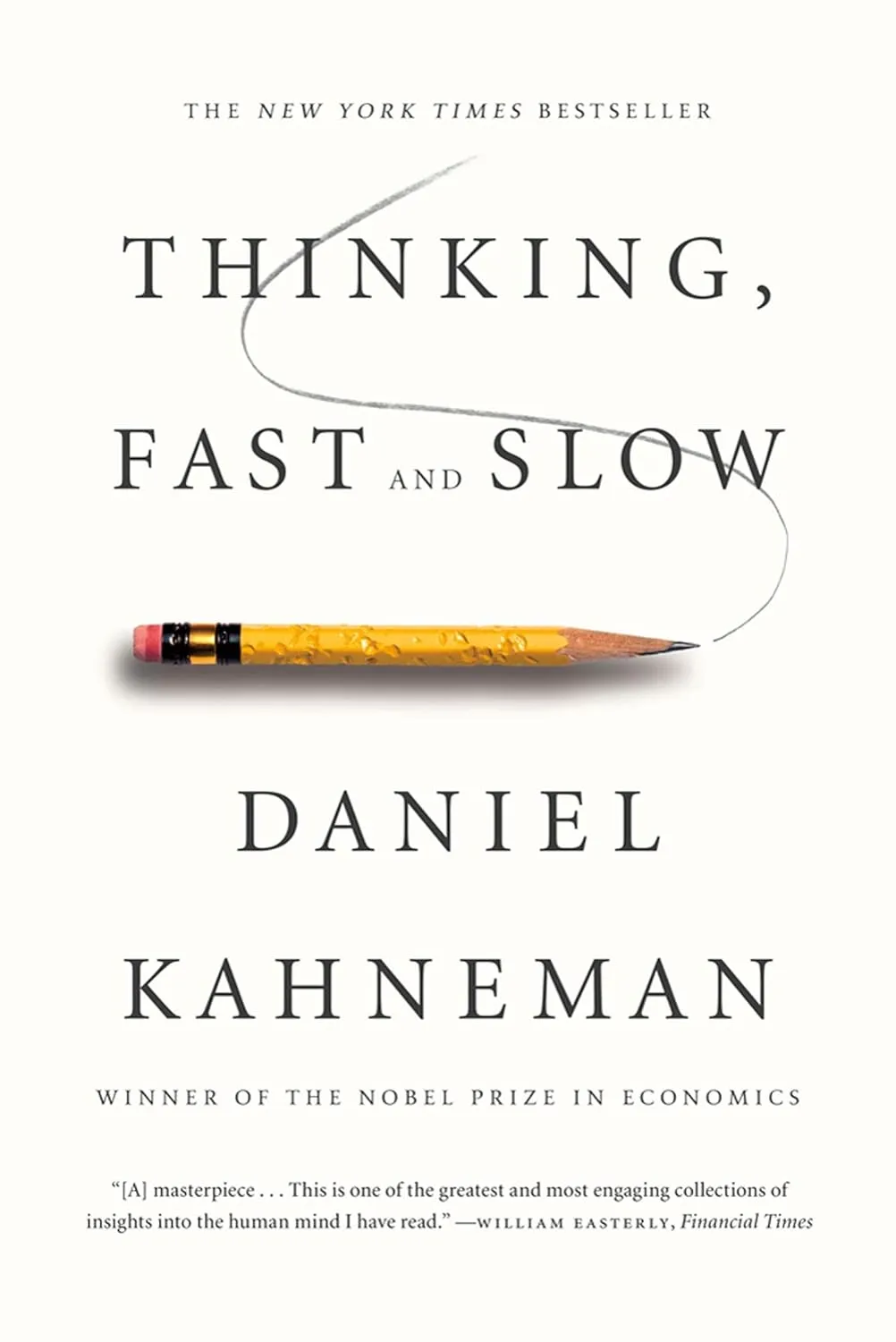
A: Complementary. Kahneman provides the deep theoretical framework; Montier provides the investment-specific application. Read Kahneman for depth, Montier for direct investment implementation.
Q: What is the single most important debiasing technique?
A: The pre-mortem combined with the outside view. Before any investment, ask: "What base rate applies to this situation?" and "In two years this has failed, what went wrong?" These two questions counteract overconfidence and optimism simultaneously.
Final Verdict
Rating: 4.5/5
The Little Book of Behavioral Investing is the most investment-applicable behavioral finance book written by a genuine practitioner. Its bias catalog, debiasing strategies, and process framework provide a complete toolkit for improving decision quality. Every active investor should read it and implement at least the pre-mortem, disposition effect correction, and base rate analysis.
The book was published in 2010, but the behavioral patterns it describes are hardwired into human psychology. They do not expire. If anything, the rise of zero-commission trading apps, social media-driven volatility, and AI-generated investment content has made these biases more dangerous, not less. Montier's framework for counteracting them is as relevant in 2026 as it was when he wrote it.
For a deeper theoretical foundation, pair this book with Kahneman's Thinking, Fast and Slow. For practical implementation of the passive investing alternative that eliminates most behavioral risk, read The Little Book of Common Sense Investing.
Get Your Copy
Hardcover: Buy on Amazon
Kindle: Buy on Amazon
Prices current as of publication date. Free shipping available with Prime.