Mental Accounting
Quick Definition
Mental accounting is the tendency to categorize money into separate mental pots based on where it came from or what it is for, and then treat each pot differently even though a dollar is a dollar wherever it sits. Coined by Richard Thaler in the 1980s, it explains why people carry credit card debt while holding a savings account, spend tax refunds more freely than paychecks, and refuse to touch "retirement money" for anything else.
What It Means
Economic theory says money is fungible: a dollar earned from work, a dollar won in a lottery, and a dollar found on the sidewalk are all worth the same and should be spent or saved based on your overall financial picture, not the dollar's origin. Mental accounting violates this. The brain labels money by source and purpose, and those labels change behavior.
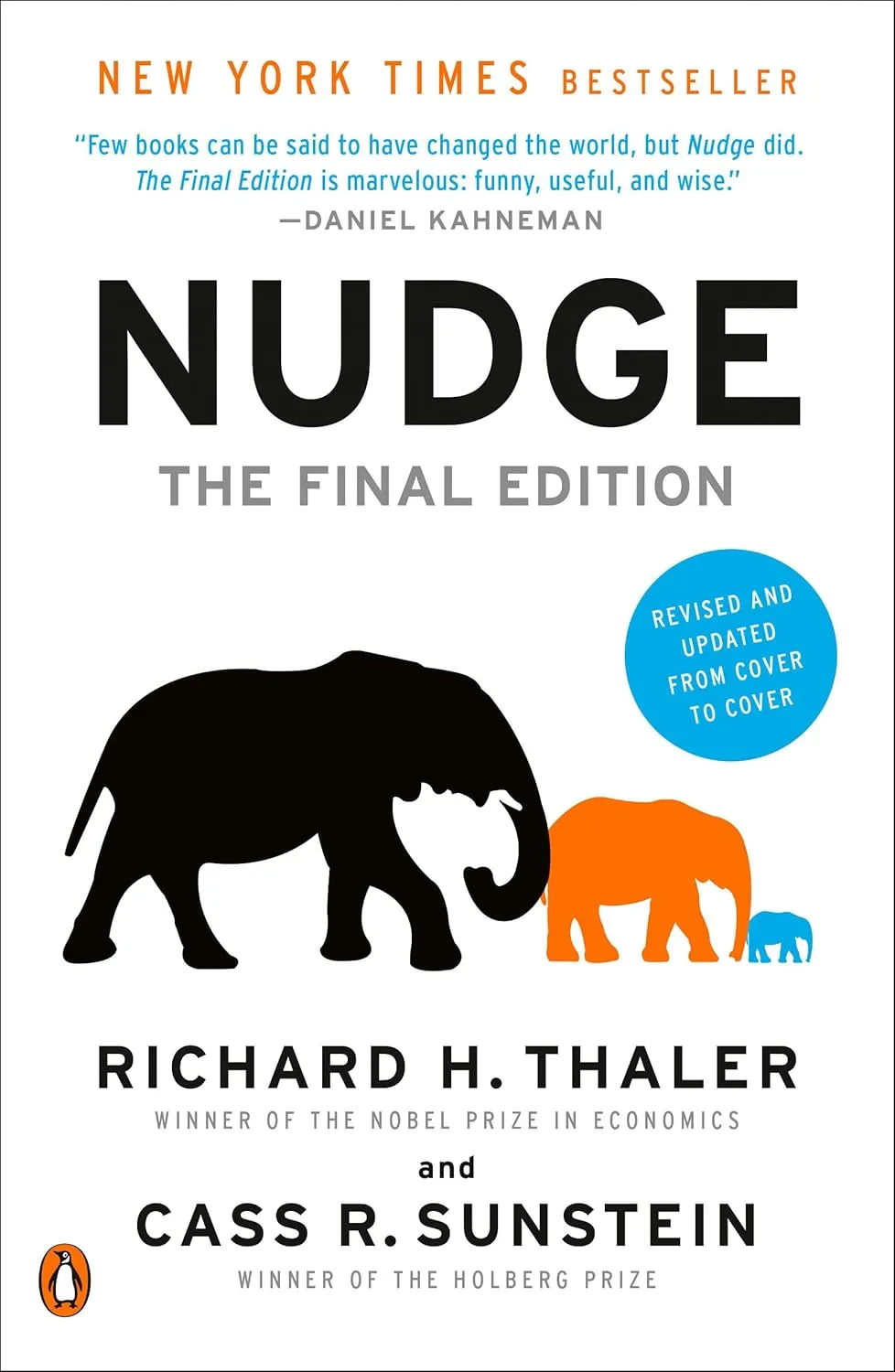
Richard Thaler formalized the idea in a series of papers starting in 1980 and collected in his 1999 paper "Mental Accounting Matters." He identified three components: how outcomes are perceived and decisions made, how activities are assigned to specific accounts, and how accounts are evaluated and balanced. The labels people use include "salary," "bonus," "tax refund," "gift," "vacation fund," "emergency fund," and "fun money." Each label carries different spending rules in the person's head.
Mental accounting is not purely bad. It can improve self-control. A household that physically separates savings into a "vacation fund" sub-account may save more for the trip than if all money sat in one pool, because the labeled account creates a soft barrier against raiding it. This is the logic behind envelope budgeting and dedicated savings buckets, and it works because it matches how the brain already thinks.
The cost comes when mental accounting overrides good math. The classic example is holding $10,000 in a savings account earning 4% while carrying $10,000 in credit card debt at 22%. Economically, the cash should pay off the debt immediately, saving 18% per year. Mentally, the savings account feels like "safety" and the credit card feels like a separate "debt" problem, so the person keeps both. The labels cost them real money.
How It Works
Mental accounting operates through three mechanisms Thaler described.
1. Transaction utility. People get value not just from the good itself (acquisition utility) but from the perceived deal (transaction utility). A $50 sweater feels like a better purchase when it was "originally $100" than when it was always $50, even though the sweater is identical. The mental account records the "savings" as a gain, which makes the purchase feel justified.
2. Categorization and budgeting. People assign spending to mental categories (food, entertainment, vacation) and track each against an implicit budget. Spending in one category does not freely transfer to another. If the entertainment budget is "spent," a person may decline a concert even if they have plenty of money in the vacation fund, because the accounts are separate in their mind.
3. Choice bracketing. Decisions are evaluated narrowly (one transaction at a time) or broadly (over a period or portfolio). Narrow bracketing is a hallmark of mental accounting. An investor who checks each stock individually feels each loss acutely, while an investor who brackets broadly sees the portfolio's overall gain and feels fine. Narrow bracketing amplifies loss aversion.
The fungibility problem. Because money is actually fungible, mental buckets create inconsistencies:
- Spending a $2,000 tax refund on a vacation while carrying $2,000 in credit card debt
- Keeping an inheritance in a separate "do not touch" account while paying high interest on a car loan
- Treating a raise as "extra" money to spend rather than part of total income to allocate
Real-World Examples
The tax refund splurge. Surveys consistently show that people spend tax refunds more freely than the same amount of salary, even though a refund is just an interest-free loan the taxpayer gave the government. The refund feels like "found money" rather than earned income, so the mental account attached to it has looser spending rules. The economically optimal move is to adjust withholding so the refund does not exist, and direct the extra each paycheck to debt or investing. The IRS Tax Withholding Estimator helps with this.
Debt and cash simultaneously. A household with $8,000 in credit card debt at 20% APR and $8,000 in a high-yield savings account at 4% APY is losing 16% per year, or about $1,280, to mental accounting. The savings account feels like a safety net, and the debt feels like a separate problem to be paid down gradually. The fix is to keep a smaller true emergency fund (say $2,000) and use the rest to crush the debt, then rebuild savings. The Debt Payoff Calculator shows the difference.
Windfall spending. Bonuses, gifts, and gambling winnings get spent at higher rates than salary. A $3,000 bonus feels like play money, so it goes to a vacation, while $3,000 of salary would have been carefully allocated to bills and savings. Treating all income as one pool, regardless of source, eliminates this gap.
Sinking funds. On the positive side, many savers use mental accounting on purpose by creating named sub-accounts: "Christmas fund," "car repair fund," "property tax fund." Each gets a monthly auto-transfer. This works because it matches the brain's natural labeling and creates a barrier to spending the money on something else. The Savings Goal Calculator helps size these buckets.
| Mental account | Typical behavior | Economic reality |
|---|---|---|
| Tax refund | Spend freely | It is your own earned money |
| Bonus | Treat as "extra" | It is compensation, part of total income |
| Inheritance | Keep separate, do not touch | Dollars are fungible with all other dollars |
| Emergency fund | Hold even while paying 22% debt | Paying debt is a guaranteed 22% return |
| Vacation fund | Save in a labeled account | Effective self-control tool |
Key Points to Remember
- Money is fungible, but the brain treats it as if it is not, sorting it into labeled buckets that change spending rules.
- Mental accounting can help (named savings buckets improve self-control) or hurt (holding cash while paying high-interest debt).
- Narrow bracketing, evaluating each transaction or holding alone, amplifies loss aversion and leads to worse decisions.
- Windfalls and refunds get spent more freely than salary because of the "found money" label.
- The fix is to use mental accounting where it helps (sinking funds, dedicated accounts) and override it where it hurts (pay off expensive debt before hoarding cash).
Common Mistakes to Avoid
Holding cash while carrying high-interest debt. This is the most expensive mental accounting error. Unless the cash is a true emergency fund you cannot risk, paying off 20% debt is a guaranteed 20% return that beats any savings account. Keep a minimal buffer and attack the debt.
Treating windfalls as free spending money. A bonus or refund is income. Allocate it by your overall plan (debt, investing, then a planned treat) rather than spending it by default. Our post on what to do with a raise or bonus gives a framework.
Refusing to touch a labeled account even when it makes sense. Some people will not touch a "retirement" account for a true emergency, and instead take on credit card debt at 25%. If the emergency is real and the account is liquid, using it beats borrowing at high rates.
Narrow bracketing on investments. Checking each stock or fund in isolation makes every loss feel terrible. Evaluate the whole portfolio against your plan, and rebalance based on the total picture. See rebalancing.
Letting transaction utility drive purchases. A "deal" is not a reason to buy. The relevant question is whether you need the item at the price being charged, not how much it was "originally." The discount is a marketing lever, not a gain.
Related Concepts
Mental accounting is a foundational concept in behavioral finance and behavioral economics, introduced by Richard Thaler. It interacts with loss aversion (narrow bracketing makes losses feel worse), hyperbolic discounting (labeled accounts can counteract present bias), and the sunk cost fallacy. The technical property it violates is fungibility, the idea that any dollar is interchangeable with any other. Practical tools include a budget and dedicated savings buckets, which you can build with the Budget Calculator. For habits, read our posts on why budgets fail and what works and how to handle money from your first real salary. The original academic source is Thaler's paper "Mental Accounting Matters".
Frequently Asked Questions
Q: Is mental accounting always bad? A: No. Named savings buckets and envelope budgeting use mental accounting to improve self-control. The damage comes when the labels override good math, like holding cash while paying high-interest debt.
Q: Why do I spend my tax refund but save my paycheck? A: Because the refund feels like "found money" in a mental account with loose rules, while your paycheck feels like earned income that needs to cover bills. Adjusting your withholding so the refund disappears, and auto-directing the extra to savings, fixes this.
Q: Should I keep an emergency fund while paying off credit card debt? A: Keep a small starter emergency fund (often $1,000 to $2,000) so you do not have to borrow again for a surprise expense, then put everything else toward the high-interest debt. Once the debt is gone, rebuild a full emergency fund.
Q: What is narrow bracketing? A: Evaluating each decision or investment in isolation rather than as part of a whole. It makes losses feel worse and leads to worse choices. Broad bracketing, looking at the whole portfolio or whole year, usually produces better decisions.
Q: How do budgeting apps use mental accounting? A: Apps like YNAB and EveryDollar lean into mental accounting by design, letting you assign every dollar a job in labeled categories. This works because it matches how the brain thinks while imposing an overall plan. See our comparison of the best budgeting apps for 2026.