*Disclosure: This article contains affiliate links. If you purchase through these links, we may earn a commission at no additional cost to you. We only recommend books we have personally read and genuinely believe in.
Quick Overview
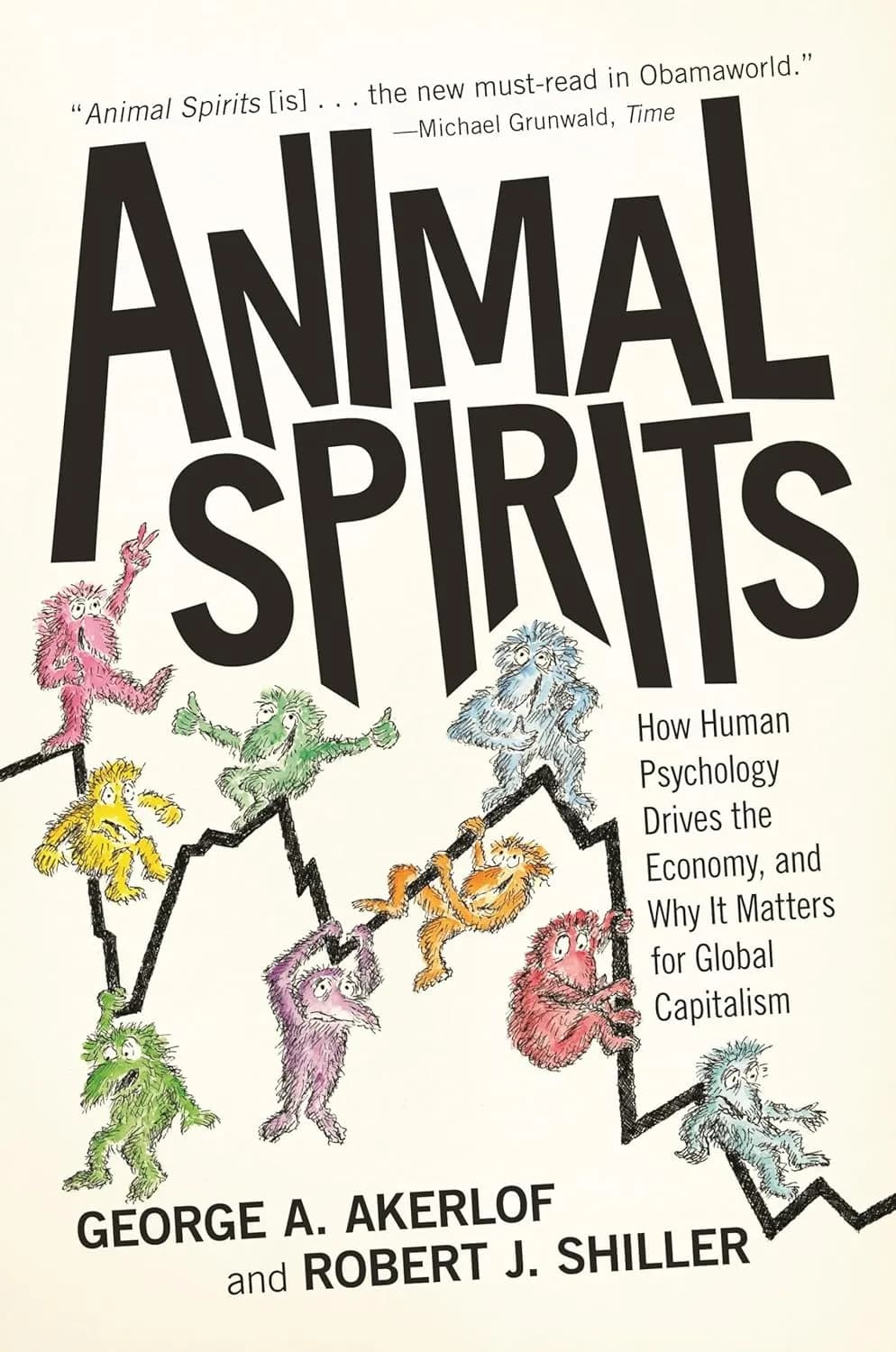
Standard economics says people are rational. The 2008 financial crisis proved they are not. George Akerlof (2001 Nobel Prize) and Robert Shiller (2013 Nobel Prize) argue that five psychological forces, what Keynes called "animal spirits," drive economic fluctuations that standard models cannot explain. Published in 2009 as the Great Recession unfolded, the book directly challenged the efficient market consensus that had failed to predict the crisis. Recent research has validated their core thesis: a 2025 IMF study found that narratives explain roughly 20% of U.S. business cycle fluctuations since 1995.
Book Details
| Attribute | Details |
|---|---|
| Title | Animal Spirits |
| Authors | George A. Akerlof & Robert J. Shiller |
| Publisher | Princeton University Press |
| Published | 2009 |
| Pages | 264 |
| Reading Level | Intermediate |
| Amazon Rating | 4.3/5 stars |
Get Your Copy
Paperback: Buy on Amazon
Kindle: Buy on Amazon
About the Authors
George Akerlof is University Professor at Georgetown University and won the 2001 Nobel Prize in Economics (with Michael Spence and Joseph Stiglitz) for his analysis of markets with asymmetric information. His 1970 paper "The Market for Lemons" is one of the most cited in economics. It demonstrated how information asymmetry destroys markets.
Robert Shiller is Sterling Professor of Economics at Yale and won the 2013 Nobel Prize in Economics (with Eugene Fama and Lars Peter Hansen) for empirical analysis of asset prices. He developed the CAPE ratio and predicted both the dot-com crash and the housing bubble.
Two Nobel Prize winners writing together is rare. Two Nobel Prize winners writing accessibly for a general audience is almost unheard of. The book reads like a conversation between someone who studies market failures (Akerlof) and someone who studies market psychology (Shiller).
The Five Animal Spirits
1. Confidence and Its Multiplier
Keynes's original observation: economic activity is driven partly by rational calculation and partly by the spontaneous confidence that things will work out. When confidence collapses, rational calculation says "stay put" regardless of economic fundamentals.
The confidence multiplier works as a feedback loop:
Economic activity -> Income -> Spending -> More economic activityWhen confidence supports this cycle, it becomes self-reinforcing upward. When confidence collapses, the cycle reverses: job losses feed fear, fear reduces spending, reduced spending causes more job losses.
Rational models cannot fully capture this feedback because confidence is not directly observable or predictable. It responds to narratives, social proof, and emotional contagion, forces outside standard macroeconomic models.
The consumer confidence survey as a leading indicator is counterintuitive:
| Consumer Confidence Index Level | Subsequent 12-Month S&P 500 Return (historical average) |
|---|---|
| Above 130 (high confidence) | +4% |
| 100-130 (moderate) | +8% |
| 70-100 (below average) | +12% |
| Below 70 (low confidence) | +18% |
Low confidence periods have historically preceded higher stock returns. This is the contrarian investing principle in action: the best time to buy is when fear is highest. For more on this dynamic, read our piece on the fear of investing that keeps people poor.
2. Fairness
Akerlof and Shiller argue that fairness norms, deeply embedded in human psychology, shape economic behavior in ways rational models miss.
Standard economic models predict that wages should fall during recessions as labor supply exceeds demand. In practice, companies rarely cut wages below what workers perceive as fair, even during severe downturns. Instead they lay off some workers and keep the rest at existing wages.
| Wage Cut (economically rational) | Layoffs (economically suboptimal) |
|---|---|
| Efficient: maintains employment | Inefficient: destroys specific human capital |
| Violates fairness norm | Perceived as necessary, not unfair |
| Damages morale of remaining workers | Remaining workers feel fortunate |
| May trigger strikes or resignation | Remaining workers maintain productivity |
The fairness norm is not irrational. It reflects genuine social coordination mechanisms. But it causes labor markets to clear through quantity (employment) rather than price (wages), amplifying recessions.
3. Corruption and Bad Faith
Akerlof and Shiller document how corruption and opportunism expand during boom periods and contract during busts:
| Phase | Corruption Level | Mechanism |
|---|---|---|
| Early boom | Low | High standards maintained |
| Mid-boom | Rising | Easy profits reduce scrutiny |
| Late boom | Peak | Fraud widespread; hard to avoid |
| Bust | Declining | Fraud exposed; enforcement increases |
| Recovery | Low | Clean-up underway |
This cyclical pattern has appeared consistently throughout financial history: the 1920s bull market (exposed by 1930s fraud prosecutions), the savings and loan crisis (fraud widespread, prosecuted in early 1990s), Enron-era fraud (exposed 2001-2002), and mortgage fraud of the 2000s (exposed 2008-2010). The pattern continued after the book was published: the crypto exchange failures of 2022 (FTX, Celsius) followed the exact same late-boom fraud cycle.
4. Money Illusion
Humans confuse nominal and real values. They think in current dollars rather than inflation-adjusted terms, leading to systematic misjudgments.
A 5% pay cut in a 0% inflation environment feels like a severe pay cut. A 2% pay increase in a 7% inflation environment (a 5% real pay cut) feels like a raise. Workers respond more negatively to nominal wage cuts than to equivalent real wage cuts through inflation.
| Nominal Return | Inflation Rate | Real Return | Investor Perception |
|---|---|---|---|
| 10% | 8% | 2% | "Great year!" |
| 2% | 0% | 2% | "Mediocre year" |
| -5% | -10% | +5% | "Terrible year!" |
The investor who earns 10% during 8% inflation earned exactly the same real return as the investor who earned 2% during 0% inflation, but feels dramatically different about it. You can check your own real returns with our inflation impact calculator.
5. Stories
Akerlof and Shiller's most original contribution is the argument that narratives, stories about how the economy works, drive economic behavior as much as fundamentals.
The housing bubble narrative (2001-2006) is the clearest example. The dominant story: "Real estate always goes up. Get in now or be priced out forever. Your home is your best investment." This narrative spread through family conversations, media coverage, and real estate advertising. It changed behavior: people bought homes they could not afford on the assumption prices would always provide an exit. The narrative was self-fulfilling while it held. Prices rising validated the story, which attracted more buyers, which raised prices further.
When the story changed in 2006-2007, the new narrative spread equally fast. Buyers stepped back. Prices fell. More stories of falling prices spread. Sellers panicked. The self-reinforcing cycle reversed.
Shiller developed this concept further in Narrative Economics (2019), and the research has accelerated since. A 2025 IMF study (Viral Narratives) found that companies with more optimistic narratives tend to accelerate hiring and capital investment by 2.6 percentage points more per year than comparable companies with pessimistic narratives, above and beyond what productivity or financial performance would predict. Strikingly, firms with optimistic narratives do not see higher stock returns or profitability in the future, suggesting narratives do not simply capture positive news but are genuine animal spirits driving real decisions.
The same study estimates that narratives explain about 20% of U.S. business cycle fluctuations since 1995, including about 32% of the early 2000s recession and 18% of the Great Recession. A separate 2025 systematic literature review (Narrative Economics: A Systematic Literature Review.270-280.2025)) identified five active research areas: macroeconomic effects of narratives, specific narrative themes, brain and behavior-related influence, narrative effects on financial markets, and the impact of narratives on economic theory.
The Eight Questions Animal Spirits Answers
Akerlof and Shiller apply their five animal spirits to explain eight persistent economic puzzles:
Why Do Economies Fall Into Depression?
Because confidence collapses, fairness norms prevent wage adjustments, and the feedback loop between consumption and employment becomes self-reinforcing downward. Standard monetary policy may be insufficient if the confidence collapse is severe enough (the liquidity trap Keynes described).
Why Do Central Bankers Have Power Over the Economy?
Through their influence on confidence and narratives, not just through the mechanical interest rate transmission channel. Federal Reserve communication about future policy affects behavior through story as much as through actual rate changes.
Why Are There People Who Cannot Find Jobs?
Because wages are sticky downward (fairness norms prevent cuts to clearing levels) and because employers prefer to maintain morale by keeping wages steady and laying off some workers rather than cutting wages for all.
Why Is There a Trade-Off Between Inflation and Unemployment?
Because money illusion means workers accept real wage cuts more readily when they come through inflation than through nominal cuts. Moderate inflation lubricates the adjustment mechanism in ways that zero inflation cannot.
Why Is Saving For the Future So Arbitrary?
Because saving decisions respond to narratives and confidence as much as to calculated future needs. Bull markets encourage spending (confidence in future wealth). Bear markets encourage saving (fear of insufficient future resources). Our savings rate calculator can help you systematize what most people leave to impulse.
Why Are Financial Prices and Corporate Investments So Volatile?
Because they are driven by narratives and confidence that shift faster than underlying fundamentals. The rational model predicts that asset prices should only change when fundamentals change. In reality they change continuously with narrative shifts.
Why Do Real Estate Markets Go Through Cycles?
Because real estate is uniquely susceptible to narrative epidemics: it is local (every market has its own story), emotional (homes are identity-laden), visible (everyone sees prices in their neighborhood), and leveraged (small equity magnifies gains and losses).
Why Does Poverty Persist in Minority Communities?
Because confidence in opportunities, fairness of institutions, and prevalent narratives about opportunity and discrimination shape economic behavior in ways that interact with structural barriers. This is the most politically charged chapter in the book.
Investment Applications of Animal Spirits
Identifying Narrative-Driven Mispricings
When a compelling story (AI revolution, clean energy transition, cryptocurrency disruption) drives asset prices, valuations often exceed what fundamentals justify. The narrative is not necessarily wrong. The price implication may be wrong.
Signs of narrative-driven excess:
Signs of narrative-driven undervaluation:
The Confidence Cycle as Context
| Market Environment | Confidence Level | Implication |
|---|---|---|
| Low VIX, narrow credit spreads, high CAPE | High confidence priced in | Future returns likely to disappoint |
| High VIX, wide spreads, low CAPE | Low confidence | Future returns likely to be above average |
| Rapidly rising VIX, credit stress | Confidence collapsing | High uncertainty; potential opportunity if financially secure |
Strengths & Weaknesses
What We Loved
Areas for Improvement
Who Should Read This Book
Highly Recommended For
Probably Not For
Comparison to Similar Books
| Book | Focus | Depth | Readability |
|---|---|---|---|
| Animal Spirits | Behavioral macroeconomics framework | High | Medium |
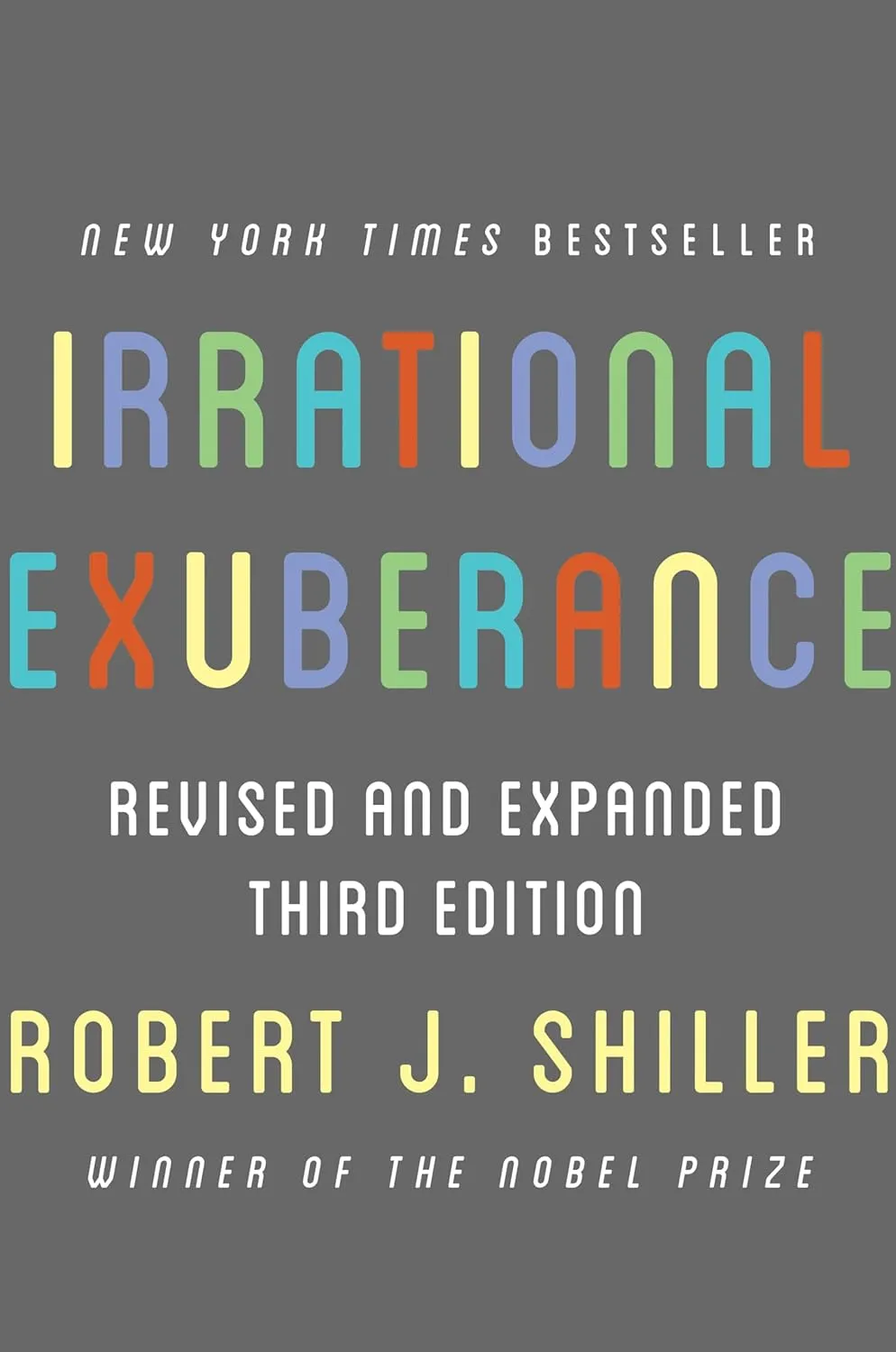
| Irrational Exuberance (Shiller) | Stock and housing bubble psychology | High | High |
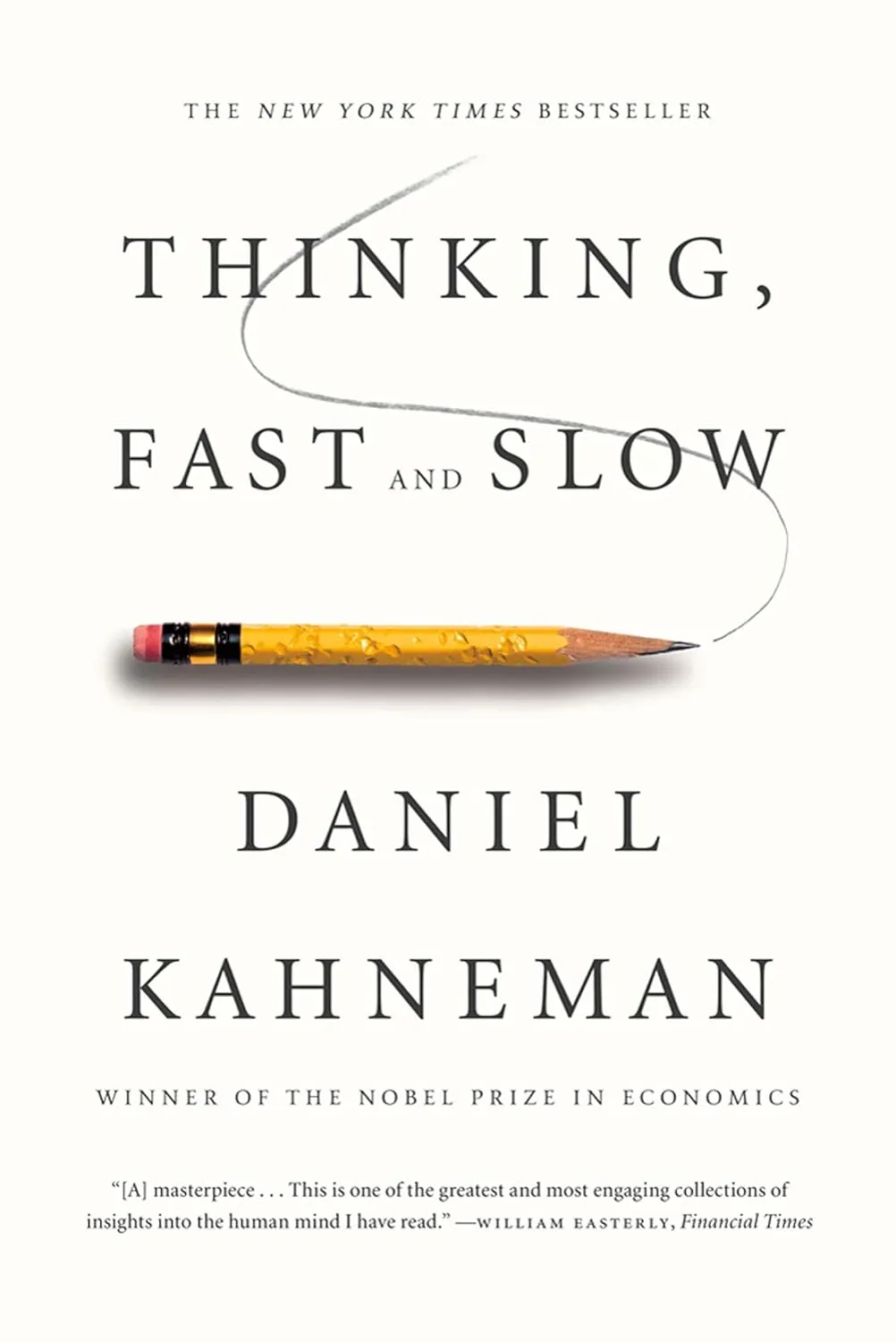
| Thinking, Fast and Slow (Kahneman) | Individual cognitive biases | Very High | Medium |
| The Psychology of Money (Housel) | Personal behavior and money | Medium | Very High |
Read Animal Spirits for the macro framework. Read Irrational Exuberance for the bubble-specific application. Read Kahneman for the cognitive science underneath both. Read Housel for the personal finance implications.
Implementation Guide
How to Apply Animal Spirits to Your Investment Process
Step 1: Identify the dominant narrative
Step 2: Check your own confidence level
Step 3: Adjust for money illusion
Step 4: Watch for the corruption cycle
Frequently Asked Questions
Q: Is this book about macroeconomics or investing?
A: Both. The macro framework (confidence cycles, narrative epidemics, money illusion) directly informs long-run asset allocation and return expectations. It is most valuable for investors trying to understand the environment they are operating in.
Q: How does this complement Irrational Exuberance?
A: Irrational Exuberance focuses specifically on stock and housing market valuations. Animal Spirits provides the broader macroeconomic framework (labor markets, recessions, policy) that explains why excessive valuations develop and how they affect the real economy.
Q: Has the narrative economics thesis been validated since publication?
A: Yes. The 2025 IMF study estimated that narratives explain about 20% of U.S. business cycle fluctuations since 1995. A 2025 IZA discussion paper (The Demand for Economic Narratives) found that households have a substantial willingness to pay (more than $4) for economic narratives, higher than for numerical forecast information. The field has moved from speculation to measurable impact.
Q: Is the book politically biased?
A: The policy recommendations lean Keynesian, and some economists disagree with the prescription for active government intervention. But the diagnostic framework (five animal spirits) is politically neutral. You can accept the analysis of how confidence and narratives drive cycles without endorsing the specific policy responses.
Final Verdict
Rating: 4.4/5
Animal Spirits was ahead of its time in 2009, and the research has caught up to its thesis. The 2025 IMF finding that narratives explain 20% of business cycle fluctuations, and that firms with optimistic narratives accelerate hiring beyond what fundamentals justify, validates the book's core argument. The five-factor framework gives you a richer understanding of market behavior than any purely quantitative model.
Read it to understand why economies swing between irrational exuberance and irrational despair. Then use that understanding to resist both.
Get Your Copy
Paperback: Buy on Amazon
Kindle: Buy on Amazon
Prices current as of publication date. Free shipping available with Prime.