
How to Choose the Best Brokerage Account in 2026
Fidelity, Vanguard, and Schwab all offer $0 commissions and low-cost index funds. But they differ on fractional shares, fund minimums, app quality, and customer service. Here is the full comparison.

Over 30 years, a 0.10% difference in expense ratios on a $100,000 portfolio costs you about $30,000 in foregone compounding. That is why choosing the right brokerage matters. The three dominant options for long-term index investors are Fidelity, Vanguard, and Charles Schwab. All three offer $0 commissions, low-cost index funds, and full retirement account support. But they differ in ways that affect your daily experience and your long-term returns.
According to Vanguard, its average expense ratio fell to 0.06% in February 2026. Fidelity offers four index funds with a literal 0.00% expense ratio. Schwab charges as little as 0.02% for its S&P 500 index fund. The fee gap between the three has narrowed to near-zero, so the decision comes down to features, usability, and account types.
This guide compares all three across the categories that matter for long-term investors.
Fidelity: Best Overall for Most Investors
Fidelity is the strongest all-around brokerage for most people in 2026. It combines zero-expense-ratio index funds, broad fractional-share access, no account minimums, and the best mobile app among the three.
Key Features
- Expense ratios: 0.00% on ZERO series funds (FZROX, FZILX, FZIPX, FZEMX). 0.015% on FXAIX (S&P 500).
- Account minimum: $0 on all account types
- Fractional shares: Available on stocks and ETFs with $1 minimum
- Account types: Brokerage, IRA, Roth IRA, SEP IRA, Solo 401(k), HSA, 529, custodial, trust
- Customer service: 24/7 phone support, 200+ Investor Centers
- Mobile app: 4.8/5 rating, widely considered the best in class
- Cash sweep rate: 2.62% on uninvested cash
The ZERO Fund Catch
Fidelity's ZERO funds (FZROX, FZILX) are exclusive to Fidelity. You cannot transfer them to another brokerage in-kind. If you ever leave Fidelity, you must sell them, realize any capital gains, and rebuy equivalent funds at the new brokerage. For long-term holders who plan to stay at Fidelity, this is a non-issue. For anyone who might switch, it is a tax trap.
Best For
Investors who want the lowest possible costs, broad fractional-share access, and a full-service platform with excellent mobile experience. Especially good for people starting with small amounts, since there are no minimums.
Vanguard: Best for Index Fund Purists
Vanguard invented the retail index fund in 1976 and remains the standard-bearer for low-cost, passive investing. Its unique ownership structure means the fund shareholders own Vanguard itself, aligning incentives with investors rather than outside shareholders.
Key Features
- Expense ratios: 0.03% to 0.05% on core index funds. 0.04% on VTSAX (total stock market), 0.04% on VFIAX (S&P 500).
- Account minimum: $0 for brokerage accounts, $1,000 to $3,000 for Admiral share mutual funds
- Fractional shares: Only for Vanguard ETFs, $1 minimum
- Account types: Brokerage, IRA, Roth IRA, SEP IRA, 529 (state plans), custodial, trust. No HSA, no Solo 401(k), no crypto trading.
- Customer service: Phone support M-F 8am-8pm ET. No physical branches. Known for long wait times.
- Mobile app: 4.4/5 rating, functional but dated
- Cash sweep rate: 4.50% via money market funds
The Minimum Issue
Vanguard's $3,000 minimum for Admiral shares is the biggest friction point for new investors. If you have less than $3,000, you buy the ETF version (VTI, VOO) instead. Vanguard ETFs can be purchased for as little as $1 with fractional shares, but only for Vanguard-issued ETFs.
Best For
Investors who want a simple, low-cost, buy-and-hold portfolio built around Vanguard funds and who do not need advanced trading tools, banking features, or 24/7 support. Read our guide on what is an index fund to understand why Vanguard's approach works.
Charles Schwab: Best for Service and Platform Depth
Schwab absorbed TD Ameritrade in 2020 and integrated thinkorswim, widely regarded as the best retail trading platform. Schwab combines low-cost index funds with excellent customer service and a full banking suite.
Key Features
- Expense ratios: 0.02% on SWPPX (S&P 500), 0.03% on SWTSX (total stock market), 0.06% on SWISX (international).
- Account minimum: $0 on all account types
- Fractional shares: Schwab Stock Slices for S&P 500 stocks, $5 minimum. Expanded to most eligible U.S. stocks and ETFs.
- Account types: Brokerage, IRA, Roth IRA, SEP IRA, Solo 401(k), 529, HSA, custodial, trust, full banking
- Customer service: 24/7 phone support, 300+ branches. Highest J.D. Power ranking among the three.
- Mobile app: 4.7/5 rating, thinkorswim for active traders
- Cash sweep rate: 0.45% default (low, but can be improved with money market funds)
- Crypto: Phased direct Bitcoin and Ethereum trading rollout began Q2 2026
Best For
Investors who want a full-service brokerage with strong customer support, branch access, and advanced trading tools alongside low-cost index fund investing. Also good for people who want banking and investing in one platform.
Head-to-Head Comparison
| Feature | Fidelity | Vanguard | Schwab |
|---|---|---|---|
| Stock/ETF commissions | $0 | $0 | $0 |
| Account minimum | $0 | $0 (most) | $0 |
| Lowest expense ratio | 0.00% (FZROX) | 0.03% (VTI) | 0.02% (SWPPX) |
| Mutual fund minimum | $0 | $1,000 to $3,000 | $0 |
| Fractional shares | All stocks/ETFs, $1 min | Vanguard ETFs only, $1 min | Most U.S. stocks/ETFs, $5 min |
| Physical branches | 200+ | None | 300+ |
| Mobile app rating | 4.8/5 | 4.4/5 | 4.7/5 |
| 24/7 customer service | Yes | No | Yes |
| HSA | Yes | No | Yes |
| Solo 401(k) with Roth | Yes | No | Yes |
| Crypto trading | Yes | No | Yes (rolling out 2026) |
| Banking features | Cash management account | None | Full banking suite |
| Robo-advisor | Fidelity Go (0.35%) | Digital Advisor (0.20%) | Intelligent Portfolios ($0) |
Real-World Examples
Example 1: The Small Starter
Jenna, 23, wants to open a Roth IRA with $500 and invest $200 per month. She needs no minimums and fractional shares.
Fidelity is the best fit. She opens a Roth IRA with $0, buys FZROX (0.00% expense ratio) with fractional shares, and sets up automatic $200 monthly contributions. Every penny goes to work immediately. At Vanguard, she would need to buy the ETF version (VTI) since the mutual fund requires $3,000. At Schwab, she could use SWTSX with $0 minimum, but fractional ETF access has a $5 minimum.
Example 2: The Three-Fund Portfolio Builder
Marcus, 40, wants to build a three-fund portfolio across U.S. stocks, international stocks, and bonds in a taxable account. He wants maximum tax efficiency.
He chooses ETFs at any of the three brokerages. VTI (Vanguard Total Stock Market ETF), VXUS (Vanguard Total International ETF), and BND (Vanguard Total Bond ETF) are available commission-free at Fidelity, Schwab, and Vanguard. The ETF structure provides better tax efficiency than mutual funds in taxable accounts. He picks the brokerage with the interface he likes best.
Example 3: The Catch-Up Investor
Robert, 52, earns $180,000 and wants to max out his 401(k), backdoor Roth, and a taxable account. He needs HSA access, Solo 401(k) options for side income, and 24/7 support.
Fidelity or Schwab both work. Both offer HSA, Solo 401(k) with Roth, 24/7 phone support, and full account types. Vanguard lacks HSA and Solo 401(k). Robert picks Fidelity for the ZERO funds and app experience, or Schwab for branch access and thinkorswim.
Common Mistakes
Choosing Based on Name Recognition Alone
All three are excellent, but they serve different needs. Vanguard is great for fund costs but weak on platform and service. Fidelity is great overall but locks you in with ZERO funds. Schwab is great for service but has a low default cash sweep rate. Match the brokerage to your specific needs, not to the brand.
Ignoring the Cash Sweep Rate
Uninvested cash in your brokerage earns the cash sweep rate. Schwab's default is 0.45%, which means cash sits earning almost nothing. Fidelity pays 2.62%. Vanguard's money market options pay 4.50%. If you keep any cash in your brokerage, this rate matters. You can manually buy money market funds at any of the three to improve this, but you have to do it actively.
Not Considering Account Type Needs
If you need an HSA, Solo 401(k), or crypto trading, Vanguard is out. If you want banking integrated with investing, Schwab or Fidelity work. Check the account types each brokerage offers before committing, because moving accounts later is a hassle.
Overlooking the Vanguard Minimum
If you are starting with less than $3,000 and want mutual funds, Vanguard is not an option. You can buy Vanguard ETFs at any brokerage, but the Admiral share mutual funds require $3,000. Fidelity and Schwab have no minimums on their index funds.
Conclusion
For most new investors in 2026, Fidelity is the best overall choice. Zero minimums, zero-expense-ratio funds, broad fractional shares, and the best app create the lowest-friction experience. Vanguard is ideal for committed index fund purists who want the lowest costs and do not need advanced features. Schwab is the strongest pick for investors who want full-service support, branch access, and a powerful trading platform. All three will get you to the same place if you invest consistently in low-cost index funds. Pick one, set up automatic contributions, and focus on what actually matters: how much you save and how long you let compound interest work. Use our investment return calculator to model your plan.
This post is for informational purposes only and does not constitute financial advice.
Tags
Savvy Nickel Team
Financial education expert dedicated to making complex money topics simple and accessible for everyone.
Recommended Articles

How to Open a Brokerage Account Step by Step
Opening a brokerage account is easier than most people expect. Here is a complete walkthrough, what to choose, what you will need, and exactly what to do once it is open.

Fractional Shares Explained: How to Invest in Amazon With $10
Fractional shares let you buy a slice of any stock or ETF regardless of its price. Here is how they work, which brokerages offer them, and when they actually matter for your portfolio.

What Is Quantitative Easing and Should Normal People Care
The Fed created trillions to buy bonds during crises. That is quantitative easing. Here is what it is, why it matters to your mortgage and investments, and whether the Fed is doing it again in 2026.
Run the Numbers
Free calculators related to this article.
401(k) Calculator
Project your 401(k) balance at retirement based on your salary, contribution rate, employer match, and expected returns. See how tax-deferred growth and free employer money add up over decades.
Open calculator →Coast FI Calculator
Find out how much you need invested right now so that compound growth alone reaches your retirement number by 65, without saving another dollar. The number is smaller than you think.
Open calculator →Dividend Calculator
Project your dividend income year by year, track your yield on cost, and see how reinvesting dividends accelerates portfolio growth. Includes tax adjustments and dividend growth.
Open calculator →Recommended Books
Related Glossary Terms
Broker
A broker is a licensed intermediary who executes buy and sell orders for securities, real estate, or other assets on behalf of clients, earning a commission or fee for the service.
Investment
An investment is an asset you buy with the expectation that it will generate income or appreciate in value over time. In 2026, with the S&P 500 CAPE ratio near 42, choosing the right investments and understanding the risk-return tradeoff matters more than ever.
IRA
An IRA is a personal tax-advantaged retirement savings account that lets individuals invest independently of their employer, with traditional IRAs offering tax-deferred growth and Roth IRAs offering tax-free growth.
Margin Trading
Margin trading is borrowing money from a broker to purchase securities, amplifying both gains and losses. Requires a margin account and exposes investors to margin calls.
401(k)
A 401(k) is an employer-sponsored retirement plan that lets you invest pre-tax dollars, reducing taxable income while building long-term wealth with potential employer matching.
403(b)
A 403(b) is a tax-advantaged retirement plan for employees of public schools, nonprofits, and certain tax-exempt organizations, similar to a 401(k) but with unique rules and investment options.
Recommended Podcasts
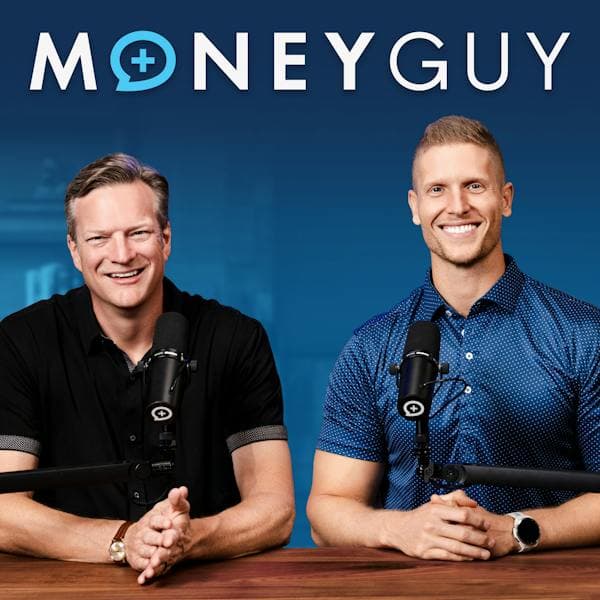
The Money Guy Show
by Brian Preston, CPA/CFP & Bo Hanson, CFA/CFP
Two fee-only financial advisors break down the Financial Order of Operations, a 9-step wealth-building framework. 617K YouTube followers and a 4.8 Apple rating.

The Long View
by Christine Benz, Amy Arnott & Ben Johnson
Morningstar's weekly deep-dive interview show on retirement, portfolio strategy, and fund analysis. 387 episodes, hosted by Christine Benz and the Morningstar research team.

Stacking Benjamins
by Joe Saul-Sehy & Josh 'OG' Bannerman, CFP
A former financial advisor and a CFP host a lighthearted show from Joe's mom's basement. Three episodes a week on investing, retirement, and behavioral finance.