Gold Standard
Quick Definition
The gold standard is a monetary system in which a country defines its currency in terms of a fixed quantity of gold, and the government or central bank commits to converting currency into gold at that fixed rate. Under a gold standard, the money supply is constrained by the amount of gold a country holds, which limits the ability of governments to print money at will. The classical gold standard functioned from the 1870s until World War I in 1914, with a troubled interwar revival in the 1920s and 1930s. The Bretton Woods system, a gold exchange standard, lasted from 1944 until President Richard Nixon ended dollar convertibility into gold on August 15, 1971.
What It Means
Money is a tool for storing value and facilitating exchange. Under the gold standard, that tool was anchored to a physical commodity. A dollar was not just a piece of paper backed by government decree. It was a claim on a specific amount of gold, typically defined by law. This anchor imposed discipline on governments and central banks: they could not issue more currency than their gold holdings could support, which constrained deficit spending, limited inflation, and provided a credible commitment mechanism that encouraged international trade and investment.
The classical gold standard, which ran from roughly 1873 to 1914, was the most famous period of this system. According to economic historian Barry Eichengreen, it was only after 1873 that countries settled on gold as the basis for their money supplies and firmly established pegged exchange rates. Britain was the center of the system, with the Bank of England playing a stabilizing role. Other core countries included France, Germany, and the United States. The system encouraged international trade by stabilizing exchange rates and facilitating foreign borrowing, because investors could trust that currencies would maintain their gold values.
The system had serious drawbacks. Because the money supply was tied to gold discoveries and mining output, economies could experience deflation when gold supply did not keep pace with economic growth. During the Great Depression, countries that abandoned the gold standard earlier recovered faster, because they were free to expand their money supplies and cut interest rates. Countries that clung to gold, like France and the United States under Hoover, suffered deeper and longer downturns.
The interwar gold standard, attempted in the 1920s, was structurally fragile. Britain returned to gold in 1925 at the pre-war parity, which overvalued the pound and damaged British exports. The system collapsed in the early 1930s as country after country abandoned gold to pursue independent monetary policies. Britain left in 1931, the United States effectively left in 1933 when Roosevelt banned private gold ownership and devalued the dollar, and the international gold standard was dead by 1936.
The Bretton Woods system, established in 1944, created a gold exchange standard. World currencies were pegged to the U.S. dollar, and the dollar was convertible into gold at $35 per ounce, but only for foreign governments and central banks, not for private citizens. This system worked as long as the United States held enough gold to back its dollar obligations. By the late 1960s, U.S. gold reserves could not cover the dollars in circulation, partly because of Vietnam War spending and Great Society programs. On August 15, 1971, President Nixon suspended dollar convertibility into gold, effectively ending the Bretton Woods system and ushering in the era of fiat money that continues today.
How It Works
Under the Classical Gold Standard
- Fixed price: The government sets a fixed price for gold. For example, the U.S. set gold at $20.67 per ounce under the Gold Standard Act of 1900.
- Convertibility: The government or central bank commits to buying and selling gold at the fixed price on demand. Anyone can bring currency to the central bank and receive gold, or bring gold and receive currency.
- Money supply constraint: Because currency is backed by gold, the money supply is limited by gold holdings. A country cannot print money beyond what its gold reserves can support.
- Automatic adjustment mechanism: When a country runs a trade deficit, gold flows out to pay for imports. The declining gold supply contracts the money supply, which lowers prices and wages, making exports more competitive and imports less attractive. The trade deficit corrects automatically. This is the "price-specie flow mechanism" described by David Hume.
- Exchange rate stability: Because all currencies are defined in terms of gold, exchange rates between currencies are fixed. A dollar worth 1/20.67 ounce of gold and a pound worth 1/4.25 ounce of gold produce a fixed exchange rate of about $4.87 per pound.
Under Bretton Woods (1944 to 1971)
- Dollar centrality: World currencies are pegged to the U.S. dollar at fixed rates.
- Gold backing: The dollar is convertible into gold at $35 per ounce, but only for foreign governments and central banks, not for private citizens.
- IMF oversight: The International Monetary Fund monitors exchange rates and provides liquidity to help countries maintain their pegs.
- Adjustable pegs: Countries can devalue or revalue their currencies with IMF approval if they face fundamental balance of payments disequilibrium.
- Collapse: As U.S. gold reserves decline relative to dollar liabilities, confidence in convertibility erodes. Nixon closes the gold window in 1971, and the system moves to floating exchange rates.
Real-World Examples
Example 1: The Classical Gold Standard (1873 to 1914)
During the classical gold standard period, international trade and investment flourished. Exchange rates between major currencies were effectively fixed, which eliminated currency risk for traders and investors. London was the financial center of the world, and the Bank of England's bank rate (its discount rate) served as the primary tool for managing gold flows. When gold left Britain, the Bank raised its rate, which attracted foreign capital and slowed domestic lending, reversing the gold outflow.
The system was not perfect. Economic historian Michael Bordo has noted that the gold standard exhibited both elements that promoted stability and forces that fostered instability. Deflation was common, because gold supply grew more slowly than economic output. Between 1873 and 1896, the U.S. experienced persistent deflation, which hurt debtors (including farmers) who had to repay loans with dollars that were worth more than when they borrowed them. This led to the Free Silver movement, which sought to expand the money supply by allowing silver to be coined alongside gold.
Example 2: The Great Depression and Gold
The gold standard worsened the Great Depression. Countries that abandoned gold early, like Britain in 1931, were able to cut interest rates and expand their money supplies, which spurred recovery. Countries that stayed on gold longer, like France and the United States (until 1933), were forced to maintain tight monetary policies that deepened the downturn. Research by economists Barry Eichengreen and Jeffrey Sachs has shown that countries that left gold earlier recovered faster. Roosevelt's decision to abandon gold in 1933, ban private gold ownership, and devalue the dollar to $35 per ounce was a critical step in the U.S. recovery.
Example 3: The Nixon Shock (August 15, 1971)
By 1971, foreign governments were demanding gold in exchange for their dollar holdings, draining U.S. reserves. France under Charles de Gaulle was particularly aggressive, converting dollars to gold and challenging U.S. monetary dominance. On August 15, 1971, President Nixon went on television to announce that the United States would no longer convert dollars into gold for foreign governments. The dollar was effectively devalued, and the Bretton Woods system of fixed exchange rates collapsed. Within a few years, major currencies were floating freely against each other, and the world entered the modern era of fiat money.
Example 4: Gold in 2026
The end of the gold standard did not end gold's role as a store of value. In January 2026, gold surged to a record high of $5,589.38 per ounce, driven by concerns about U.S. fiscal sustainability, a weakening dollar, and geopolitical tensions. By August 2026, gold was trading around $4,588 per ounce after a sharp correction from the January highs. Major banks remained bullish: JPMorgan forecast gold could push toward $6,000 per ounce by year-end 2026, HSBC predicted an average of $4,560, Goldman Sachs forecast $4,900 by year-end, and Deutsche Bank expected an average of $4,800 in Q4 2026. The surge illustrates that even without a formal gold standard, investors and central banks still turn to gold when confidence in fiat currencies erodes.
Key Points to Remember
- The gold standard tied currency values to a fixed quantity of gold, constraining money supply growth and limiting inflation.
- The classical gold standard (1873 to 1914) provided exchange rate stability and encouraged international trade, but also produced deflation when gold supply lagged economic growth.
- The gold standard worsened the Great Depression, because countries on gold could not expand their money supplies to fight deflation.
- The Bretton Woods system (1944 to 1971) was a gold exchange standard where currencies pegged to the dollar and the dollar was convertible into gold at $35 per ounce.
- President Nixon ended dollar convertibility on August 15, 1971, closing the gold window and ushering in the fiat money era.
- Since 1971, the world has operated on a fiat currency system where money's value derives from government decree and market confidence, not from commodity backing.
- Gold remains a store of value and hedge against currency debasement, as demonstrated by its 2026 record high near $5,600 per ounce.
Common Mistakes to Avoid
- Romanticizing the gold standard. The gold standard provided price stability and exchange rate discipline, but it also produced painful deflation, constrained governments from responding to economic crises, and was associated with severe depressions. The Great Depression was deeper and longer in countries that stayed on gold. Returning to gold would strip central banks of the ability to act as lender of last resort during financial crises.
- Assuming gold-backed money is immune to devaluation. Governments on the gold standard could and did devalue their currencies by reducing the gold content of the currency. Roosevelt devalued the dollar from $20.67 per ounce to $35 per ounce in 1933, a 41% devaluation. A gold standard constrains policy, but it does not make it impossible for governments to adjust the gold price.
- Confusing the gold standard with a gold investment. The gold standard is a monetary system where currency is convertible into gold at a fixed rate. Buying gold as an investment is a personal financial decision to hold a commodity that may appreciate or depreciate. The two concepts are related but distinct. You can invest in gold without supporting a return to the gold standard.
- Thinking the gold standard prevented financial crises. Financial crises occurred regularly under the gold standard, including the Panic of 1893, the Panic of 1907, and numerous banking panics in Britain and Europe. The gold standard provided monetary discipline, but it did not eliminate speculative excess, bank failures, or asset bubbles.
- Ignoring why the system was abandoned. The gold standard was not abandoned on a whim. It was abandoned because it failed to provide the monetary flexibility needed to respond to major economic shocks, including two world wars and the Great Depression. The Bretton Woods system failed because U.S. gold reserves could not back the growing supply of dollars needed for global trade. The system broke down for structural reasons, not just policy mistakes.
Related Concepts
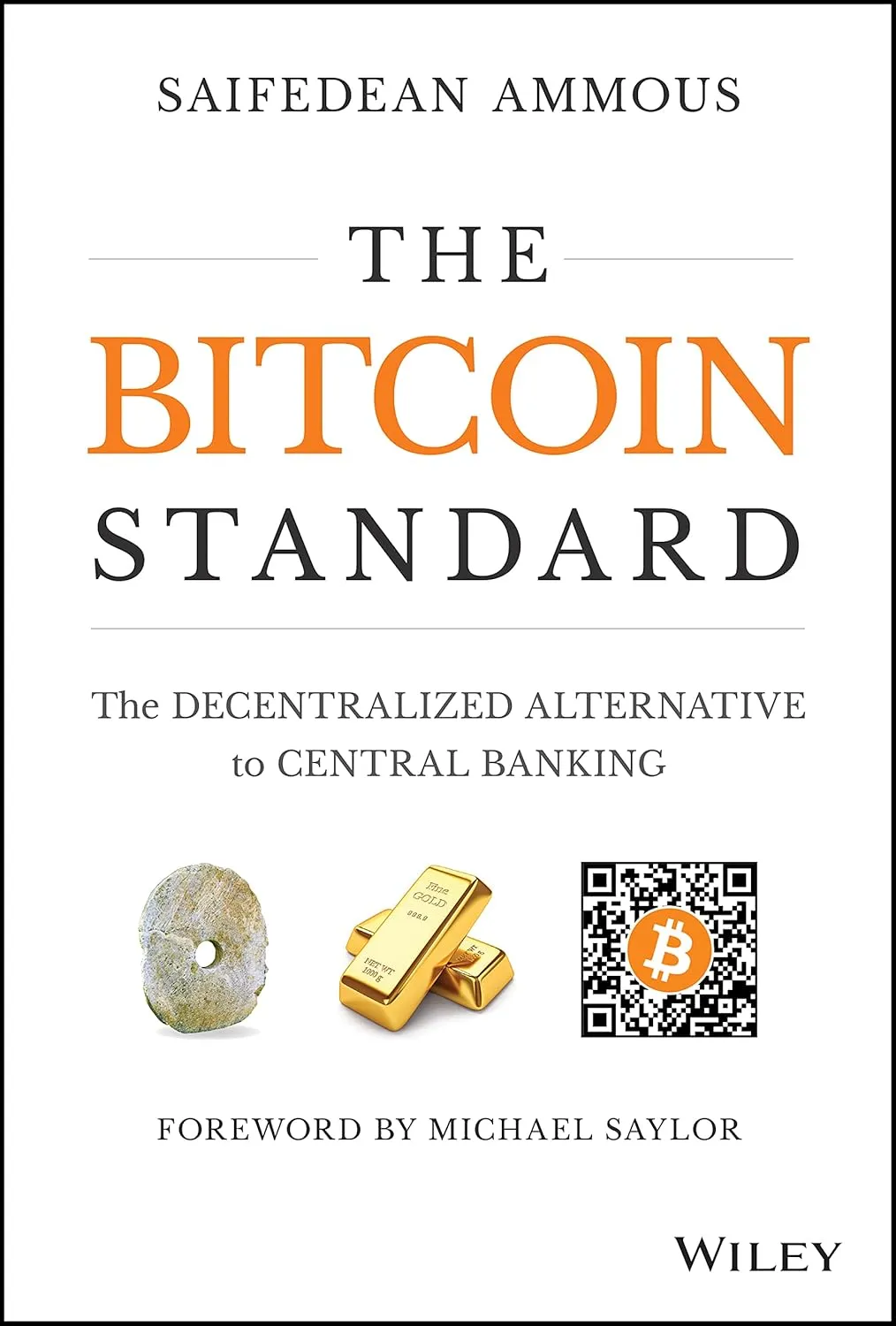
The gold standard is the historical foundation of modern monetary systems, and understanding it illuminates why today's fiat currency system works the way it does. The end of gold convertibility in 1971 gave central banks like the Federal Reserve the freedom to conduct independent monetary policy, including setting the federal funds rate and engaging in quantitative easing. Currency devaluation under a gold standard required officially lowering the gold price, while under fiat systems it happens through market forces and policy signaling. Gold itself remains an investment asset and central bank reserve holding, serving as a hedge against inflation and currency debasement. Some proponents of Bitcoin argue it serves as a digital gold standard, because its supply is algorithmically limited, though it lacks gold's millennia-long history as a store of value. The potential rise of central bank digital currencies (CBDCs) raises questions about whether governments will use technology to impose even greater control over money than fiat systems allow. Our blog posts on why the dollar loses value over time, what inflation really is, and what quantitative easing is explain how the post-gold-standard monetary system affects your wallet. The Federal Reserve's historical timeline and the Treasury's history of the gold standard provide authoritative background on the transition from gold to fiat money.
Frequently Asked Questions
Q: Could the United States return to the gold standard? A: Technically yes, but practically it would be extremely difficult and likely harmful. The U.S. money supply is far larger than U.S. gold reserves. As of 2026, U.S. gold holdings are about 261 million ounces. At $4,600 per ounce, that is worth about $1.2 trillion, while the M2 money supply exceeds $21 trillion. Returning to gold would require either a massive contraction of the money supply (causing severe deflation and depression) or setting the gold price at an astronomically high level (effectively a massive devaluation). It would also strip the Federal Reserve of its ability to respond to recessions and financial crises.
Q: Why did countries abandon the gold standard? A: Countries abandoned gold because the system was too rigid to handle major economic shocks. World War I forced countries to suspend convertibility to finance war spending. The interwar revival was fragile and collapsed during the Great Depression, when countries needed to expand money supplies but gold constraints prevented it. Bretton Woods collapsed because U.S. gold reserves could not back the dollars needed for global trade and the growing U.S. deficit from Vietnam and Great Society spending.
Q: Is gold a good investment in 2026? A: Gold hit a record high of $5,589.38 per ounce in January 2026 before correcting to around $4,588 by August. Major banks remain broadly bullish, with forecasts ranging from $4,560 to $6,000 per ounce. Gold can serve as a hedge against currency debasement, inflation, and geopolitical risk, but it produces no income (no dividends or interest) and can experience sharp drawdowns. As with any investment, the decision depends on your goals, risk tolerance, and overall portfolio allocation.
Q: What is the difference between the gold standard and fiat money? A: Under the gold standard, currency is convertible into a fixed quantity of gold, and the money supply is constrained by gold holdings. Under fiat money, currency has value because the government declares it legal tender and because market participants accept it. Fiat money gives central banks the flexibility to expand or contract the money supply in response to economic conditions, but it also creates the risk of inflation if money is printed excessively.
Q: Did the gold standard prevent inflation? A: The gold standard generally limited inflation over the long run, because the money supply could not grow faster than gold supply. However, it did not eliminate inflation entirely, and it produced periods of deflation that were equally damaging. Between 1873 and 1896, the U.S. experienced persistent deflation under the gold standard. The system provided long-term price stability but at the cost of short-term volatility and the inability to respond to economic crises.